
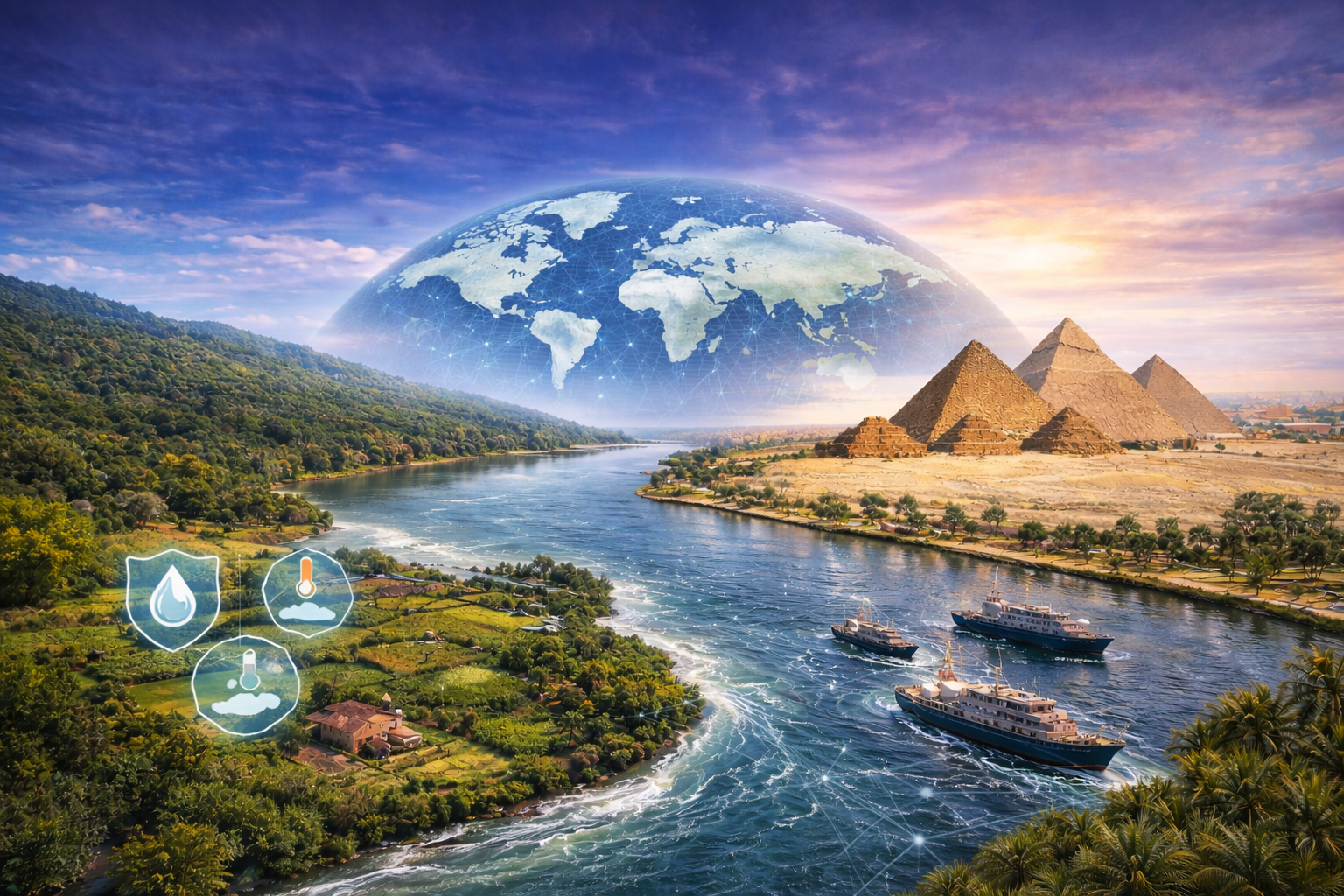
- Netravati and Nile have both sustained civilisations for thousands of years, enabling settlement, agriculture, trade, and cultural continuity.
- River health now directly influences coastal stability, port infrastructure, shipping lanes, and global supply chains.
- Climate change was repeatedly framed as a security issue rather than only an environmental concern. It was described as a risk multiplier that intensifies existing political, social, and economic vulnerabilities.
- Rivers may be local in origin, but their consequences are global, and safeguarding them is fundamental to ecological stability, security, and human survival.
For much of human history, rivers functioned as ecological and cultural lifelines, sustaining agriculture, trade, and settlement, and shaping the civilisational landscapes of South Asia, Northeast Africa, and beyond. They were not merely sources of water, but organising forces of social and economic life.
Today, rivers occupy a far more contested space. Climate change has disrupted hydrological patterns, intensifying floods and droughts, while rapid urbanisation and infrastructure expansion have placed unprecedented stress on river ecosystems. Increasingly, rivers are entangled with questions of governance, political power, national security, and global economic stability, transforming shared ecological commons into strategic assets.
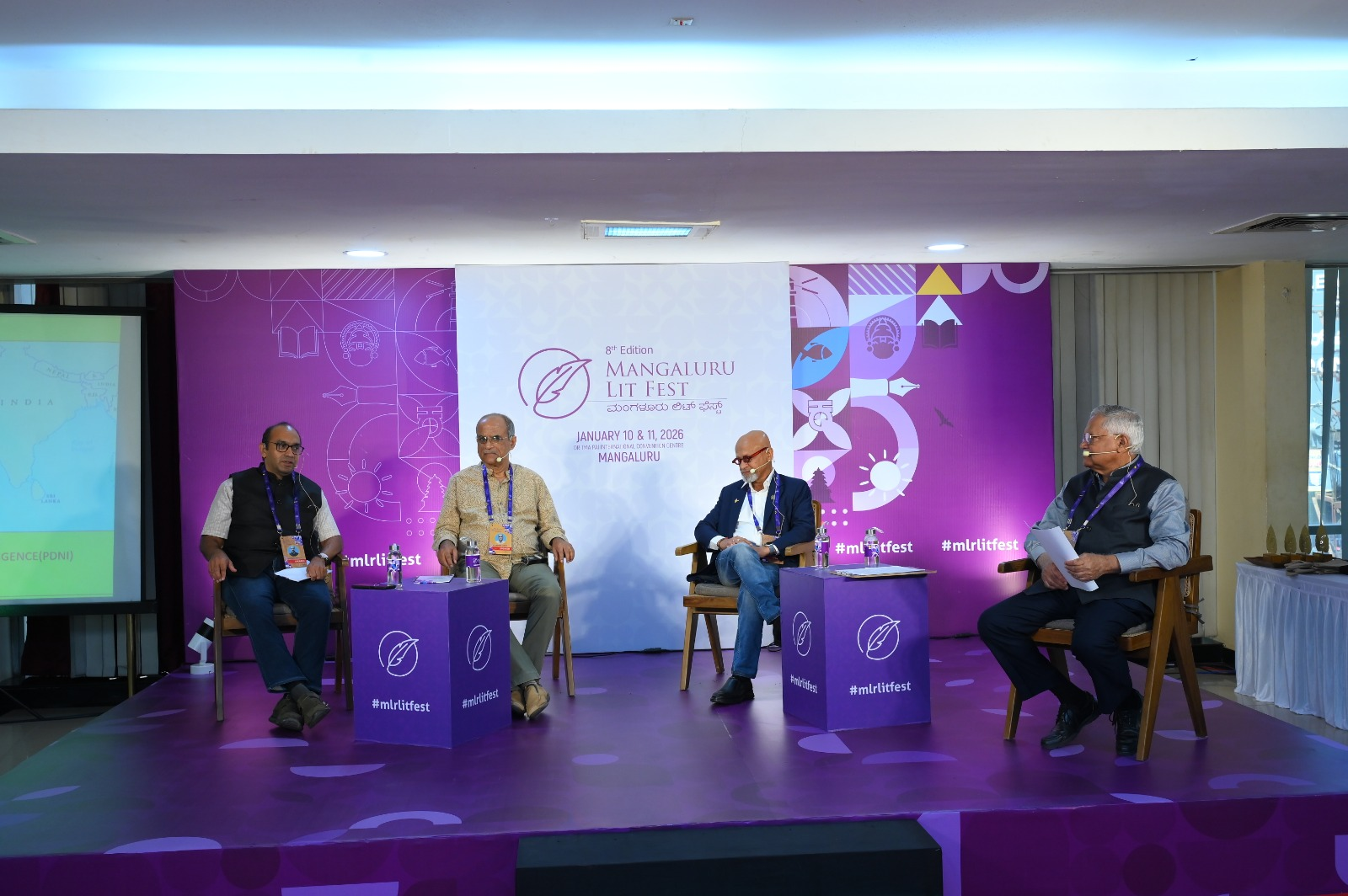
It is within this evolving context that the session “Netravati to Nile: Local Rivers, Global Stakes” at the 8th Mangaluru Lit Fest positioned its discussion, using two vastly different river systems to highlight shared challenges and structural patterns shaping rivers across the Global South.
Moderated by Prashanth Vaidyaraj, Editor of SamvadaWorld, the discussion brought together three distinct yet complementary perspectives: Dr. Raghu Murtugudde, Professor Emeritus of Atmospheric and Oceanic Sciences and Earth System Science at the University of Maryland, USA; CA Giridhar Kamath, a practising Chartered Accountant based in Mangaluru with long-standing engagement in river conservation issues; and Commodore Udai Rao (Retd.), former Principal Director of Naval Intelligence. Together, the panel examined how rivers such as the Netravati and the Nile reflect broader structural challenges—climate stress, governance failures, and power asymmetries—facing river systems across the Global South.
The discussion began by recognising that, at first glance, the Netravati and the Nile appear to have little in common. One is a relatively short river flowing from the Western Ghats into the Arabian Sea; the other is a vast transboundary system traversing multiple nations. Yet, historically, both rivers played a foundational role in sustaining civilisations—supporting agriculture, enabling trade, and fostering cultural continuity. In the present, both are under mounting stress from pollution, population pressure, climate variability, and competing developmental demands.
The panel then situated rivers within a broader framework of economic and security interdependence. In earlier eras, river-based civilisations prospered because rivers facilitated mobility and exchange within limited geographical spheres. Today, this logic extends well beyond riverbanks to coastlines, ports, and maritime routes. River health directly influences coastal ecosystems, port infrastructure, shipping lanes, and global supply chains. Recent global disruptions have underscored the fragility of these interconnected systems, demonstrating how disturbances in riverine or maritime spaces can cascade into economic and political instability far beyond their immediate regions.
By framing rivers as connectors between ecology, economy, and security, the session moved away from narrow environmental narratives and towards a more integrated understanding of rivers as critical components of global stability. The Netravati and the Nile thus became entry points into a larger conversation—one that links local river struggles to global questions of climate resilience, governance, and justice in the Global South.
Maritime security was presented as far more than a military concern. It now includes cooperation, connectivity, and freedom of navigation, especially in regions where rivers flow into heavily trafficked seas. Environmental threats such as oil spills, plastic pollution, and climate-driven disruptions were identified as shared challenges that no country can address in isolation. Economic stability and national security are increasingly tied to the health of oceans and the river systems feeding into them, reinforcing the need for regional and international cooperation.
Climate stress formed one of the central pillars of the discussion. A long-term geological perspective was used to explain how river systems and climate patterns have evolved over millions of years. India and Africa were once part of the same landmass, and tectonic shifts shaped mountain ranges, rainfall systems, and river flows. The Western Ghats, an ancient geological formation, and the much younger Himalayas were highlighted as fundamentally different systems, each influencing rainfall, monsoon behaviour, and hydrology in distinct ways.
While climate has always been dynamic, the pace and intensity of change today are described as unprecedented. Rainfall patterns are becoming increasingly erratic, with fewer rainy days but much heavier rainfall events, followed by longer dry spells. These shifts increase the risks of floods, droughts, and groundwater depletion. Urbanisation, deforestation, and land-use change further amplify these impacts by disrupting natural drainage systems and reducing ecological buffers.
The panel agreed that Climate change was a risk multiplier that intensifies existing political, social, and economic vulnerabilities. Regions already facing governance challenges and population pressure are particularly exposed. Tropical regions were identified as warming faster than much of the world, second only to the Arctic, because rising greenhouse gas concentrations trap more heat. When climate stress intersects with weak institutions and limited adaptive capacity, it can accelerate instability and conflict.
Inequality between regions emerged as a critical concern. Despite contributing less to global emissions, tropical and Global South regions face disproportionate impacts from cyclones, floods, droughts, and heat stress. Climate security was therefore presented as a multi-sectoral challenge affecting water availability, agriculture, transportation, energy systems, and livelihoods simultaneously. Effective responses must be grounded in ecological realities and lived experience rather than short-term political calculations.
River conservation was discussed as an ecosystem-wide responsibility. Rivers were described not as isolated channels but as systems interconnected with forests, wetlands, biodiversity, and human livelihoods. The Western Ghats were emphasised as the water tower of peninsular India, giving rise to both long east-flowing rivers such as the Krishna, Godavari, and Cauvery, and short but ecologically rich west-flowing rivers like the Netravati. Despite their shorter length, west-flowing rivers were highlighted as vital freshwater sources for densely populated regions.
The stark reality of global water availability was repeatedly underlined. Although over 70% of the Earth’s surface is covered by water, 97% of it is saline. Most of the remaining freshwater is locked in glaciers, leaving only a tiny fraction accessible through rivers. Yet this small fraction sustains entire ecosystems and human populations, making river governance decisions extremely consequential.
The panel also discussed the impact of large-scale projects on the natural ecosystem and conservation, taking the example of the Yettinahole project. The project was originally conceptualised as a diversion of water from the Netravati basin and later reframed as a drinking water project. It aimed to supply water to interior regions. The discussion traced key political and administrative milestones and highlighted the sharp escalation in projected costs over time. The feasibility of the project was examined in practical terms. The proposed volume of water transfer was explained using simple comparisons, illustrating that delivering 24 TMC would require pumping the equivalent of tens of thousands of cricket stadiums filled with water within a limited monsoon window. Pumping such volumes uphill against gravity was described as physically and logistically impractical. These concerns led to public opposition, legal challenges, and intervention by environmental authorities.
The session critically examined how water security has become deeply politicised. Large infrastructure projects were discussed as examples of how political narratives often override hydrological limits and scientific reasoning. Despite improvements in data, modelling, and climate science, governance failures and short-term electoral considerations continue to undermine sustainable water management. Water, much of it underground and invisible, was described as a vital resource whose mismanagement places future generations at risk.
The discussion concluded with a strong emphasis on urgency and responsibility. Climate-related losses observed across the world were framed as warnings of what lies ahead if action is delayed. Water security was described as long-term insurance for society, requiring cooperation, foresight, and governance that extends beyond political cycles. The central message remained consistent throughout the session: rivers may be local in origin, but their consequences are global, and safeguarding them is fundamental to ecological stability, security, and human survival.

Tejashree P V holds a Master’s degree in English Literature from IGNOU and a Bachelor’s degree in Journalism, English, and History from Vivekananda Degree College. A UPSC aspirant, she has a keen interest in international affairs, geopolitics, and policy.
 Anjali Singh
  Anusreeta Dutta
  Aayush Pal