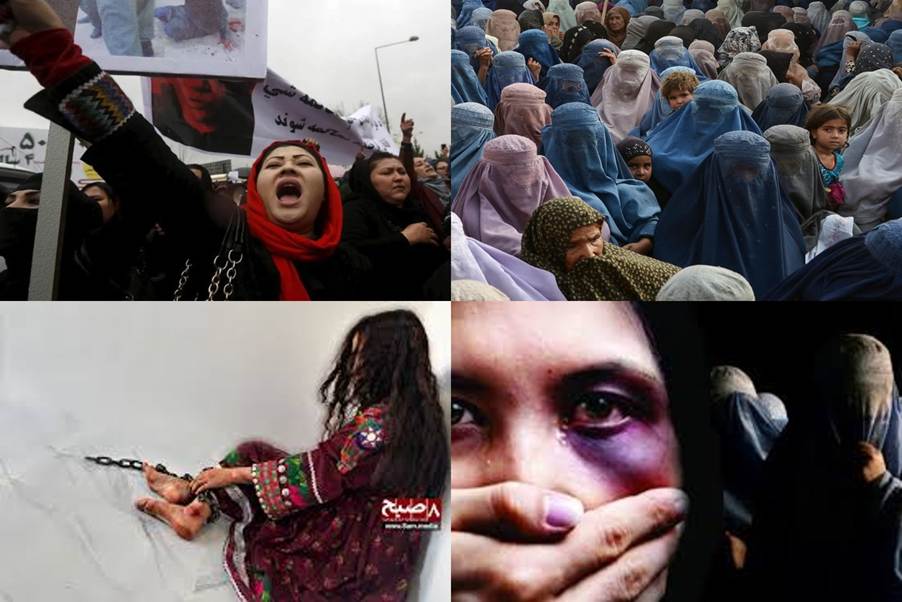
- Afghanistan is now the only country in the world where girls over the age of 12 are systematically prohibited from secondary and tertiary education.
- The penal code is being implemented in a context where girls and women have already been largely erased from public life.
- Analysis of the Taliban’s new regulation by GIWPS divides Afghan society into ‘free’ and ‘enslaved’ persons and into four social classes, with harsher punishments for those at the bottom.
- Afghan and international human rights organisations warn that the code formalises gender apartheid and may meet the thresholds for crimes against humanity.
Law as a Tool of Gender Apartheid
In early 2026, the Taliban quietly brought into force a new criminal procedure and penal framework, which is referred to in various reports as the “Penal Principles of Taliban Courts” or the new Criminal Procedure/Criminal Code, comprising 119 articles across multiple chapters.
This code does not merely reorganise courts; more critically, it hardwires authoritarian control, the legal recognition of slavery, and the systematic subordination of women into Afghanistan’s legal architecture.
Afghan and international human rights organisations, including Rawadari, the Georgetown Institute for Women, Peace and Security (GIWPS), and feminist legal analysts, warn that the code formalises gender apartheid and may meet the thresholds for crimes against humanity.[1]
This legal regime sits atop an already sweeping set of edicts that bar girls from secondary and higher education, ban women from most forms of work, and confine them to their homes. Afghanistan is now the only country in the world where girls over the age of 12 are systematically prohibited from secondary and tertiary education.[2]
The combined effect is not only a human rights catastrophe; it is also a public health emergency that will reverberate across generations of Afghan women and girls.
The New Penal Code: Legalising Slavery and Erasing Women
Analysis of the Taliban’s new regulation by GIWPS and others indicates that it divides Afghan society into “free” and “enslaved” persons and further into four social classes, with harsher punishments for those at the bottom.[3]
Article 9 sets different levels of tazir (discretionary punishment) for religious scholars, elites, the middle class, and a “lower class” who can be beaten and flogged. Article 15 explicitly distinguishes between “free” and “enslaved” offenders, thereby normalising enslavement as a legal status.[4]
Reports based on the Pashto text obtained by Rawadari and Afghan media such as Rukhshana and Zan Times confirm repeated references to ghulam (slave), and a class-based justice system that shields clerics while exposing poorer Afghans and disproportionately women without independent income to physical punishment and imprisonment. [5]
While husbands and “masters” are authorised to impose tazir punishments, this effectively privatises coercive power within households and workplaces.
This reflects women’s legal personhood being systematically downgraded. Under provisions analysed by GIWPS and feminist legal groups, a husband who severely beats his wife faces a maximum of 15 days’ imprisonment if the abuse can be proven in court.[6]
Domestic violence is redefined from a serious crime to a near-tolerated private matter, while cruelty to animals is punished more severely. This legal hierarchy sends a clear message that women’s bodily integrity is valued less than animal welfare.
Criminalising Women’s Autonomy
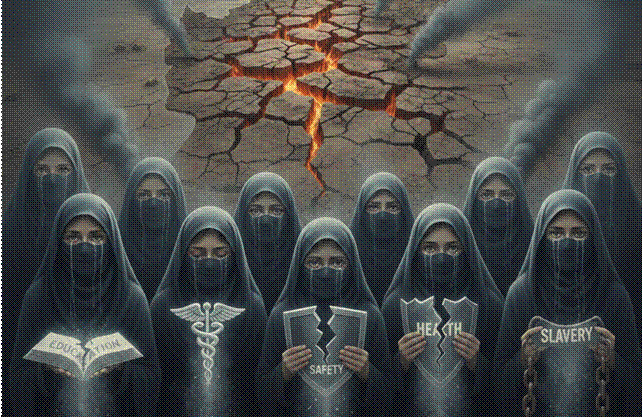
Several articles explicitly target women’s autonomy. Under Article 34, a woman who stays at her natal family’s home without her husband’s permission or a “Sharia-justified reason” can be imprisoned for three months, and her relatives can also be imprisoned for sheltering her.
On the other hand, Article 32 treats even serious domestic violence as a minor offence, and Article 58 enforces and sentences women accused of apostasy to life imprisonment with regular lashings, a punishment not mirrored for men.
The code also criminalises ordinary social interactions and dissent. Insulting the “Imam” (supreme leader) or high-ranking Taliban officials is punishable by lashes and imprisonment, and failure to report perceived “subversive” activity can itself result in a prison sentence.
Under loosely framed provisions permitting corporal punishment in the “public interest,” parents and husbands can punish children and wives for religious non-conformity, including for missing prayers.
This system transforms families into (un)law enforcement units and normalises vigilantism against women in the name of “preventing vice.”
From a public health perspective, the legal endorsement of physical and psychological violence against women and girls will intensify already high levels of gender-based violence, trauma, and chronic stress documented in Afghanistan.[7]
Dismantling Women’s Futures
The penal code is being implemented in a context where girls and women have already been largely erased from public life. Since 2021, the Taliban have banned girls from secondary school and women from universities, making Afghanistan the only country in the world where girls over the age of 12 are prohibited from formal secondary and higher education.
UNESCO estimates that at least 1.4 million girls have been deliberately denied access to secondary education since 2021, and nearly 2.5 million Afghan girls, which represents around 80% of school-age girls, are now out of school.
When it comes to higher education, enrolment has fallen by more than half since 2021, and primary school enrolment has also dropped sharply, partly because female teachers are barred from teaching boys.
The deeper concerns lie in the public representation of women. Human Rights Watch and peer-reviewed analyses document that women and girls are barred from most jobs, face strict mobility controls, and are even prevented from accessing parks, gyms, and many public spaces.
The impact on the health workforce has also been immediate. The Taliban have closed the remaining pathways for women to enter medical training and, in some regions, prohibited women from being treated by male clinicians.
This combination, with no trained female health care providers and bans on male providers treating women, is creating a deliberate vacuum in women’s access to essential health care.[8]
Health Impacts on Afghan Women and Girls
Afghanistan already has one of the highest maternal mortality ratios in the world, at around 520 maternal deaths per 100,000 live births in 2023, far above regional peers. [9]
With the current bans on women’s education, work, and movement, and the effective dismantling of the female health workforce, maternal mortality and morbidity are expected to rise significantly.
UN-linked analyses cited in recent commentary on the new criminal code warn that maternal deaths could increase by around 50%, adolescent pregnancies by 45%, and child marriage by 25% if current policies persist.[10]
Speaking about child marriage and adolescent pregnancy, a 2025 study on Afghanistan’s policies and early child marriage also concluded that bans on girls’ education and mobility are driving earlier marriage, adolescent pregnancy, and increased maternal and infant mortality and morbidity.[11]
UNESCO similarly warns that education bans and economic hardship are fuelling rising child marriage and child labour. Very young mothers face higher risks of obstetric complications, fistula, and neonatal death, with outcomes that will become more common as education and autonomy are stripped away.
But it doesn’t end here, as these codes are not just limited to the physical health of women and children. Extensive literature links educational exclusion and gender-based violence in Afghanistan to severe psychological distress, depression, anxiety, and hopelessness among women and girls.
The new code moves violence from the shadows into the law itself by authorising husbands and “masters” to punish, downgrading domestic violence, and criminalising women who flee abuse; it locks victims into violent environments.
This is likely to worsen suicide attempts, self-harm, and untreated mental illness in a setting where mental health services are already extremely scarce.
With these codes being enforced in Afghanistan, access to care and humanitarian services doesn’t seem to fit in their ideology. UN agencies and NGOs report that bans on women working for NGOs and aid agencies have severely reduced the ability to reach women with food, shelter, and health services. Over half of NGOs say these bans have degraded their programming, and 97% of Afghan women surveyed by UN Women said the ban on female NGO staff negatively affected them. [12]
With the penal code further criminalising women’s public presence and travel without a male guardian, even existing humanitarian health services will become harder to access.
Global Evidence
The Taliban’s new code mirrors patterns seen globally when law is used to entrench gender inequality. A Lancet series on gender inequality and restrictive gender norms concludes that such norms consistently worsen health outcomes, especially for women across a wide range of diseases and settings.
Legal and policy reforms that expanded girls’ education and women’s labour rights were associated with improvements in women’s health and reductions in child and maternal mortality; reversing these reforms had the opposite effect.[13]
Public Health and International Response
The Taliban’s new penal code and criminal regulation do more than violate individual rights; they also deeply construct a legal environment in which the social determinants of health for women’s education, income, safety, mobility, and access to care are systematically dismantled.
Afghanistan’s already fragile health system, which had begun to show progress in reducing maternal mortality before 2021, is now being reshaped around exclusion and fear.
From a public health perspective, three implications are clear.
First, women’s crucial health indicators, such as maternal mortality, adolescent pregnancy, unsafe abortion, malnutrition, mental health, and exposure to violence, are likely to worsen sharply and persistently under this legal architecture.
Second, these harms add a further layer of burden for poor women, rural women, widows, ethnic and religious minorities, and those without male “protectors” will bear the greatest burden in a system that ties punishment and protection to class and conformity.
Third, the codification of slavery, gender apartheid, and private violence risks normalising similar models elsewhere, undermining global norms against slavery and gender persecution.
Afghan women and girls, activists, and health workers have already borne the brunt of these policies, often at great personal risk. These policies produce early death, intergenerational trauma, and economic collapse.
Recognising the new Taliban code as a public health emergency and as a legal regime of gender apartheid is essential if international actors are to design responses that match the scale and urgency of the crisis now facing Afghan women.
References:
- [1] The Taliban’s New Criminal Regulation Legalizes Slavery, Violence, and Repression of Women – Georgetown Institute for Women, Peace and Security
- [2] Afghanistan: 1.4 million girls still banned from school by de facto
- [3] The Taliban’s New Criminal Regulation Legalizes Slavery, Violence, and Repression of Women – Georgetown Institute for Women, Peace and Security
- [4] Taliban’s new criminal code sparks outrage for legitimising slavery, social bias
- [5] How the Taliban’s new criminal code penalises women – analysedbeingRukhshana Media
- [6] bushcenter.org/publications/two-minute-take-the-talibans-new-law-allows-slavery-and-oppression-of-afghans
- [7] https://ijgws.thebrpi.org/journals/ijgws/Vol_13_2025/3.pdf
- [8] Afghanistan’s Taliban Ban Medical Training for Women | Human Rights Watch
- [9] Maternal mortality ratio (modeled estimate, per 100,000 live births) – Afghanistan | Data
- [10] https://www.unwomen.org/en/articles/faqs/faqs-afghanistan
- [11] The Impact of Afghanistan’s Policies on Early Child Marriage and Girl’s Education: Current Trends and Future Consequences – PMC
- [12] https://data.unwomen.org/sites/default/files/documents/Publications/2023/Afghanistan-factsheet-3.pdf
- [13] Improving health with programmatic, legal, and policy approaches to reduce gender inequality and change restrictive gender norms – ScienceDirect

Dr. Muktha is a practising Ayurvedic Practitioner and Public Health Professional. Views expressed are the author’s own.
 Kumar Satish
  Aayush Pal
  Anjali Singh