
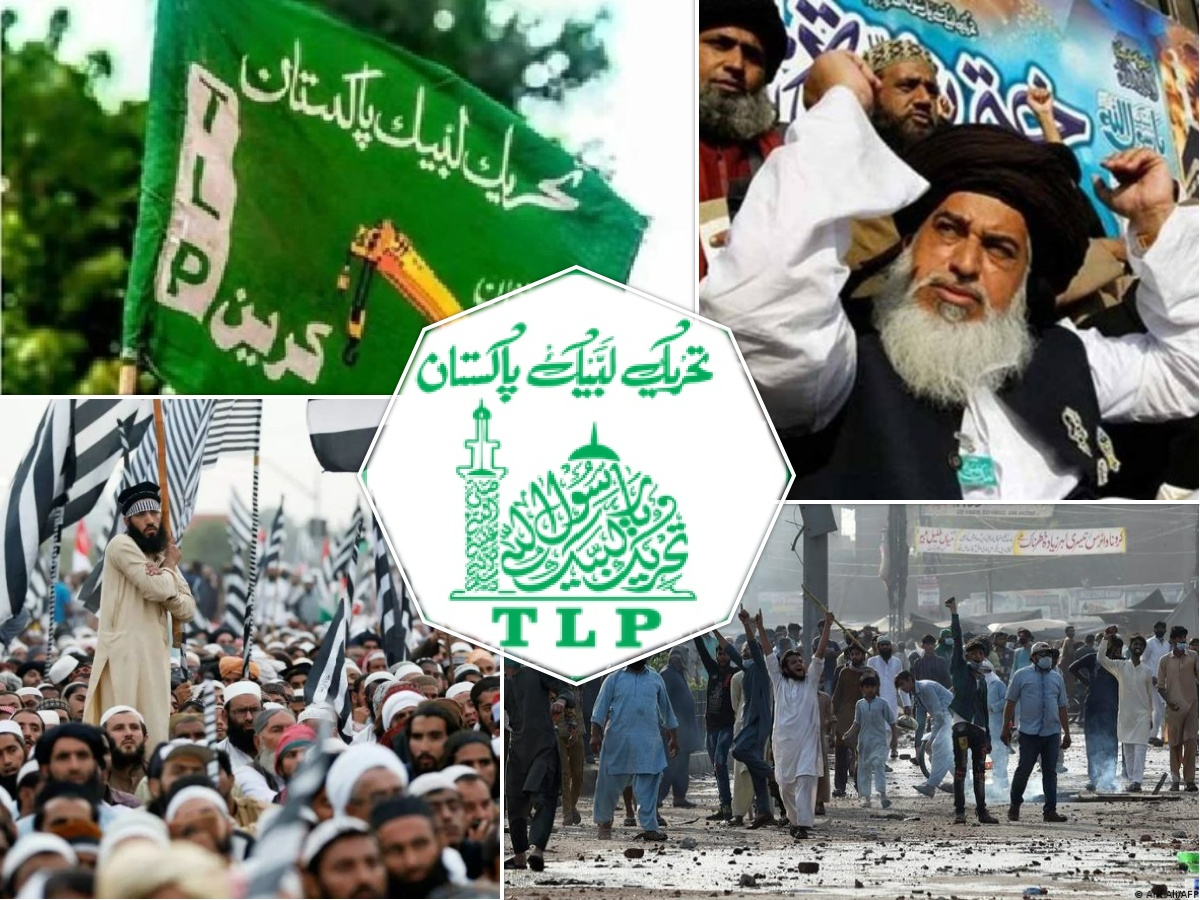
- The recent violence perpetrated by the TLP illustrates the ineffectiveness of the Pakistani establishment’s long-standing policy of supporting Islamist factions in politics to maintain a weakened democracy in the nation.
- The emergence of TLP is a consequence of the evolving political landscape in Pakistan. The pivotal event leading to the establishment of TLP was the assassination of Taseer and the execution of Qadri.
- The 2024 general elections were a significant triumph for the TLP, which emerged as a result of the establishment’s backing in Pakistan. The TLP’s brutality is a consequence of its recent surge in popularity in Pakistan and its dominance in the politics of violence.
- As long as the Pakistani bureaucracy continues to support religious factions and preferentially favours one over another, the state of domestic politics in Pakistan will remain sectarian and violent.
A prominent leader of Tehreek-e-Labbaik Pakistan was recently convicted for inciting people to behead the then Chief Justice of Pakistan and received a 35-year prison sentence. The history of TLP and its associated violence in Pakistan is relatively recent. The Shahbaz Sharif government prohibited this group in October 2025, after the confrontation between police and TLP activists in Muridke, which led to the deaths of 16 individuals, including police personnel, and over 1,600 injuries. In 2018, there were attempts to kill the then-Interior Minister Ahsan Iqbal. The TLP and its activists participated in anti-France riots in 2021 and the Jaranwala Church attack in 2023.
The TLP is an Islamic organisation in Pakistan recognised for its street activism and brutality. The TLP is a Barelvi Islamic group, in contrast to the largely Deobandi and Ahl-e-Hadith mainstream Islamic groups. Their group is named in honour of its creator, Ahmed Raza Khan Barelvi, from Bareilly. This group is affiliated with the Hanafi school of thinking, a subdivision of Sunni Islam. The primary distinction between Barelvis and Deobandis lies in the former’s emphasis on the preeminent existence of Prophet Mohammad, his creation from divine light (Nur), his concurrent presence in multiple places (Hazir-o-Nazir), and his understanding of the unseen (Ilm-e-Ghaib). They emphasise the reverence of Sufi saints and the respect of shrines. Since 2011, there has been a dramatic increase in political mobilisation and activism in Pakistan. This article contends that this development results from the Pakistani establishment’s policy of supporting Islamist groupings to constrain democratic parties within Pakistani politics. The article highlights the relative marginalisation of Barelvi Islamic factions in Pakistan.
The instrumental value of Islam for the Muslim elites has existed since before the establishment of Pakistan. In contrast to Deobandis, Barelvis significantly contributed to the establishment of Pakistan and supported the All-India Muslim League. Manki Sharif in NWFP endorsed the AIML movement for Pakistan and urged its adherents to vote for Pakistan in the referendum for NWFP. Deobandis, such as Jamiat Ulama-e-Islam, also provided support for the concept of Pakistan. After the partition, the Barelvi Jamiat Ulama-e-Pakistan was marginalised due to the more prominent activities of Deobandi factions, notably Jamat-e-Islami. The Deobandis led the anti-Ahmedi campaign in the country throughout the 1950s. The Barelvis failed to engage with any political issues pertinent to Islam, rendering them a less significant group. The political marginalisation of Barelvi groups intensified in the 1970s and 1980s, as Deobandi militant factions became instrumental in countering Iran-backed Shia extremism in Pakistan and conducting proxy battles against the Soviets in Afghanistan. The Deobandi Islamic seminaries and organisations obtained state support during this period.
Subsequent to 9/11, the circumstances deteriorated for Barelvis as their political divergences with Deobandis and Ahl-e-Hadeeths intensified. The Barelvis emerged as the primary target of sectarian terrorist assaults in Pakistan perpetrated by Tehreek-e-Taliban Pakistan and Lashkar-e-Jhangvi. Nearly all Sufi shrines, including prominent sites such as Data Darbar in Lahore and Abdullah Shah Ghazi in Karachi, were subjected to terrorist attacks. Subsequent to the 2010 Data Darbar incident in Lahore, the Barelvi delegation convened with then-Punjab Chief Minister Shahbaz Sharif to demand justice for the victims. However, the government took no action because of its political alliance with the Deobandi political factions.
After 9/11, Pakistan was compelled to alter its approach regarding Islamist factions within the country. Under Musharraf, Pakistan implemented coercive measures against Islamic terrorist organisations associated with Deobandi and Ahl-e-Hadeeth ideologies. These initiatives led to terror attacks against the establishment in Pakistan since 2008, notably the Red Mosque bombing in Islamabad in 2007 and the Army Public School massacre in Peshawar in 2014. This prompted Pakistan to reevaluate its support for these non-Barelvi groups. Barelvis were identified as the optimal solution to address this challenge, given that they represent the majority of Pakistan’s population. Conversely, Barelvis identified a political issue associated with Islam that could be leveraged to galvanise the populace in their favour. The topic pertains to ‘Blasphemy statutes,’ which have gained prominence among Barelvis. They successfully exploited this problem to attain prominence in Pakistan’s politics. These two considerations resulted in a shift in the state’s backing of Islamist groups. They commenced endorsing Sufi and Barelvi factions and provided them with political opportunities. The Pakistan People’s Party restructured the National Council for Promotion of Sufism, renaming it the Sufi National Council.
The emergence of TLP is a consequence of the evolving political landscape in Pakistan. The pivotal event leading to the establishment of TLP was the assassination of Taseer and the execution of Qadri. As the governor of Punjab, Salman Taseer promoted changes to Pakistan’s blasphemy legislation. He was assassinated by his bodyguard, Mumtaz Qadri, in 2011. Qadri received a death sentence. He was regarded as a Shaheed by Barelvis. The TLP was established in 2015 by Barelvi Islamic scholar Khadim Hussain Rizvi. He restructured advocacy for blasphemy legislation and was dubbed the ‘Blasphemy Activist.’ This matter was utilised to terminate the political marginalisation of Barelvis in Pakistan.
The substantial popularity of the TLP in Punjab, Pakistan, and its opposition to the Pakistan Muslim League (Nawaz) during the 2018 general election. The Pakistani establishment sought to support the TLP in Punjab. This culminated in the substantial success of the TLP, which garnered 2.2 million votes. It emerged as the fifth largest political party in Pakistan and the third largest in the Punjab state. In the 2024 general election in Pakistan, its vote share reached 2.8 million, establishing it as the most popular religious political party. These elections were a significant triumph for the TLP, which emerged as a result of the establishment’s backing in Pakistan. The TLP’s brutality is a consequence of its recent surge in popularity in Pakistan and its dominance in the politics of violence.
The recent violence perpetrated by the TLP illustrates the ineffectiveness of the Pakistani establishment’s long-standing policy of supporting Islamist factions in politics to maintain a weakened democracy in the nation. This will not only undermine democracy but also jeopardise the security of the Pakistani state. The Pakistani government’s latest measures to curb the TLP’s violence are unlikely to have a significant impact. As long as the Pakistani bureaucracy continues to support religious factions and preferentially favours one over another, the state of domestic politics in Pakistan will remain sectarian and violent. To ensure peace, the Pakistani state must restrict the instrumentalisation of Islam for political objectives within its political landscape. It must assert its dominance over the application of coercive power in Pakistan by eradicating these groups in all manifestations. In the absence of this, nothing holds utility.

Mohmmad Rizwan is a PhD scholar in Political Science at Jamia Millia Islamia and is currently awaiting his final defence. His doctoral research examines Pakistan’s relations with key global powers. Views expressed are the author’s own.
 Pranav S
  Ajith Shetty Heranje
  Atri Patel