
Conflict, Choice and the Stories We Normalise
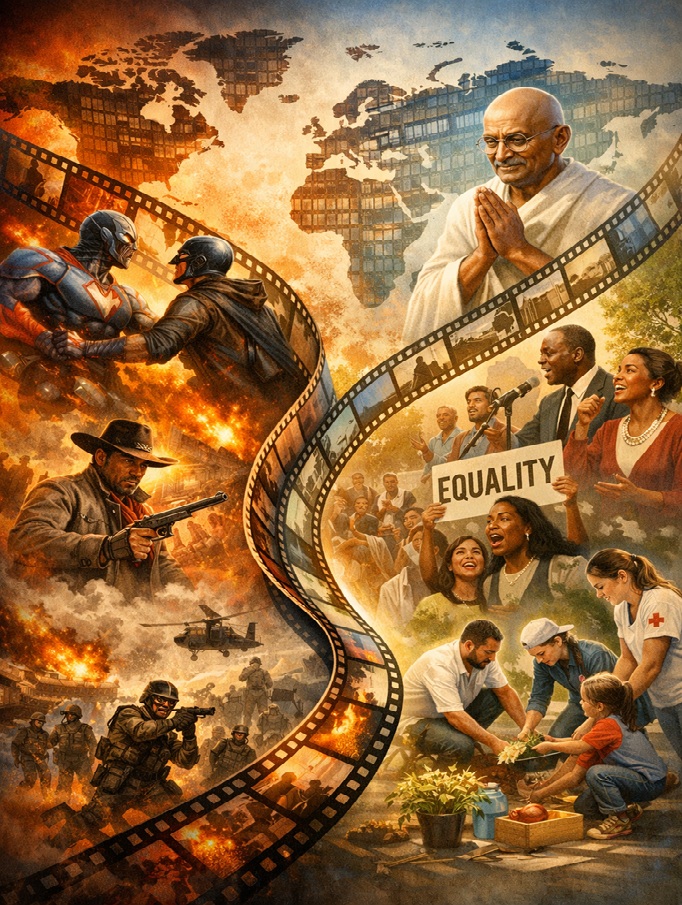
- Cinema continues to reveal much about humanity, not only what people fear, but also what they believe power looks like.
- Cinema carries immense cultural influence. It shapes imagination, aspiration, and the patterns of behaviour that societies come to celebrate.
- The stories that become popular rarely remain confined to the screen; they quietly inform the narratives people carry into everyday life.
- Cinema can help shape a nation’s identity, unite societies through shared narratives and serve as a torchbearer of cultural values.
Cinema has always reflected the imagination of its time. Since the emergence of modern film storytelling in the early twentieth century, a recurring narrative pattern has appeared across genres: conflict escalates, a threat emerges, and resolution arrives through force.
From classic Westerns to contemporary action franchises, audiences are frequently presented with a familiar structure. A character is wronged or endangered. An adversary appears. Strength is demonstrated through confrontation, and victory is achieved when the opponent is defeated.
Across decades of storytelling, this pattern has shaped a quiet cultural assumption—that conflict between people is inevitable, danger is always nearby, and survival depends on the ability to fight, dominate or outmanoeuvre others.
Cinema often highlights situations in which individuals struggle to survive, portraying crisis and confrontation as natural features of life. The presence of an enemy becomes central to the story, and the ability to defeat that opponent becomes a measure of strength.
In many films, large-scale destruction unfolds on screen to save a few lives or neutralise a perceived threat. The narrative assures the viewer that such damage is necessary. Victory justifies the means.
From the heroic intervention in Superman: The Movie (1978) to the battles of Spider-Man (2002) and the large-scale confrontations seen in films such as the Avengers franchise, the modern superhero genre illustrates this structure clearly. Extraordinary power is presented as the means through which disorder is controlled and threats are eliminated.
Characters in cinema are portrayed as strong because they can inflict harm, manipulate others or prevail through violence. Those who cannot do so are often portrayed as weak. The underlying suggestion is that value lies in the capacity to fight.
This narrative approach reflects the fantasies and impulses humanity often entertains. When such stories are absorbed repeatedly, it becomes easy to assume that life itself resembles a constant battlefield—that someone, somewhere, may eventually come to harm us and that preparedness for conflict is therefore essential.
Yet if we observe the daily interactions that sustain real communities throughout the world, a different reality emerges. People live alongside neighbours. They share workplaces and public spaces. Stability in these environments rarely depends on force. Harmony is maintained through adjustment, communication and the willingness to understand one another.
Societies function not because individuals are constantly prepared for battle, but because most people choose cooperation over confrontation.
However, cinema often amplifies escalation as the engine of resolution. Characters react quickly, escalate rapidly and defeat their opponents decisively. The audience experiences an intense rush as these conflicts unfold, and the story concludes once the threat has been eliminated.
In reality, increased tension never opens a path to peace. It only signals that restraint has already been abandoned.
A deeper question naturally arises: Does the removal of an opponent truly resolve the conditions that created the conflict in the first place?
Rarely in modern cinema is reflection on the consequences of characters’ actions explored. They defeat an enemy, and the story moves forward, while a deeper examination of how the situation arose in the first place is seldom shown.
However, meaningful progress often begins when individuals pause to reflect on their own decisions and recognise how their actions contribute to the circumstances they experience. Such reflection can transform conflict into learning and responsibility into wiser choices.
Human history suggests that cycles of retaliation tend to reproduce themselves. Harm answered with harm rarely concludes the pattern; it extends it.
At a subtle level, the narratives repeatedly absorbed through storytelling influence how people interpret strength, safety and success. If stories continually suggest that danger is inevitable and confrontation is necessary, societies begin to accept those assumptions as normal.
Yet real life offers another possibility.
Many individuals remembered for transforming societies did so through restraint, clarity of purpose and selfless service to others. Their influence emerged through reconciliation, non-violence and a deep commitment to the well-being of fellow human beings.
Films exploring the lives of figures such as Nelson Mandela, Mother Teresa and Mahatma Gandhi reveal another dimension of strength, one grounded not in defeating adversaries but in dissolving hostility through forgiveness, discipline and constructive action. These stories highlight that restraint can transform confrontation and that service to others generates influence far beyond force.
Such narratives endure because they reveal that the most durable influence often arises from responsibility, patience and the willingness to serve fellow human beings without expectation of reward.
In this way, cinema carries immense cultural influence. It shapes imagination, aspiration, and the patterns of behaviour that societies come to celebrate. The stories that become popular rarely remain confined to the screen; they quietly inform the narratives people carry into everyday life.
Movies reflect the collective consciousness of their audiences and the decisions people justify when circumstances become difficult.
Cinema can help shape a nation’s identity, unite societies through shared narratives and serve as a torchbearer of cultural values. Through thematic storytelling, values are often communicated indirectly, influencing how younger generations understand strength, success and responsibility.
Actors and public figures portrayed on screen frequently become models for young audiences to emulate in fashion, behaviour and lifestyle.
During the 100 Years of Sangh Journey: New Horizons event held in Mumbai in February 2026, Mohan Bhagwat, Sarsanghchalak of the Rashtriya Swayamsevak Sangh, reflected on this influence while discussing the immense popularity of Salman Khan among the youth. He noted how cinema personalities can shape trends and attitudes, demonstrating the powerful cultural role the medium continues to play in society.
As audiences evolve, storytelling evolves with them. Cinema has the opportunity to illuminate cooperation as clearly as it now portrays conflict, dialogue as powerfully as confrontation and responsible action as a real form of strength. It can reveal that stability in human relationships grows through understanding, patience and the willingness to treat others with dignity—even during disagreement.
The most interesting question for the future of cinema may therefore be:
If storytelling has helped normalise conflict for generations, could it also help normalise cooperation and empathy?
Cinema continues to reveal much about humanity—not only what people fear, but also what they believe power looks like.
As audiences continue to reflect on their conduct through entertainment, the stories chosen for celebration may gradually begin to reveal something else as well:
Lasting stability between people emerges when individuals recognise their responsibility toward one another and choose cooperation, restraint and service as the foundations of shared life.

Ananda Mathews, known professionally in the film industry as Matthew David, DOP, is a Mumbai-based cinematographer and author residing in Goa. He engages in spiritual counselling and social service alongside his Guru Ji, Divine Colonel – Ashok Kini Ji (as named by President of Bharat, Dr APJ Abdul Kalam). His first book, In Quest of Guru and the forthcoming Living Science explore the journey of human transformation. Views expressed are the author’s own.
 Anusreeta Dutta
  Aayush Pal
  Hridbina Chatterjee