|
Getting your Trinity Audio player ready...
|
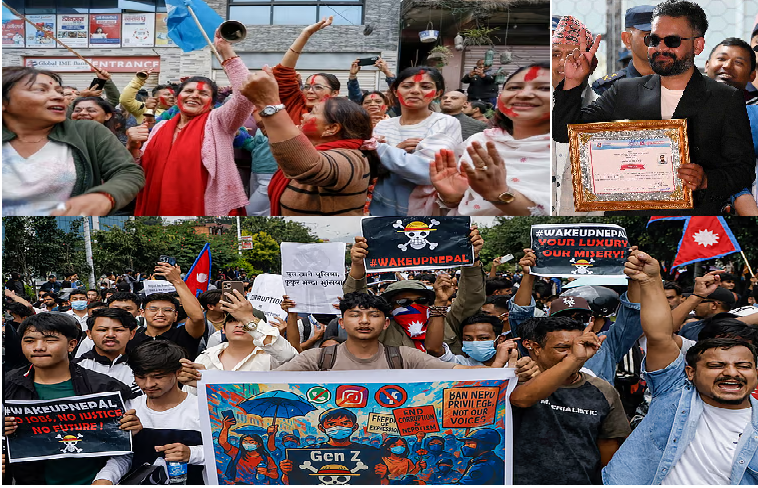
- The general election became an important turning point, shaped by deep-seated dissatisfaction and impatience among the new generation.
- The movement was very decentralised, lacking any one strong leader but shared common demands for transparency, accountability and reform of systems.
- The elections of 2026 in themselves manifested a clear generational rupture.
- Youth leadership in Nepal’s political transformation is both the promise of democratic renewal and the risks of populist symbolism.
The rise of youth leadership in the political change of 2026 in Nepal must be seen in light of a deep crisis of legitimacy in the country’s democratic system. For a long time, an elite group had ruled over Nepal’s politics, with ever-repeating leadership from people linked to old parties and patronage networks. This stagnation made younger people angry, especially against a backdrop of high unemployment, corruption and large-scale outmigration. By 2025, this unhappiness had taken shape as a common belief that formal democratic organisations were there but did not provide real accountability or socioeconomic development. The general election in 2026 thus became not just another voting event but rather an important turning point, shaped by deep-seated dissatisfaction and impatience among the new generation.
The direct trigger for this change was the huge wave of protests led by youth in September 2025 when the government tried to limit social media platforms. It was widely seen as an authoritarian move. These protests were mainly initiated by Gen Z activists through digital tools and grew into Nepal’s worst political unrest since the end of the civil war. This movement was very decentralised, lacking any one strong leader but shared common demands for transparency, accountability and reform of systems. The violent suppression of protests, which resulted in many deaths, further undermined the legitimacy of those in power and led to Prime Minister K P Sharma Oli resigning from his position. This series of events shows how youth mobilisation can act as a catalyst for regime change but raises questions about whether such mobilisation can lead to sustainable institutional reform.
The elections of 2026 in themselves manifested a clear generational rupture. A new cohort of voters, many of whom were participating for the first time, aligned themselves with candidates and parties that represented a break from the past. Surveys and anecdotal evidence indicated that young voters were less ideologically motivated and more outcome-oriented regarding governance, particularly in relation to anti-corruption measures, economic measures and economic opportunity. The rise of youth-oriented political formations reflected this shift as traditional party loyalties weakened. It should be noted that the elections were judged as largely free and fair, which means that procedural democracy has remained intact even during times of great political upheaval; however, relatively low voter turnout also indicated some scepticism on the part of the public about electoral politics.
A key part in this change was taken by Balendra Shah, a 35-year-old ex-rapper and independent mayor of Kathmandu who became the face of a new order in politics. His rise to power can be seen as an example from all over the world where outsiders use their fame, media attention, and anti-system stories to get into politics. Shah’s party got a strong vote from the people. This was the first time in many years that an untraditional group took over Nepal’s parliament. People liked him not just because he was young but also because he seemed real and was far from old political groups. But since he does not have much experience in running things at the national level, it raises questions about whether such leaders can handle tricky issues well.
The new government has a cabinet that is made up of younger ministers and others from non-traditional backgrounds. This further strengthens the story about the change brought by youth. The administration shows itself as inclusive and renewing. Policy ideas, such as promised attempts to tackle caste discrimination and increase social justice, are meant to show that governance can meet the wishes of marginalised groups. These actions imply that youth leadership is not just a symbol but could bring real reform. The actual carrying out of these policies will determine if this change is true democratic renewal or mostly just talk, though. Critics contend that Shah’s rese captures some elements of populist symbolism rather than deep institutional transformation. The personalisation of politics, reliance on social media engagement, and charismatic leadership raise concerns about the erosion of programmatic party politics. In this view, youth leadership might become a performative substitute for structural reform, where the optics of change overshadow the complexities involved in governance. The global pattern with celebrity or outsider politicians moving into leadership roles highlights potential pitfalls with such trajectories, especially when expectations outpace institutional capacity.
The broader political context is still characterised by fragmentation and structural constraints. Nepal’s federal system, coalition politics and geopolitical location between major powers place huge limitations on any government to implement sweeping reforms. Although the new leadership has a strong electoral mandate, sustaining momentum will mean navigating entrenched bureaucratic systems and competing interests. The generational shift, therefore, does not automatically solve the underlying challenges of governance but rather reconfigures the actors involved in addressing them.
Youth leadership in Nepal’s 2026 political transformation is both the promise of democratic renewal and the risks of populist symbolism. It can be viewed as a genuine break from entrenched political structures on one side, which are motivated by mass mobilisation and demands for accountability. On the other hand, however, there is a charismatic figure dependence with all its uncertainties about policy implementation that raises questions regarding how big and durable this change really is. It will be up to the new government in Nepal to decide whether this moment brings about a real transformation in democratic governance or just serves as an unimportant footnote to the country’s continuing battle against misaligned political institutions and public expectations.
Kumar Sheni is an Assistant Professor of Political Science at the School of Geopolitics and Public Policy, REVA University, Bengaluru. Views expressed are the author’s own.
 Raghvendra Tripathi
  Pranav S
  Ajith Shetty Heranje