
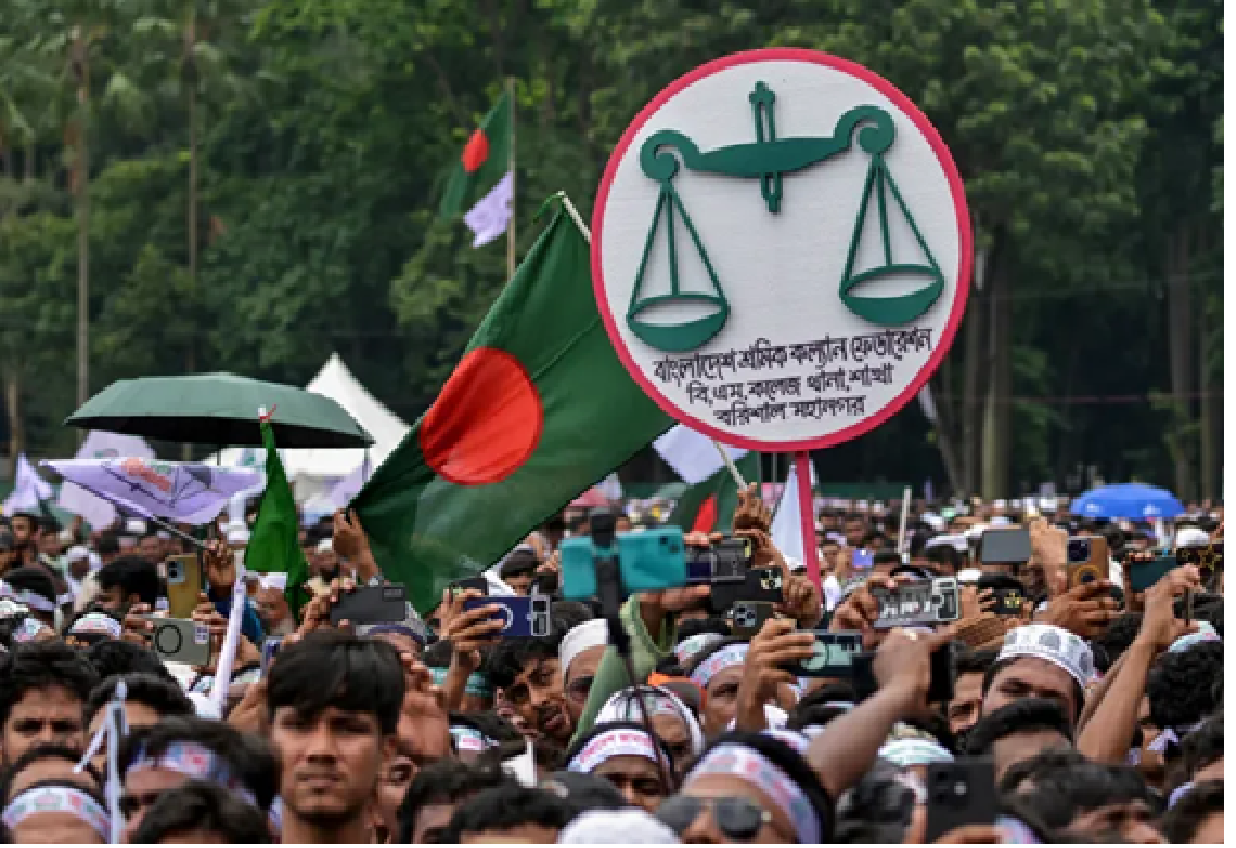
- Protests against Sheikh Hasina and her party in 2024 presented Jamaat with an opportunity for revival, and it has now emerged as one of the principal political forces in the forthcoming February 2026 elections.
- The ascent of Jamaat-e-Islami in Bangladesh may complicate India’s efforts to recalibrate relations with Dhaka, as multiple concerns persist, generating friction with India.
- The Islamisation of Bangladesh, with support from external entities such as Pakistan and Turkey, poses a threat to India’s border security and will worsen animosity in bilateral relations.
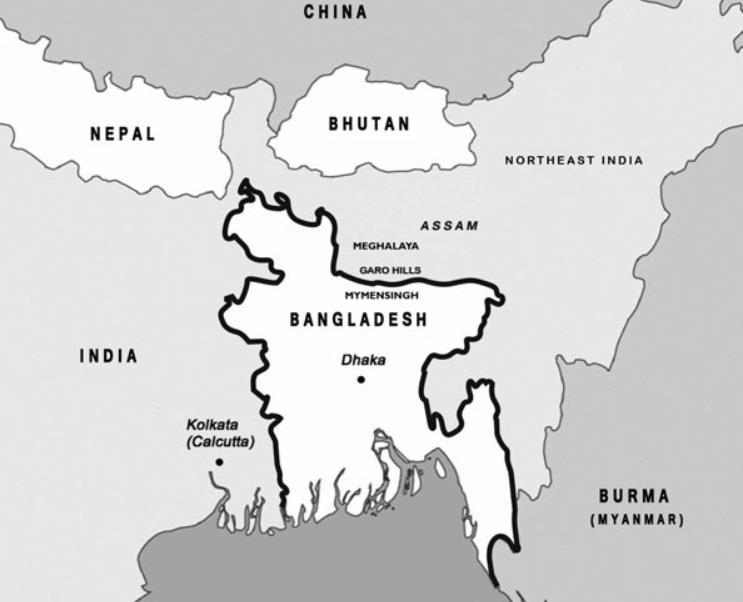
- Increasing religious radicalisation may render borders with India susceptible to incursions by religious extremist factions, drug traffickers, and other criminal elements, thereby destabilising India’s northeast.
Recently, Jamaat-e-Islami (Bangladesh) has had a significant political rise within the national political scene of the country. It is a prominent Islamist political party in Bangladesh. The Bangladesh Nationalist Party (BNP) and Jamaat-e-Islami (Bangladesh) have become the primary rivals for authority in the next elections scheduled for February of this year. Various major reasons boosted the political stature of Jamaat. This rise of Jamaat has emerged as a substantial challenge for India for multiple reasons, which this piece intends to explore.
The organisation was established in 1979 by the eastern faction of Jamaat-e-Islami (Pakistan). The party originates from the Jamaat-e-Islami (Hind) movement, founded by Maulana Syed Abu Ala Maududi in British India in 1941. The movement sought to construct a political, social, and economic system grounded in Islamic norms within a unified India. They seek to apply the fundamental principles of Islam in India (Islahi, 2016). The partition resulted in the division of Jamaat into two factions: Jamaat-e-Islami (Pakistan) and Jamaat-e-Islami (Hind). The latter remained in India, while the former opted for Pakistan. The founder, Maududi, relocated to Pakistan to implement Islamic ideas there.
Jamaat-e-Islami (Pakistan) was bifurcated into two factions: the Western wing and the Eastern wing. The Eastern wing of Jamaat remained devoted to a unified Pakistan due to their conviction in the unity of the Ummah. They also aided Pakistan’s military in its fight against insurgents during the liberation of Bangladesh in Eastern Pakistan. The division of Pakistan in 1971 led to the formation of Bangladesh, which in turn caused the fragmentation of Jamaat. In 1972, Jamaat, along with other religious groups, was prohibited in Bangladesh due to its participation in the genocide of Bengali Muslims by Pakistani armed forces. The prohibition was repealed in 1976, and the present Jamaat was established in 1979. It also engaged in the democratic insurrection against General Ershad’s administration in 1990. It also formed a political alliance with the Bangladesh Nationalist Party during various eras of Bangladesh’s political landscape.
The political demise of Jamaat commenced with the ascendance of the Awami League in 2008, which instituted the ‘War Crimes Tribunal’ aimed at prosecuting all war criminals from the 1971 conflict, including members of Jamaat. The decline of Jamaat-e-Islami (Bangladesh) in the nation’s politics was precipitated by two primary factors: firstly, it was portrayed as an anti-Bangladeshi entity due to its involvement in the 1971 war crimes, leading to the annulment of its party registration in 2013; secondly, it experienced a significant loss of leadership, with several prominent figures, including its chief Motiur Rehman Nizami, receiving death sentences.
However, the protests against Prime Minister Sheikh Hasina and her party in 2024 presented Jamaat an opportunity for revival. It has also emerged as one of the principal political forces in the forthcoming February 2026 Bangladesh elections. Several significant factors contribute to Jamaat’s strength in contemporary Bangladeshi politics: primarily, Jamaat and its leadership have endured persecution under the Haseena regime, fostering public sympathy for them. This sentiment was seen in Bangladeshi student politics when Jamaat’s student faction, Chhatrashibir, secured the majority of seats in the 2025 university elections. Secondly, Jamaat has severed ties with its traditional ally, BNP, positioning itself as its most formidable adversary in the upcoming election. Student leaders who coordinated demonstrations against the Awami League established the National Citizen Party, which Jamaat now allies with. The recent inclusion of the Bangladesh Labour Party in preparation for the upcoming election further strengthened the alliance. Third, Jamaat received international support for its Islamic political agenda from Pakistan and Turkey. Washington has shown its readiness to work with the group.
Regardless of the outcome of this election, Jamaat will continue to be a major force in Bangladesh that New Delhi cannot overlook. The ascent of Jamaat in Bangladesh may complicate India’s efforts to recalibrate relations with Dhaka. Multiple concerns will persist in generating friction with India.
Firstly, Jamaat is recognised as an anti-India and pro-Pakistan entity in Bangladesh. Jamaat will persist in fostering anti-India sentiment for its political advantage, which will hinder the improvement of relations.
Second, the constitution of Jamaat asserts that the adoption of Islamic rules is the sole effective means to restore justice in the country. The Islamization, or the impetus to Islamize the nation, with support from external entities such as Pakistan and Turkey, poses a threat to India’s border security. This will worsen animosity in bilateral relations.
Fourth, the religious radicalisation of Bangladeshi society will make it less inclusive and accommodating of minorities. These minorities are already susceptible to several religiously motivated killings. The targeted deaths of minorities in Bangladesh may have repercussions for India, potentially resulting in retaliatory assaults against minorities within its borders.
Third, increasing religious radicalisation may render borders with India susceptible to incursions by religious extremist factions, drug traffickers, and other criminal elements, thereby destabilising India’s northeast.
The recent regime change in Bangladesh has significantly aligned Dhaka with Islamabad. There has already been an enhancement in their political, economic, and military relations. For instance, Bangladesh permitted a delegation from Pakistan, headed by the Inter-Services Intelligence (ISI), to access sensitive regions next to the Indian border. The Pakistani leadership may leverage this as a new avenue to commence a proxy conflict with India.
Ultimately, it is exceedingly challenging to forecast that Jamaat and its allies will secure victory in the election. However, it will persist as the obstacle that complicates India’s efforts to improve relations with Bangladesh. India should adopt a prudent strategy toward Bangladesh that emphasises activism rather than interventionism. It should bolster the secular forces in Bangladesh by providing aid, such as supporting the BNP.

Mohmmad Rizwan is a PhD scholar in Political Science at Jamia Millia Islamia and is currently awaiting his final defence. His doctoral research examines Pakistan’s relations with key global powers. Views expressed are the author’s own.
 Kumar Sheni
  Raghvendra Tripathi
  Pranav S