
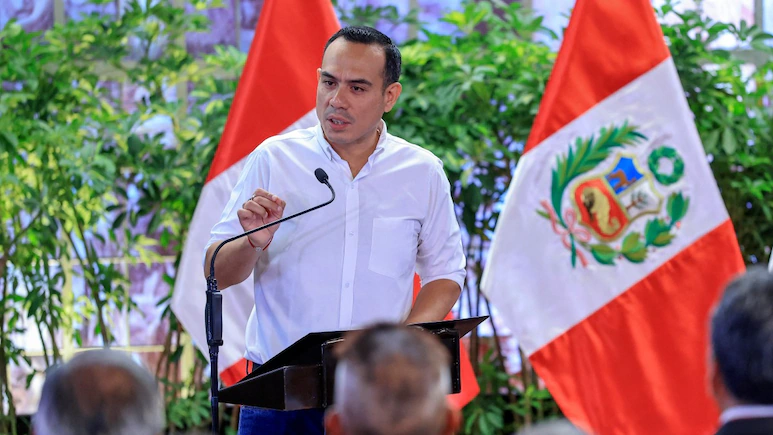
- Peru’s Congress has once again reshaped the country’s leadership, removing interim President José Jerí just four months into his term.
- The immediate trigger for Jerí’s downfall was a scandal dubbed “Chifagate,” centred on secret, off-the-record meetings with Chinese businessmen.
- Peru’s Congress has appointed left-wing lawmaker and former judge José María Balcázar as interim president, just a day after the removal of José Jerí.
Peru’s Congress has once again reshaped the country’s leadership, removing interim President José Jerí just four months into his term. The move, approved by a congressional vote of 75 to 24, reflects not only the immediate corruption allegations surrounding Jerí but also the deeper institutional fragility that has turned Peru’s presidency into a revolving door over the past decade.
Jerí, who assumed office in October 2025 after the impeachment of his predecessor Dina Boluarte, charged with “moral incapacity”, became the country’s eighth president in less than ten years. His removal follows a familiar pattern in Peruvian politics, where successive leaders from Pedro Castillo to Boluarte have been ousted amid corruption scandals or constitutional confrontations with Congress.
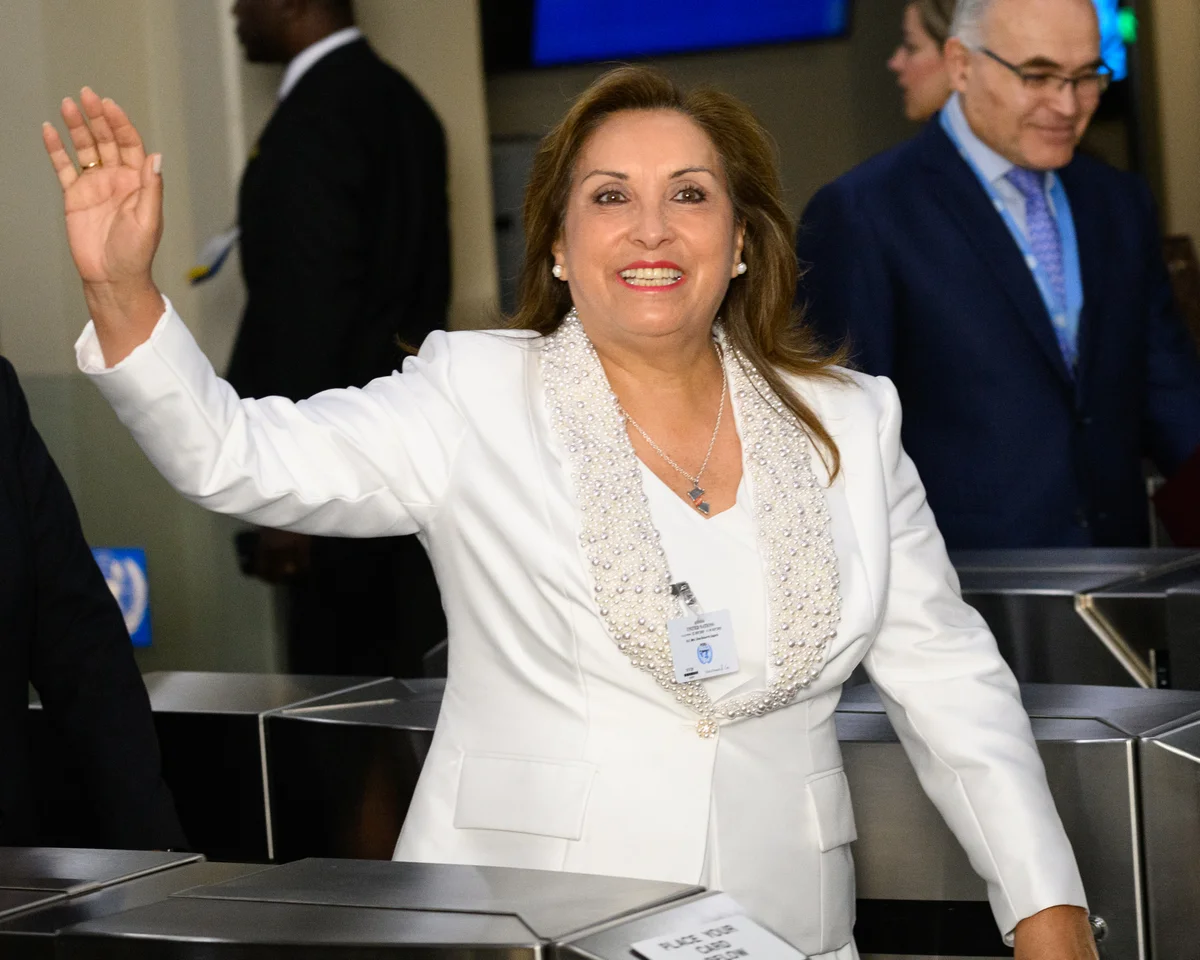
The immediate trigger for Jerí’s downfall was a scandal dubbed “Chifagate,” centred on secret, off-the-record meetings with Chinese businessmen. Security footage showed the president attending late-night encounters, in some cases appearing to conceal his identity, and failing to disclose the meetings in his official agenda. Prosecutors launched investigations into possible influence-peddling linked to the businessmen, one of whom had ties to government energy concessions to build a hydroelectric plant, which has experienced delays and faced questions about its transparency. Additional allegations compounded the crisis. Beyond the video footage, lawmakers questioned him about irregular appointments and other alleged illegal activities.
However, the speed and ease with which Congress removed Jerí highlight a structural problem in Peru’s political system. Since 2018, the Congress of Peru has successfully impeached and removed 4 presidents from office. During this same period, there were also several unsuccessful impeachment attempts. The constitution provides mechanisms, such as censure votes or impeachment on grounds of “moral incapacity,” that critics say are overly broad and frequently weaponised by a fragmented legislature. As a result, presidents often govern without stable party support and remain vulnerable to sudden removal. Jerí’s ouster came only weeks before the country is due to hold a general election, where more than three dozen candidates are already in the race. Many observers fear that the next president could face the same kind of pressure from Congress, especially since Peru still lacks strong, disciplined political parties and the executive–legislative rivalry shows no signs of easing.
Peru’s Congress has appointed left-wing lawmaker and former judge José María Balcázar as interim president, just a day after the removal of José Jerí. His appointment makes him the country’s ninth president in a decade, underlining Peru’s deep political instability. Balcázar will serve only briefly, as the country is set to hold a general election on April 12, with a possible runoff in June.
The controversy was not limited to domestic politics; it also had an international dimension. Allegations about Jerí’s connections with Chinese businessmen emerged at a time when competition between the United States and China has become more visible in Peru, particularly over large infrastructure projects backed by Chinese investment. This backdrop heightened worries about possible foreign influence and about the transparency of government decisions.

Anshika Agrawal is a research scholar at the Centre for Russian and Central Asian Studies, Jawaharlal Nehru University, with a strong interest in current affairs, bilateral and multilateral relations, and public policy. Views expressed are the author’s own.
 Anusreeta Dutta
  Hridbina Chatterjee
  Mohmmad Rizwan