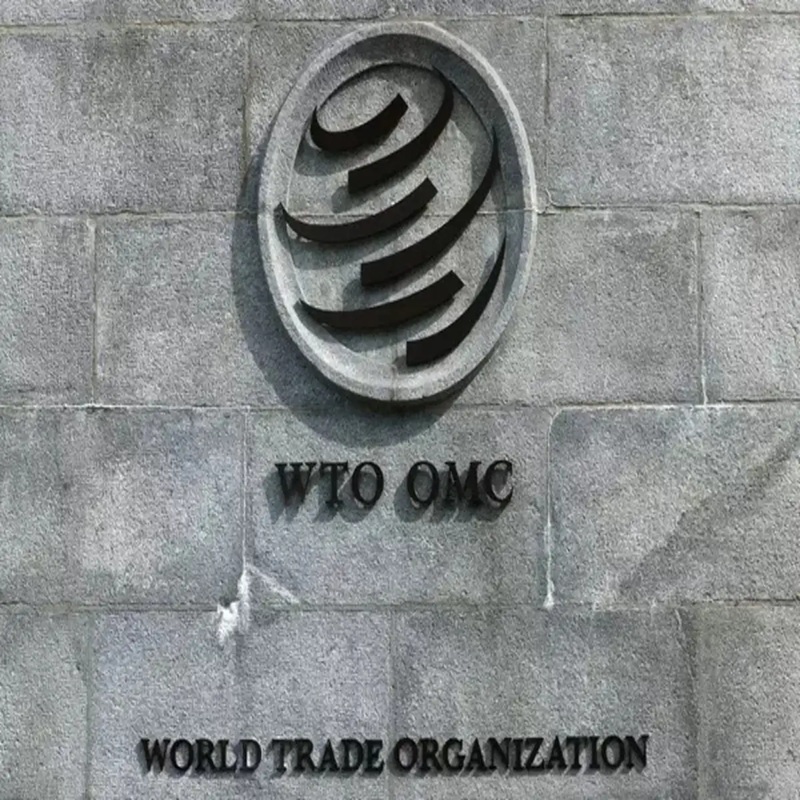
- Petter Olberg’s assessment ahead of MC14 underscores that deep divisions over the WTO’s consensus rule have effectively ruled out meaningful institutional reform in Yaoundé.
- The WTO’s paralysis has been deepened by the U.S. blockade of the Appellate Body, renewed unilateral tariffs under President Trump since 2025, and a shift toward plurilateral deals that bypass consensus.
- As bilateral and regional trade agreements multiply and protectionism hardens, failure to reform threatens to render the WTO irrelevant while normalising unilateralism in global trade.
The reform facilitator of the World Trade Organisation, Norwegian Ambassador Petter Olberg, has disavowed the possibility of any agreement on institutional overhaul at the 14th Ministerial Conference (MC14) in Yaounde, Cameroon, from March 26-29, 2026, as a document circulated among members on December 12. This declaration highlights that there are such deep-rooted divisions with the WTO decision-making principle of consensus, a process that requires all 166 members to vote unanimously, which becomes hard to achieve due to conflicting national interests.
The evaluation by Olberg does not portray an immediate failure but a turn in supporting a barebones approach to be used in future discussions, indicating the paralysis of the organisation.
The consensus rule came as an offshoot of the 1994 Marrakesh Agreement that made WTO the heir to the General Agreement on Tariffs and Trade (GATT) and established the rule of veto power, based on the principle of promoting multilateral equity, where GATT had been less formal in the application of its principles. This system drove historic rounds such as Uruguay (1986-1994) that saw tariff reductions of an average of 40 per cent and gave rise to the WTO with an enhanced dispute settlement program through Appellate Body panels.
However, first cracks formed in the 1999 Seattle Ministerial Conference when consensus did not come up over labour standards, environmental concerns, and demands by the developing countries to have exemptions on agriculture liberalisation, which revealed rifts between North and South and anti-globalisation protests, which stalled the negotiations. These flaws were best embodied by the Doha Development Round started in 2001 and was stalled because of agriculture subsidies, U.S. and EU farm subsidies versus Indian food security stockpiles, and special safeguard provisions to poor farmers.
In 2008, at the Geneva mini-ministerial, India and China vetoed a deal, citing consensus to preserve policy space; the U.S. denounced a lack of transparency. Squeezing fisheries subsidies curbs past 2022, during COVID-19, only through plurilateral side-deals, not through a full consensus, and prefiguring hybrid models. In 2024, MC13 made marginal fisheries gains, but no revival of a dispute settlement, as the U.S.-led Appellate Body blockade, which began in 2017 due to judicial overreach, remained in place, and America had blocked 20+ of its attempts to appoint a judge.
With President Trump in position since January 2025, U.S. unilateralism has escalated to worsen the crisis, with tariffs on China, Mexico, and Canada dominating more than 500 billion dollars of trade, directly competing with the concept of Most-Favoured-Nation (MFN) as per the GATT Article I, transforming 80 per cent of the global flows to 72 per cent. Washington is a call to make changes deep and significant; consensus is denounced as allowing free-riding by China: its state subsidies in steel, solar, and EVs are distortive to markets.
The U.S frustration dates back to the TPP pursuit of the Obama administration as an alternative to the WTO, yet the Trump administration of “America First” took a step up with Section 301 measures, which were similar to the GATT arguments of the 1970s but increased with the digital trade gaps. The developing countries respond that reforms pose a threat to Special and Differentiated Treatment (S&DT), which is provided in Marrakesh and has a more extended implementation period and assistance. Those allied to the African Group object to self-designation reforms of the developing states, which are advanced, as these would result in coerced liberalisation in times of debt crisis, a situation experiencing MC13 agriculture deadlocks since the 2013 Bali, where the public holding of stocks to assure food security has not been resolved since Bali.
China presents itself as a champion of multilateralism, but its dual-circulation plan and Belt and Road investments are a source of accusations of non-market distortion in the United States, splitting the coalition of the Global South.The consultations of Olberg indicate three fundamental rifts: aims of reform, the role of WTO in Marrakesh of liberalising, and in common purpose in the midst of unilateralism. U.S., EU, Japan, Australia (Pro-reform Quad): Pro-reform Quad advocates a streamlined settlement of digital commerce, AI governance and climate-related regulations, as well as consensus is seen as a form of business as usual, which could lead to paralysis. The members of the development propose reformulating the development goals of the Preamble, strengthening S&DT to support SDGs, and resolving vulnerabilities of its supply chains without top-down impositions.
Revival of dispute settlement is the biggest issue: since 1985, more than 50 cases have been pending before the Appellate Body, and the Multi-Party Interim Appeal Arbitration Arrangement (MPIA) has only 55 members, leaving the restoration of the consensus-bound Appellate Body. Plurilaterals such as the 2024 Investment Facilitation Agreement (90+ members) only experiment but marginalise outsiders in fear of exclusion. In the July 2025 report, Olberg pointed to political interest as being high compared to previous years, but December’s pessimism, in its turn, is a result of uncompromising gaps. The U.S. is only willing to dilute the veto without reciprocity, and BRICS+ wants protection because of the development.
With the Trump 60% China tariffs and 25% universal duties in December 2025, WTO irrelevancy accelerates with expansions of the Carbon Border Adjustment Mechanism at the EU and the Atmanirbhar push to produce in India. There are no Yaoundé breakthroughs, and bilateral agreements are on the rise, CPTPP, RCEP, USMCA 2.0, and WTO is losing its 98 per cent merchandise deal. The post-Ukraine and Red Sea disruptions require the rules on critical minerals to be in place, but they cannot be agreed upon.
An MC14-level framework endorsement would perhaps rescue plurilaterals and transparency (e.g. Trade Policy Reviews), but would encourage a two-tier WTO: the insiders making digitally, the outsiders in legacy GATT. In the case of geopolitical tensions, U.S.-China decoupling, and the flux in the Indo-Pacific, this stasis encourages the overlaps of a ‘spaghetti bowl’, adding 10-15 per cent compliance costs, according to the IMF. The ultimate consequence of a lack of reform legitimises unilateralism, which has brought 1.5 billion people out of poverty since 1995. This raises the question of whether Yaounde is triggering a big-picture reaffiliation process or has to be devolved into irrelevance amid an ever-growing protectionist tide.
References:
- https://www.devdiscourse.com/article/technology/3733351-navigating-wto-reform-challenges-and-progress
- https://tradebetablog.wordpress.com/statement-olberg-wto-reform-july-2025/
- https://www.reuters.com/business/finance/wto-chair-rules-out-reform-deal-next-major-meeting-document-shows-2025-12-17/
- https://www.marketscreener.com/news/wto-chair-rules-out-reform-deal-at-next-major-meeting-document-shows-ce7d50dfda8af122
- https://gppi.net/assets/ENSURED_Report_D3.1_Public_Final.pdf
- https://www.southcentre.int/wp-content/uploads/2025/09/Working-Paper-on-WTO-Reform-Rewriting-Trade-History-1-Sept-2025.pdf

Shrivara Mahajan is pursuing an International Relations major with a minor in Public Policy at OP Jindal Global University. He is a Senior Intern at the Jindal Centre for the Global South and has priorly interned with The Spread Smile Foundation. Views expressed are the author’s own.
 Faareha Usmani
  Archita Gaur
  Hridbina Chatterjee