
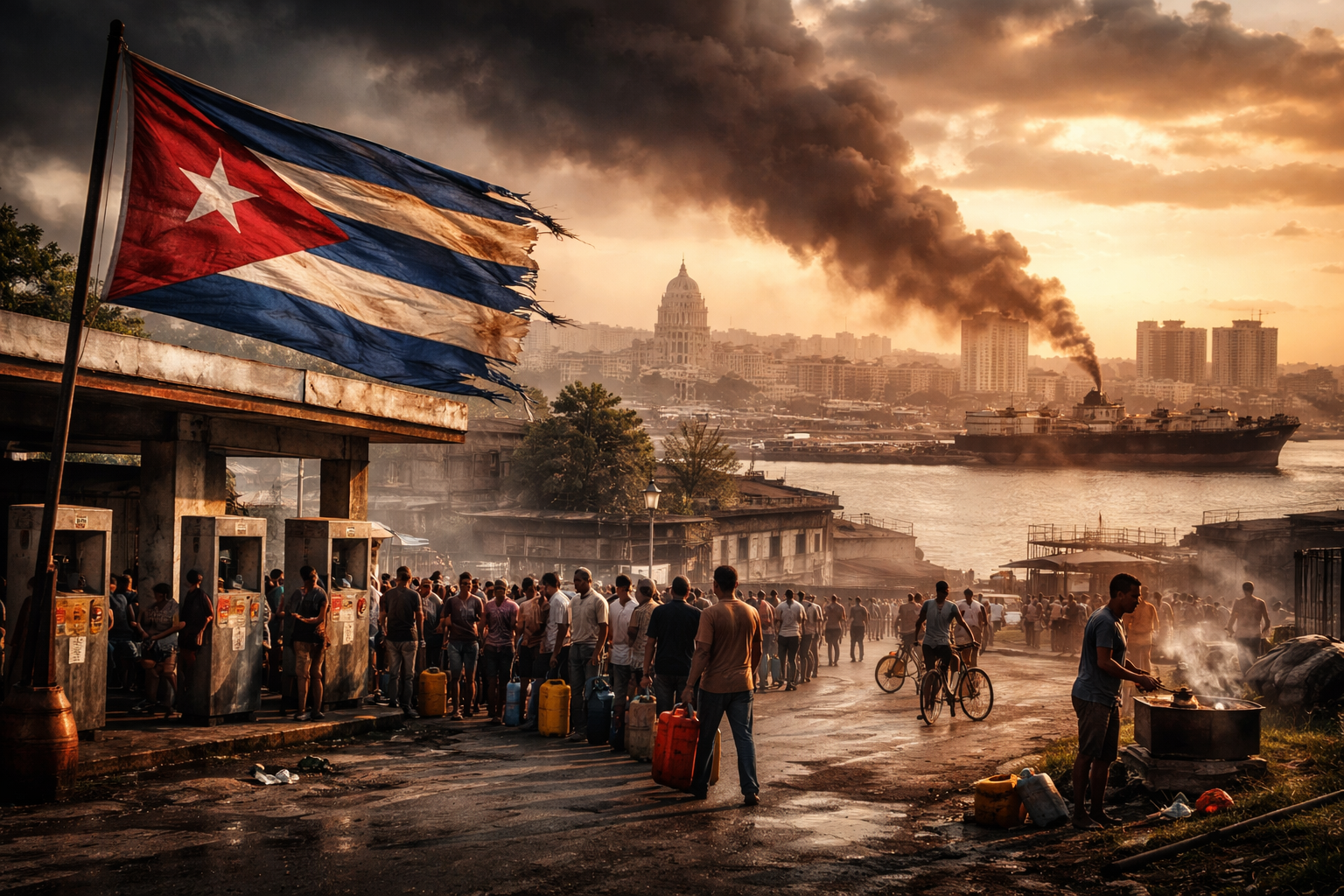
- A U.S. oil blockade is causing a severe energy crisis in Cuba, and the country is rapidly running out of fuel.
- US President Donald Trump, last month, signed an executive order and called Cuba “an extraordinary threat to their national security”.
- The Cuban President called this move “fascist, criminal, and genocidal”, and rejected all the claims of being a security threat to the USA.
- The standoff highlights how energy has become a central tool of political leverage in US-Cuba relations.
A U.S. oil blockade is causing a severe energy crisis in Cuba, and the country is rapidly running out of fuel. The government of Cuba has been forced to cut electricity for hours, affecting daily life there. The effects on the country’s economy and population could be devastating.
The United States, after abducting the Venezuelan president, Nicolas Maduro, last month, has effectively cut off Venezuelan oil supplies to Havana. Venezuela, the closest ally of Cuba, provides the much-needed fuel to it. US President Donald Trump, last month, signed an executive order and called Cuba “an extraordinary threat to their national security”. He warned that he would impose tariffs and sanctions on any state that supplies oil to Cuba, although Havana has rejected all the claims of being a security threat to the USA. The Cuban President called this move “fascist, criminal, and genocidal”.
Daily life in Cuba has been severely disrupted, as state-owned companies shift to four-day workweeks and schools and universities operate on reduced hours. Several tourism facilities have been temporarily closed, while available fuel is being reserved exclusively for essential services and critical activities. Amid the ongoing economic crisis, some families have turned to wood for cooking due to fuel shortages. In recent years, Cuba invested significantly in solar energy projects with Chinese assistance, but these installations remain insufficient to meet nationwide energy demand. The country remains heavily dependent on imported energy to sustain its power needs. According to expert estimates, as of January 30, Cuba had oil reserves sufficient for only 20 to 25 days at prevailing demand levels.
Due to decades of strict US economic sanctions, Cuba has largely destroyed its economy and heavily depends on other allies for oil imports, such as Mexico, Russia, and Venezuela. Until last month, Mexico remained Cuba’s major oil supplier, but the help from Mexico remained limited as its economy is heavily tied to the United States. The President of Mexico, Claudia Sheinbaum, is willing to offer a talk to mediate between Havana and Washington.
The standoff highlights how energy has become a central tool of political leverage in US-Cuba relations. Unless there is a diplomatic talk between the Cuban and the American administration, the confrontation will worsen the humanitarian conditions in Cuba.

Anshika Agrawal is a research scholar at the Centre for Russian and Central Asian Studies, Jawaharlal Nehru University, with a strong interest in current affairs, bilateral and multilateral relations, and public policy. Views expressed are the author’s own.
 Joy Aditya Phookan