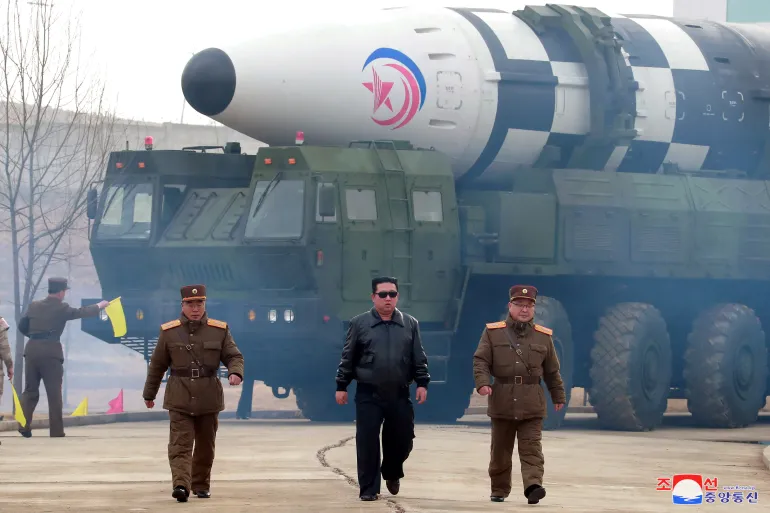
- North Korea is currently in a strategic pause: militarily strong, economically weak, diplomatically marginalised, yet internally stable.
- The main question is not whether North Korea is no longer important in geopolitics, but whether the international system, which is focused on bigger wars, is underestimating a nuclear power that has learned how to survive in the dark.
- North Korea’s nuclear status, which was previously viewed as an increasing emergency, has settled into a hesitant but visible acceptance: deterrence without resolution.
- The global system has implicitly accepted Pyongyang’s nuclear capacity, and an immediate retreat is unlikely. Such normalisation weakens diplomatic influence while improving regime security.
For nearly a decade, North Korea was the epicentre of global nuclear concern. Its intercontinental ballistic missile (ICBM) tests and nuclear ambitions brought the Korean Peninsula to the brink of war, culminating in high-profile summit diplomacy between Kim Jong Un and former US President Donald Trump. For a brief moment, Pyongyang was regarded as the most pressing security threat to the international order.
North Korea is currently in a strategic pause: it is militarily strong, economically weak, diplomatically weak, and stable at home. Ironically, its lack of attention in world debate may help it stay alive. Less scrutiny lowers the chances of escalation and lets things be reset. The main question is not whether North Korea is no longer important in geopolitics, but whether the international system, which is focused on bigger wars, is underestimating a nuclear power that has learned how to survive in the dark.
By 2026, however, the global strategic situation had changed radically. The Russia-Ukraine conflict has transformed European defence priorities, the United States-China competition dominates Indo-Pacific policy, and West Asian instability continues to draw global attention. In this crisis hierarchy, North Korea has been strategically overshadowed. Its nuclear status, which was previously viewed as an increasing emergency, has settled into a hesitant but visible acceptance: deterrence without resolution.
From Nuclear Flashpoint to a Frozen State of Balance
It seems that North Korea’s main strategic goal has been met: not diplomatic recognition, but real deterrence. Having a nuclear weapon that can be delivered has made it much less likely that other countries will try to change the government. Missile launches are scary right now, but not as quickly as they used to be. Instead, they are calibrated signals that make sovereign defence stronger.
This step shows a bigger shift in how people around the world see things. People no longer see Pyongyang as a quickly growing threat. Instead, they see it as a permanent, legal nuclear player in the security situation in Northeast Asia. The fact that there is no ongoing denuclearisation dialogue shows that the international system has moved from confrontation to containment because it is tired.
Strategic Sidelining in a Crowded Geopolitical Order
North Korea’s exclusion is systemic rather than incidental. Great power rivalry has grown in both geographical and technological dimensions. The United States and China have long competed for trade, semiconductors, marine superiority, and influence in the Indo-Pacific region. Russia’s conflict with the West has consumed military resources and diplomatic bandwidth. The Middle East’s energy security dynamics continue to influence global markets and geopolitical decisions.
In this crowded arena, North Korea’s nuclear program is no longer the top priority. This does not imply that the threat has disappeared; rather, it has become normalised. The global system has implicitly accepted Pyongyang’s nuclear capacity, and an immediate retreat is unlikely. Such normalisation weakens diplomatic influence while improving regime security.
Tourism and Tactical Opportunities: Adapting the economy without making changes
One of the most exciting things to happen in the last few years is that North Korea is slowly opening up to tourists again, especially with projects like the Wonsan-Kalma beach development. After a strict period of epidemic isolation, Pyongyang has slowly started to allow limited access to foreigners again. Don’t think of this as a systemic reform.
Tourism has useful purposes. It brings in regulated foreign currency, eases some of the restrictions on sanctions, and improves elite patronage networks by investing in infrastructure. It also lets the government show that things are stable and current. Planned visits make things seem normal, which makes the government seem more legitimate and keeps people from getting too much information.
This plan is more like selective permeability than liberalisation. After 1978, China made big changes to its economy. North Korea, on the other hand, is being more careful and politically protected. The government tightly controls ideas and security while allowing small economic channels to open. It is change without change—adapting without giving up.
The Russia Factor and the Politics of Alignment
North Korea’s relationship with Moscow has changed its strategic position as Russia fights the West. Pyongyang has power in a world that is very divided because of trade, diplomacy, and the possibility of military cooperation. Working with Russia makes deterrence work better and makes it less likely that countries will be diplomatically isolated in multilateral organisations.
But depending on someone else can be dangerous. The Juche ideology of North Korea encourages people to be independent and rely on themselves. If you depend too much on an outside sponsor, especially one that is against Western pressure, you could weaken this basic idea. So, the connection is better described as transactional alignment than strategic subordination.
China is still an important factor. Beijing wants peace on the Korean Peninsula and tries to stay away from situations that might make the US military stronger near its borders. China’s global goals and problems with its own economy make North Korea less important, but it still acts as an economic buffer for Pyongyang.
The Myth of Regime Change and Stability at Home
The idea of regime change comes up from time to time in Western talk. But the signs we have point to things going on instead of falling apart. Kim Jong Un has made his power more stable by reorganising the elite, centralising decision-making, and making internal security stronger.
Economic pragmatism is shown by how more and more people are using informal market mechanisms in their daily lives. Local markets, which used to be informal networks for survival during the economic crisis, are now semi-institutionalised and under government control. This limited marketisation improves living conditions while maintaining political power.
Consequences for the Indo-Pacific and further
Actors in the Indo-Pacific now see risks in the region differently because North Korea is no longer a threat. A nuclear North Korea that lasts forever changes the way alliances are made, missile defences are set up, and messages are sent. Not talking to each other doesn’t mean stability; it means that the balance is based on fear rather than trust.
For middle powers keeping an eye on changes in the world, the situation in North Korea shows how getting nuclear weapons can change the security of a regime in a big way. When credible deterrence is in place, the need for diplomacy goes down. The emphasis transitions from disarmament to governance.
Conclusion: Nuclear Power is on hold for strategic reasons
North Korea is currently in a state of strategic suspension, with a strong military presence, a weak economy, little diplomatic influence, and a strong internal structure. It being left out of global discussions doesn’t mean it’s not important; it just means it can adapt to a new world order.
The reopening of tourism, careful alignments on the outside, and consolidation on the inside all show that the regime cares more about staying in power than putting on a show. The explosive endings of past years have given way to peaceful endurance. Pyongyang has learned that in today’s world, it needs to be patient and not always be aggressive to stay alive.
The main question is not if North Korea has been ignored. The question is whether an international system that is too busy to pay attention could miss a nuclear power that works best in the dark. History shows that players who work behind the scenes often change the strategic landscape in ways that no one expects. North Korea’s current silence might not show weakness but readiness instead.

Anusreeta Dutta is a columnist and climate researcher with experience in political analysis, ESG research, and energy policy. Views expressed are the author’s own.
 Pranav S
  Ajith Shetty Heranje
  Atri Patel