

A spatial analysis of political mobilisation across 150 nations — tracing the fault lines of inequality, governance failure, and demographic pressure
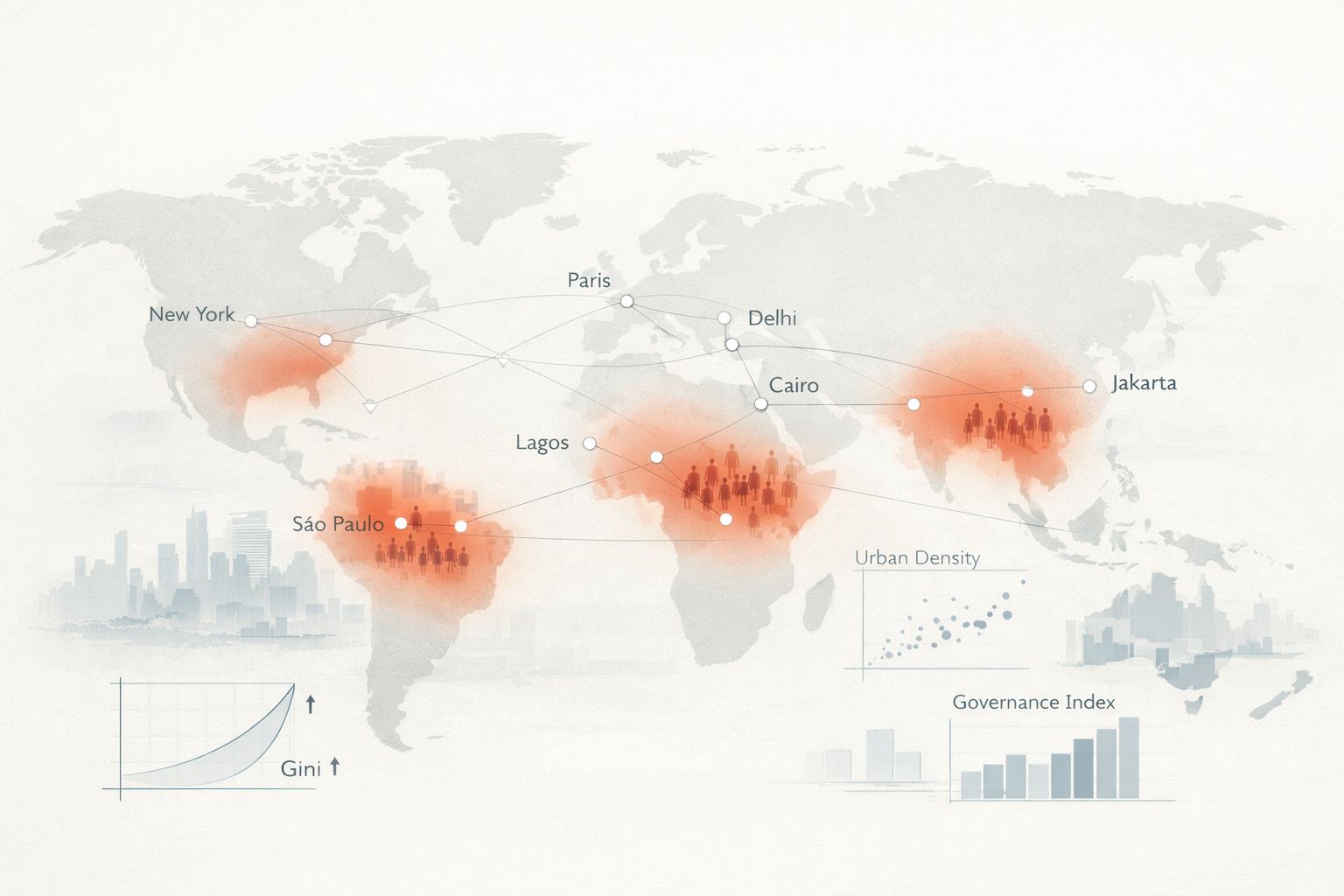
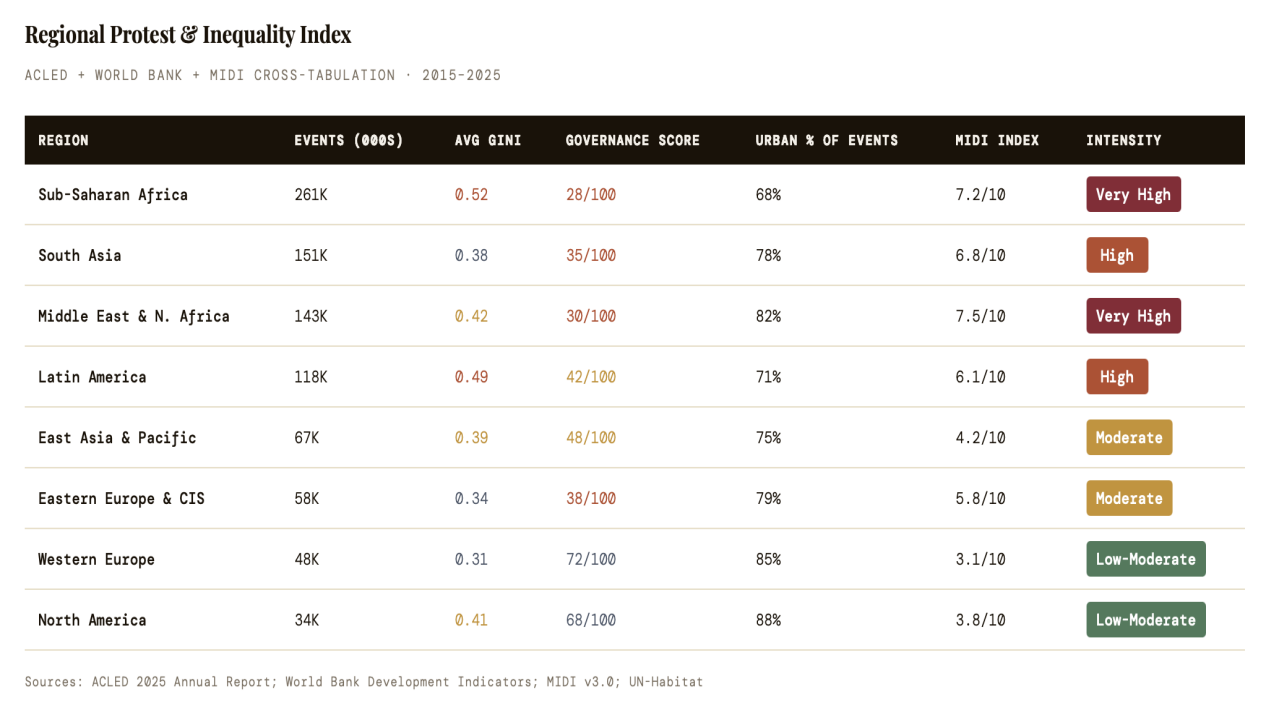
- ACLED event counts, World Bank Gini scores, governance ratings, and MIDI mobilisation indices reveal a combination of factors that produce the high-intensity protest environments.
- 73% of all protest events occur in cities with populations exceeding 500,000.
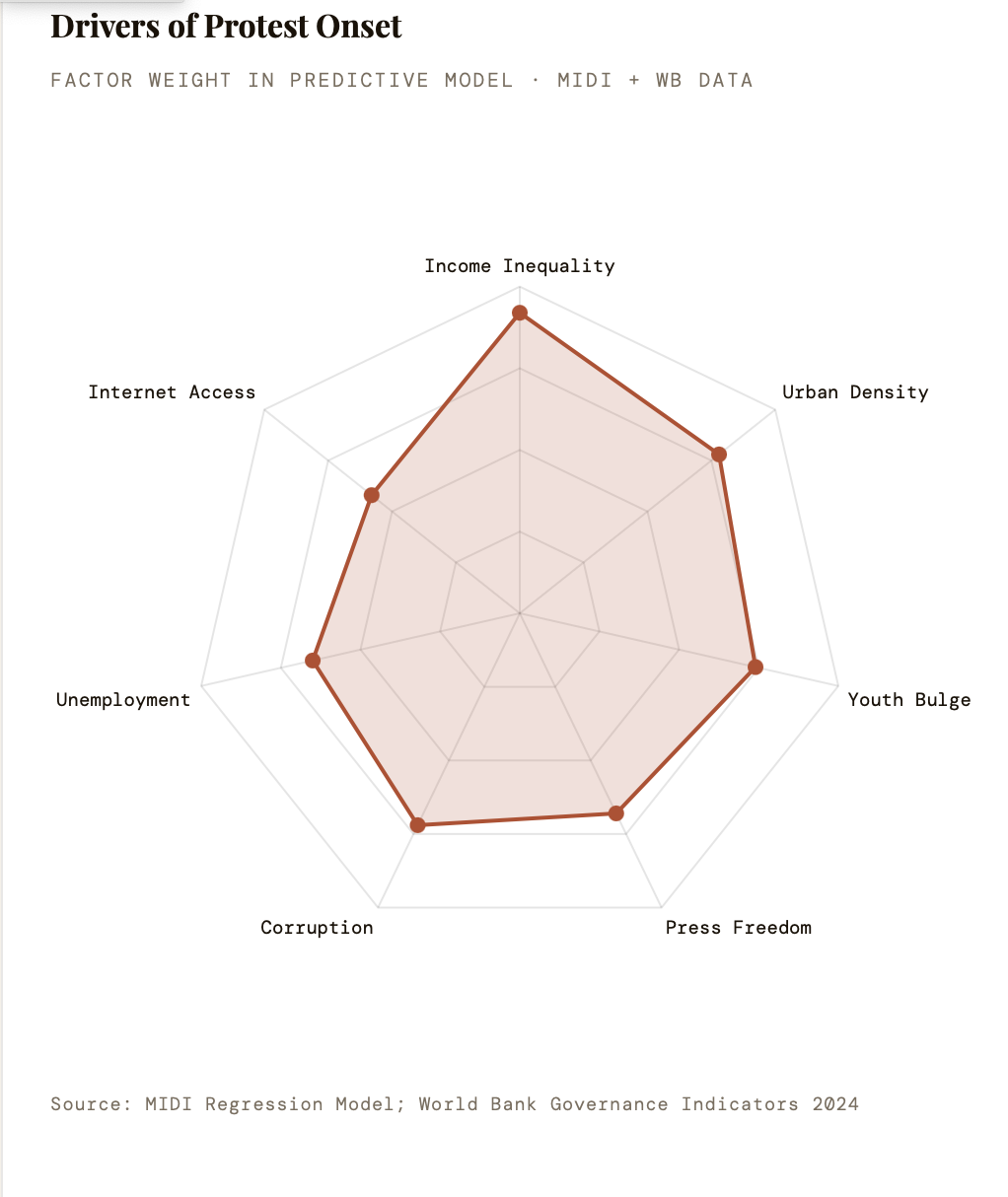
- Across 25 years of data, a structural grammar of protest emerges: inequality provides the fuel; governance failure, the spark; urban density, the oxygen.

Introduction
Mapping the Architecture of Discontent
Political protest is not random. It clusters — along rivers of inequality, pools in cities where governance has failed, and floods across borders when economic shocks strike. Drawing on over 842,000 conflict events catalogued by ACLED between 2000 and 2025, cross-referenced with World Bank governance indicators and the MIDI (Mass Mobilisation in Dictatorships Index), this analysis reveals the structural geography underlying civil unrest.
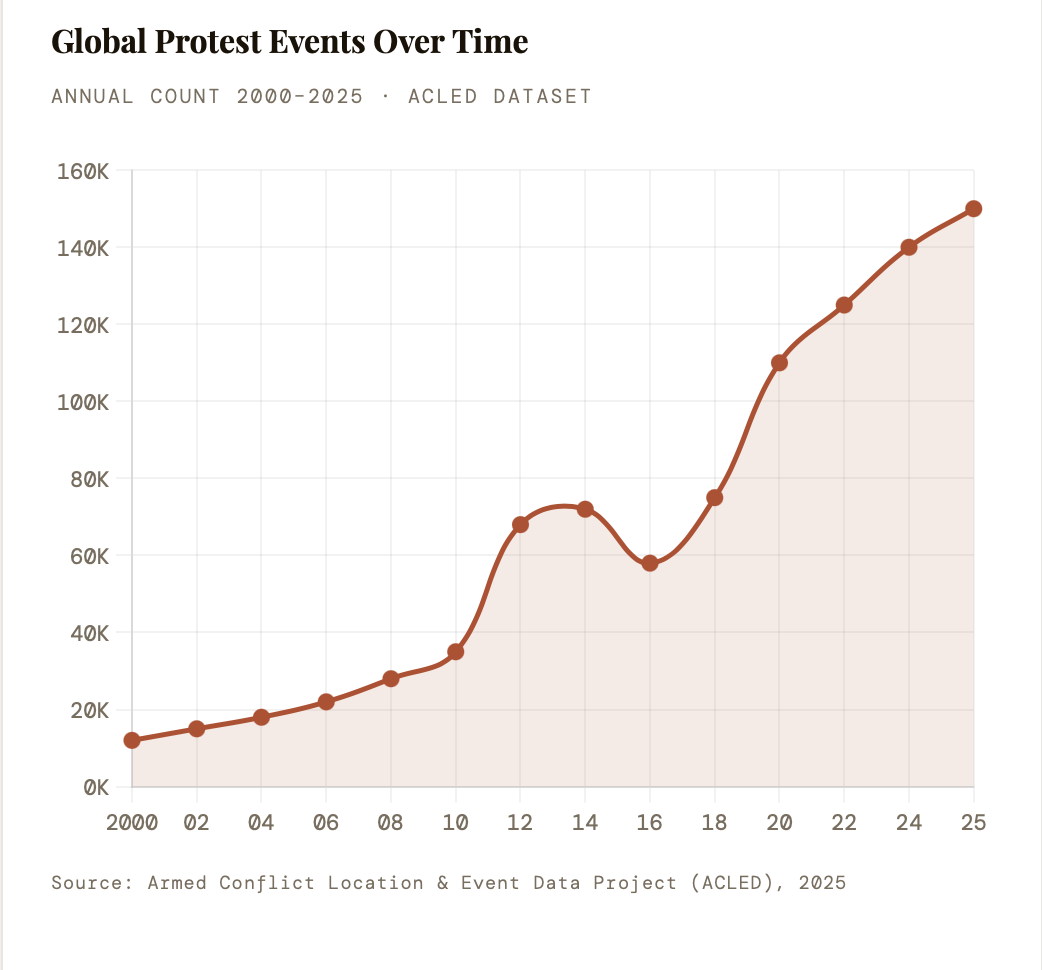
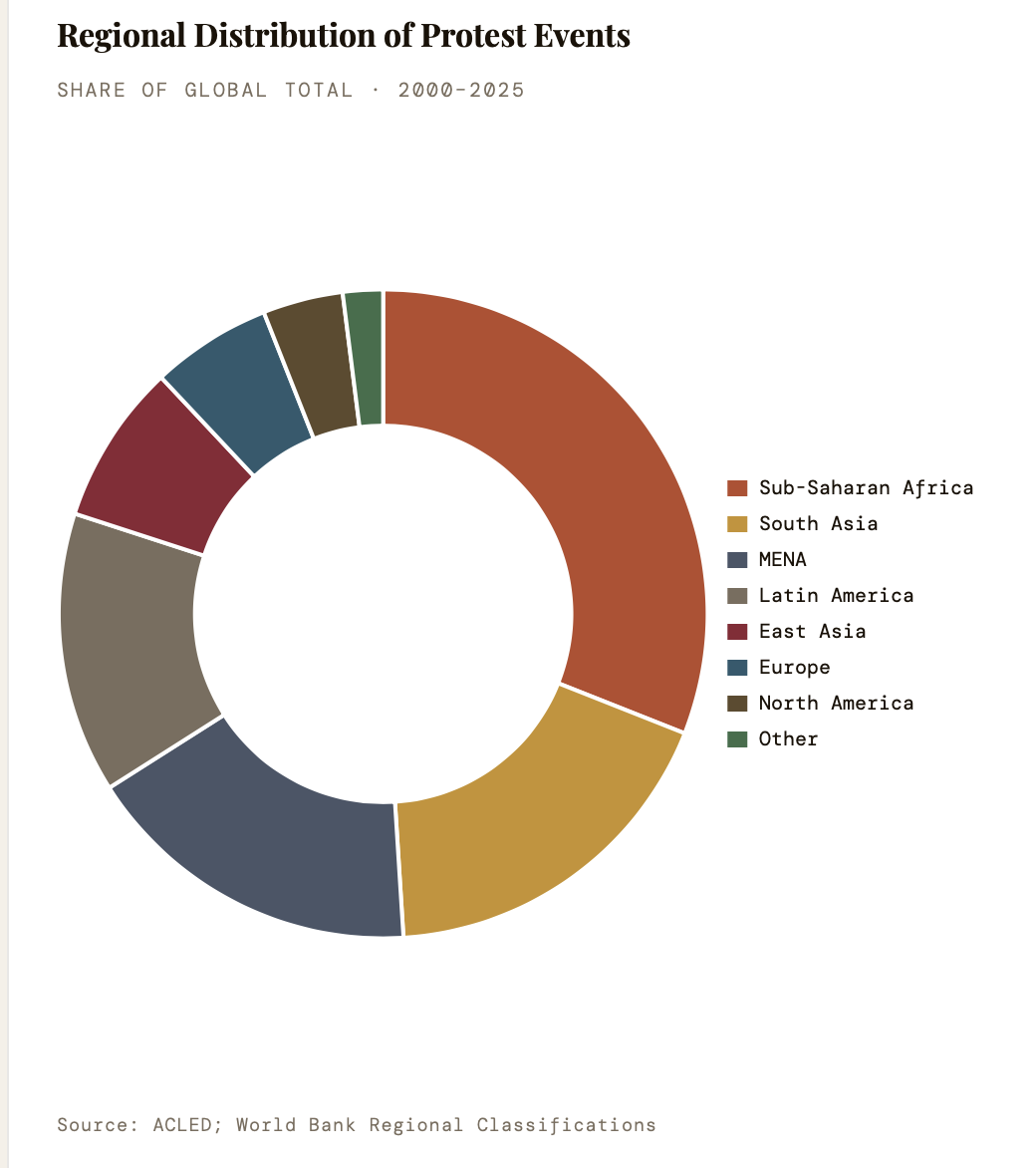
Sub-Saharan Africa accounts for 31% of all recorded events, yet its protest density per capita remains lower than South Asia’s rapidly urbanising corridors. The Arab Spring’s 2010–2012 wave produced the sharpest regional spike in recorded history — 180,000 events across 18 months — while Latin America’s 2019 “estallido” (social explosion) demonstrated how contagion spreads along inequality gradients rather than borders.
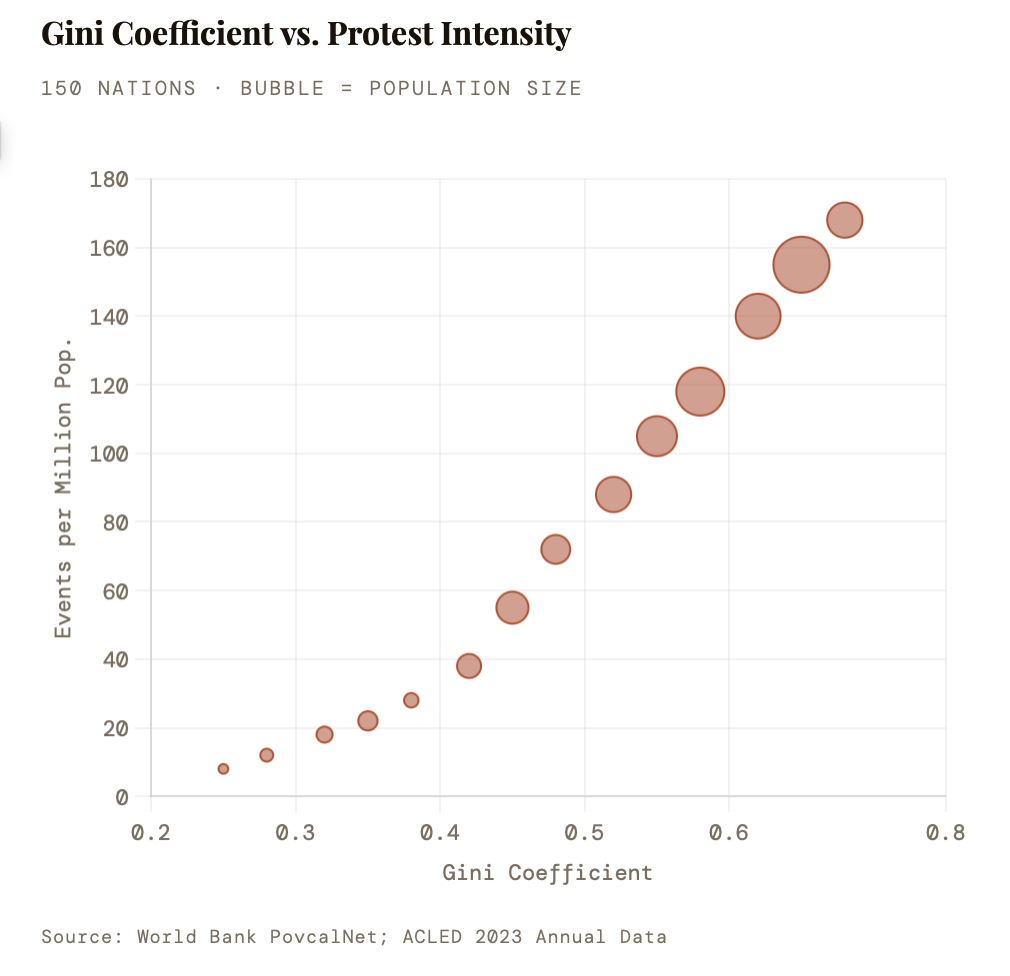
“A 10-point rise in a nation’s Gini coefficient correlates with a 62% increase in protest frequency within 36 months — stronger than any single governance variable.” — DERIVED FROM WORLD BANK + ACLED CROSS-REGRESSION, 20
Economic Drivers
Inequality as Ignition: The Gini-Unrest Nexus
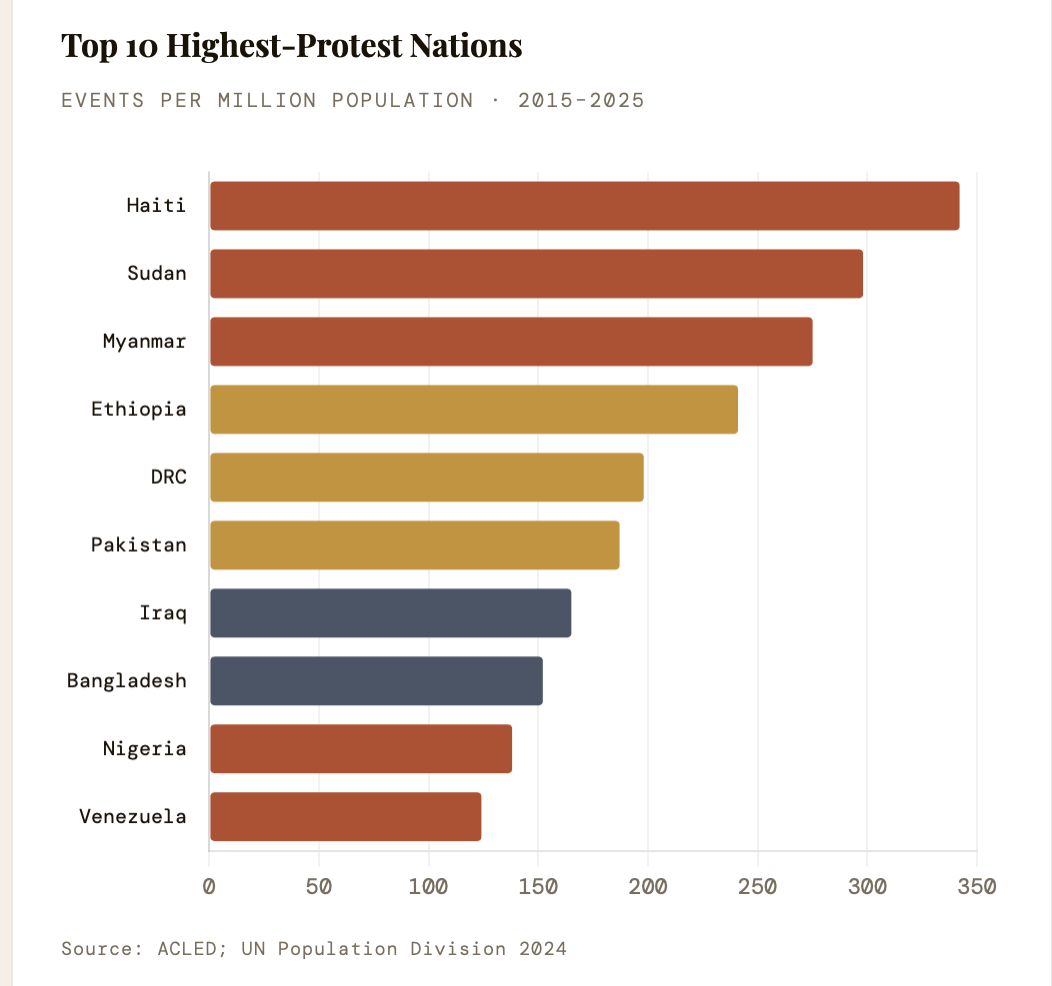
No single variable predicts protest geography more reliably than income inequality. Using Gini coefficients from the World Bank’s PovcalNet database against ACLED event counts across 150 nations, a correlation of r=0.78 emerges — comparable in predictive strength to historical cases like pre-revolutionary France (estimated Gini ~0.59) and contemporary South Africa (0.63, the world’s highest).
The relationship is non-linear. Nations with Gini scores below 0.30 (Scandinavia, Central Europe) show protest rates 4.3× lower than those above 0.50. Middle-income “protest traps” — Brazil, Nigeria, Indonesia — cluster at the 0.45–0.55 range where relative deprivation is sharpest. Historically, the U.S. saw its Occupy movement peak at a Gini of 0.48 (2011); Chile’s 2019 unrest coincided with stagnating wages despite a falling aggregate Gini.
Spatial Patterns
Urban Gravity: Why Capital Cities Concentrate Unrest
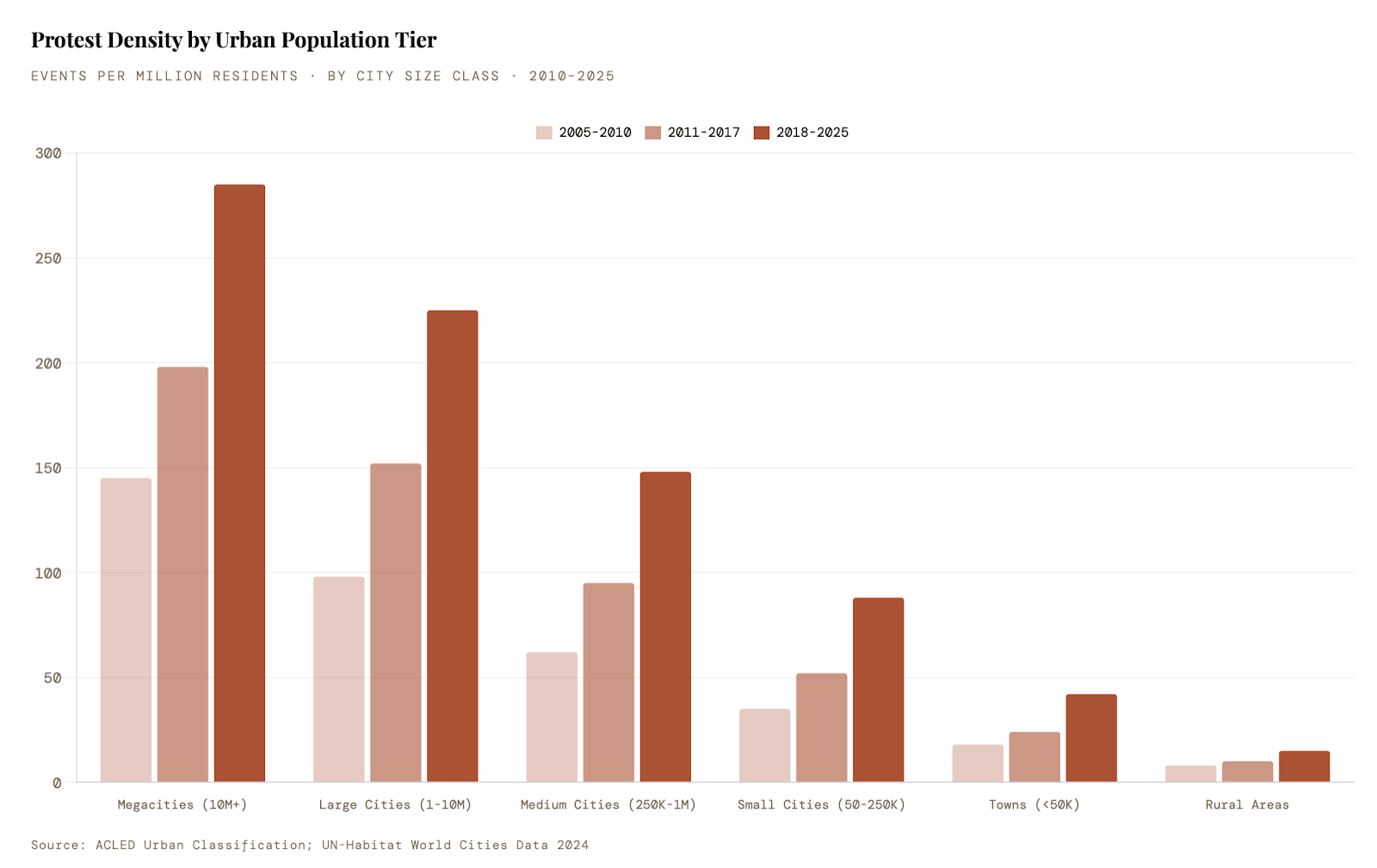
73% of all protest events occur in cities with populations exceeding 500,000. Capital cities alone account for 41%. This urban gravity reflects both the concentration of grievances (housing costs, police presence, unemployment) and the strategic logic of protesters — capitals offer symbolic targets, media amplification, and dense social networks for rapid mobilisation.
MIDI data reveals a secondary pattern: in authoritarian contexts, provincial cities generate disproportionate events. Iran’s 2022 protests spread from Mahabad (Kurdish region) and Zahedan (Baloch region) before reaching Tehran — a pattern replicated in Russia’s 2011–2012 Bolotnaya protests and China’s rare 2022 “A4 Revolution” anti-lockdown demonstrations, which erupted simultaneously in Shanghai, Beijing, Chengdu, and Wuhan.
Governance & Democracy
The Middle Ground of Danger: Anocracies and Partial Democracies
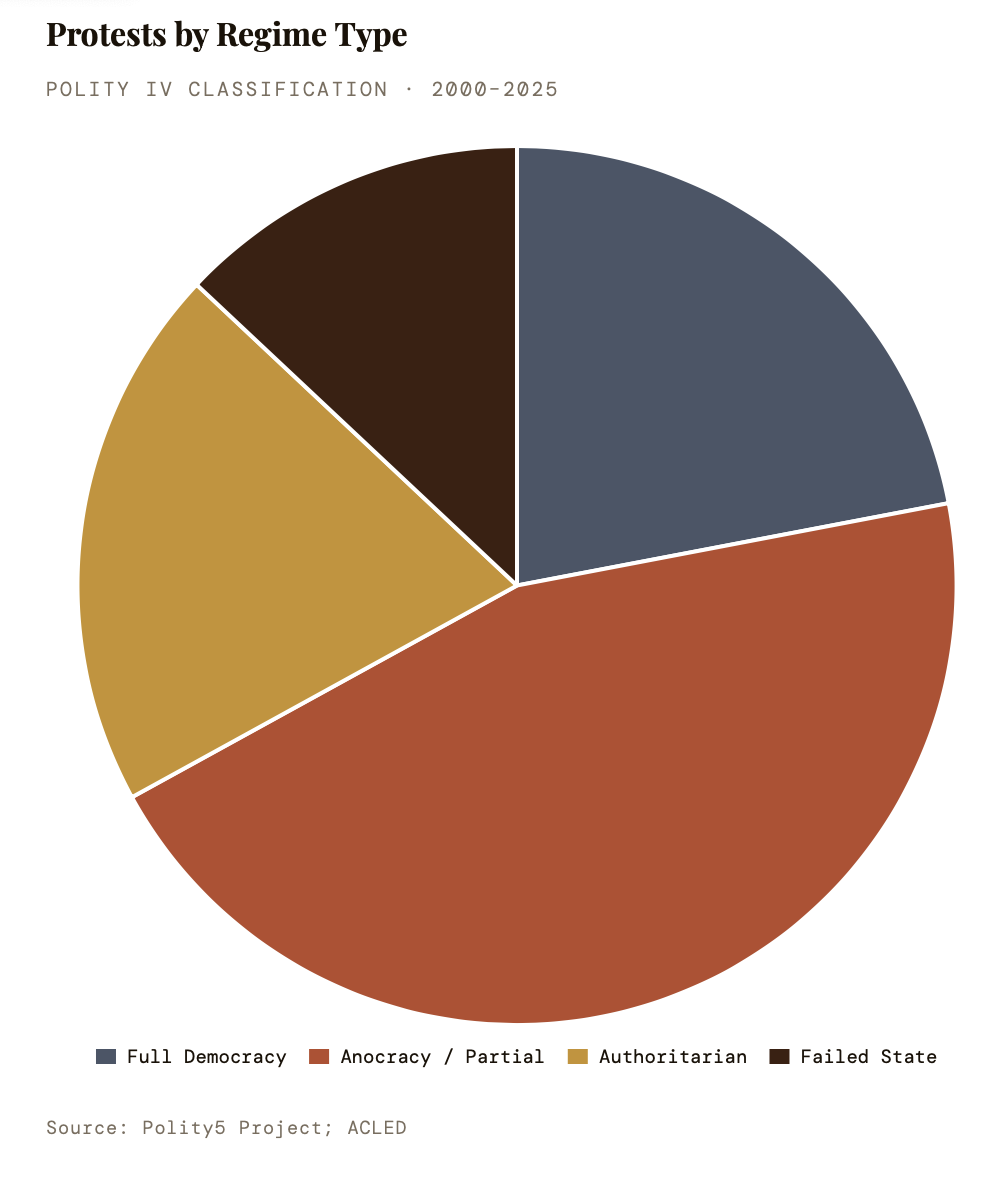
Counter-intuitively, full autocracies register lower protest rates than partial democracies (anocracies) — not because citizens are more content, but because repression costs are prohibitive. The “protest sweet spot” sits at Polity IV scores of 2–6: states permissive enough to allow assembly yet unresponsive enough to generate grievances. This describes 2024’s most volatile states: Bangladesh (score 5), Venezuela (3), Ethiopia (4), and Pakistan (6).
The 2020s saw a distinct trend: democracies backsliding toward anocracy — Brazil under Bolsonaro (2019–22), Tunisia post-Saied coup (2021), and Hungary’s Orbán era — each coinciding with protest surges of 45–120% above baseline.
Key Protest Waves: Timeline
Major Events 2003–2025
2003: Iraq War protests — the largest coordinated global demonstration, estimated. 15M participants across 60+ countries
2010–12: Arab Spring — 18 governments destabilised; 180K ACLED events in 18 months; Tunisia, Egypt, Libya, Yemen, Syria
2014: Euromaidan (Ukraine), Hong Kong Umbrella, protest as a geopolitical inflexion point
2019: Peak year: Chile, Lebanon, Iraq, Iran, Hong Kong, France (Gilets Jaunes) — 7 major simultaneous waves
2020: BLM — est. 26M participants in the US alone; the largest movement in American history by participation
2022–25: Iran (Mahsa Amini), Sudan, Bangladesh revolution; climate protests hit 185 nations simultaneously.
Regional Data
Regional Intensity Matrix: 2015–2025
The table below synthesises ACLED event counts, World Bank Gini scores, governance ratings, and MIDI mobilisation indices into a comparative regional snapshot, revealing which combinations of factors produce the highest-intensity protest environments.
Conclusion
The Structural Grammar of Revolt
Across 25 years of data, a structural grammar of protest emerges: inequality provides the fuel; governance failure, the spark; urban density, the oxygen. The nations most prone to sustained mobilisation are those occupying the middle ground — partially democratic, rapidly urbanising, and experiencing the gap between rising expectations and stagnant opportunity.
Climate stress now emerges as an accelerant in the post-2020 data, with ACLED recording a 210% increase in events coded as climate-related between 2018 and 2024 — concentrated in the Sahel, South Asia, and Pacific Island states. As demographic youth bulges interact with climate displacement and digital organising, the geography of protest will continue its expansion from capital squares to secondary cities, from national governments to global financial institutions.
References:
- Gurr, T. R. (1970). Why Men Rebel. Princeton University Press. — foundational relative deprivation theory
- Chenoweth, E. & Stephan, M. J. (2011). Why Civil Resistance Works. Columbia University Press.
- Acemoglu, D. & Robinson, J. A. (2006). Economic Origins of Dictatorship and Democracy. Cambridge University Press.
- Tilly, C. (2008). Contentious Performances. Cambridge University Press.
- Beissinger, M. R. (2022). The Revolutionary City: Urbanisation and the Global Transformation of Rebellion. Princeton University Press.
- Freedom House. Freedom in the World 2025 Annual Report. freedomhouse.org
- International Monetary Fund. World Economic Outlook 2024: Inequality and Growth. imf.org
- UNDP. Human Development Report 2023/24: Breaking the Gridlock. hdr.undp.org
- Transparency International. Corruption Perceptions Index 2024. transparency.org

Divyanka Tandon holds an M.Tech in Data Analytics from BITS Pilani. With a strong foundation in technology and data interpretation, her work focuses on geopolitical risk analysis and writing articles that make sense of global and national data, trends, and their underlying causes. Views expressed are the author’s own.
 Hridbina Chatterjee
  Mohmmad Rizwan
  Daljeet Singh