
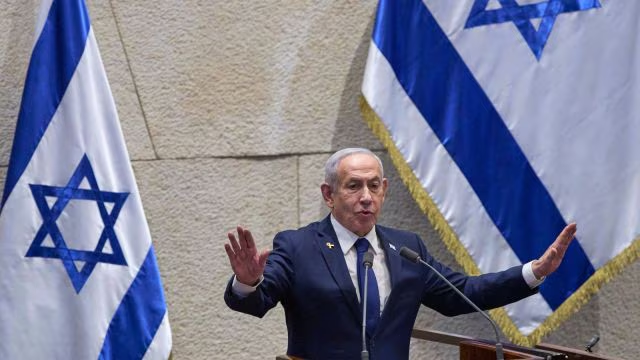
- Benjamin Netanyahu invoked his close ties with Narendra Modi, Donald Trump, and Vladimir Putin to reject claims that Israel is diplomatically isolated during the Gaza war.
- By highlighting military actions against Hamas, Hezbollah, and developments against Iran’s nuclear programme, Netanyahu projected an image of strength while reinforcing Israel’s strategic messaging to a domestic audience.
- At the same time, Netanyahu’s diplomatic narrative contrasts sharply with the humanitarian crisis in Gaza, where reports of famine, hostage deadlock, and stalled peace talks continue to raise global concern.
In a fiery address to the Knesset on Monday (8th Dec), Israeli Prime Minister Benjamin Netanyahu mounted a robust defence of his leadership amid the ongoing Gaza war and rising global criticism. Speaking during a ‘40-signature debate’—a parliamentary mechanism that requires the Prime Minister to appear before lawmakers—Netanyahu rejected claims of diplomatic isolation, asserting that despite a surge in anti-Semitism targeting the Jewish state, Israel today enjoys unprecedented international backing.
Highlighting his personal rapport with several global leaders, including Indian Prime Minister Narendra Modi, he insisted that Israel is “stronger than ever” and continues to command significant support across key capitals. He emphasised regular meetings with Modi, where he said he was soon set to meet with him and that India was keen to strengthen its relationship with Israel. Netanyahu also cited regular diplomatic communications with President Donald Trump and President Vladimir Putin as protecting the interests of Israel against both internal and external challenges.
Netanyahu’s speech highlights his resilience, as he rejected calls to end the conflict and showcased the military success, such as neutralising leaders of Hamas and Hezbollah, as well as progress against Iran’s nuclear program. However, in mentioning Modi, a move that reflects Israel’s deepening defence and technology alliance with India, he shifts from humanitarian criticism of Gaza to broader geopolitical influence, which aligns with his long-standing electoral strategy of projecting personal chemistry with the international community.
This rhetoric by Netanyahu operates on two levels: strengthening his domestic backing by being seen as assertive and pre-empting accusations of isolation in the face of UN condemnations and global protests. Using Modi as a hook signals the convergence of Indo-Israeli counter-terrorism cooperation, which is visible through defence equipment sales and intelligence exchange aimed at offsetting backlash in the Arab world.
However, this risks oversimplifying the ground realities in Gaza, as reports of famine and hostage stalemates persist, and phase-two peace negotiations under the Trump plan remain stalled due to factors such as deep mistrust over Hamas disarmament. Finally, Netanyahu positions personal diplomacy as strategic leverage in wartime, although the continued global support remains contingent on tangible progress toward de-escalation. Optimism about expanding alliances with other powers is implied in his Modi reference, though analysts question whether such partnerships can outweigh the rising Palestinian death toll and allegations of aid blockade claims.

Shrivara Mahajan is pursuing an International Relations major with a minor in Public Policy at OP Jindal Global University. He is a Senior Intern at the Jindal Centre for the Global South and has priorly interned with The Spread Smile Foundation. Views expressed are the author’s own.
 Aayush Pal
  Diksha Bharti