
- One of the major reasons for the mission’s failure was the inability of the United Nations to act decisively within its mandate, along with a lack of political will among member states.
- One of the major reasons cited for the mission’s failure in Haiti was the involvement of peacekeeping personnel in cases of sexual abuse against civilians.
- At present, UNPKM currently has 11 active United Nations Peacekeeping Missions operating worldwide and has completed nearly two-thirds of its missions launched since the Cold War.
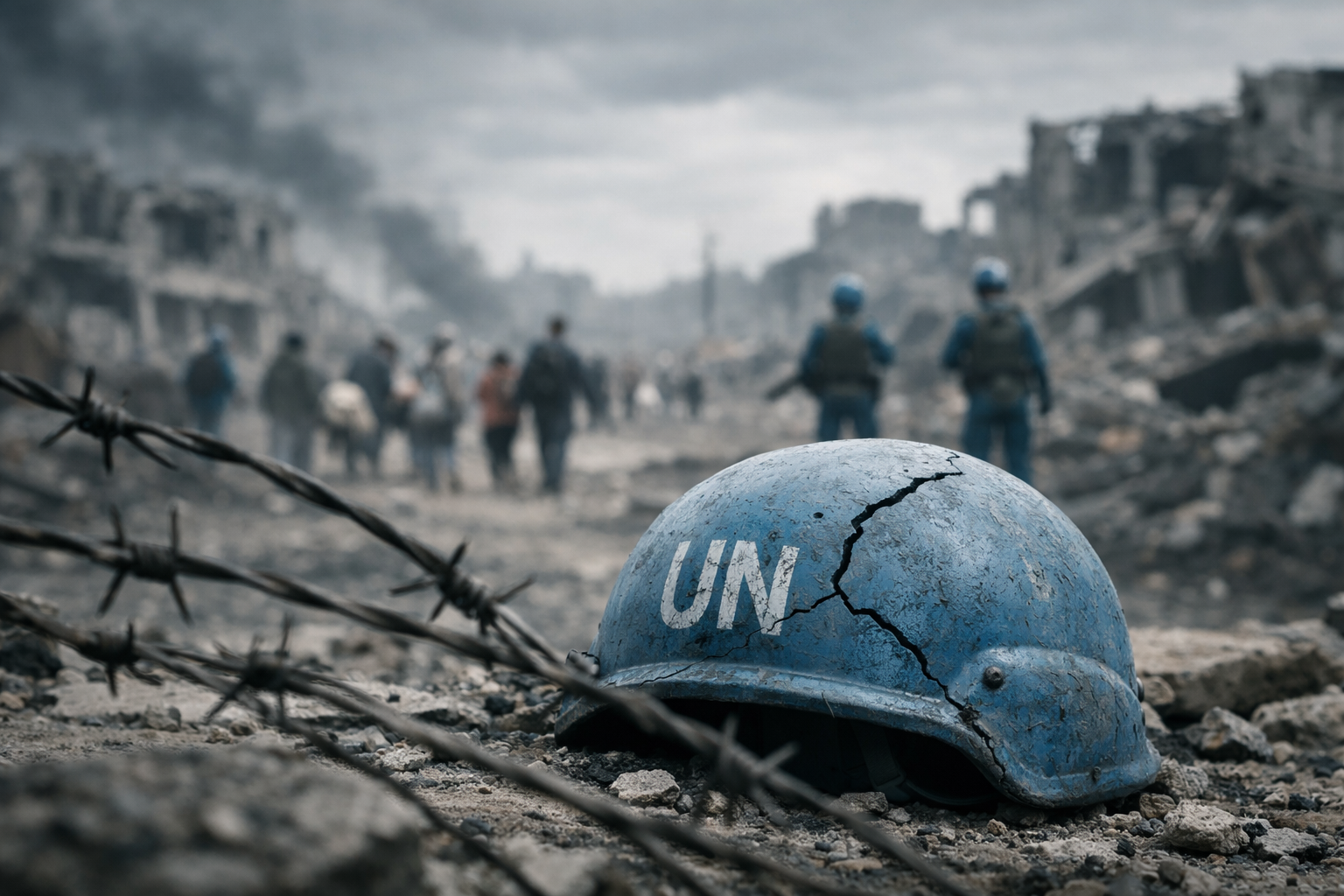
The United Nations Peacekeeping Mission was born during the Cold War, a period marked by intense geopolitical rivalries between states. It was established on 29 May 1948, when the United Nations deployed a small group of military observers to the Middle East to form the United Nations Truce Supervision Organization (UNTSO), tasked with monitoring the Armistice Agreement between Israel and its Arab neighbours. Over the past seven decades, more than one million men and women from 125 countries have served under the UN flag as military, police, and civilian personnel. United Nations Peacekeeping forces are commonly referred to as “Blue Helmets,” symbolising service and sacrifice.
At present, UNPKM currently has 11 active United Nations Peacekeeping Missions operating worldwide and has completed nearly two-thirds of its missions launched since the Cold War. It employs almost 100,000 soldiers, police, and civilian personnel, with an annual budget of approximately USD 5.6 billion for the 2024–2025 period. The United States currently contributes about 26.95 per cent of the total peacekeeping budget, although the U.S. Congress has capped its contribution at 25 per cent of the overall cost. Following Donald Trump’s assumption of office, his administration announced its intention to limit U.S. funding to one-quarter of total expenses, which placed financial pressure on several peacekeeping operations.
The UNPKM primarily consists of three types of missions. The first type includes traditional or classical peacekeeping missions, launched in response to wars between states over territorial disputes. Such conflicts often remain prolonged, as the concerned countries fail to agree on border demarcation, as seen in the Israel–Syria conflict (Golan Heights). The second type involves multidimensional missions, commonly deployed in newly independent states emerging from colonial rule, where political and economic instability often leads to civil war. In such cases, peacekeepers are required to provide long-term assistance to civilians, which demands substantial financial resources. The third type comprises protection and stabilisation missions, which have emerged in response to terrorism and increasing attacks on peacekeepers, leading some economically developed countries to avoid contributing troops. These factors have contributed to the failure of several missions, including those in Angola, and have collectively influenced the overall limitations of peacekeeping operations.
Why Peacekeeping Missions Failed?
Several United Nations peacekeeping missions have experienced serious failures, with one of the most prominent cases being Rwanda (UNAMIR, 1994). The United Nations Assistance Mission for Rwanda (UNAMIR) was initially deployed in 1993 to support the peace process, particularly the implementation of the Arusha Peace Agreement, which was signed by the Rwandan parties on 4 August 1993. However, when genocide erupted in April 1994, the mission proved incapable of preventing mass killings. UNAMIR remained active for nearly three years, but its mandate and operational capacity were severely limited, with a primary focus on securing foreign nationals rather than intervening effectively to stop internal violence. One of the major reasons for the mission’s failure was the inability of the United Nations to act decisively within its mandate, along with a lack of political will among member states. Additionally, inadequate provision of resources and reinforcements further weakened the mission, as the scale of violence against the Tutsi population was not adequately anticipated. As a result, UNAMIR relied on poorly equipped and insufficiently trained troops, with limited armed support from contributing countries, which significantly constrained its capacity to respond to the genocide.
Srebrenica (Bosnia, 1995) is a major failure of United Nations peacekeeping. In 1995, during the Bosnian War, the town of Srebrenica was designated as a United Nations “safe area” under the United Nations Protection Force (UNPROFOR). However, the area was overrun by Bosnian Serb forces, and the UN battalion stationed there was unable to defend the civilians, leading to the fall of Srebrenica and the killing of nearly 8,000 Bosniak Muslim men and boys. This incident was later ruled as genocide by the International Court, and the mission has since been referred to as a failure of UN peacekeeping efforts.
Haiti (Multiple Missions, 1990s–2000s) also represents a significant setback for UN peacekeeping operations. The United Nations Security Council ended nearly 15 years of peacekeeping missions in Haiti, following persistent controversies and operational failures. One of the major reasons cited for the mission’s failure was the involvement of peacekeeping personnel in cases of sexual abuse against civilians, along with the outbreak of a cholera epidemic that killed nearly 10,000 people. The epidemic occurred after peacekeepers were accused of negligently dumping infected sewage into a river, particularly in the aftermath of the 2010 earthquake, which severely damaged public trust in the mission.
Darfur (UNAMID, 2007–2020) demonstrates the limitations of peacekeeping missions operating under weak mandates. The UNPKM faced serious challenges in Darfur due to a weak mandate and resistance from the host government, which restricted the mission’s ability to protect civilians effectively. The Sudanese government further imposed constraints on peacekeeping activities, significantly limiting operational freedom, which ultimately led to the mission’s termination on 31 December 2020.
Despite the fact that several United Nations Peacekeeping Missions have failed, the United Nations has also successfully conducted peacekeeping operations in countries such as Cambodia, El Salvador, Guatemala, Mozambique, and Namibia. Through its peacekeeping forces, the United Nations continues to play a significant role in conflict zones, ranging from the protection of civilians to the provision of humanitarian assistance. Therefore, despite its limitations and failures, UN peacekeeping remains relevant in the contemporary world.

Antara Deka is a student of Political Science at North Eastern Hill University and History at Indira Gandhi National Open University. Her interests include political awareness and civic engagement, and she has been actively involved in initiatives promoting informed participation among youth. Views expressed are the author’s own.
 Divyanka Tandon
  Aayush Pal
  Anjali Singh