


- The rapid intersection of accessible additive manufacturing technologies and violent extremism creates an urgent security challenge for governments and technology platforms all over the world.
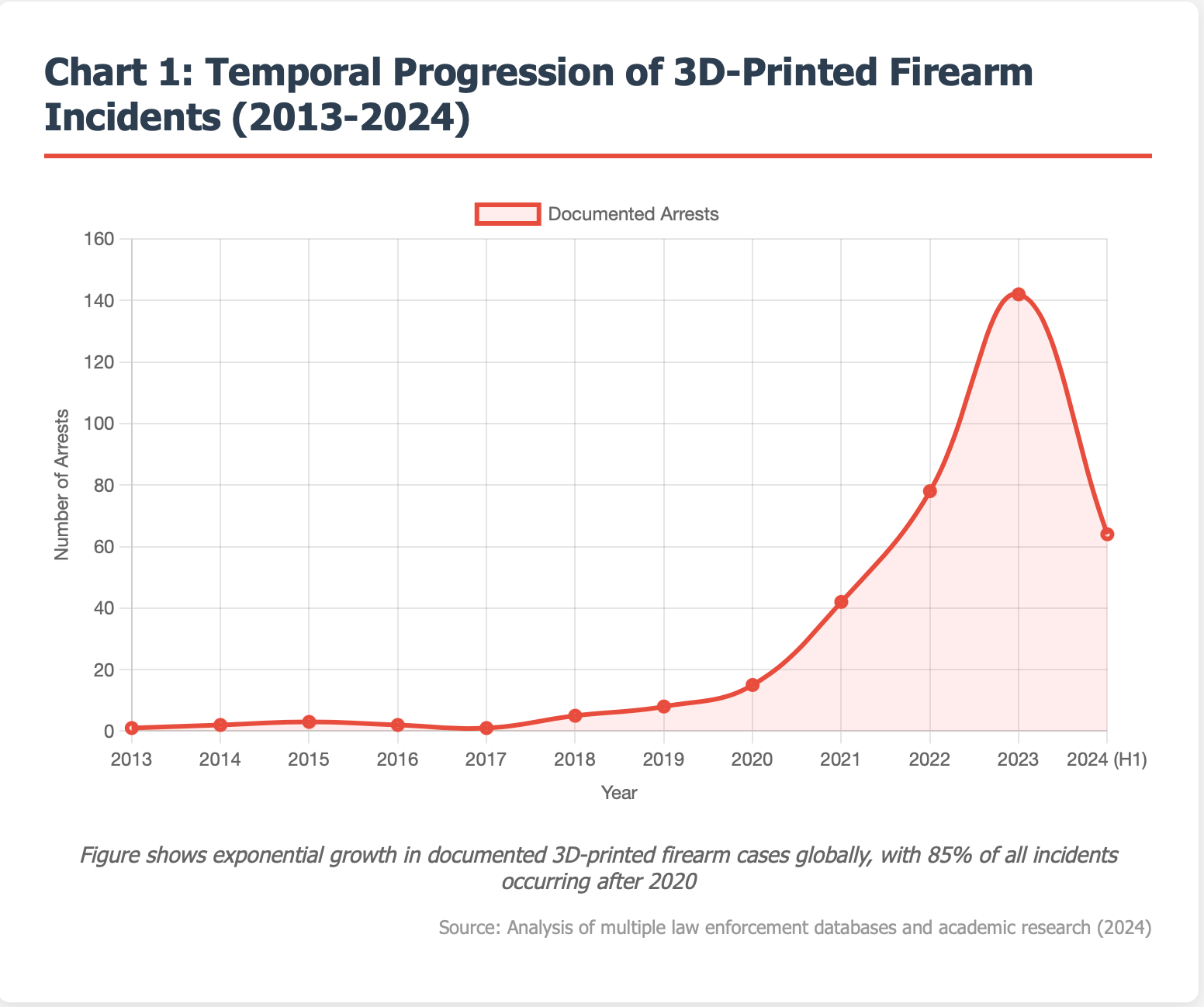
- Data compiled by 3DPrint.com reveals that by mid-2024, authorities had documented 342 arrests related to 3DPFs since 2013, with 64 arrests occurring in just the first six months of 2024 alone.
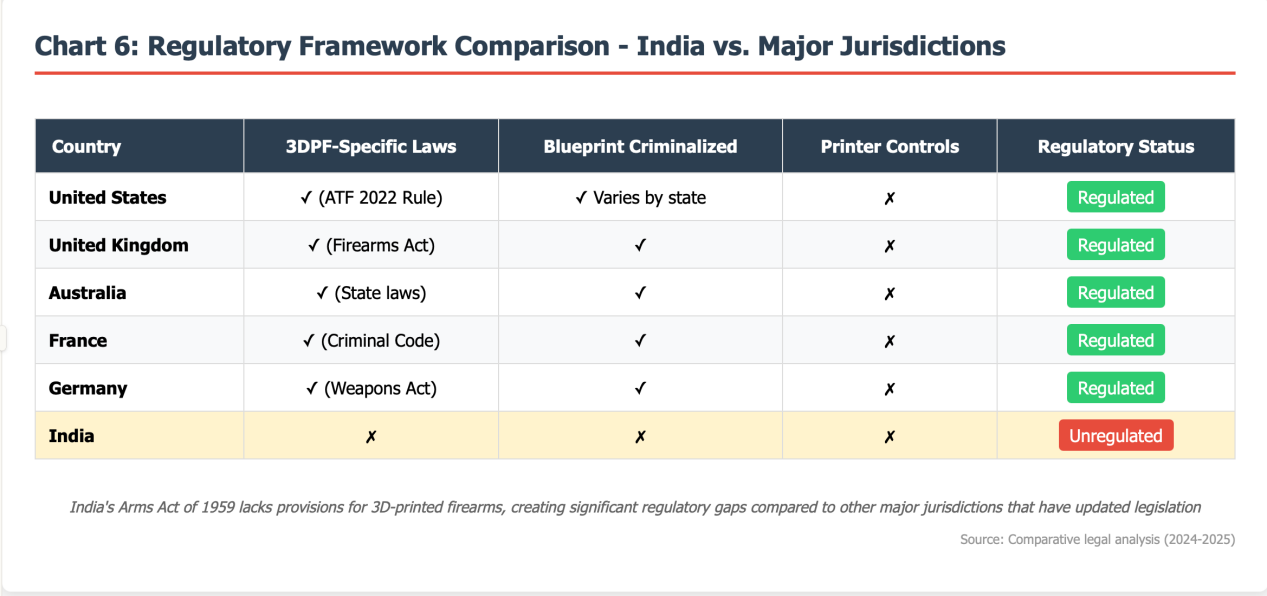
- Research from 2024 and 2025 highlights significant regulatory gaps, particularly in the Arms Act of 1959, which does not address 3D-printed firearms or associated digital blueprints.
- Technology companies must limit 3D-printed firearms proliferation among extremist groups through content control, community disruption, and manufacturing prevention.
The rapid intersection of accessible additive manufacturing technologies and violent extremism creates an urgent security challenge for governments and technology platforms all over the world. In the years 2024 to 2025, extremist networks have seen extreme proliferation rates of 3D-printed firearms (3DPF). As a result of these high-profile cases from 2024 to 2025, there are now numerous documented instances of 3D-printed firearms being used by extremist groups. This Insight will explore the current trends in the proliferation of 3D-printed weapons within these communities, identify threats in countries such as India, and provide actionable recommendations to technology companies on how to stop these threats before they become a reality.
The 2024-2025 Threat Landscape: By the Numbers
The diffusion of 3D-printed weapons is about to reach a sensitive inflexion point. Data compiled by 3DPrint.com reveals that by mid-2024, authorities had documented 342 arrests related to 3DPFs since 2013, with 64 arrests occurring in just the first six months of 2024 alone. Whilst this represents a decline from the record 142 arrests in 2023, researchers analysing 225 incidents globally from 2013 to July 2024 emphasise that the majority of documented cases have emerged since 2020, indicating systematic adoption rather than isolated experimentation.
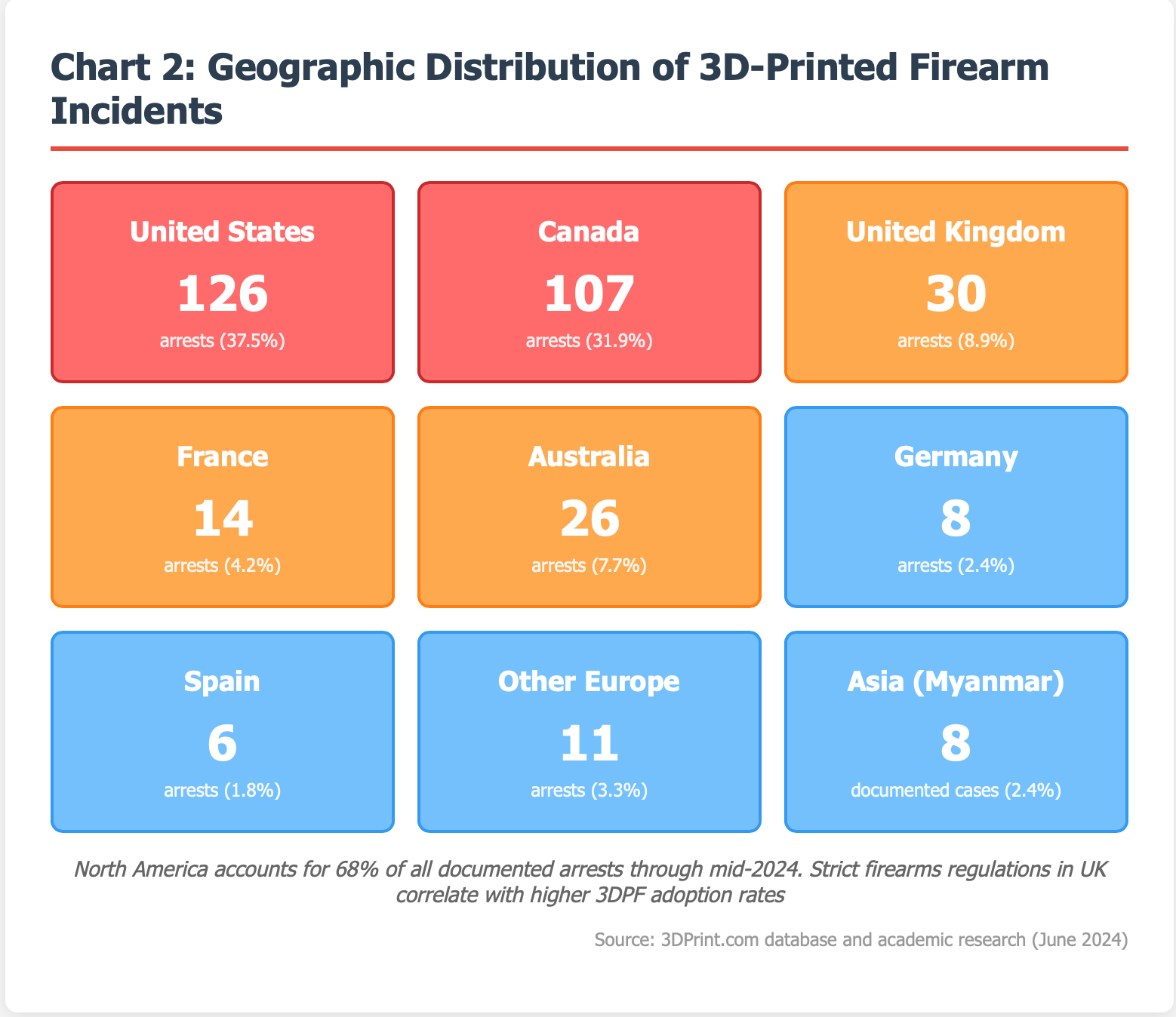
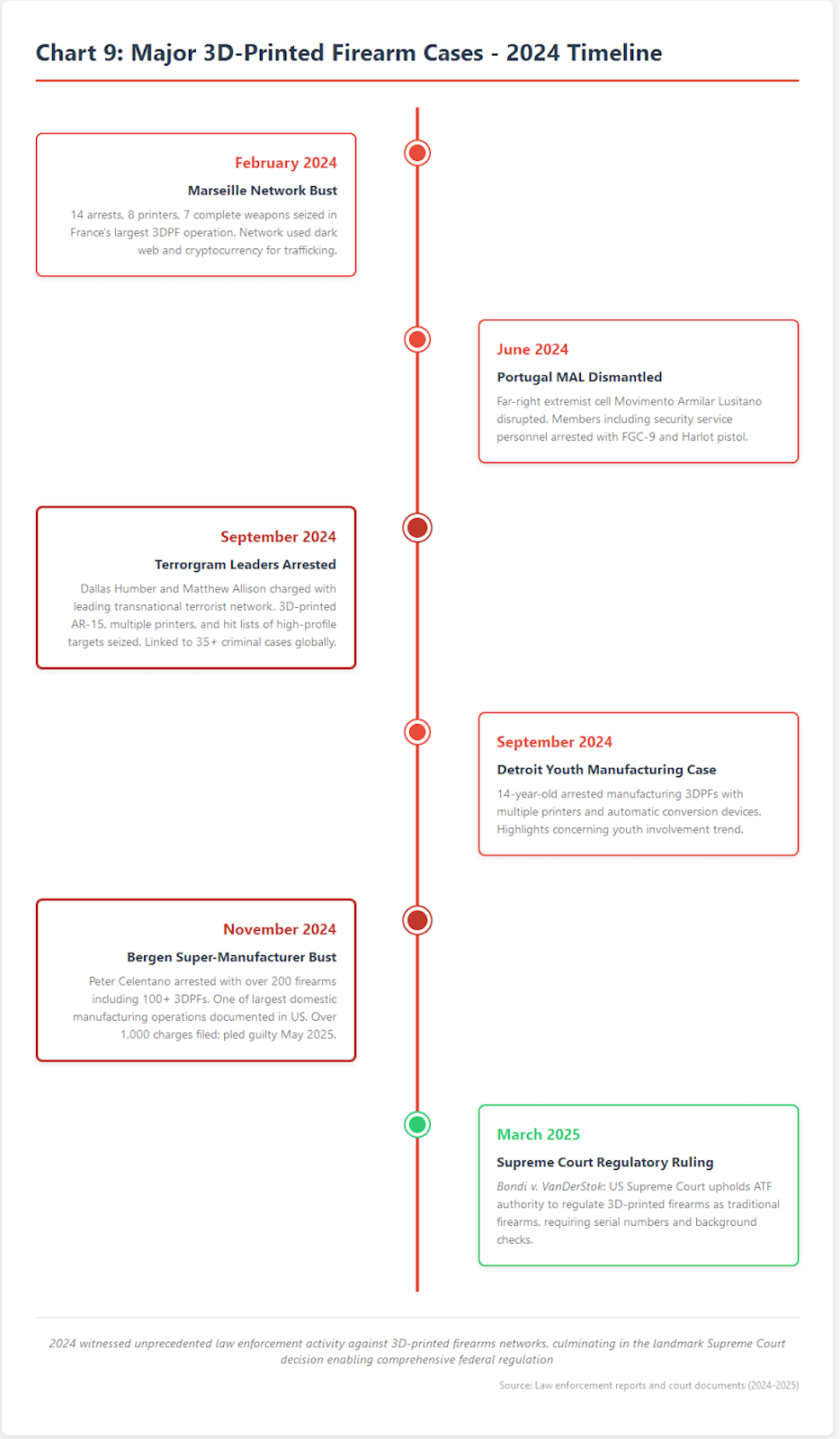
Concentrated hotspots are based on geographical distributions. For example, in July 2024, the United States listed 126 arrests, which represented more than one-third (37.5%) of the total global arrests. Meanwhile, in Canada, the number of arrests rose significantly, from 82 reported at the end of 2023 to 107 by mid-2024, which is a 30.5% increase within a year. The United Kingdom recorded 30 arrests by mid-2024, representing a 25% year-on-year increase, whilst France experienced its first major crackdown with 14 arrests stemming from a single Marseille trafficking network dismantled in February 2024.
The Terrorgram Collective: 2024’s Most Significant Takedown
Dallas Humber and Matthew Allison were arrested in September 2024 for their roles in the Terrorgram Collective, a transnational terror network promoting white supremacist accelerationism. Charged with 15 counts in California, including soliciting hate crimes, their leadership has been pivotal. Since taking control in 2022, they have expanded the group’s reach following previous arrests. Law enforcement found a 3D-printed AR-15, firearms, Nazi memorabilia, and 3D printers at Humber’s Elk Grove home. Allison was apprehended in Idaho with a firearm and ammunition. Their activities are linked to three violent incidents: a deadly shooting in Slovakia, a thwarted attack in New Jersey, and a stabbing in Turkey. Research shows 35 criminal cases connected to the Collective. If convicted, both face up to 220 years in prison; Humber has pleaded not guilty and was denied bail.
The French Network: Europe’s Largest 3DPF Bust
In February 2024, French authorities dismantled a significant network trafficking 3D-printed firearms, with operations spanning from Marseille to Belgium. The investigation, led by the gendarmerie’s cyber division, concluded with raids involving 300 officers and resulted in 14 arrests, eight 3D printers, seven completed 3D-printed weapons, and 24 conventional firearms seized. A 26-year-old man from the Var region managed the operation and is wanted under a European Arrest Warrant. Marseille’s public prosecutor noted this was a historic seizure in France, as these weapons are often untraceable. The network utilised dark web sales and cryptocurrency, shipping components separately to evade detection. The seized firearms were assessed to be of high quality, further highlighting the issue of unregulated 3D-printed weapons.
Ireland’s Digital Paramilitaries: ONH’s Adaptation
Óglaigh na hÉireann (ONH), a dissident Irish Republican group, has begun utilising 3D-printed guns, reflecting the adaptation of extremist factions to modern technology. They first showcased these weapons during an April 2022 Easter Rising event in Belfast. The FGC-22 firearm, using .22 Long Rifle bullets, is easier to acquire. In 2024, ONH continued promoting these weapons in propaganda, including images of militants and a death threat against a republican, emphasising internal power struggles post-leadership change, although their practical effectiveness is dubious.
India’s Emerging Challenge: Regulatory Gaps and Potential Threats
India faces vulnerabilities regarding the potential for the adoption of 3D-printed firearms by criminal and extremist networks, despite not experiencing widespread proliferation as seen in Western countries. Research from 2024 and 2025 highlights significant regulatory gaps, particularly in the Arms Act of 1959, which does not address 3D-printed firearms or associated digital blueprints. Legal experts indicate that individuals creating 3D-printed weapons can currently only be prosecuted under intellectual property laws rather than firearms regulations, raising concerns over enforcement weaknesses.
Circumstances such as downloading weapon blueprints legally from international platforms present alarming scenarios, as Indian law does not provide a clear prosecutorial route under firearms statutes. The legitimate defence sector in India has embraced 3D printing, with projects like 3D-printed houses for the Air Force and missile components from the Defence Research and Development Organisation (DRDO) showcasing advanced manufacturing capabilities. However, these developments raise dual-use concerns, as the same technology facilitating defence innovations could enable illicit arms production. The affordability of entry-level 3D printers, priced around ₹50,000 (approximately £475), further lowers barriers to manufacturing weapons.
Legal scholars advocate for proactive measures, urging regulation of access to weapon blueprints and amendments to the Arms Act to clarify restrictions on digitally manufactured firearms. The situation in Myanmar serves as a cautionary example, where non-state actors rapidly scaled 3D-printed weapon production following the military coup. Given India’s complex security landscape, including ongoing insurgencies and militancy issues, there exists a pressing need to address the risks posed by the potential proliferation of 3D-printed firearms among non-state armed groups.
Youth Involvement: The Alarming Generational Trend
This disturbing phenomenon has drawn attention in 2024, with over 80 incidents reported from around the world, among them 17 linked to far-right extremism. In Detroit, a 14-year-old was arrested for manufacturing 3DPFs from his home, possessing parts of guns and devices with which to convert pistols into automatic weapons. Another 14-year-old was later charged after he allegedly fired the weapon. In August, an investigation in Yorkville, New York, turned up a gun-making operation by a group of 19- and 20-year-olds in which several fully assembled firearms, high-capacity magazines, and 3D-printed parts were discovered.
In February 2025, a 16-year-old in Utica was arrested for operating a 3D-printed gun scheme and was hit with charges related to a half-dozen firearms. The November arrest of 35-year-old Peter Celentano in Bergen revealed the enormous scope of 3DPF manufacturing when an operation by police resulted in the seizure of more than 200 firearms, including 100 3D-printed guns. Celentano faces over 1,000 counts, including possession of machine guns. Easy access to how-to manuals, online communities, inexpensive 3D printers, and firearm social media culture, all contributing to contacts leading to extremist ideologies and radicalisation, enables young people to produce 3DPFs.
The FGC-9 Ecosystem: Design, Distribution, and Ideology
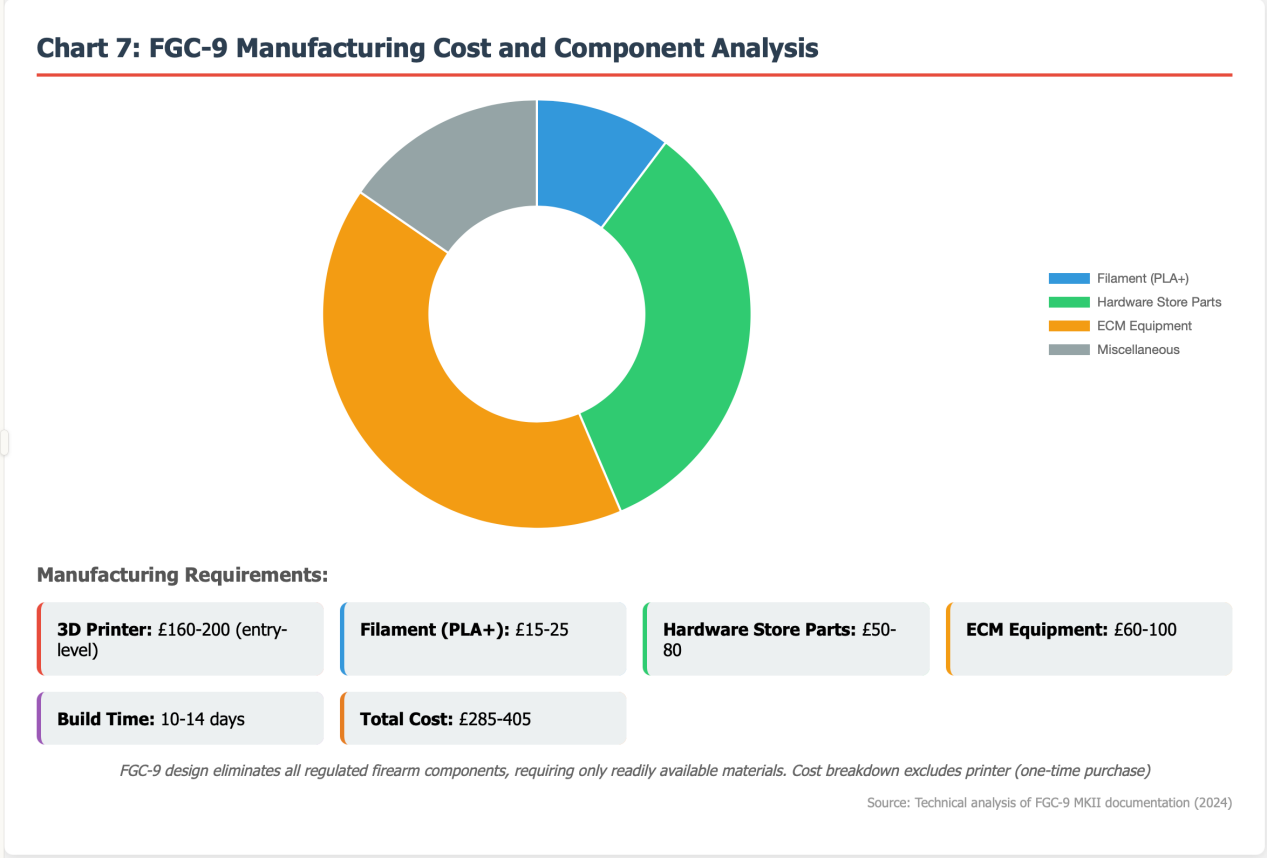
The FGC-9 is a key design in 3D-printed firearms (3DPF) across countries like the UK and Australia. Released in March 2020 by Jacob Duygu, it bypasses firearms regulations by utilising 3D-printed parts and common hardware, costing under £400 to manufacture. A detailed 200-page manual allows even untrained individuals to create functional guns. The upgraded FGC-9 MKII appeared in April 2021, with variants like Stingray. Its name reflects its ideological stance against gun control, appealing to far-right extremists as symbols of defiance against authority.
Digital Infrastructure Enabling Proliferation
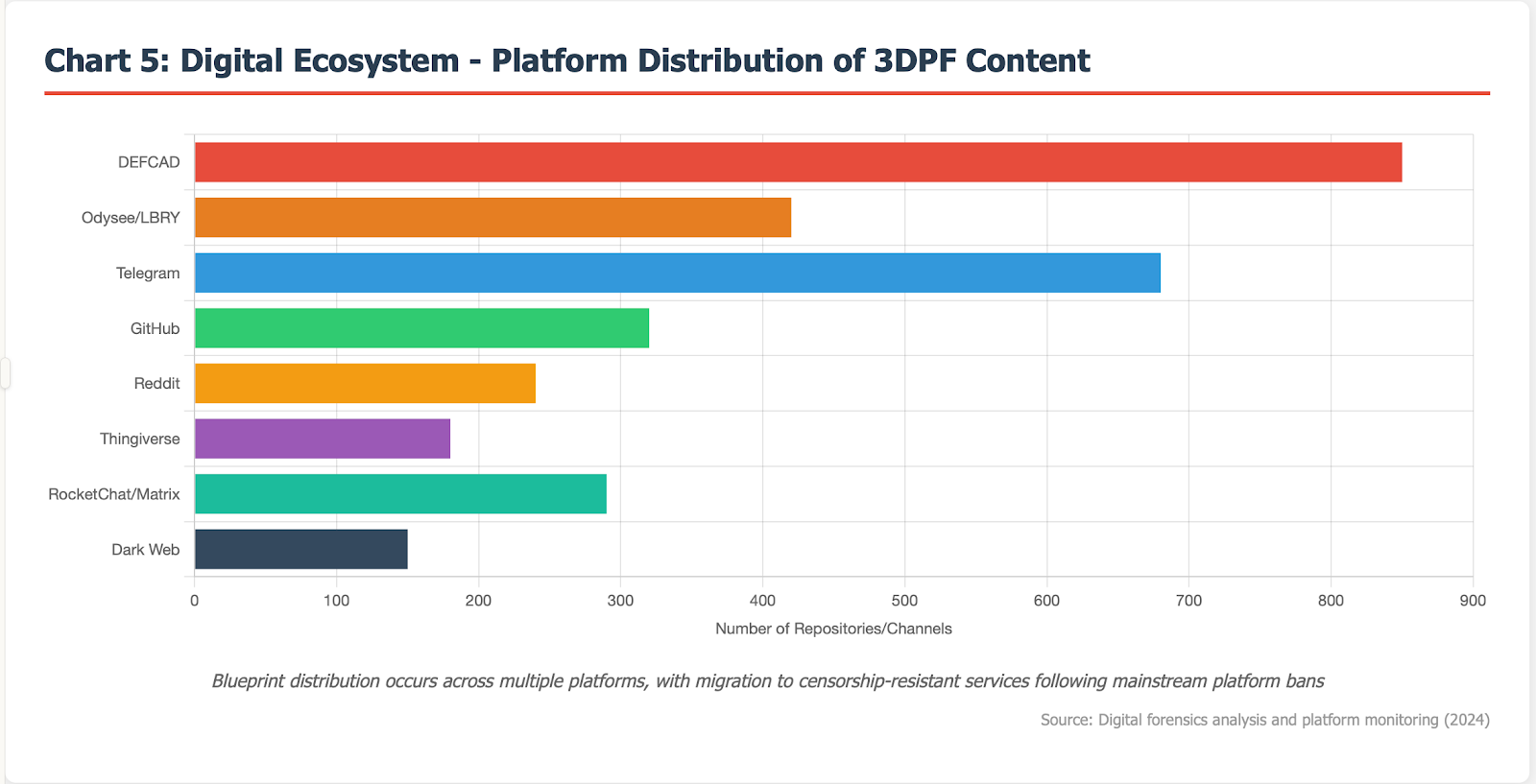
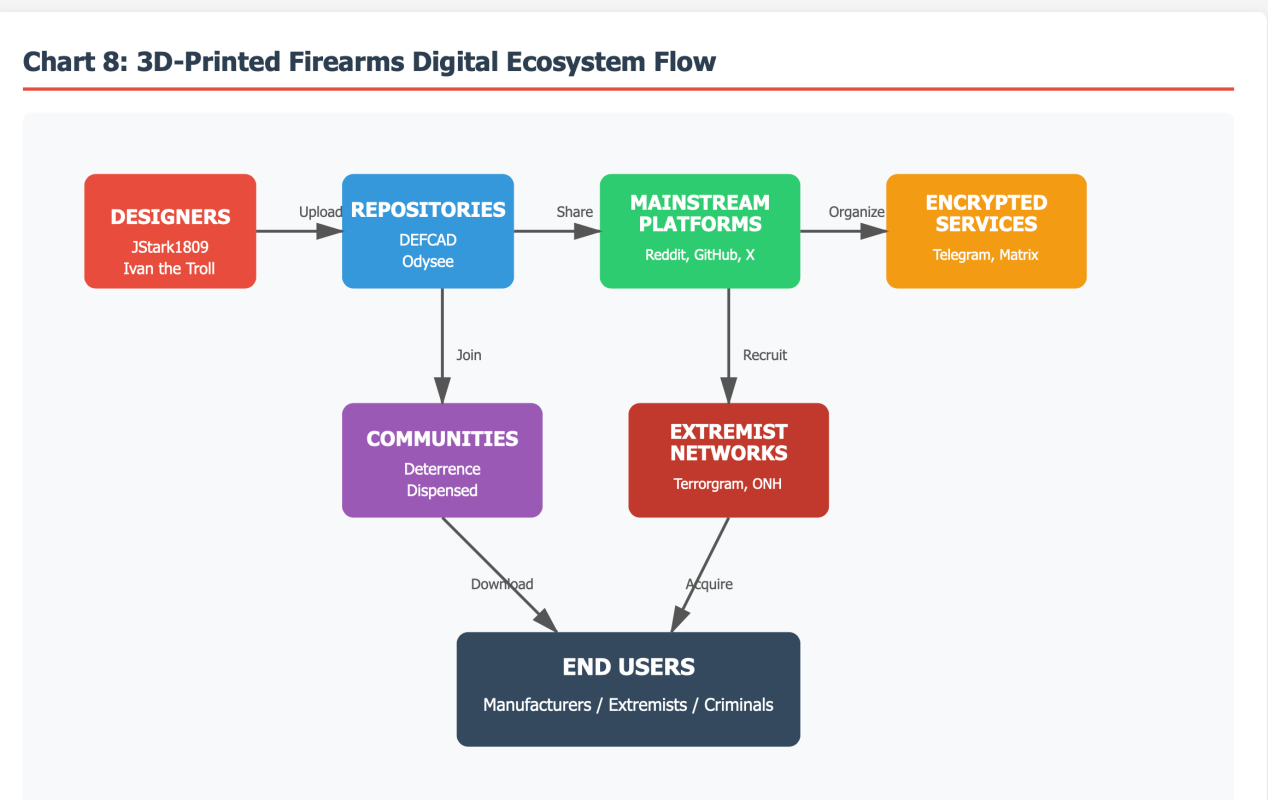
The development of 3D-printed guns relies on a digital ecosystem for design sharing and community organisation, utilising platforms from open-source sites like Defence Distributed’s DEFCAD to blockchain-based repositories like Odysee. After being banned from mainstream platforms in 2019, Deterrence Dispensed moved to decentralised options, building its Keybase membership before facing further restrictions in 2021. Many continue to share blueprints on platforms like GitHub, Facebook and Reddit while extremist networks exploit these pathways to radicalise users and disseminate 3D-printed gun designs, blurring the lines between legitimate enthusiasts and extremist groups.
Data Analysis: Patterns, Concentrations, and Projections
Meticulous scrutiny of reported incidents reveals promising patterns to aid in countermeasure developments.
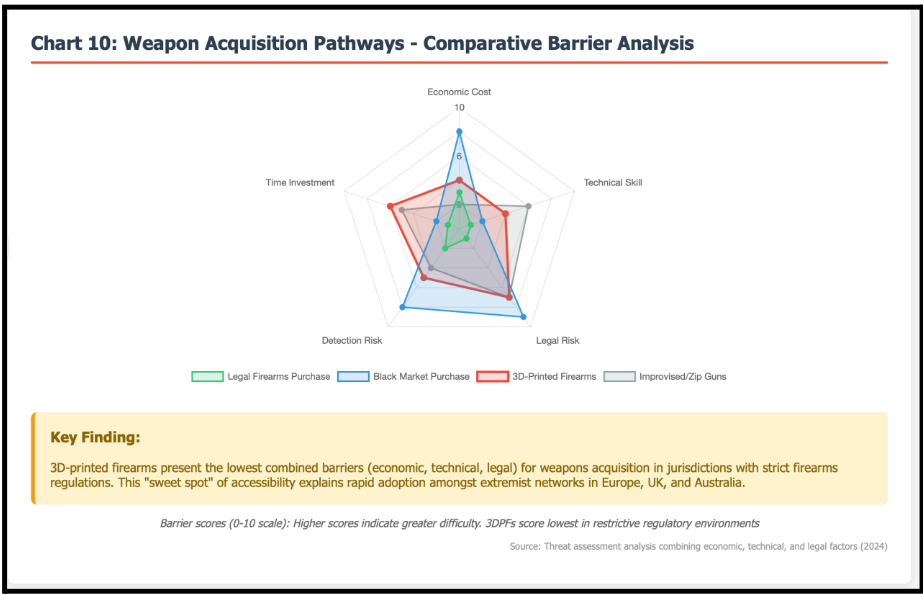
- Geographic Distribution: North America leads with 233 arrests (68%), followed by Europe (69 arrests, 20%), Oceania (26 arrests, 8%), and Asia (Myanmar only). Significant UK share (30 arrests, 44% of Europe) supports the weapon substitution hypothesis; stricter gun laws correlate with higher 3DPF adoption.
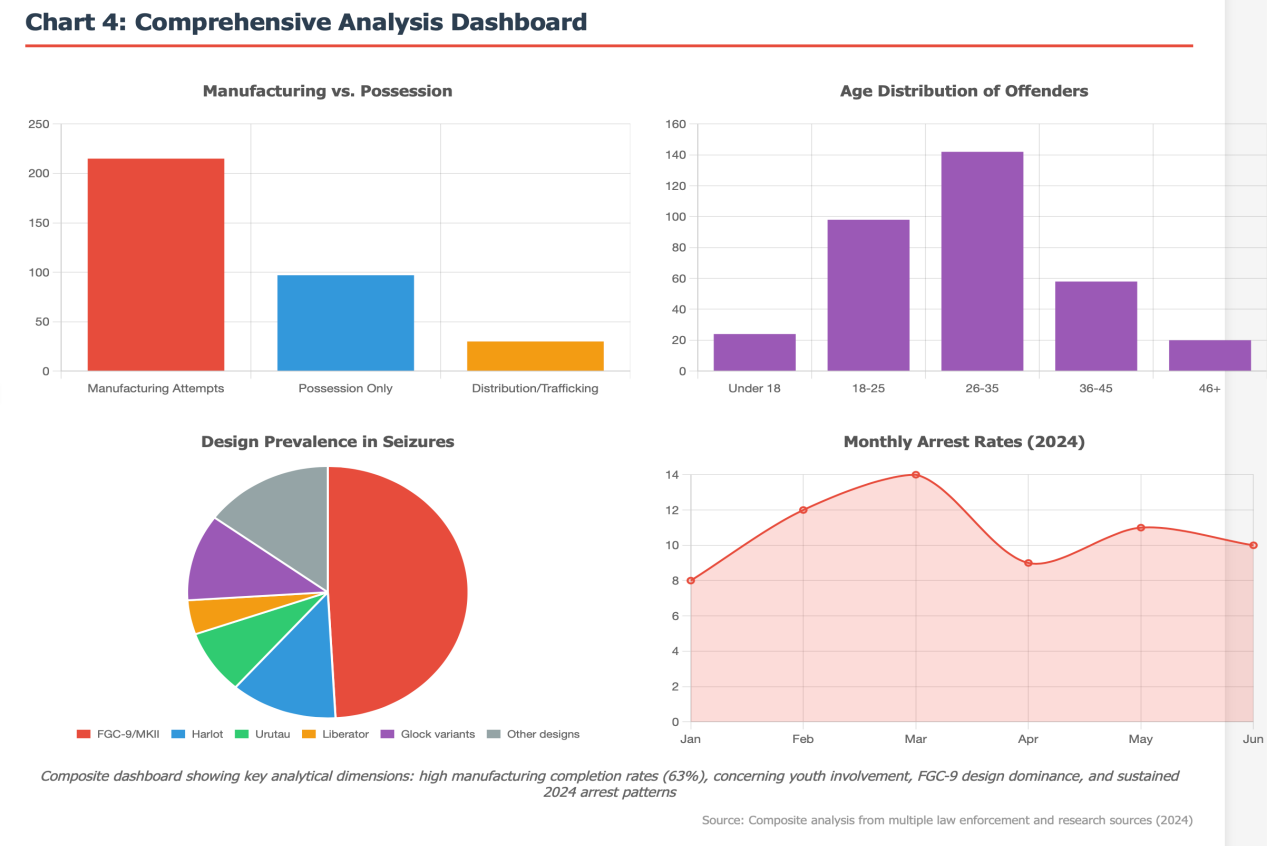
- Time Line Shift: A rise from the first arrest in 2013 to 342 by mid-2024 indicates systematic adoption. Post-2020, a dramatic surge in incidents (85% of cases) aligns with FGC-9 release and the pandemic’s role in fostering digital communities. Monthly arrests average 10.7 in 2024, surpassing pre-2020 rates.
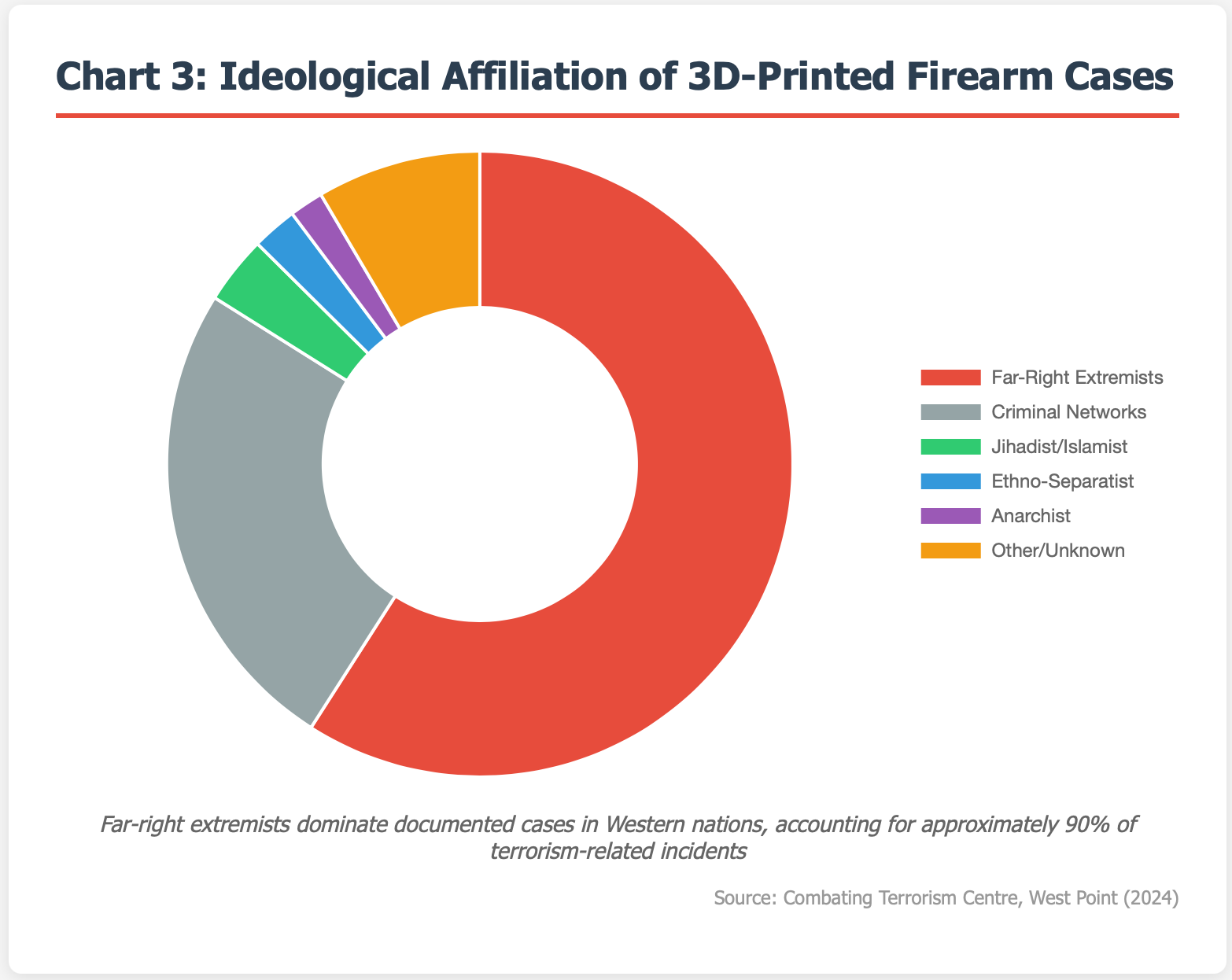
- Ideological Distribution: 90% of Western cases linked to far-right extremists facilitate monitoring online spaces where 3D-printed firearm discussions occur; however, emerging ideological diversification is seen in cases like the Greeks arrested in New York and ONH in Northern Ireland.
- Manufacturing vs. Possession: 63% of cases involve manufacturing attempts rather than blueprint-only possession, indicating lowered barriers to entry and increased capability, vital for threat assessment.
- Design Prevalence: FGC-9 is present in about 70% of identified weapon designs, allowing targeted countermeasures.
- Age Demographics: Youth involvement (80 documented cases, 17 linked to far-right extremism) highlights alarming recruitment and radicalisation among digital natives; the Detroit case illustrates the accessibility of manufacturing tools.
- Quality Assessment: Law enforcement reports high quality of seized firearms; expert evaluations contradict prior beliefs about 3D-printed firearms being unreliable.
Platform Responses and Manhattan DA’s Regulatory Push
The rise of 3D-printed firearms has prompted varied regulatory responses. In July 2024, Thingiverse introduced AI-based moderation to remove weapon designs after investigations by Manhattan DA Alvin Bragg identified numerous downloadable files. While significant reductions in available designs were noted, the decentralised nature of file-sharing hampers effectiveness. DA Bragg’s broader strategy includes urging manufacturers like Bambu Lab and Shenzhen Creality to implement security protocols that screen print jobs against gun blueprint databases. This regulatory approach draws on historical methods used against counterfeiting with colour printers.
French company Dagoma’s initiative to release non-functional blueprint files highlights innovative tactics, though scalability issues arise from repository distributions. A pivotal Supreme Court ruling in Bondi v. VanDerStok affirmed the ATF’s authority to regulate 3D-printed firearms akin to traditional ones, necessitating serial number markings and background checks. Nevertheless, enforcement challenges persist, as decentralised repositories allow easy content duplication, pushing users to less regulated platforms, such as LBRY and Odysee, undermining traditional moderation efforts.
Practical Recommendations for Technology Platforms
- Technology companies must limit 3D-printed firearms proliferation among extremist groups through content control, community disruption, and manufacturing prevention.
- Improve content detection systems via advanced AI for identifying blueprints/instructions using CAD file scanning, text recognition, image analysis, and matching technologies.
- Detection should include recognition of coded language related to firearms.
- Use network analysis to disrupt firearms-related communities: map social networks, track user movements, and identify influential accounts for removal.
- Target proactive intervention to prevent community growth around 3D-printed firearms.
- Integrate detection measures into 3D printer and software products, screening print jobs against weapon component databases and employing machine learning for identification.
- Enforce default security settings with detection capabilities; implement a cloud-based filter to intercept weapon prints.
- Launch counter-messaging campaigns on platforms about the consequences of firearm actions; include legal stories, voices from affected communities, education on regulations, and partnerships against extremism.
- Collaborate across industries to create shared threat databases, coordinate enforcement actions, standardise policies, and share intelligence on tactics.
- Ensure transparency with regulators and law enforcement through periodic reporting while respecting user privacy.
- Address the balance between safety and free expression, with human review processes and transparent appeal mechanisms to overcome challenges.
Conclusion
By 2024–2025, the spread of 3D-printed firearms in extremist and criminal networks poses substantial global security challenges, with over 340 arrests and increasing youth involvement, especially in North America and Europe. Notable cases, such as the Terrorgram Collective and the Marseille network, demonstrate how weapon design intersects with crime.
While India faces vulnerabilities due to regulatory gaps, Myanmar’s embrace of the FGC-9 design underscores the rapid adaptation by non-state actors. Key patterns like far-right concentration and high manufacturing rates indicate intervention opportunities. Technology platforms can disrupt online design sharing through detection and collaboration, but the rise in cases and new legal precedents highlights the urgency for balanced countermeasures.

Divyanka Tandon holds an M.Tech in Data Analytics from BITS Pilani. With a strong foundation in technology and data interpretation, her work focuses on geopolitical risk analysis and writing articles that make sense of global and national data, trends, and their underlying causes. Views expressed are the author’s own.
 Aayush Pal
  Anjali Singh
  Anusreeta Dutta