
- The book argues that Africa cannot be treated as one uniform region because it has 54 countries, over 3,000 ethnic groups, and more than 2,000 languages.
- Faloyin argues that colonial history, media bias, and aid narratives have created a single dominant narrative about Africa, which erases its rich diversity and strength.
- Faloyin focuses primarily on today’s realities, such as youth protests, mobile banking technologies like Mpesa, and the African Continental Free Trade Area (AfCFTA), to show a bright continent ready for its own future.
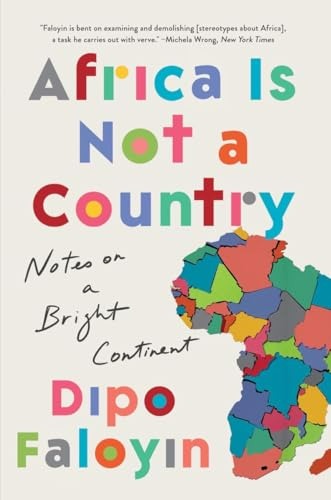
We are reviewing Dipo Faloyin’s book Africa Is Not a Country: Notes on a Bright Continent, published in 2022 by W.W. Norton. This work focuses on presenting Africa’s real stories beyond common misconceptions. The publisher, W.W. Norton & Company, brings a compelling approach to examining how Africa is portrayed in academic discourse. Further, Faloyin, a Nigerian journalist at VICE News, draws on his experience in Lagos and across global media to challenge Western stereotypes about Africa. He also argues that Africa is not a single poor place, as many people often assume.
The book argues that Africa cannot be treated as one uniform region because it has 54 countries, over 3,000 ethnic groups, and more than 2,000 languages. This diversity itself demonstrates that the continent requires further study as a collection of separate nations rather than being viewed as a single entity. Faloyin argues that colonial history, media bias, and aid narratives have created a single dominant narrative about Africa, which erases its rich diversity and strength. In the book, he writes eight essays that challenge these stereotypes, advocating for a more nuanced understanding of Africa’s complexity and modern progress.
In the first part, Faloyin writes with clear reporting skills and sharp humour that make complex ideas easy to understand. The style mixes personal stories with serious analysis in a way that is both simple and insightful. In his approach, he uses humour to make criticism more accessible. For example, in Faloyin’s analysis of the 1884–1885 Berlin Conference, European powers carelessly divided Africa while drinking and smoking, creating borders that broke communities apart. This careless action has caused long-lasting conflicts across the continent. This method helps readers feel connected to these past injustices, turning difficult ideas about colonial history into emotions that people can clearly understand. We also see how he uses his own family stories to make his points stronger. His experiences from his Yoruba-Igbo family in Nigeria show cultural richness, like the “Jollof Wars,” where people playfully argue about rice dishes, which shows both regional pride and unity in diversity. These small stories work as counter-narratives to common stereotypes, showing Africa’s daily joys and new ideas from Nairobi’s tech centres to Nollywood’s growing film industry.

Faloyin shows Africa’s diversity through different themes, colonial borders, white saviorism, and cultural theft, using an approach that exposes how events like Live Aid made Africans look helpless instead of capable. He demonstrates how these narratives have often positioned Africans as passive receivers rather than active change-makers. In the essay “The Story of Democracy in Seven Dictatorships,” he discusses leaders like Mobutu Sese Seko and Idi Amin, who came after independence, and he criticises external influences while praising strong democratic movements in Senegal and Ghana.
The last part focuses mainly on sub-Saharan Africa and gives less attention to North Africa. Moreover, this limited coverage may create a somewhat one-sided view, even though the book tries to show Africa’s diversity. Faloyin focuses primarily on today’s realities, like youth protests, mobile banking technologies such as M-Pesa, and the African Continental Free Trade Area (AfCFTA), to show a bright continent ready for its own future. His emphasis on these modern developments paints Africa as moving towards self-determined growth.
Faloyin’s work connects with scholars such as Edward Said and Frantz Fanon, who wrote about how Western societies have historically viewed the East and about how colonial rule affected people’s minds. He further extends these ideas to media representation itself, aligning with Binyavanga Wainaina’s satirical essay “How to Write About Africa,” which criticises lazy stereotypes such as “tribal” portrayals or constant poverty.
In essence, Faloyin criticises how global media often similarly portrays Africa, as if it were one country with only problems like hunger and war, echoing Mbembe’s ideas about necropolitics, but he remains hopeful and advocates for the return of African cultural artefacts and better journalism. Through this approach, the book connects academic scholarship with popular discussions about stereotypes. This challenges readers to examine their role in maintaining such narratives in the context of movements such as the Black Lives Matter movement.“Africa Is Not a Country” significantly reshapes how international audiences understand African identity and politics.
The book contributes directly to changing global perspectives on Africa’s diverse realities. It also empowers African voices, calling for partnership rather than pity, and shows the continent’s internal problems without overly idealising them. Faloyin’s analysis sometimes overlooks some details, like inequalities within Africa, but it nevertheless helps change how people see the continent. This book is essential reading for understanding Africa beyond colonial perspectives. The book encourages understanding and informed discussion in times of misinformation, while also highlighting Africa’s agency and independence in many ways.
Book Title: Africa Is Not a Country
Author: Dipo Faloyin
Publishers: W.W. Norton
Pages: 380 Pages (Hardcover)
Price: ₹2941
SW Ratings: ****½

Anshika Agrawal is a research scholar at the Centre for Russian and Central Asian Studies, Jawaharlal Nehru University, with a strong interest in current affairs, bilateral and multilateral relations, and public policy. Views expressed are the author’s own.
 Ananda Mathews
  Archita Gaur
  Balaji Subramanian