
|
Getting your Trinity Audio player ready...
|
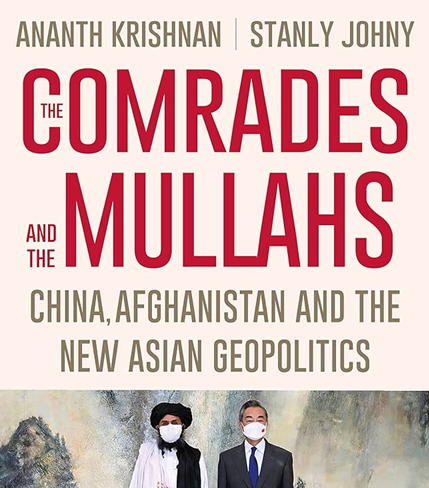
- The authors highlight the convergence of security (notably Xinjiang-related) and economic concerns, characterising Beijing’s response as cautious pragmatism.
- The dual logic of caution and opportunism is the basis of China’s approach, and this is evident in the limited political commitments, yet continued diplomatic and economic engagement with the Taliban.
- The book not only accounts for what China is doing today but raises more fundamental questions about the limits of external influence and the potential directions for regional geopolitics in Asia.
- The book also raises an even more critical question: can China really avoid the fate of historical external powers in Afghanistan?
Few regions reveal the constraints on great power ambition as starkly as Afghanistan. As ‘The Comrades and the Mullahs’ by Ananth Krishnan and Stanly Johny notes, “this is a story of power after power failing to learn from the past.”
Against this background, the book offers a more sophisticated analysis of China’s interaction with the Taliban-controlled Afghanistan and places this in the context of shifting Asian geopolitics. The authors highlight the convergence of security (notably Xinjiang-related) and economic concerns, characterising Beijing’s response as cautious pragmatism. By placing China’s policy in the context of a longer history of external interventions in Afghanistan, the book interrogates continuities and changes in great power conduct.
The book’s organisation reflects this layered approach, beginning with the historical background of U.S. intervention and the emergence of the Taliban, then tracing regional geopolitical shifts in the aftermath of the fall of Kabul. Following developments from the US’ retreat to China’s increased involvement, especially in terms of the revival of the Silk Road and the role of Xinjiang, the authors place Beijing’s Afghan policy within a larger strategic design. In particular, the analysis goes beyond China to factor in Pakistan as a crucial intermediary and India’s more tentative engagement, highlighting how Afghanistan continues to serve as a venue for inter- and intra- regional rivalries.
The core message is that China’s engagement with Afghanistan is driven primarily by non-ideological, pragmatic considerations of security and economic interests. For Beijing, Afghanistan’s stability is not an end in itself, but a strategic necessity, especially as it relates to Xinjiang, where anxieties over extremism and cross-border militancy are high. Meanwhile, Afghanistan is also a prospective, even if precarious, economic frontier, whether by way of its mineral wealth or through its integration into wider regional connectivity projects. This dual logic of caution and opportunism is the basis of China’s approach, and this is evident in the limited political commitments, yet continued diplomatic and economic engagement with the Taliban.
“This is a story of power after power failing to learn from the past”
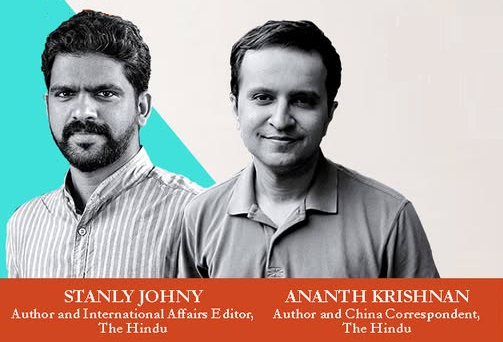
Yet, the book also raises an even more critical question: can China really avoid the fate of historical external powers in Afghanistan? Although Beijing’s strategy is different in its focus on economic engagement and political caution, it is also bound by the same structural imperatives that have traditionally undermined foreign participation. Long-term strategic success remains elusive as ongoing instability, internal Taliban rivalries and weak institutional governance so far persist. In addition, China’s emphasis on economic inducements presupposes a stability that Afghanistan has seldom enjoyed. In this regard, the book proposes that although China may approach affairs in Afghanistan differently, at least in a manner, it is not entirely immune to the enduring difficulties that have come to define the waters in which Afghanistan’s geopolitical business has been conducted.
For India, these are turning into complex strategic problems. New Delhi has historically been cautious of the Taliban, but China’s growing presence in Afghanistan adds a new regional dynamic that cannot be ignored. Beijing’s backing of Pakistan and expanding economic footprint has created a sense of strategic encirclement and marginalisation of Indian regional aspirations. At the same time, the uncertain trajectory of domestic stability in Afghanistan and the lack of anything resembling legitimate governance narrows the space for New Delhi to actively engage. This is putting India in a bind strategically; there are its security concerns on one hand and the need to keep up with the rapidly evolving regional order on the other. In that light, the book implicitly conveys the need for India to recalibrate its stance, not just on the reactive axis but towards a more layered and agile regional policy.
While specifically discussing China, this book also helps contribute to a wider explanation of how modern geopolitics in Asia are being shaped in the post-American era. It traces the rise of a more segmented regional system, where old power hierarchies are evolving into fluid and occasionally weak alignments. In this regard, Afghanistan is not an outlier but a lens through which to analyse the constraints on external influence and the evolving configuration of regional power competition.
“The core message is that China’s engagement with Afghanistan is driven primarily by non-ideological, pragmatic considerations of security and economic interests.”
Ultimately, ‘The Comrades and the Mullahs’ places China’s Afghan policy in a wider historical pattern of outward engagement, tempered by aspiration, expediency, and repeated underestimation of the other. As the authors note, “this is a story of power after power failing to learn from the past.” Whether China can break this pattern remains to be seen. Though its tactics are those of a pragmatist and a restrained approach, rather than those of an ideologically rigid actor, avoiding direct military intervention and opts instead for economic and diplomatic overtures. The age-old complexities of Afghanistan are still strong enough to challenge even the most calculated forms of statecraft. In that sense, the book not only accounts for what China is doing today but raises more fundamental questions about the limits of external influence and the potential directions for regional geopolitics in Asia.
Book Title: The Comrades and the Mullahs
Author: Ananth Krishnan and Stanly Johny
Publishers: HarperCollins India
Pages: 341 Pages (Hardcover)
Price: ₹403
SW Ratings: ****½

Archita Gaur is a postgraduate student at the School of International Studies, JNU. She specialises in the World Economy and has a strong interest in public policy, economic research, and governance. The views expressed are the author’s own.
 Ananda Mathews
  Balaji Subramanian
  Anshika Agarwal