|
Getting your Trinity Audio player ready...
|
- Shah’s outreach to foreign envoys is indicative of an attempt to avoid alignment and diversify ties, supporting a hedging tactic common to small governments in asymmetric power contexts.
- Shah’s leadership will be put to the test by handling India’s security concerns, addressing public mistrust of Chinese projects, and striking a balance between anti-corruption pledges and the need to maintain foreign investment.
- The Shah government’s success will depend on its ability to navigate competing pressures, maintain strategic balance, and align its reformist domestic agenda with a coherent and pragmatic external strategy.
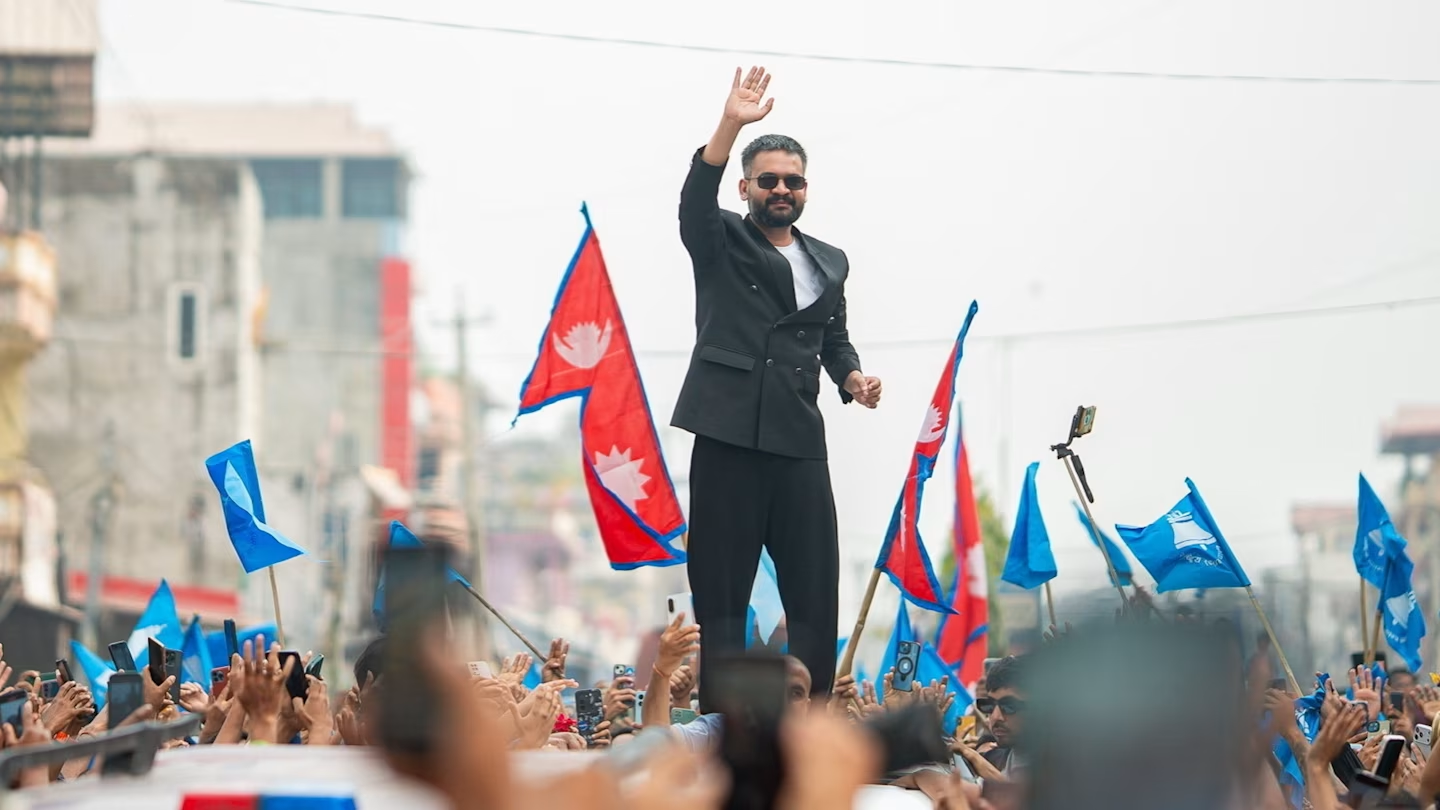
The emergence of Balendra Shah and the Rastriya Swatantra Party (RSP) following the March 5, 2026, elections represents both change and continuity in Nepal’s foreign policy trajectory. A reform-oriented leadership focused on accountability and efficient governance is being propelled by the electoral failure of traditional parties, which reflects voter discontent with established elites. In terms of foreign relations, however, Kathmandu seems dedicated to maintaining its long-standing approach of striking a balance between China and India.
According to neorealism, Nepal’s geographic location as a landlocked nation sandwiched between two powerful nations continues to influence its foreign policy. Maintaining strategic autonomy while avoiding excessive reliance on any neighbour is crucial, even in the face of domestic political turmoil. Shah’s simultaneous outreach to several foreign envoys is indicative of an attempt to avoid alignment and diversify ties, supporting a hedging tactic common to small governments in asymmetric power contexts.
At the same time, Nepal’s focus on development diplomacy exhibits liberal institutionalist characteristics. The cautious continuation of engagement with China’s Belt and Road Initiative (BRI) highlights Kathmandu’s emphasis on external collaborations for economic progress.
However, the limitations of such cooperation are highlighted by issues with funding, accusations of corruption, like those related to Pokhara International Airport, and difficulties with implementation. Nepal’s demand for case-by-case financing is indicative of a practical reevaluation meant to maximise profits while reducing risks.
As Beijing looks to reconsider its relationship with a non-communist ruling party that has no ideological affinities with the Communist Party of China (CPC), China’s attitude, which is typified by a “wait-and-watch” strategy, is consistent with strategic realism. Even if China’s economic and security interests—particularly with regard to Tibet—remain substantial, the lack of traditional communist actors in Nepal’s government may limit its political clout.
The RSP government’s internal limitations could influence its outward stance. Shah’s leadership will be put to the test by handling India’s security concerns, addressing public mistrust of Chinese projects, and striking a balance between anti-corruption pledges and the need to maintain foreign investment. An attempt to redefine neutrality beyond the conventional India-China binary is suggested by his early diplomatic signalling, such as meeting several ambassadors at once.
Nepal’s changing identity as a “bridge state” is an aspirational rethinking of its place in regional geopolitics, according to constructivist theory. But it’s still unclear how to turn this story into a workable plan. The difficulties of institutionalising neutrality in the face of conflicting regional interests are demonstrated by historical antecedents like King Birendra’s “Zone of Peace” plan.
In conclusion, while Nepal’s domestic politics have undergone significant transformation, its foreign policy exhibits strong elements of continuity shaped by structural realities. The Shah government’s success will depend on its ability to navigate competing pressures, maintain strategic balance, and align its reformist domestic agenda with a coherent and pragmatic external strategy.

Anjali Singh is a postgraduate student of Political Science and International Relations, a Social Media Analyst, and a former Research Intern at the Indian Council of World Affairs. Views expressed are the author’s own.
 Archita Gaur