Fifteen Years After Gaddafi, Libya Remains Trapped in Conflict
- Fifteen years later, Libya remains unable to establish a stable political order or restore the authority of a unified state.
- The ongoing civil conflict has increasingly transformed Libya into a proxy battleground, with countries across the world seeking to expand their influence.
- Oil has become central to Libya’s political contest, with control over production, exports and revenues providing significant leverage to rival factions.
- The expectation was that the fall of Gaddafi would turn Libya into a new hope for Africa, but instead, the country has become one of the region’s biggest political and humanitarian disasters.
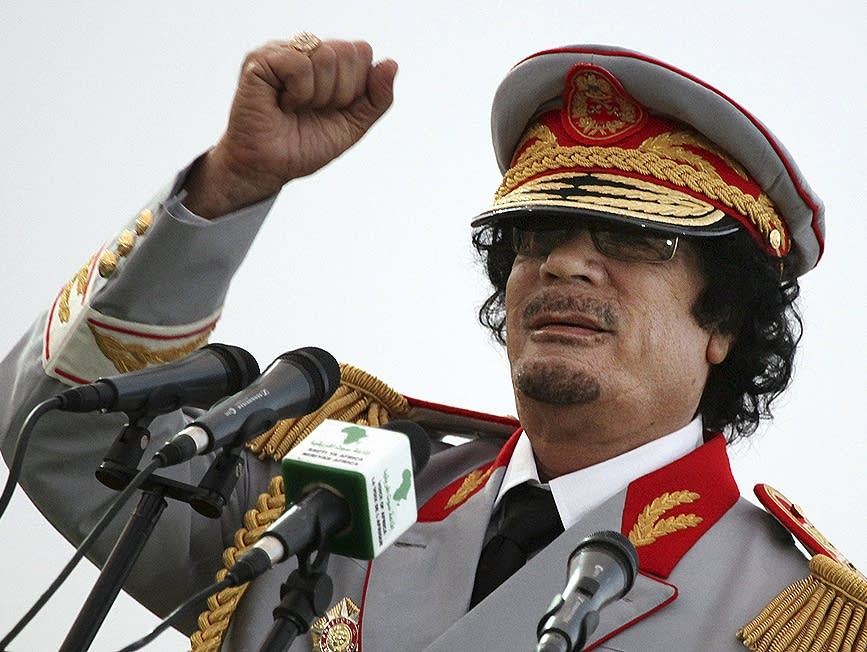
In 2011, the Arab Spring reached Libya, an oil-rich nation situated along the Mediterranean coastline. A country largely known for its flamboyant dictator, Muammar Gaddafi, who raised eyebrows across the world with his eccentric persona, was also one where the leader remained deeply invested in Libya’s sovereignty and advocated for greater unity across the Arab world. It has been 15 years since the fall of Gaddafi, and for many, the end of his rule also marked the beginning of Libya’s decline. His overthrow plunged the country into a chaotic state of affairs, with civil war, political instability and the collapse of basic necessities turning Libya into one of the most unstable nations in the region. Continuous conflict has brought the country to a standstill. The question, therefore, is what has transpired over the last 15 years, and how exactly Libya descended into the security crisis it finds itself in today?
A Country Divided Between Two Power Centres
The situation in Libya remains precarious, with the country divided between two major power blocs—the eastern and western factions. The eastern power bloc is led by Khalifa Haftar, who heads the Libyan National Army (LNA) and seeks to extend his authority across the country. Operating primarily from Benghazi, his forces exercise control over much of eastern Libya, including strategically important oil-producing regions. The eastern administration, associated with the Government of National Stability, continues to face international recognition challenges, while receiving backing from regional and international players such as Egypt, Russia and the United Arab Emirates.
On the other hand, western Libya is dominated by the Government of National Unity (GNU), headed by Abdul Hamid Dbeibah and based in the capital, Tripoli. The government enjoys international recognition and support from countries such as Turkey and Qatar. The continuous rivalry between the eastern and western power centres has sustained Libya’s civil conflict, with both sides seeking greater control over the country and its political institutions.
A Conflict That Has Become a Proxy Battleground
The ongoing civil conflict has increasingly transformed Libya into a proxy battleground, with countries across the world seeking to expand their influence. Given Libya’s strategic geographical location along the Mediterranean, its vast energy resources and its proximity to Europe and Africa, several international actors remain interested in strengthening their foothold in the country. Turkey, Qatar, Russia, Egypt, the UAE and the United States all have varying interests in Libya’s political and strategic future.
The division of power within Libya has become one of the major obstacles to reaching a consensus on holding elections. The country’s political fragmentation has repeatedly stalled efforts to organise presidential elections, with competing factions unable to agree on the political and institutional arrangements necessary to move forward. The continued involvement of foreign powers, coupled with the competing interests of Libya’s domestic factions, has further complicated the political process, preventing the country from reaching a common conclusion and prolonging its instability.
Oil: Libya’s Greatest Asset and Its Biggest Dilemma
The resource dilemma is another major factor contributing to Libya’s crisis. The country possesses enormous oil reserves, yet political divisions and competing power structures have prevented the effective utilisation of its resources. Oil has become central to Libya’s political contest, with control over production, exports and revenues providing significant leverage to rival factions.
The eastern power bloc controls a significant portion of Libya’s oil-producing territories and infrastructure. However, control over oil fields does not necessarily translate into the ability to independently manage international exports, revenues or the country’s broader economic affairs. Political disputes, institutional fragmentation and competing claims over revenue distribution continue to undermine Libya’s energy sector, making oil a central instrument of political bargaining and instability.
The Aftermath of Regime Change
The Western-led intervention in Libya, which contributed to the overthrow of Gaddafi, not only toppled the regime but also created a vacuum that the country has struggled to fill. Fifteen years later, Libya remains unable to establish a stable political order or restore the authority of a unified state. Its inability to conduct presidential elections, maintain institutional consensus and ensure basic administrative functioning reflects the depth of the crisis.
The Libyan situation is not an isolated case. Across parts of Sub-Saharan Africa and North Africa, countries blessed with enormous geographical and natural resources continue to struggle with instability, weak institutions and conflict. In several cases, these resources have become sources of competition, exploited by domestic power centres and external actors seeking strategic or economic advantage. Libya is a stark example of how resource wealth, rather than guaranteeing stability and prosperity, can become a catalyst for prolonged conflict when political institutions collapse, and competing interests take precedence over national unity.
The Arab Spring: A Reality Check on Regime Change
And this very much raises the question of who exactly has benefited from the Arab Spring, opening up a larger debate about its consequences across the region. The idea behind the Arab Spring was fundamentally to overthrow dictatorial regimes and bring about democratic transformation, allowing countries to embrace democracy, political freedom and economic prosperity. The same aspirations were witnessed across several Middle Eastern and North African countries. However, the aftermath of the Arab Spring presents an entirely different reality. Countries such as Libya, along with others across the region that witnessed major political upheavals, have struggled to establish functioning political systems, with their economies and institutions performing far worse than what was initially envisioned. The expectation was that the fall of Gaddafi would turn Libya into a new hope for Africa, but instead, the country has become one of the region’s biggest political and humanitarian disasters. This raises a broader question: does the world necessarily need another Arab Spring? The answer may not simply lie in fighting dictatorships, but in confronting every form of power that fails to govern effectively. A regime does not necessarily have to be dictatorial to become dysfunctional; the greater challenge is ensuring that governments, regardless of their political nature, are capable of delivering stability, functioning institutions and prosperity to their people.

Aayush Pal is a freelance writer on contemporary geopolitical developments. The views expressed in his work are entirely his own.
 Niranjan Kadam
 Hridbina Chatterjee