
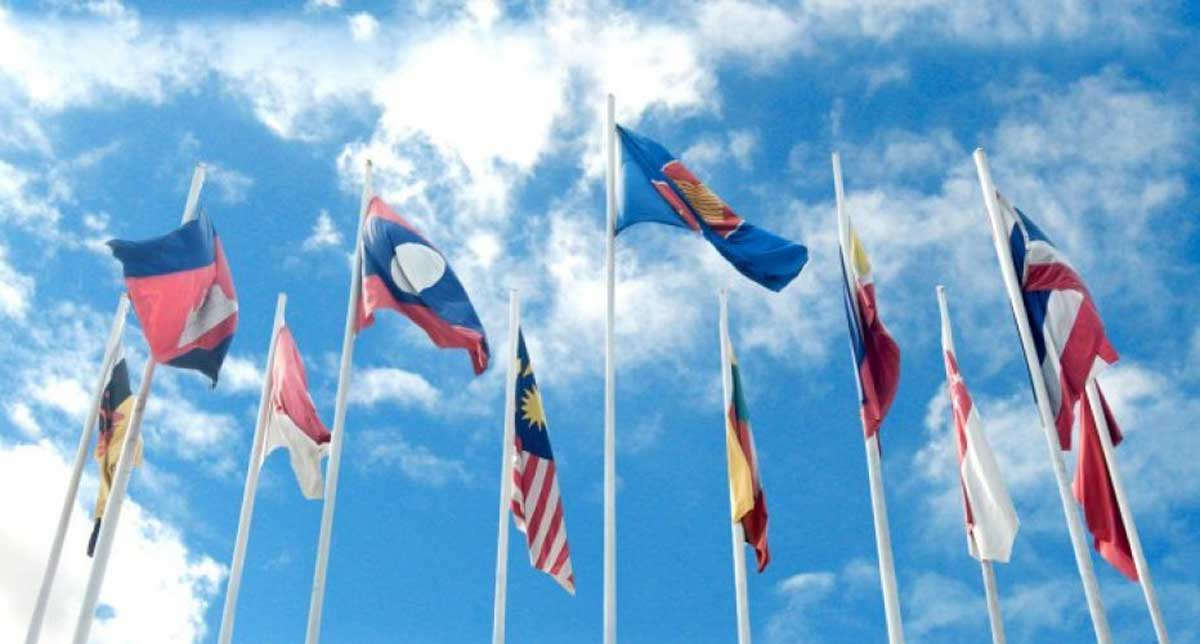
- ASEAN has become a geopolitical and strategic platform with which every major country wants to engage.
- Countries have understood the importance of maintaining resilient supply chains and multiple sources of supply rather than depending on a single country.
- Southeast Asia has become an extended neighbour to India, making the region important for India’s connectivity, neighbourhood security and strategic interests.
- Southeast Asia has very much become the centre stage of contemporary global geopolitics, and the ball is now in Southeast Asia’s court to determine how it capitalises on these opportunities, maintains strategic autonomy and strikes a fine balance between preserving its independence and further engaging with other countries.
The world has witnessed two major summits, one being the India–ASEAN Summit and the other the Asia-Pacific Economic Cooperation (APEC) summit. Both bring together some of the world’s major economic powers and reflect the growing importance of the wider Asia-Pacific region. However, what was common between the two summits was the significant participation of ASEAN countries. India concluded a summit with ASEAN’s 11 member countries, while seven countries from the bloc were present at the APEC summit. This very much reflects the changing geopolitical reality and suggests that ASEAN is no longer simply a grouping that countries engage with for diplomatic convenience; rather, it has become a geopolitical and strategic platform with which every major country wants to engage.
The Geopolitical Importance of Southeast Asia
What makes ASEAN particularly important is the geopolitical location of its member countries. The region sits at the crossroads of the Indian and Pacific Oceans, covering some of the world’s most important maritime trade routes. Six member countries lie along the Strait of Malacca, a key transit point connecting the Asian world with the Pacific. The world very much understands the importance of maintaining a strategic presence along major sea lanes, as the Strait of Hormuz has demonstrated the greater importance of having a presence around geopolitical chokepoints.
However, it is not just about the geopolitical location of these countries, but more importantly, the overall dynamics and the advantages they have to offer. One of the reasons why the world needs ASEAN is its greater economic access. ASEAN has a significant demographic advantage and, more importantly, the right factors of production, which include affordable labour, relatively affordable electricity and substantial domestic demand. The combined populations of these countries are among the largest in the region, alongside their growing economies. Its critical geographical location also means that connectivity with the rest of the world is of great importance, and maintaining trade and economic access is relatively advantageous for these countries.
Economic Diversification and the China Factor
Another major reason why countries around the world have been increasingly interested in fostering relationships with this bloc is economic diversification. The world has understood that economic dependency on China has significantly increased. China is a country known for politicising its economic relationships, and amid major supply-chain disruptions that have been happening across the world, countries have understood the importance of maintaining resilient supply chains and multiple sources of supply rather than depending on a single country. This is where ASEAN comes into play. Countries such as Thailand, Indonesia and Vietnam offer significant alternatives to China, and economic diversification is one of the reasons why countries have been increasingly interested in maintaining relationships with ASEAN.
Keeping this in mind, India has been particularly interested in further enhancing its relationship with Southeast Asia. India has just concluded a major and successful India–ASEAN summit in the Philippines, and under Prime Minister Narendra Modi’s administration, New Delhi has been vocal about fostering greater relationships with Southeast Asia through its Act East Policy. Southeast Asia has become an extended neighbour to India, and one of the reasons why India wants to further strengthen its relationship with the region is connectivity. Southeast Asia is situated in close proximity to India, which shares a territorial boundary with Myanmar. Hence, it is important for India not only to amplify its geographical proximity but, more importantly, to protect its neighbourhood and territory. Security concerns arising out of Myanmar are also one of the reasons why India needs to remain vocal and maintain good relations with Southeast Asia.
Another major factor is China. China considers Southeast Asia its backyard. The rise of Chinese influence, economically and, more importantly, its territorial ambitions, has threatened countries in the region, particularly Vietnam and the Philippines, which have been facing the brunt of China’s growing territorial ambitions. This is where India wants to come in and capitalise on the opportunity. India has been strategic in Southeast Asia as it seeks to specifically maintain greater strategic partnerships with countries that share animosity towards China. If we look at the recent enhancement in relations between the Philippines and Vietnam, India has elevated its relationships with these countries to a strategic level. More importantly, India has shared its sophisticated military arsenal, including BrahMos missiles, with countries such as the Philippines, while also expanding its defence engagement with Vietnam and Indonesia. India has understood the importance of the region and is not only capitalising on the opportunity but also strengthening its relationships with countries across Southeast Asia.
Trade diversification is another major reason. India understands that Southeast Asia has significant demand and can become a perfect export destination for several Indian economic sectors. More importantly, the overall factors of production that Southeast Asian countries enjoy offer India a mutually beneficial opportunity. India has a win-win relationship with Southeast Asia.
The Opportunities, Challenges and Strategic Balancing Act
Just like India, the overall importance of Southeast Asia was also evident at the recently concluded Asia-Pacific Economic Cooperation summit in China, where seven ASEAN member countries participated. Major economies, including China, the United States, Canada and Australia, were interested in fostering greater relationships with the region because they understand its importance and how stronger economic relations and interdependence could potentially lead to greater cooperation.
However, there are several critical challenges that exist. One of them is political consensus. Considering that Southeast Asia is a bloc where consensus matters, every major decision within the Association of Southeast Asian Nations (ASEAN) requires mutual agreement among its members. Sometimes, this consensus results in delays, differences and complications. When there are multiple competing interests, it can become difficult to arrive at a unified decision, and this remains one of the challenges facing the bloc.
Another major challenge is security, particularly what has been happening in Myanmar since 2021 in the form of civil war, alongside territorial conflict between Cambodia and Thailand, which has questioned the unity of the bloc. These developments further complicate the situation, hinder the rise of investment and affect the overall interest emerging from the region and the wider world.
Although Southeast Asia has much to offer the world, it also has problems of its own. It has very much become the centre stage of contemporary global geopolitics, and the ball is now in Southeast Asia’s court to determine how it capitalises on these opportunities, maintains strategic autonomy and strikes a fine balance between preserving its independence and further engaging with other countries.

Aayush Pal is a freelance writer on contemporary geopolitical developments. The views expressed in his work are entirely his own.
 Anjali Singh