


Executive Summary
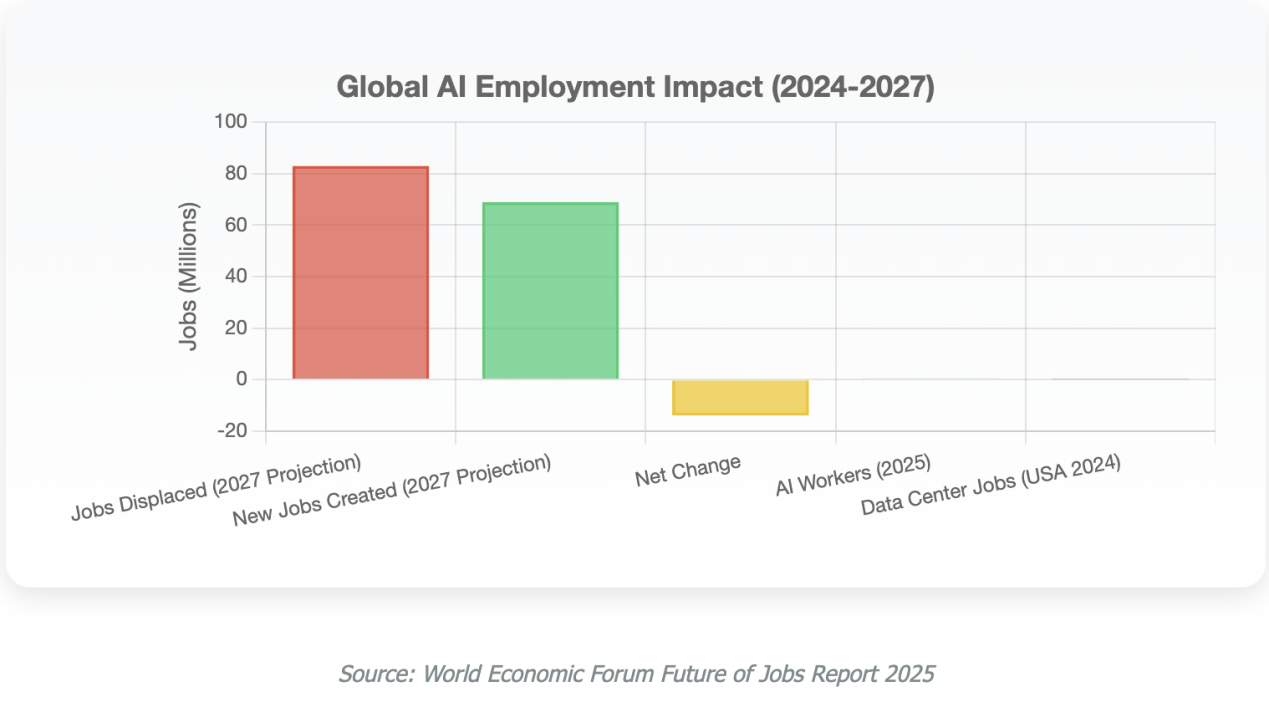
| Artificial Intelligence represents one of the most transformative technological shifts in human history, fundamentally reshaping the global employment landscape. This comprehensive analysis examines the multifaceted impact of AI on jobs across three major economies: the United States, China, and India. Through rigorous data analysis and evidence-based research, we explore both the displacement risks and the unprecedented opportunities created by AI adoption. The narrative surrounding AI and employment is complex and nuanced. While certain jobs face automation risks, AI is simultaneously creating entirely new categories of employment, enhancing productivity, and driving economic growth. By 2030, an estimated 14% of employees globally may need to change careers due to AI and automation. Still, the technology is also projected to create 69 million new roles by 2027, offsetting the displacement of 83 million jobs. |
Global AI Impact Overview
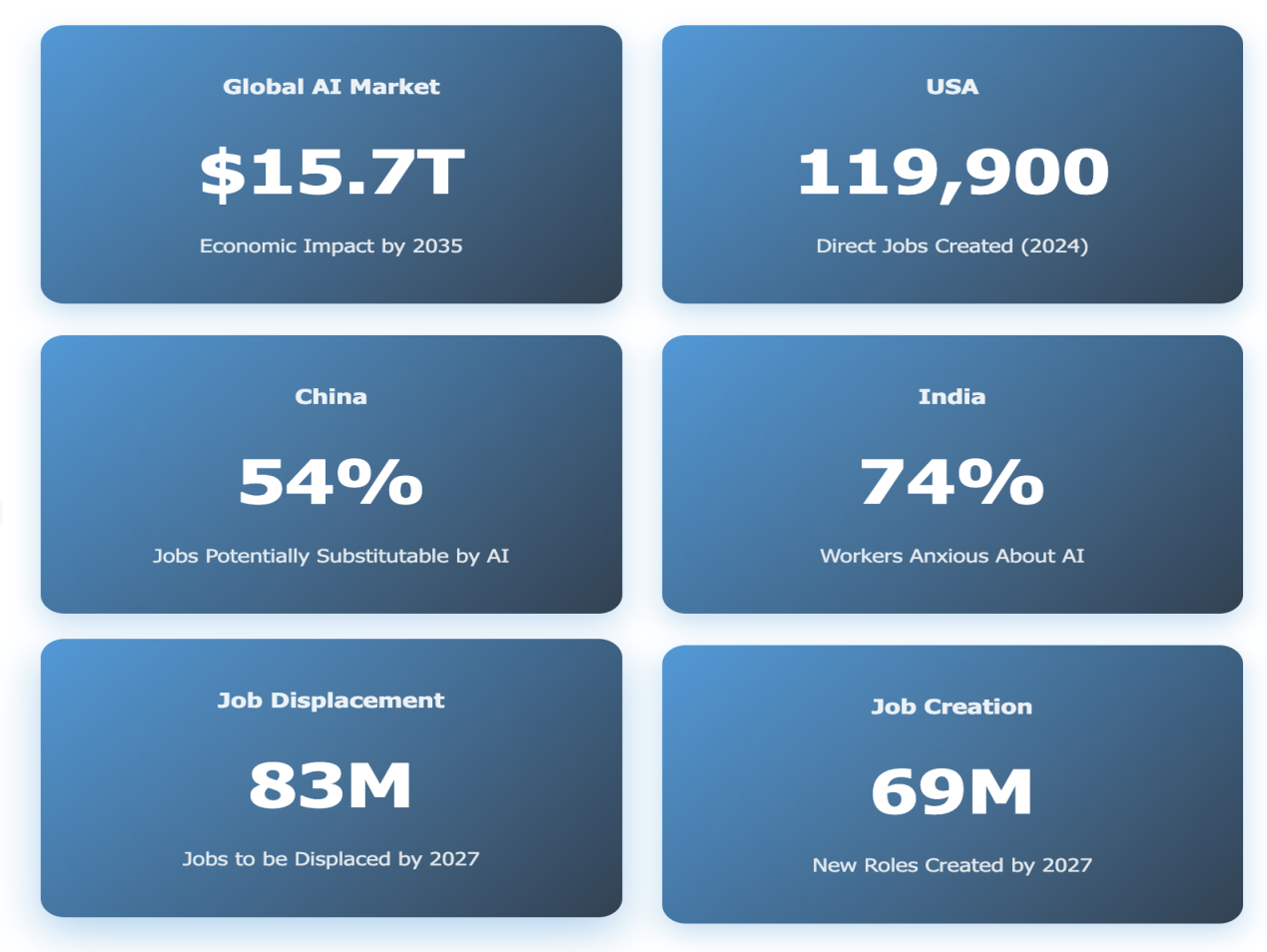
The integration of artificial intelligence into the global economy is accelerating at an unprecedented pace. As of 2025, AI adoption has moved from experimental phases to mainstream implementation across virtually every industry sector. McKinsey Global Institute projects that AI will contribute a staggering $15.7 trillion to the global economy by 2035, fundamentally transforming how businesses operate and how workers perform their jobs.
Current State of AI Adoption
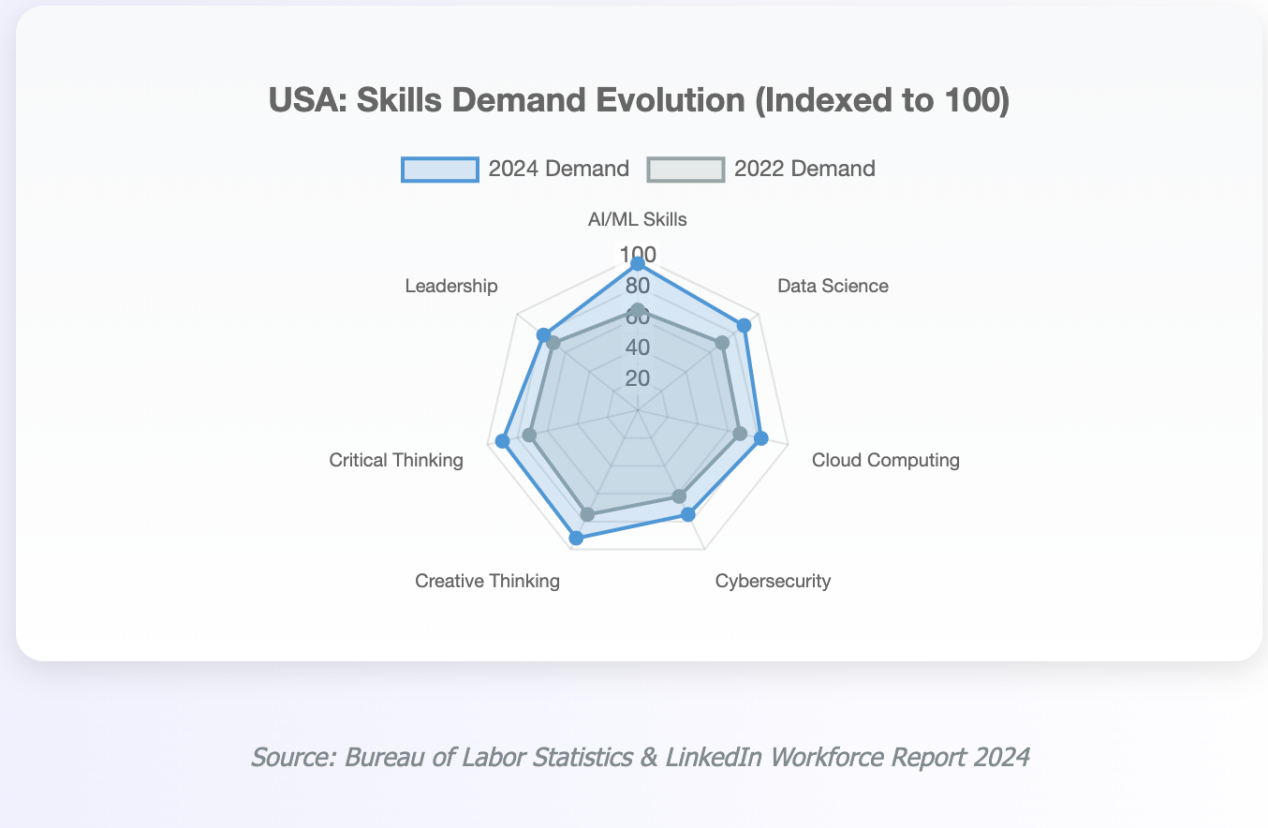
Recent data from PwC’s 2025 Global AI Jobs Barometer reveals that AI is making people more valuable, not less, even in highly automatable jobs. The analysis of nearly one billion job advertisements from six continents shows several critical trends. Seventy-seven per cent of industries are increasing their AI usage, including sectors traditionally viewed as less exposed to AI, such as mining and agriculture. The rate of skill change in AI-exposed jobs has accelerated to 43% (up from 25% the previous year), with the fastest change occurring in automatable jobs.
| Critical Finding: Workers with AI skills command a 43% wage premium compared to workers in the same job without AI skills, up from 25% in 2024. This demonstrates that AI competency is becoming one of the most valuable assets in the modern workforce. |
The Automation Paradox
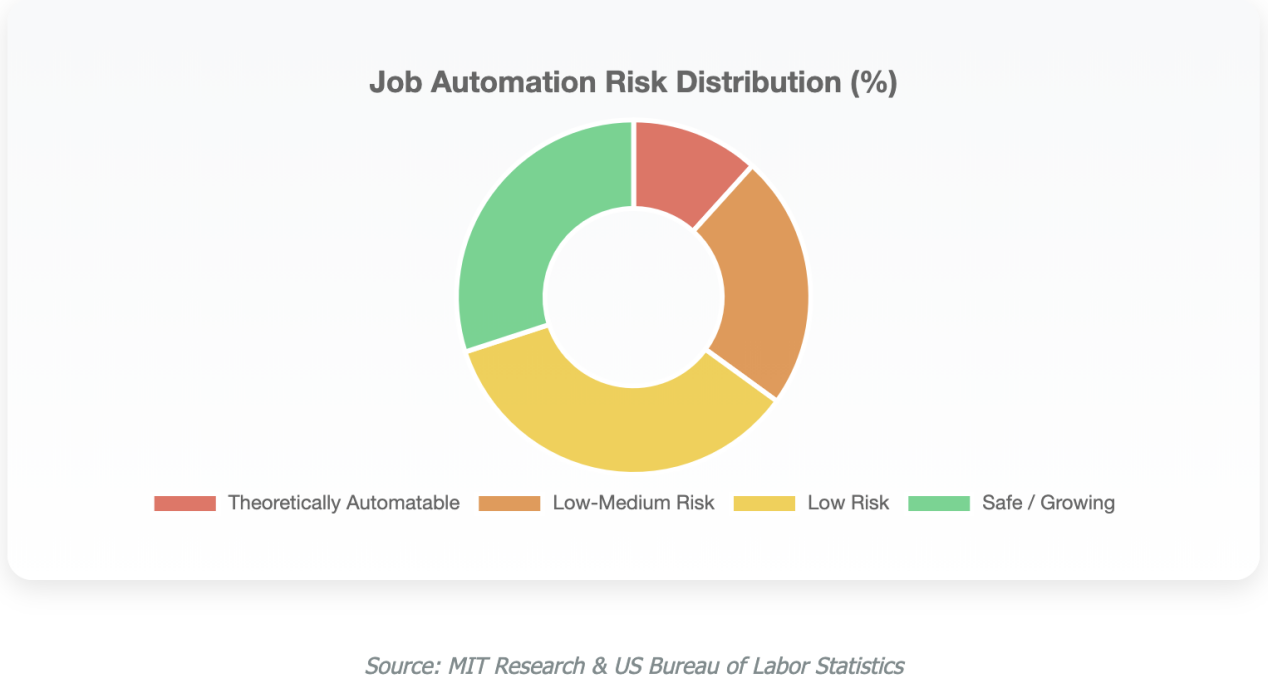
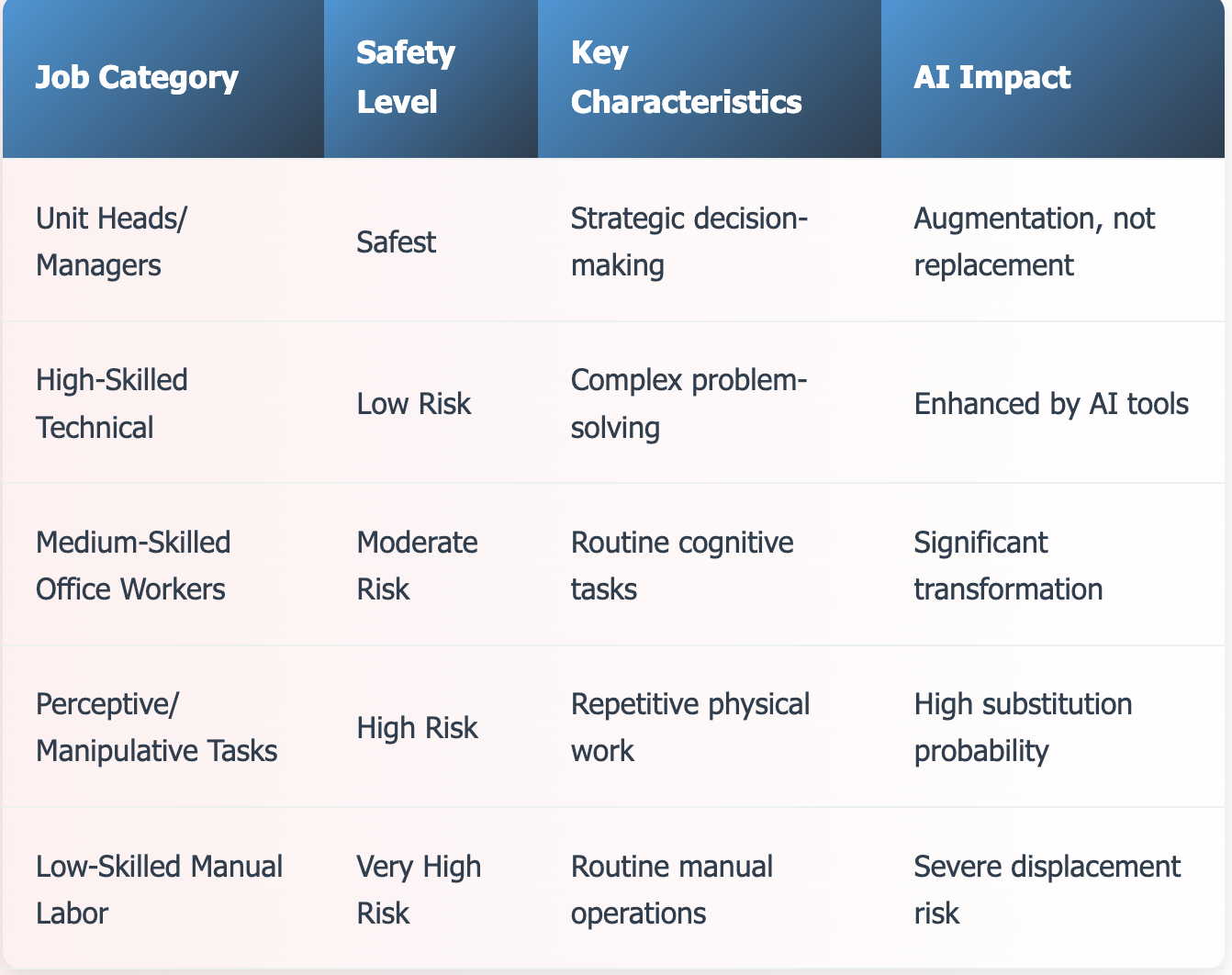
Contrary to dystopian predictions, historical evidence suggests that automation tends to reallocate work rather than eliminate it outright. Research from MIT indicates that approximately 11.7% of the labour market could be automated in theory, but whether automation will reach that level remains uncertain. Significantly, job losses as a share of total employment have trended downward over the past 30 years, even as automation and digital tools have become more widespread.
United States: Leading AI Innovation
Current Employment Landscape
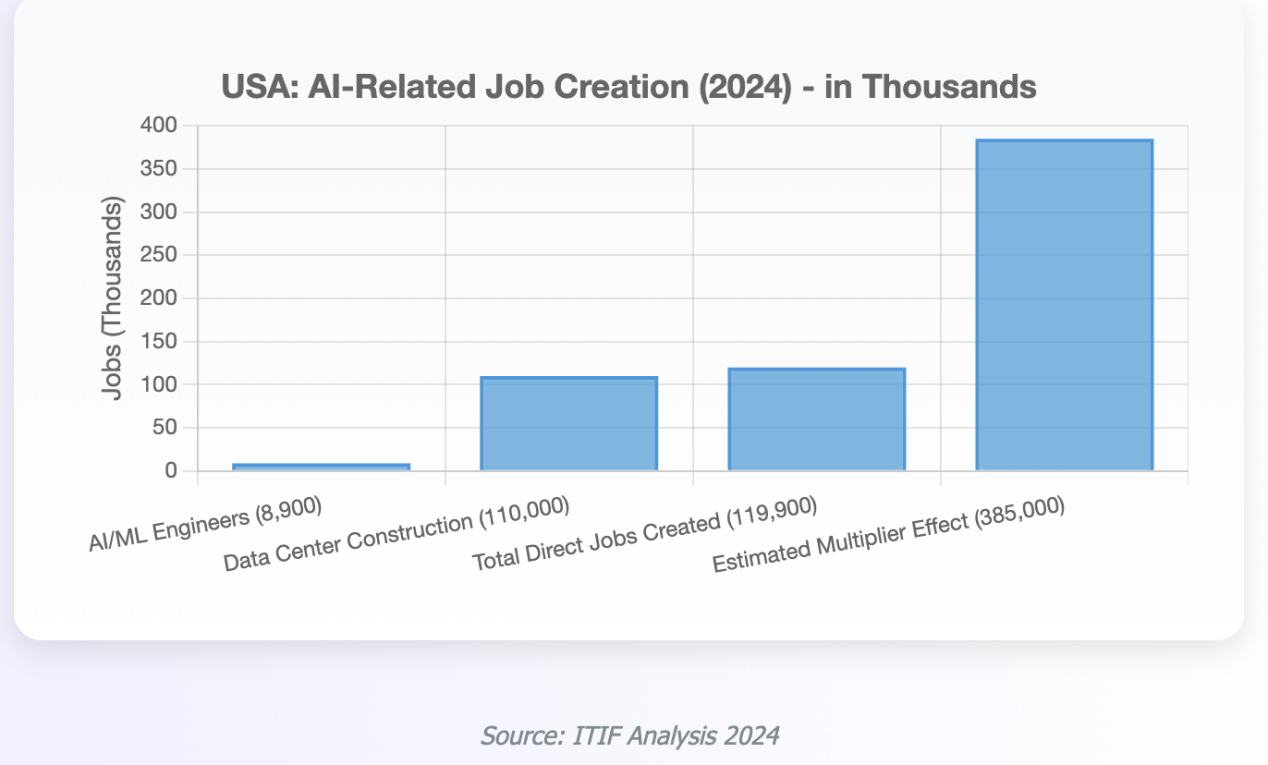
The United States stands at the forefront of AI development and deployment, with the technology’s impact on employment already becoming visible. In 2024, AI growth generated approximately 119,900 direct jobs in the U.S. economy. This includes more than 8,900 employees added specifically to develop, train, and operate AI models, including machine learning engineers and data scientists. Additionally, AI firms’ expansion of data centres fueled a surge in construction activity, with each large-scale data centre requiring roughly 1,500 on-site workers and taking up to three years to complete.
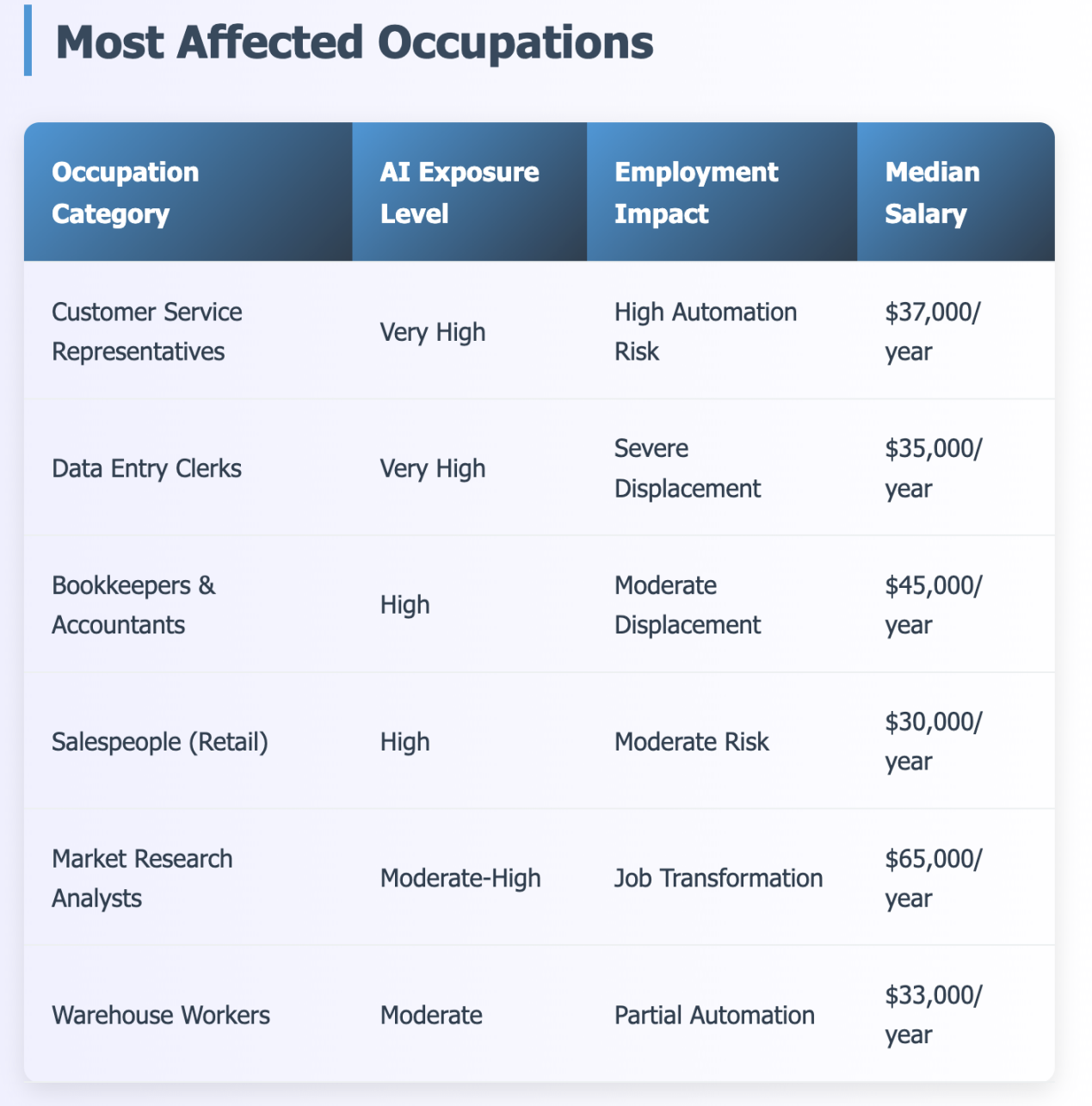
Jobs at Risk and Transformation
While AI is creating significant new employment opportunities, certain occupational categories face higher displacement risks. Goldman Sachs Research estimates that AI could displace 6-7% of the US workforce if widely adopted. However, this impact is likely to be transitory as new job opportunities ultimately put people to work in other capacities. Notably, unemployment among workers aged 20-30 in tech-exposed occupations has risen by almost 3 percentage points since early 2025, higher than for their counterparts in other trades.
| Key Insight: An MIT and Boston University report projects that AI will replace as many as 2 million manufacturing workers by 2026. However, by 2030, at least 14% of employees globally will need to change careers—not necessarily lose jobs, but transition to new roles. |
Emerging Job Categories
High-Growth AI Jobs
- AI/ML Engineers: Developing algorithms and systems (Avg: $150,000/year)
- Data Scientists: Analysing and interpreting complex data (Avg: $125,000/year)
- AI Ethics Officers: Ensuring responsible AI deployment (Avg: $140,000/year)
- Prompt Engineers: Optimising AI interactions (Avg: $95,000/year)
- AI Trainers: Teaching AI systems (Avg: $75,000/year)
- Data Annotators: Labelling training data (Avg: $45,000/year)
High-Risk Occupations
- Telemarketers: 99% automation probability
- Tax Preparers: 98% automation probability
- Library Technicians: 93% automation probability
- Freight Agents: 89% automation probability
- Paralegals: 85% automation probability
- Retail Salespeople: 78% automation probability
Data Centre Construction Boom
One of the most significant employment impacts of AI has been the massive expansion of data centre construction. In 2024, data centre construction translated into over 110,000 jobs. Some estimates suggest that data centres have a strong local multiplier effect, generating an additional 3.5 jobs for every one job inside the data centre itself, amplifying the employment impact significantly.
China: AI Transformation at Scale
The Chinese AI Ecosystem
China has rapidly evolved into a global AI powerhouse, with government initiatives, massive corporate investments, and a growing talent pool driving unprecedented growth. The State Council released the New-Generation Artificial Intelligence Development Plan in July 2017, establishing China’s AI development goals for 2020, 2025, and 2030. This strategic plan has fundamentally reshaped China’s approach to AI adoption and its impact on employment.
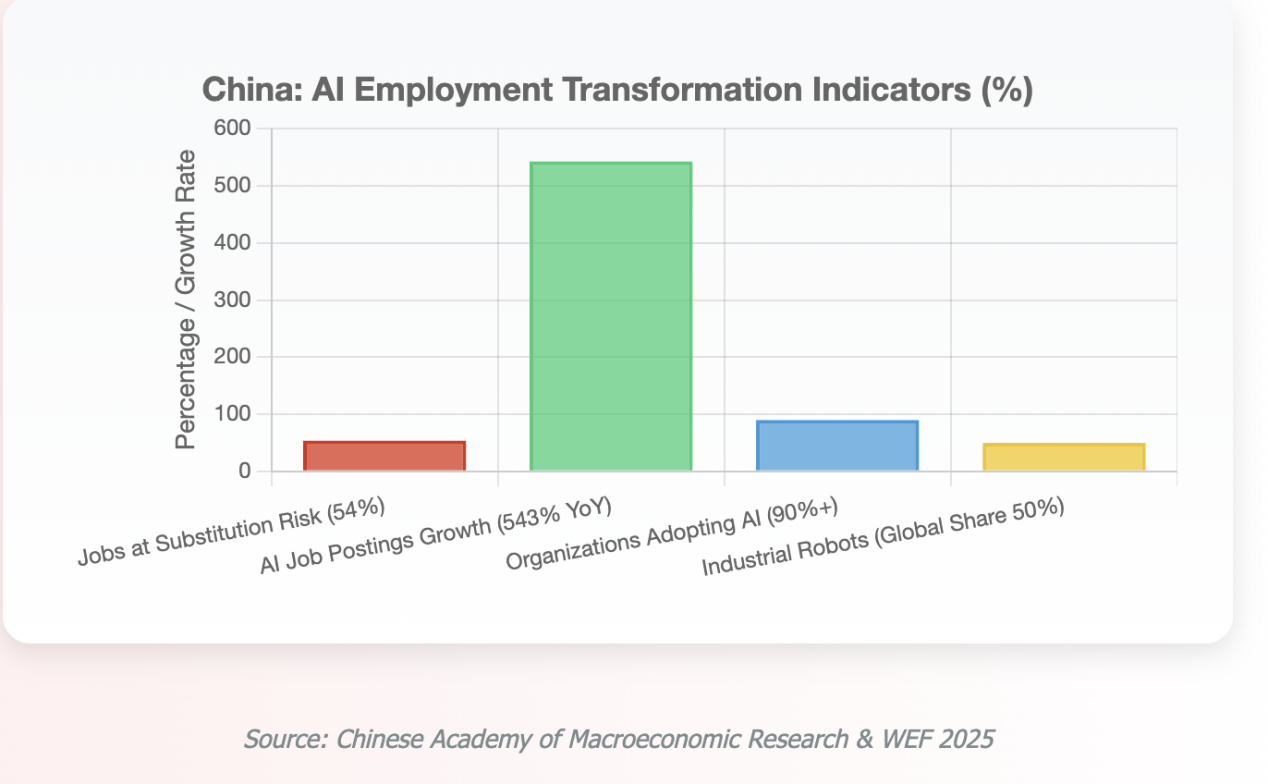
| Remarkable Statistic: More than 90% of organisations in China identify AI and robotics as key technologies to transform their business, according to the World Economic Forum’s Future of Jobs Report 2025. This is significantly higher than global averages and underscores China’s aggressive AI adoption strategy. |
Employment Impact Analysis
Research utilising LightGBM-based prediction models estimates that 54% of jobs in China could be substituted by AI in the coming decades. This represents one of the highest projected displacement rates globally. However, the reality is more nuanced than simple substitution. While some positions are being automated, new job opportunities requiring different skills are also emerging, meaning overall employment levels have not experienced the dramatic decline some predicted.
Sectoral Impact
China’s manufacturing sector, which employs hundreds of millions of workers, is experiencing significant transformation. The country has been the world’s leading market for industrial robots since 2013, with one in every two industrial robots installed globally being put to work in China. This trend coincides with demographic shifts—China’s working-age population is projected to shrink from 59% today to just 36% by 2100, making automation not just an economic choice but a demographic necessity.
Job Creation and AI Boom
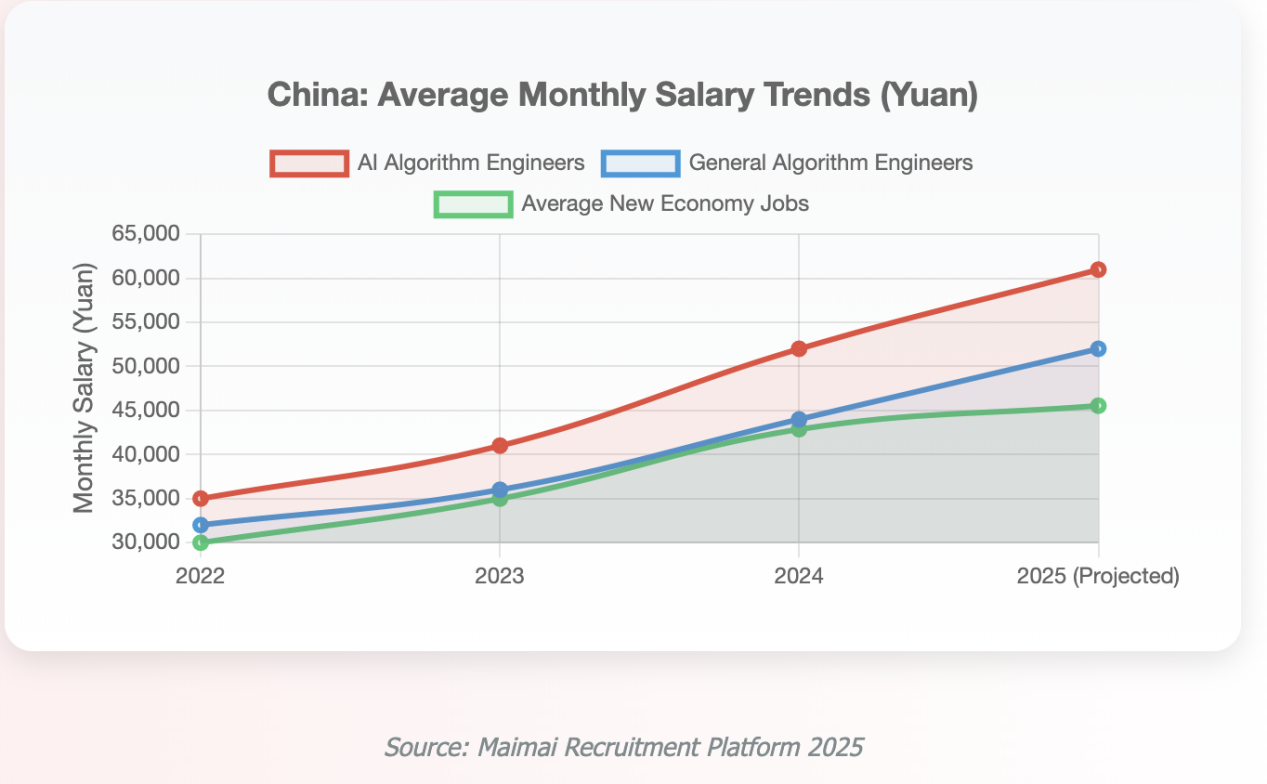
Despite displacement concerns, China’s AI sector is creating substantial employment opportunities. From January to October 2025, AI-related job openings surged 543% year-on-year, with AI roles dominating the list of most in-demand positions. Algorithm engineers and large-model algorithm engineers ranked first and second among the top 10 most sought-after technical jobs.
| Wage Premium for AI Skills: Average pay for algorithm engineers specialising in AI-generated content is nearly 18% higher than that of general algorithm engineers. AI product managers earn more than 20% above their traditional counterparts, demonstrating the substantial economic value of AI expertise. |
Government Response and Concerns
Chinese officials are increasingly concerned about AI-driven job disruption. Job postings for college graduates fell 22% in the first half of 2025 compared to the previous year. The government has begun exploring an “AI + Employment” framework featuring tax incentives, wage subsidies, reskilling programs, and potentially limits on technology’s ability to displace certain jobs. During the 2025 Two Sessions meetings, officials acknowledged that AI disruption could trigger labour crises and “shake society to its core.”
Fastest Growing Roles in China
- AI & ML Specialists: 543% YoY growth
- Algorithm Engineers: Highest demand
- Large Model Engineers: Top emerging role
- AI Product Managers: 3rd most in-demand
- Data Scientists: Sustained high demand
- AI Trainers & Annotators: Rapid expansion
Most Vulnerable Sectors
- Low-Skilled Manufacturing: Heavy automation
- Routine Assembly Work: Robot substitution
- Entry-Level Tech Jobs: 22% fewer postings
- Manual Data Processing: Near-complete automation
- Basic Customer Service: AI chatbot replacement
- Delivery Services: Drone/robot deployment
Unique Chinese Context
China’s employment situation differs significantly from Western economies. The nation’s approach emphasises “industrial structure optimisation” as the mediating mechanism through which AI affects employment. The implementation of the 2017 AI Development Plan significantly increased employment of high- and medium-skilled labourers while reducing low-skilled employment. China is undergoing rapid transformation through digitalisation, intelligentization, and green transition, profoundly reshaping its employment landscape.
India: AI Anxiety and Opportunity
The Indian AI Landscape
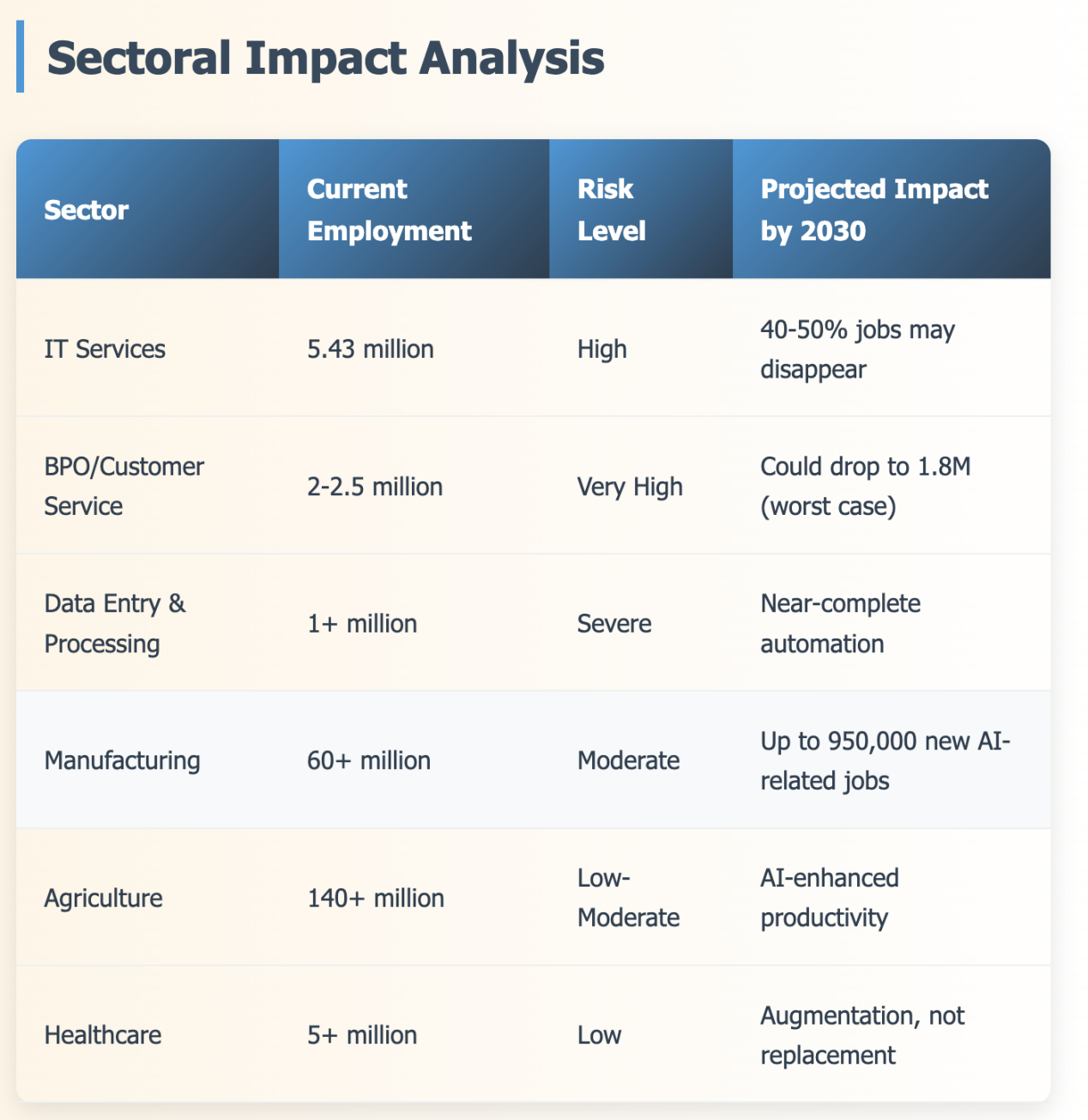
India presents perhaps the most complex and critical case study in the global AI employment transformation. With a workforce exceeding 500 million people, including 5.43 million IT professionals and millions more in outsourcing and business process management, India stands at a critical juncture. The nation is simultaneously one of the world’s largest AI adopters and one of the most vulnerable to AI-driven job displacement.
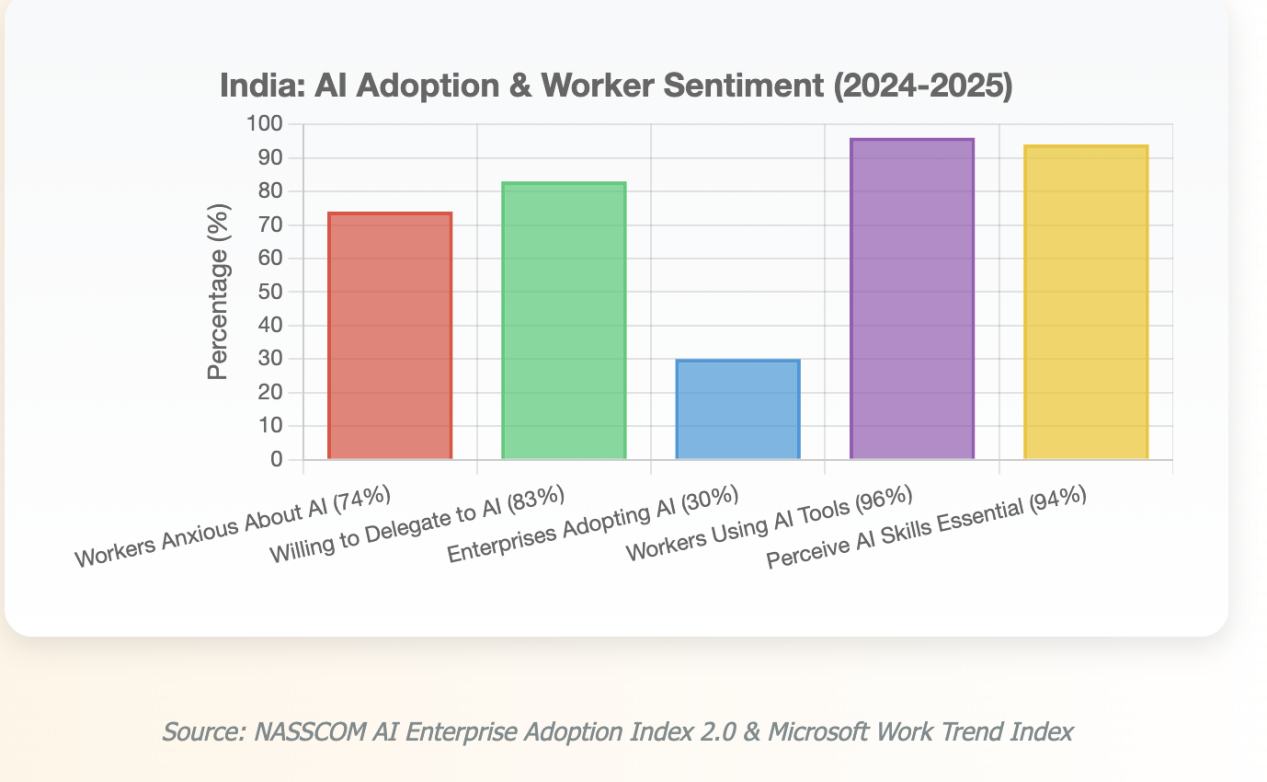
Anxiety Epidemic: Microsoft’s 2023 Work Trend Index reveals that an overwhelming 74% of India’s workforce harbours deep-seated anxieties about AI potentially replacing their jobs. This is significantly higher than global averages and reflects the precarious position of many Indian workers in the global economy.
Dual Nature of AI Impact
India’s relationship with AI is paradoxical. Despite widespread fear, 83% of Indian workers express willingness to delegate as much work as possible to AI to alleviate their workloads. This reflects a complex mix of anxiety and pragmatic acceptance. The country ranks among the top three nations in Stanford University’s Global AI Vibrancy Tool, with India’s AI talent base expected to more than double by 2027, growing at a CAGR of around 15%.
Employment Crisis Context
India’s AI disruption occurs against the backdrop of an existing employment crisis. The International Labor Organization’s India Employment Report 2024 revealed that the proportion of educated youth who are unemployed doubled from 35.2% in 2000 to 65.7% in 2022. Urban unemployment rose to 7.1% in mid-2025, with youth unemployment among those aged 15-29 spiking to nearly 19%. Over 3,600 employees were laid off by Indian startups in the first five months of 2025 alone, with many layoffs attributed to AI-driven automation.
| IT Sector Shock: India’s IT industry experienced over 50,000 job cuts in 2024, particularly among entry-level programmers and software testers. Major companies like TCS reportedly reduced workforce numbers, with layoffs affecting thousands despite official attributions to “skill mismatches” rather than AI displacement. |
Perception and Reality
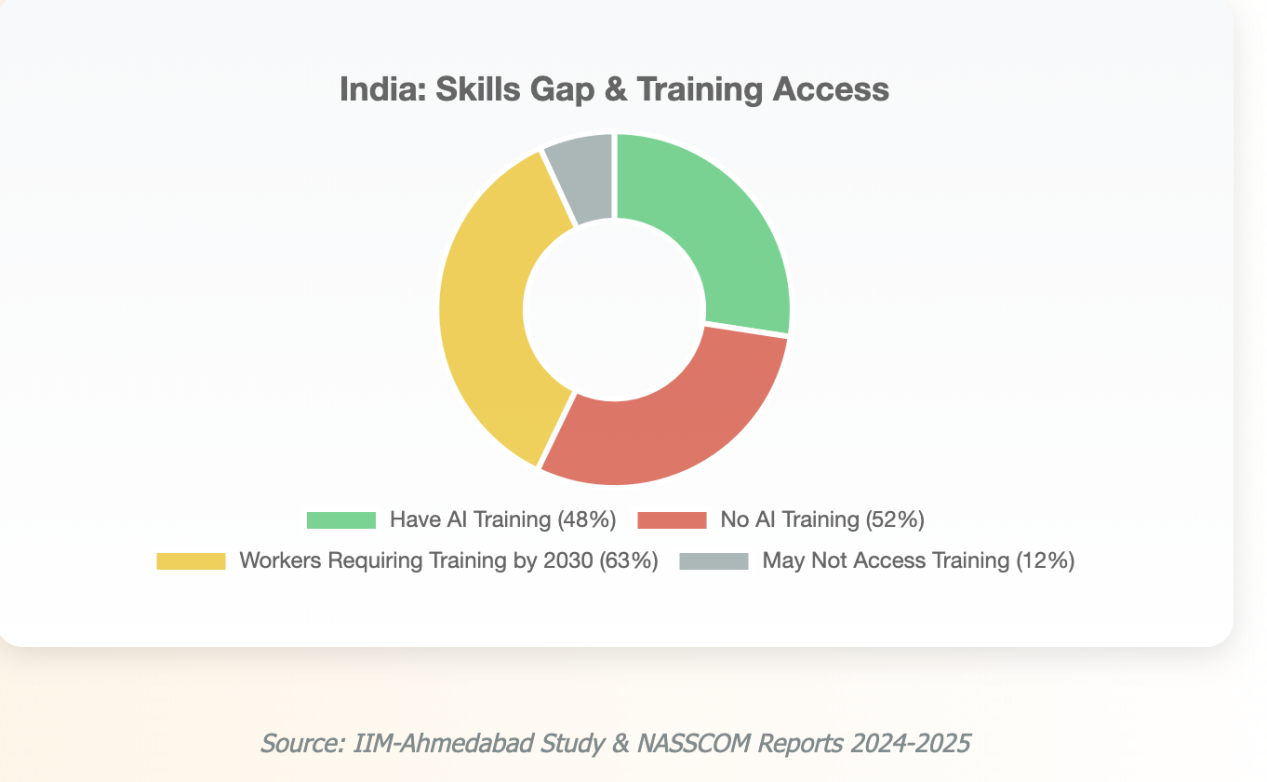
An IIM-Ahmedabad study of white-collar workers found that 68% fear their roles could be automated within five years, yet only 55% have adopted AI tools, and just 48% have received AI training. This gap between perception and preparation represents a critical vulnerability. The study also revealed that 40% of white-collar employees perceive their current skills will become redundant, highlighting the urgent need for reskilling initiatives.
Job Creation Potential
Despite the anxiety, India has substantial job creation potential through AI. NASSCOM’s analysis suggests the Indian IT sector is expected to add 1 million AI-related employment positions by 2025, with 80% of Indian IT firms intending to hire new AI talent. The World Economic Forum projects AI could generate 40 million new jobs in India by 2030. Additionally, AI’s contribution to India’s GDP is expected to reach $967 billion by 2035, representing approximately 10% of the nation’s GDP targets.
- AI Talent Pool: World’s largest digitally skilled talent pool
- AI Project Contribution: 19.9% of global GitHub AI projects (2024)
- Reskilling Capacity: 8-10 million professionals in AI services by 2030
- New Roles: Data annotators, prompt engineers, AI trainers
- IT Expansion: 1M AI-related jobs by 2025
- Manufacturing Boost: 950,000 new AI-related manufacturing jobs by 2030
Critical Challenges
- White-Collar Risk: 40-50% of jobs may disappear
- Skill Gap: 63 in 100 workers need training by 2030
- Unreachable Workers: 70M+ may not gain needed training
- Youth Unemployment: 65.7% of educated youth are unemployed
- Recent Layoffs: 3,600+ startup employees in 5 months (2025)
- IT Sector Cuts: 50,000+ jobs lost in 2024
Government Initiatives
The Indian government has launched several initiatives to address AI’s employment impact. The IndiaAI Mission focuses on building AI infrastructure and skills. The “YUVA AI for ALL” program offers free national-level foundational courses to create mass AI awareness. The National Career Service (NCS) portal provides career counselling and information on skill development programs. However, implementation and reach remain significant challenges, with many workers unable to access these resources.
Critical Statistic: India’s 2024-25 Economic Survey concludes that “estimates about the magnitude of labour market impacts by AI may be well above what might actually materialise,” suggesting that while concerns are valid, the actual disruption may be less severe than feared, provided appropriate policy responses are implemented.
Comparative Analysis: USA, China & India
Key Differences in AI Impact
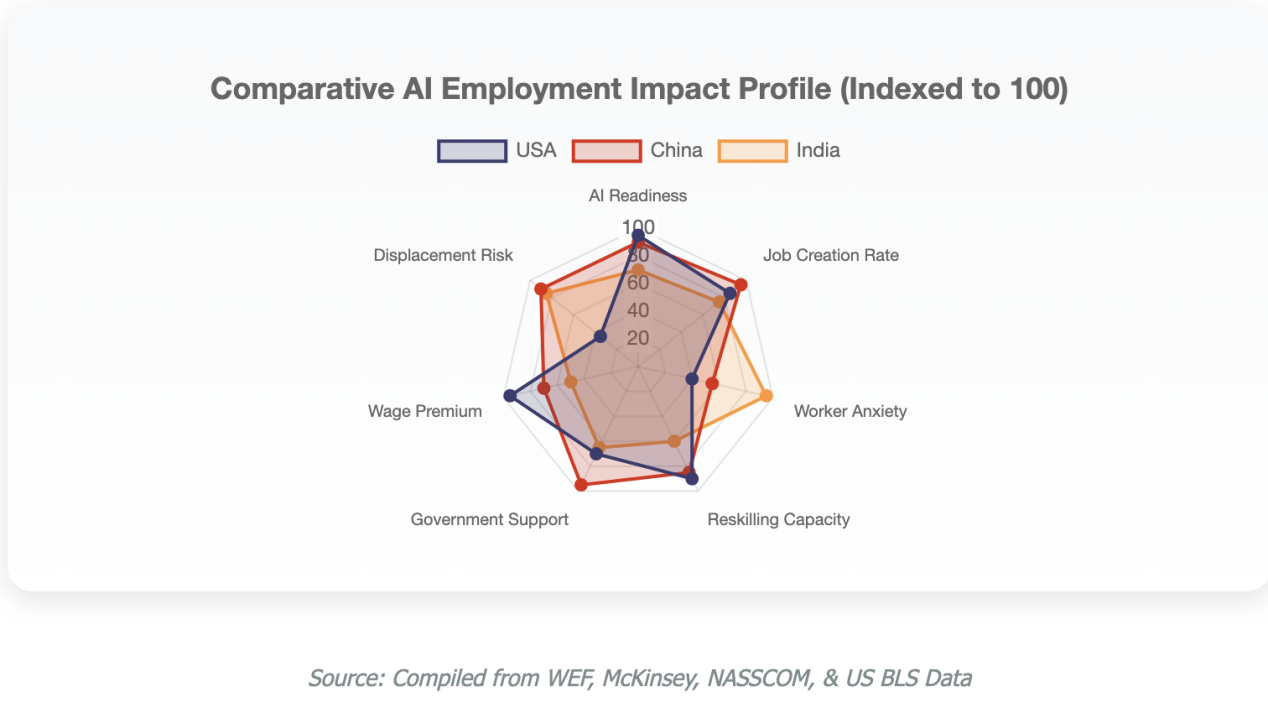
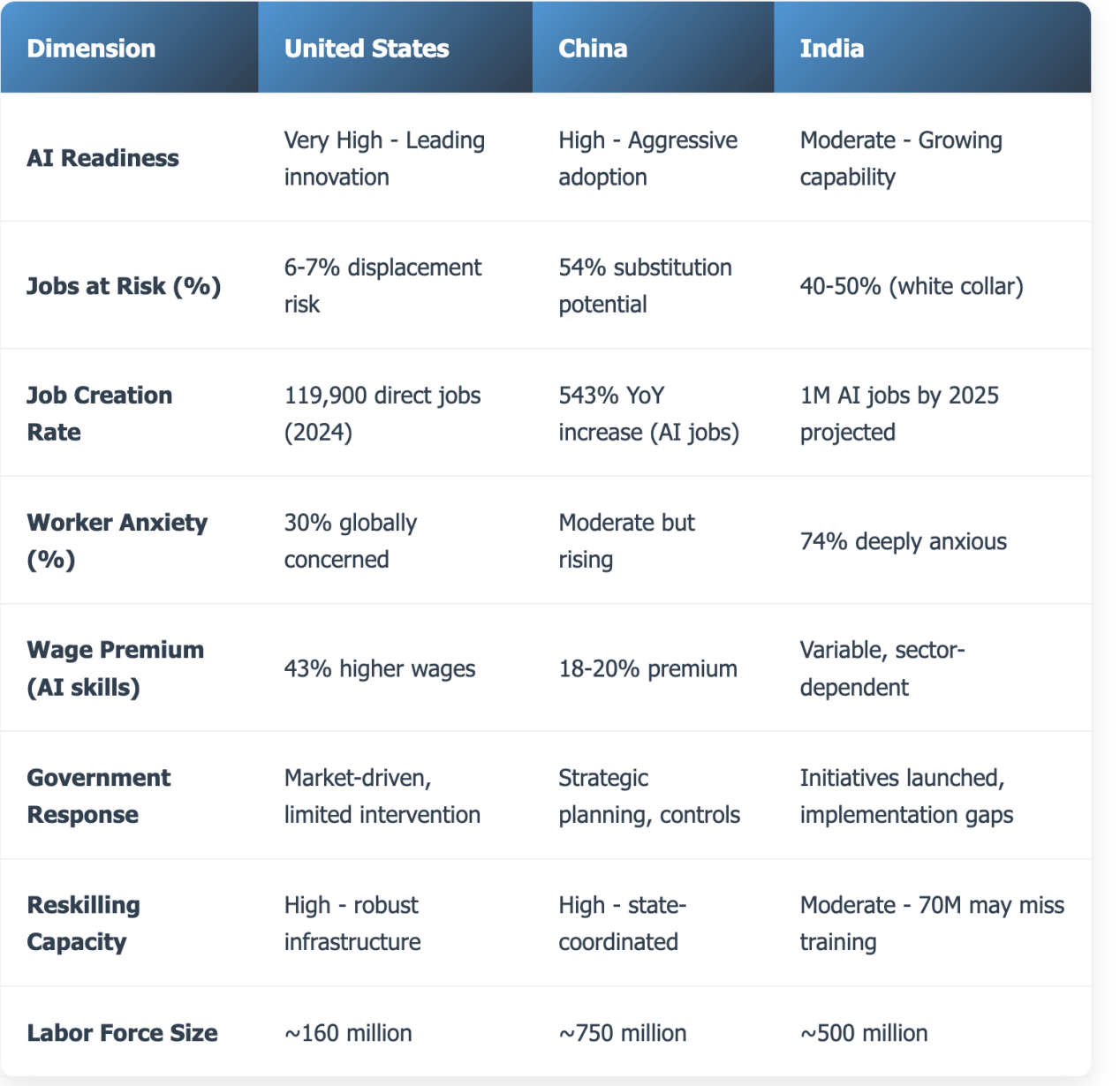
The impact of AI on employment varies dramatically across these three economies, shaped by their unique economic structures, labour force compositions, technological capabilities, and policy frameworks. Understanding these differences is crucial for developing effective responses to AI-driven disruption.
Economic Development Stage Impact
The three nations’ different stages of economic development profoundly influence how AI affects employment. The United States, as a mature post-industrial economy, experiences AI primarily as a productivity enhancer and job transformer, with relatively smooth transitions facilitated by robust social safety nets and educational systems. China, in the midst of transitioning from labour-intensive manufacturing to high-tech services, views AI as essential for maintaining competitiveness amid demographic decline. India, still developing its manufacturing base while maintaining a large services sector, faces the unique challenge of AI potentially “leapfrogging” traditional development pathways, creating both opportunities and risks for its massive young workforce.
Skills for the AI Era
Most In-Demand Skills Across All Three Countries
As AI reshapes the employment landscape, certain skills are becoming increasingly valuable across all three economies. These can be broadly categorised into technical AI skills, cognitive skills that complement AI, and uniquely human skills that AI cannot easily replicate.
Technical Skills
- Machine Learning & Deep Learning: Core AI development capabilities
- Natural Language Processing: Working with language models
- Computer Vision: Image and video analysis systems
- Data Science & Analytics: Interpreting complex datasets
- Cloud Computing: Managing AI infrastructure
- Cybersecurity: Protecting AI systems
- Creative Thinking: Innovation beyond AI capabilities
- Critical Thinking: Evaluating AI outputs
- Emotional Intelligence: Human-centric interactions
- Complex Problem Solving: Novel situation handling
- Leadership & Management: Guiding human-AI teams
- Adaptability: Continuous learning mindset
The Reskilling Imperative
The World Economic Forum projects that nearly 44% of workers’ core skills will change within the next five years. This unprecedented rate of skill obsolescence demands massive reskilling initiatives. The three countries are taking different approaches. The United States relies primarily on market-driven solutions with private sector training programs. China employs state-coordinated reskilling programs aligned with industrial policy. India faces the challenge of reskilling at scale, with estimates suggesting 63 in 100 workers will require training by 2030, though 12 in 100 may be unable to access necessary upskilling opportunities.
Generational Impact: BMG Research findings indicate 52% of individuals aged 18-24 express worries about AI’s impact on their careers, compared to lower concerns among older workers approaching retirement. This generational anxiety reflects the reality that younger workers will spend decades navigating an AI-transformed labour market.
Multi-Stakeholder Approach
Addressing AI’s employment impact requires coordinated action from governments, businesses, educational institutions, and workers themselves. Based on the experiences and challenges identified across the USA, China, and India, several key policy directions emerge.
For Governments
- Invest in Education: Integrate AI literacy into the curriculum from primary through tertiary education.
- Fund Reskilling Programs: Provide accessible, affordable training for displaced workers
- Strengthen Social Safety Nets: Ensure adequate support during job transitions.
- Incentivise Job Creation: Tax credits and subsidies for companies creating new AI-related positions
- Support Research: Fund studies on AI’s labour market impacts to inform policy
- Promote Fair Labour Practices: Ensure AI deployment doesn’t exploit workers or erode labour standards.
- Foster Public-Private Partnerships: Collaborate with industry on workforce development
For Businesses
- Invest in Employees: Prioritise reskilling the current workforce before external hiring
- Transparent Communication: Clearly communicate AI adoption plans and their implications
- Human-Centred AI: Design AI systems that augment rather than replace workers where possible
- Create New Roles: Develop positions that leverage human-AI collaboration
- Ethical Deployment: Consider social impacts alongside efficiency gains
- Redeployment Programs: Move displaced workers to new positions within organisations
For Workers
- Embrace Lifelong Learning: Continuously update skills throughout careers
- Develop AI Literacy: Understand how to work effectively with AI tools
- Cultivate Uniquely Human Skills: Focus on creativity, empathy, and complex problem-solving
- Stay Adaptable: Be prepared for career transitions and new opportunities
- Network Actively: Build professional connections across industries
| Evidence from Stanford: Research studying customer support teams found that when human agents were given AI assistance, productivity jumped, customer satisfaction improved, employee retention increased, and no jobs were cut. This demonstrates that thoughtful AI implementation can enhance human work rather than eliminate it. |
The relationship between artificial intelligence and employment is neither purely dystopian nor purely utopian—it is profoundly complex and still unfolding. The evidence from the United States, China, and India reveals that AI is simultaneously displacing certain jobs, transforming many others, and creating entirely new categories of employment that didn’t exist a few years ago.
Several key insights emerge from this comprehensive analysis. First, AI’s impact varies dramatically based on national context, economic development stage, labour force composition, and policy responses. What works in the United States may not be appropriate for India or China. Second, while displacement is real and causing genuine hardship for affected workers, historical patterns suggest that technological transitions, though painful in the short term, ultimately lead to higher productivity, new industries, and improved living standards. Third, the speed of AI development has accelerated beyond most predictions, demanding urgent and sustained attention from policymakers, business leaders, and workers.
The data shows that AI is creating substantial new employment opportunities—119,900 direct jobs in the USA in 2024, a 543% year-over-year surge in AI job openings in China, and projections of 1 million AI-related jobs in India by 2025. Workers with AI skills command significant wage premiums—43% in the USA, 18-20% in China. These figures demonstrate that AI competency is becoming one of the most valuable assets in the modern global economy.
However, the analysis also reveals serious concerns. An estimated 83 million jobs globally face displacement by 2027, 54% of Chinese jobs have substitution potential, and 40-50% of India’s white-collar positions may disappear. The psychological toll is evident in India’s 74% worker anxiety rate and the United States’ 3-percentage-point unemployment increase among young workers in tech-exposed occupations. These numbers represent real human consequences that demand compassionate and effective policy responses.
The path forward requires balancing innovation with social responsibility. We must harness AI’s potential to solve humanity’s greatest challenges—from healthcare to climate change to education—while ensuring that the benefits are broadly shared and that workers have the support, training, and opportunities needed to thrive in an AI-augmented economy. This will require unprecedented cooperation between governments, businesses, educational institutions, and civil society.
Ultimately, the question is not whether AI will transform employment—it already is. The question is whether we will manage this transformation wisely, ensuring that AI enhances human potential rather than simply displacing human workers. The evidence suggests that with thoughtful policy, substantial investment in education and reskilling, and a commitment to human-centred AI development, we can navigate this transition successfully. The future of work in the AI era will be determined not by technology alone, but by the choices we make today.
| Sources: – World Economic Forum, – PwC AI Jobs Barometer, – McKinsey Global Institute, – NASSCOM, – US Bureau of Labour Statistics, – Stanford HAI, – IIM-Ahmedabad, – Goldman Sachs Research, – Chinese Academy of Macroeconomic Research |

Divyanka Tandon holds an M.Tech in Data Analytics from BITS Pilani. With a strong foundation in technology and data interpretation, her work focuses on geopolitical risk analysis and writing articles that make sense of global and national data, trends, and their underlying causes. Views expressed are the author’s own.
 Kumar Sheni
  Raghvendra Tripathi
  Pranav S