|
Getting your Trinity Audio player ready...
|
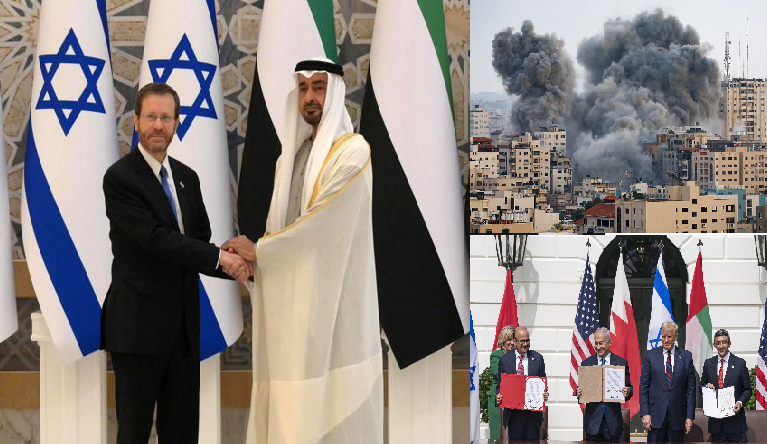
- The UAE, Bahrain, and Israel came together to sign the “Abraham Accords,” which would change the dynamics of the diplomatic relationship in West Asia.
- The concern lies with how long their momentum will last amidst the turmoil, hostility, and existential threats of the post-October 7, 2023, reality.
- Arab leaders may find clear political and strategic value in engaging with Israel, but their populations continue to reject and remember the displacement of Palestinians.
A Historic Handshake and What Came After
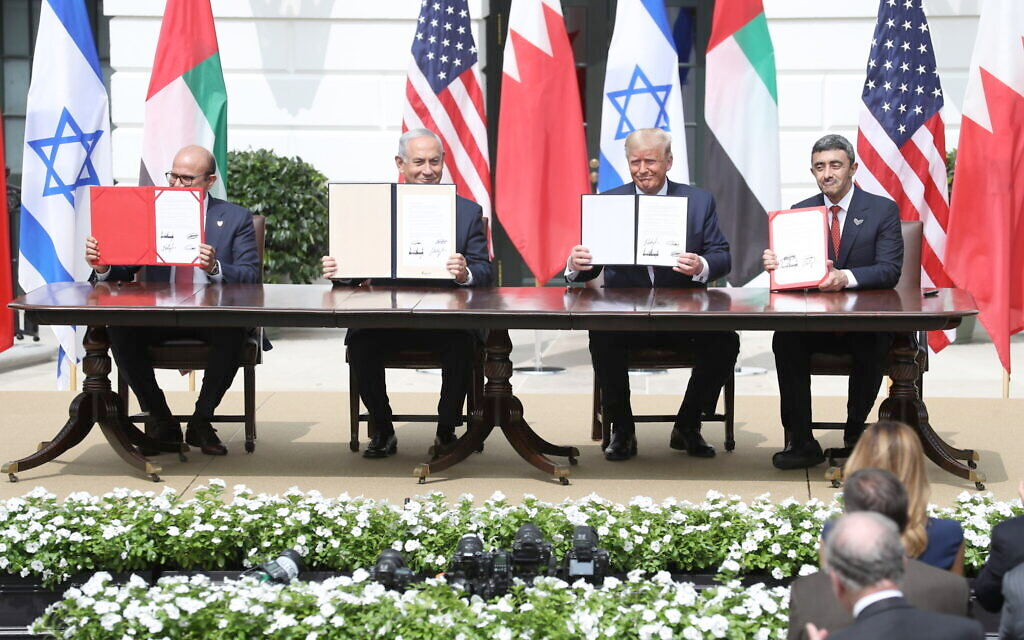
In the midst of shooting footage on the South Lawn of the White House in September 2020, something transpired that had ceased to be an unspoken hope among experienced foreign policy experts. Representatives from the UAE, Bahrain, and Israel came together to sign the so-called “Abraham Accords,” agreements that would, in the opinion of many commentators, forever change the dynamics of the diplomatic relationship in West Asia.
No peace-for-land approach. No prospects for the establishment of a Palestinian state. It was all about trade and security cooperation and the handshake that shook Ramallah, Tehran, and Riyadh.
However, half a decade down the line, there is no longer a question of the survival of those agreements. Rather, the concern lies with how long their momentum will last amidst the turmoil, hostility, and existential threats of the post-October 7, 2023, reality.
What the Abraham Accords Actually Changed
However, before judging these deals as nothing more than a PR stunt, it may be worth examining their concrete results.
Firstly, UAE-Israel trade reached almost $3 billion in just two years. Flights from Tel Aviv to Abu Dhabi became common practice. Israelis started visiting Dubai’s shopping centres. Joint ventures between the two sides blossomed. Bahrain came next, albeit somewhat quietly and steadily. Both Morocco and Sudan agreed to join the agreement, each for their specific reasons: Morocco achieved US recognition of its sovereignty over Western Sahara; Sudan was removed from the list of terrorism-supporting countries. Yes, it was a business deal. But in diplomacy, business is how relationships start.
Another crucial effect of these accords was a dramatic change in the strategic calculations of Arab states. Indeed, for decades, Arab governments relied not only on their real interest in the Palestinian issue but also on using it as an excuse to ignore Israel’s proposals without losing support at home. The Abraham Accords ended up breaking this dam.
The Palestinian Question: The Wound That Won’t Close
No honest examination of the state of Arab-Israeli relations could ever avoid the Palestinian angle, which proved true with the latest outbreak of hostilities in October 2023.
In fact, the moment the militant group Hamas launched its attack against Southern Israel on October 7, 2023, leading to the military operation that followed in the Gaza Strip, the precarious foundations of the process of normalisation began creaking under the weight of events. Protests erupted in Jordan, Morocco, and even Bahrain. Arab states involved in normalisation agreements found themselves caught between pragmatic foreign policy concerns and outraged domestic constituencies.
As always, the plight of the Palestinians, especially the scenes emerging from Gaza, came to symbolise the struggle of the people, as it did in the early 2000s. Governments that had long shielded their relationship with Israel from public scrutiny saw the walls crumble around their ears.
This is the basic paradox that all of the diplomatic communiqués have not been able to address: Arab leaders may find clear political and strategic value in engaging with Israel, but they remain constrained by domestic sentiment, as their populations continue to reject and remember the displacement of Palestinians.
Saudi Arabia: The Big Prize That Keeps Slipping Away
If the Abraham Accords were a strategic appetiser, Saudi Arabia was always the main course — for Israel, for Washington, and arguably for the entire regional order.
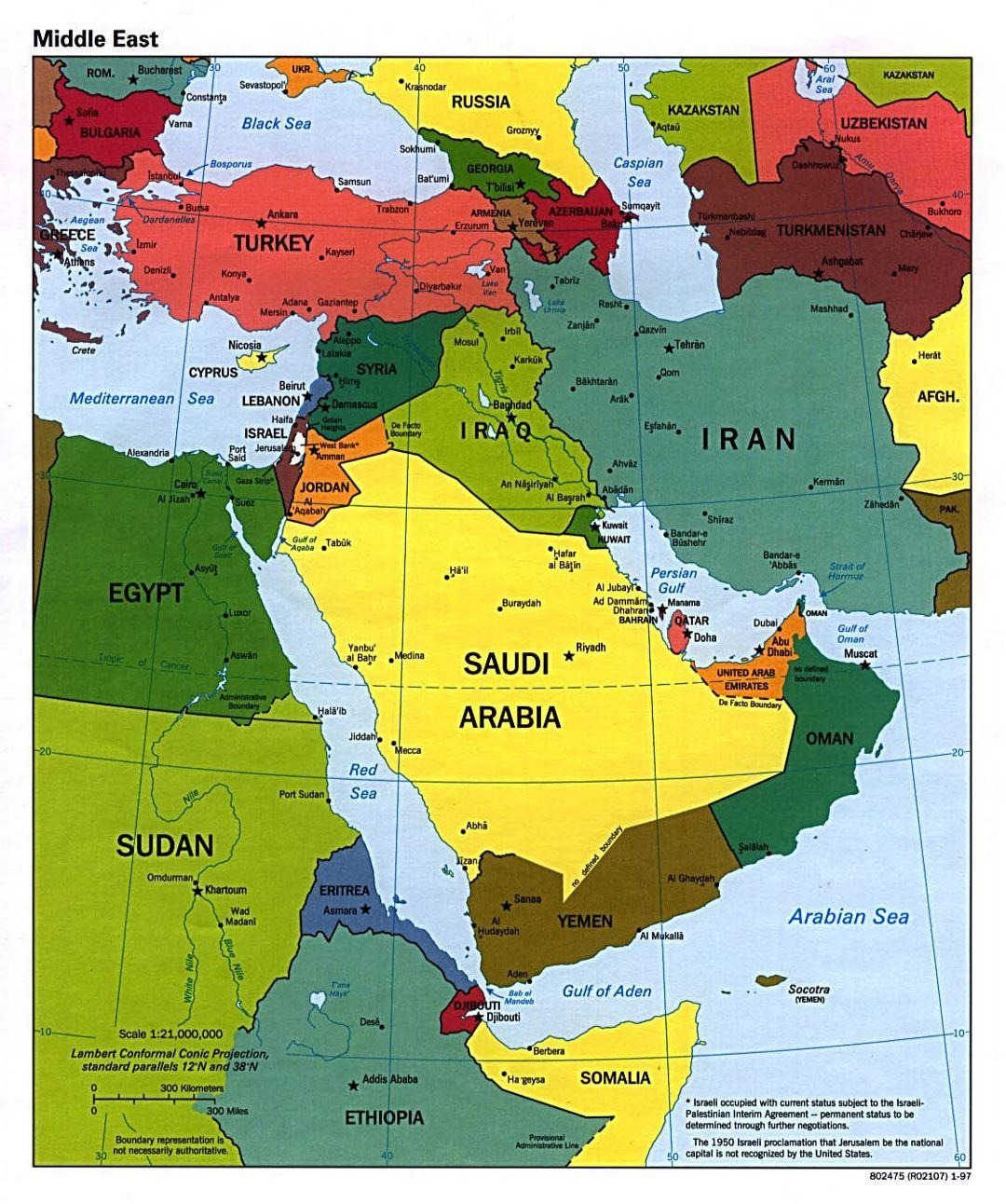
The logic seemed compelling. Saudi Arabia is Islam’s most symbolically important state, home to Mecca and Medina. If Riyadh normalised relations with Jerusalem, the theological and political cover for other Muslim-majority countries to follow would be enormous. For Israel, it would mean something approaching comprehensive regional acceptance. For the United States, it would be a foreign policy triumph of the first order.
In the months before October 2023, the deal appeared genuinely close. Crown Prince Mohammed bin Salman — MBS — was reportedly willing to move, provided the U.S. delivered security guarantees and civilian nuclear assistance. Israeli sources, including Prime Minister Netanyahu, spoke about normalisation as a matter of when, not if.
October 7 ended that conversation, at least for the foreseeable future.
Since then, Saudi Arabia’s public position has hardened considerably. Officials in Riyadh have repeatedly stated that normalisation with Israel cannot proceed without a credible pathway to a Palestinian state. Whether that is a sincere red line or a negotiating position remains genuinely unclear — MBS has shown before that he is willing to make moves that defy conventional Arab political wisdom. But the post-Gaza political environment makes any such move extraordinarily difficult to sell domestically, let alone to the broader Muslim world that looks to Riyadh for moral leadership.
The Saudi calculus, stripped to its essentials, involves a painful trade-off: the security and economic benefits of closer ties with Israel and the U.S. versus the religious and political cost of normalising with a government conducting what multiple international bodies have characterised as a humanitarian catastrophe. That is not a trade-off any leader can make easily in 2026.
India’s Quiet Balancing Act: Playing Both Sides of the Table
India’s position in all of this is genuinely fascinating — and honestly, it doesn’t get nearly enough attention from Western commentators who tend to reduce the whole normalisation debate to an Arab-Israeli-American triangle.
For most of the 20th century, India stood firmly in the Palestinian corner. That wasn’t just diplomatic posturing — it came from somewhere real. The non-aligned movement, the shared memory of colonial subjugation, and the political weight of a large and vocal Muslim population. Supporting Palestine was, for India, almost a matter of identity.
That has changed. Slowly at first, then quite noticeably under Modi. Today, India and Israel share defence contracts, agricultural know-how, water technology, and — though neither side talks about it loudly — counter-terrorism intelligence. These aren’t casual exchanges. They reflect a relationship that has real depth and mutual interest behind it.
And yet India hasn’t walked away from the Arab world either, because it simply can’t afford to. Think about what the Gulf actually means for ordinary Indians: close to nine million people working across the UAE, Saudi Arabia, Kuwait, Bahrain, Qatar, and Oman. The money they send home isn’t a footnote in India’s economy — it’s a lifeline for entire communities. Add to that the sheer volume of trade with Arab nations, running well into the hundreds of billions of dollars, and you begin to understand why New Delhi can’t afford to be seen as Israel’s unconditional ally.
So India does something difficult: it holds both relationships at once. When the UN General Assembly called for a ceasefire in Gaza in late 2023, India raised its hand in favour — while its defence ties with Israel remained quietly intact. It put its name on the IMEC agreement, a trade corridor that runs through Israel, while carefully avoiding any public blessing of Israeli military operations. Critics call this hypocritical. A more honest reading is that it’s just the reality of being a large, ambitious country with interests pulling in multiple directions at the same time.
For India, the question of Arab-Israeli normalisation is never going to be a distant policy debate. It touches its energy supplies, its diaspora, its trade routes, and its growing desire to be taken seriously as a global power — not just a regional one. What India wants, more than anything, is a West Asia stable enough that it never has to publicly choose a side. Whether that version of West Asia is actually within reach is the question the whole region is wrestling with right now.
The Resistance Axis and Its Staying Power
To talk about normalisation without also highlighting the forces arrayed against that normalisation would be simplistically naive. These forces are neither negligible nor losing strength.
Iran and Hezbollah, Hamas, and the Houthis in Yemen are referred to by analysts as the resistance axis. They are, however, tied not only by ideological morality but also by their strategic opposition to both Israel and what they view as the immense power and influence of America over them in the region. Since 2023, the nature of Iran’s significant influence in West Asia has, if anything, become more convoluted and complicated. Most notable is a direct exchange of missiles between Iran and Israel in April of 2024, consisting of two regional powers engaging one another directly instead of proxy engagements; the missile strikes launched are unprecedented and represent a significant increase in hostility and instability in an already volatile environment with respect to normalisation.
Despite suffering extensive battlefield losses in Lebanon, Hezbollah still possesses the capability to undermine any Israeli diplomatic momentum toward normalisation. Additionally, the Houthis’ continued attacks on vessels in the Red Sea that they associate with Israel or supporters of Israel have caused a major disruption in global shipping and trade routes in ways that nobody could foresee at the time of signing the Abraham Accords.
The resistance axis does not necessarily need to win militarily to achieve a political victory or objective. It only needs to ensure that the price associated with normalisation (in bloodshed, loss of domestic legitimacy, etc.) remains high enough to cause Arab regimes to reflect upon normalisation.
Where Does This Leave Us?
The honest answer, in April 2026, is somewhere between cautious persistence and strategic paralysis.
The Abraham Accords have not collapsed. The UAE, Bahrain, and Morocco continue to maintain their relationships with Israel, even if they have been tested and publicly strained. The commercial and security architecture built since 2020 has proven more durable than its critics expected.
But the grand vision — a comprehensive Arab-Israeli peace anchored by Saudi normalisation, with the Palestinian question resolved or at least managed — looks more distant than it did three years ago, not less.
What seems most likely is a period of quiet recalibration. Arab states that have normalised will hold their positions while keeping a lower public profile. Saudi Arabia will continue to extract concessions from Washington as the price of any future movement, including genuine U.S. pressure on Israel regarding Palestinian statehood. India will continue threading its needle. And the Palestinians themselves — caught between Hamas’s destructive militancy and Fatah’s sclerotic ineffectiveness — will struggle to find a political leadership capable of converting international sympathy into meaningful sovereignty.
West Asia has a way of confounding both pessimists and optimists in equal measure. The Abraham Accords were, genuinely, a surprise. The next surprise — for good or ill — is probably already forming beneath the surface of events we can currently see.

Raghvendra Tripathi is an independent researcher with a background in computer applications and a keen interest in technology and geopolitics. His articles focus on how emerging technologies influence international strategy, policy, and global power dynamics. Views expressed are the author’s own.
 Ajith Shetty Heranje
  Atri Patel
  Anusreeta Dutta