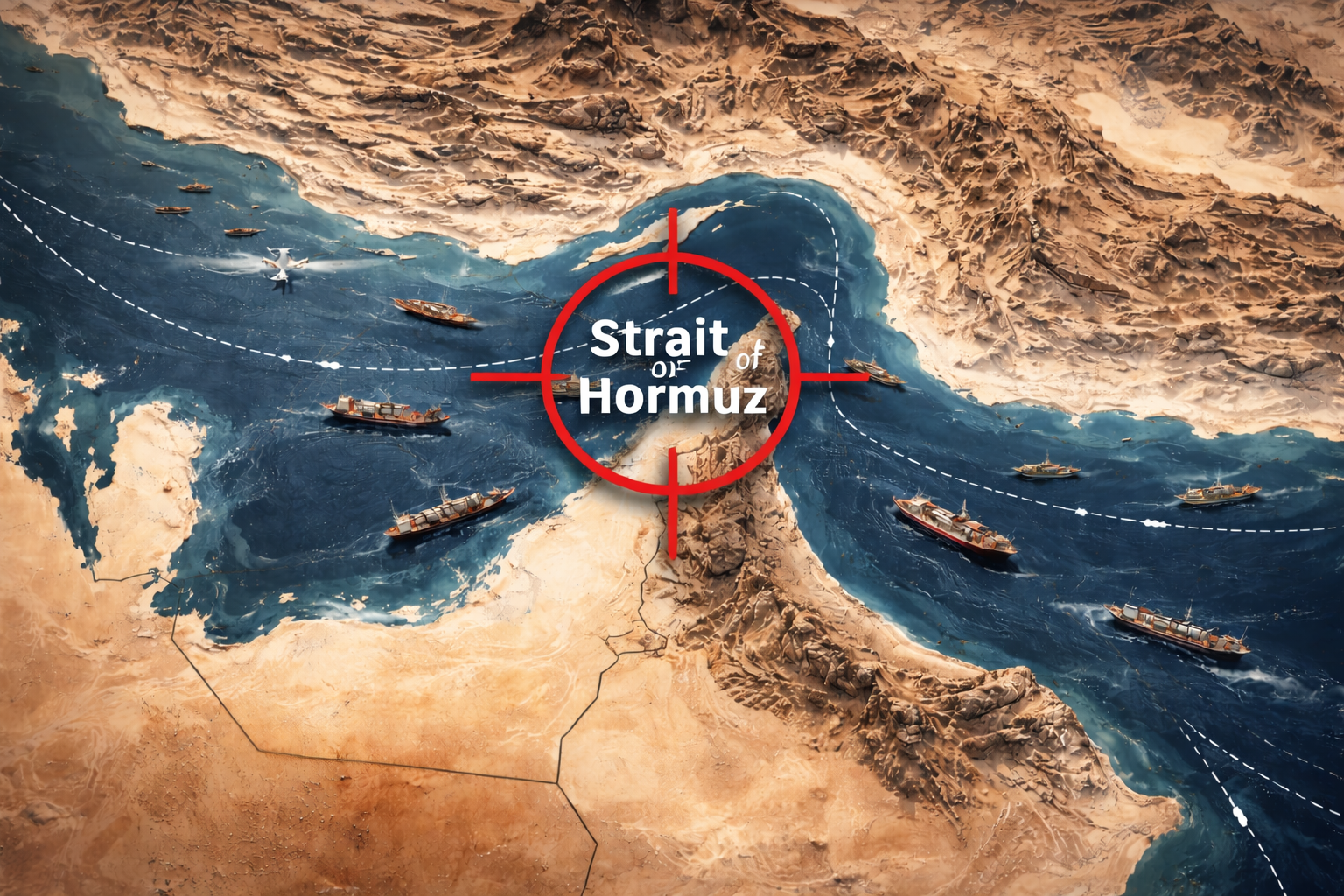
- Roughly one-fifth of all oil traded by sea, about 20 to 21 million barrels every single day, flows through the Strait of Hormuz, a 33-kilometre-wide chokepoint.
- A closure would disrupt a fifth of globally traded oil overnight, and prices wouldn’t just spike; they would gap violently upward on fear alone.
- Even without a formal blockade, the threat of insurance premiums skyrocketing or crews refusing to sail can achieve much the same result.
The narrow stretch of water between Iran and the Arabian Peninsula has never felt smaller. Over the past weekend, as US and Israeli forces struck targets inside Iran, Tehran responded with a barrage of retaliatory attacks across the region, hitting assets in Israel, Qatar, the UAE, Kuwait, Bahrain, Jordan, Saudi Arabia, Iraq, and Oman. Then came the radio warnings crackling over VHF channels in the Strait of Hormuz. The message, delivered by Iran’s Islamic Revolutionary Guard Corps (IRGC), “No ship is allowed to pass,” was not an official closure order. But for shipping companies, it might as well have been.
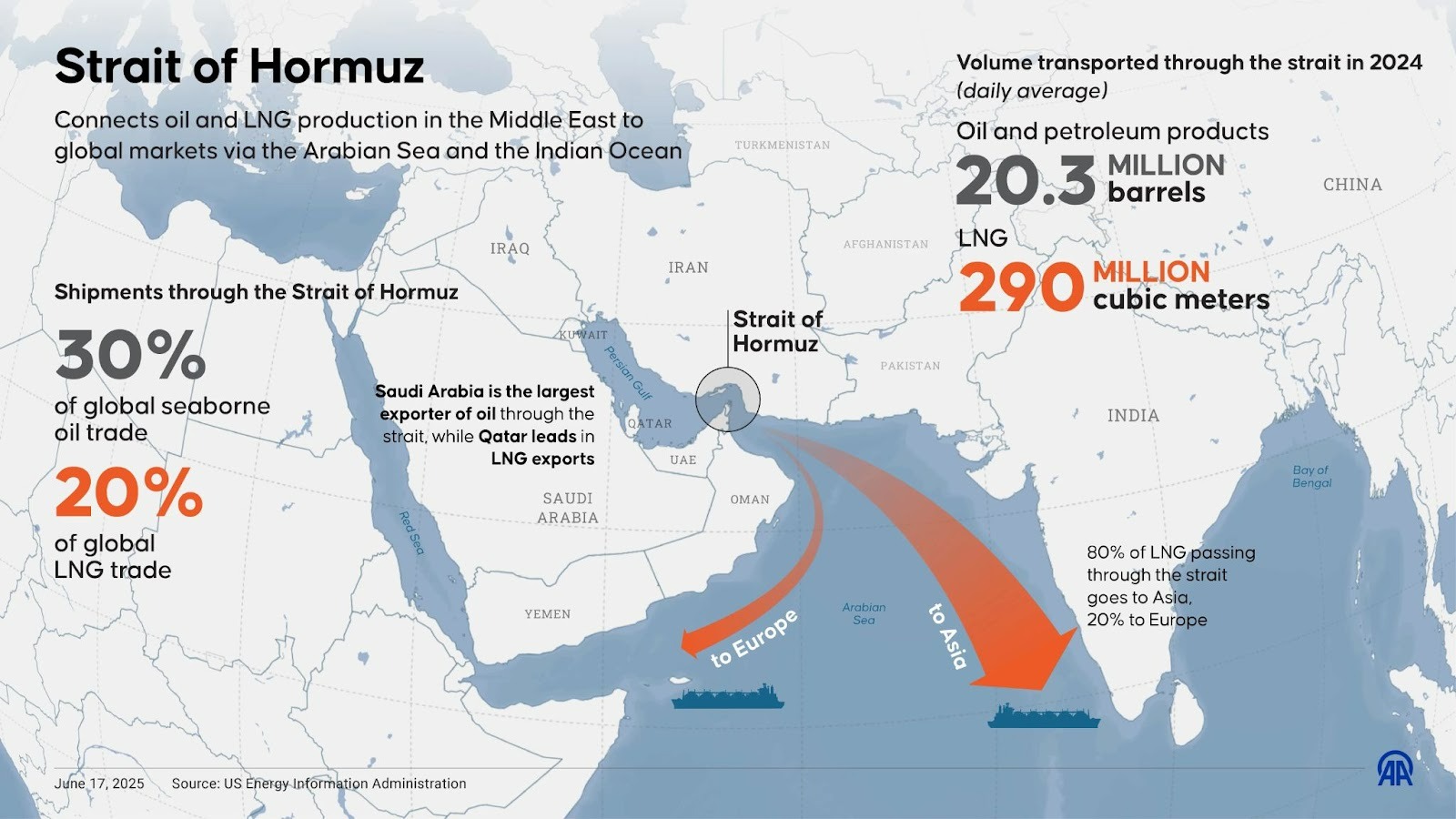
What we are witnessing is not just another flare-up in the Middle East. Roughly one-fifth of all oil traded by sea, about 20 to 21 million barrels every single day, flows through this 33-kilometre-wide chokepoint. At its narrowest, the shipping lanes are only three kilometres wide in each direction. Block it, harass it, or simply scare insurers and owners enough, and the global economy feels the pain almost instantly.
Last year, the strait carried roughly $500 billion worth of annual global energy trade. That includes not only crude oil but also nearly 20 per cent of the world’s jet fuel and 16 per cent of gasoline and naphtha. Eighty-four per cent of the crude heading out goes to Asia; China, India, Japan, and South Korea alone took 69 per cent of it in 2024. A sustained disruption here doesn’t just raise pump prices in California or Europe, it slams costs in Delhi, airline tickets in Tokyo, and inflation numbers in Beijing.
Experts are trying to separate panic from reality. Amrita Sen, founder of Energy Aspects, points out that a full Iranian shutdown is unlikely because the US and Israel could neutralise the capability very quickly. What they cannot stop, she warns, are sporadic one-off attacks on individual tankers, enough to make every owner and insurer think twice. That caution itself is the disruption. Ali Vaez of the International Crisis Group puts it bluntly: a closure would disrupt a fifth of globally traded oil overnight, and prices wouldn’t just spike, they would gap violently upward on fear alone. The shock waves, he says, would tighten financial conditions, fuel inflation, and push fragile economies toward recession within weeks.
The human and strategic dimensions matter too. The strait is not just pipes and tankers; it is patrolled waters, vulnerable to mines, drones, speedboats, and the kind of asymmetric tactics Iran has perfected over decades. Even without a formal blockade, the threat of insurance premiums skyrocketing or crews refusing to sail can achieve much the same result.
This crisis is a stark reminder of how fragile our energy security really is. A waterway barely wider than some rivers carries the lifeblood of modern industry, and a few dozen radio messages plus one struck tanker are enough to rattle the entire system. Whether cooler heads prevail in the coming days or sporadic attacks keep the fear alive will determine if this becomes a short, sharp price spike or the kind of sustained energy shock that reshapes inflation forecasts, trade patterns, and even political calculations in capitals far from the Gulf.
For now, the tankers sit idle, the reroutes lengthen, and the world waits to see whether the Strait of Hormuz stays a vital passage or becomes, once again, a flashpoint that proves just how interconnected and vulnerable our global economy truly is.

Anshika Agrawal is a research scholar at the Centre for Russian and Central Asian Studies, Jawaharlal Nehru University, with a strong interest in current affairs, bilateral and multilateral relations, and public policy. Views expressed are the author’s own.
 Ajith Shetty Heranje
  Atri Patel
  Anusreeta Dutta