
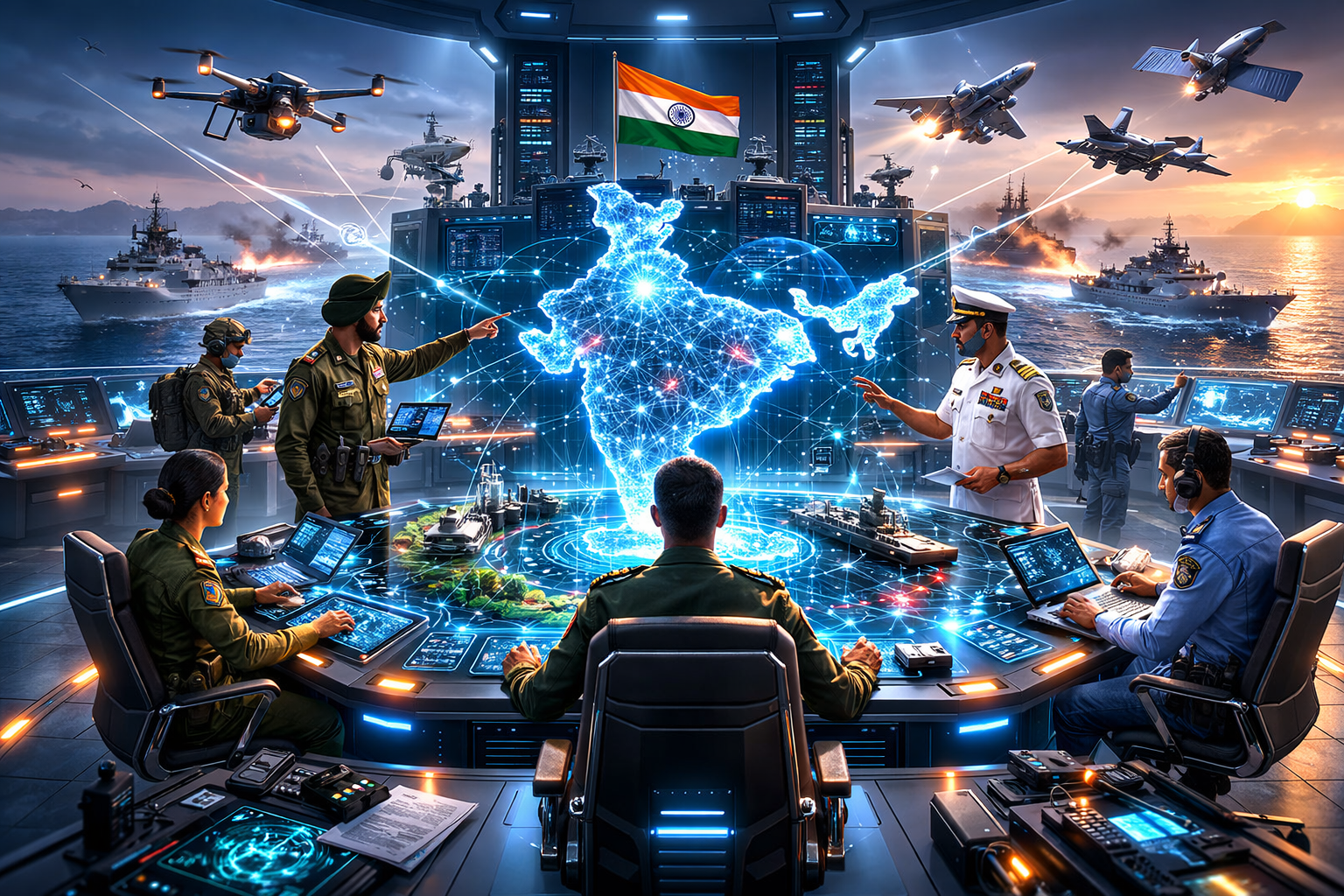
- CII-organised session on “Leveraging AI for Defence” underscored the expanding role of artificial intelligence in shaping India’s future military capabilities.
- The panel emphasised that artificial intelligence has emerged as a pivotal force multiplier in contemporary warfare.
- Strong data governance was identified as the foundation for successful adoption.
- While acknowledging the immense benefits of artificial intelligence, the panel argued that it should not function as an independent decision-making entity.
At the important India AI Impact Summit 2026 held in New Delhi, a session organised by the Confederation of Indian Industry titled “Leveraging AI for Defence: Driving Innovation and Efficiency” highlighted the growing centrality of artificial intelligence in shaping the future of India’s military capabilities. The discussion was moderated by Puneet Kaura, Managing Director and CEO of Samtel Avionics Ltd., and brought together senior tri-service leadership, including Maj Gen VJS Varaich, AVM Ajay Kunnath, Cmde SK Singh and Group Capt Ajey Lele. The speakers offered detailed operational and strategic perspectives on the integration of artificial intelligence within the Armed Forces.
The panel emphasised that artificial intelligence has emerged as a pivotal force multiplier in contemporary warfare. Its increasing incorporation into defence systems was described as a potential game changer for enhancing surveillance, operational planning, logistics optimisation and autonomous systems. The Indian Armed Forces, it was noted, are committed to integrating advanced technologies to improve overall military efficiency and preparedness.
A major focus of the discussion was the creation of secure and trusted defence ecosystems. Strong data governance was identified as the foundation for successful adoption. Structured data management, proper access control and reliable data pipelines were seen as essential for ensuring accuracy and accountability.
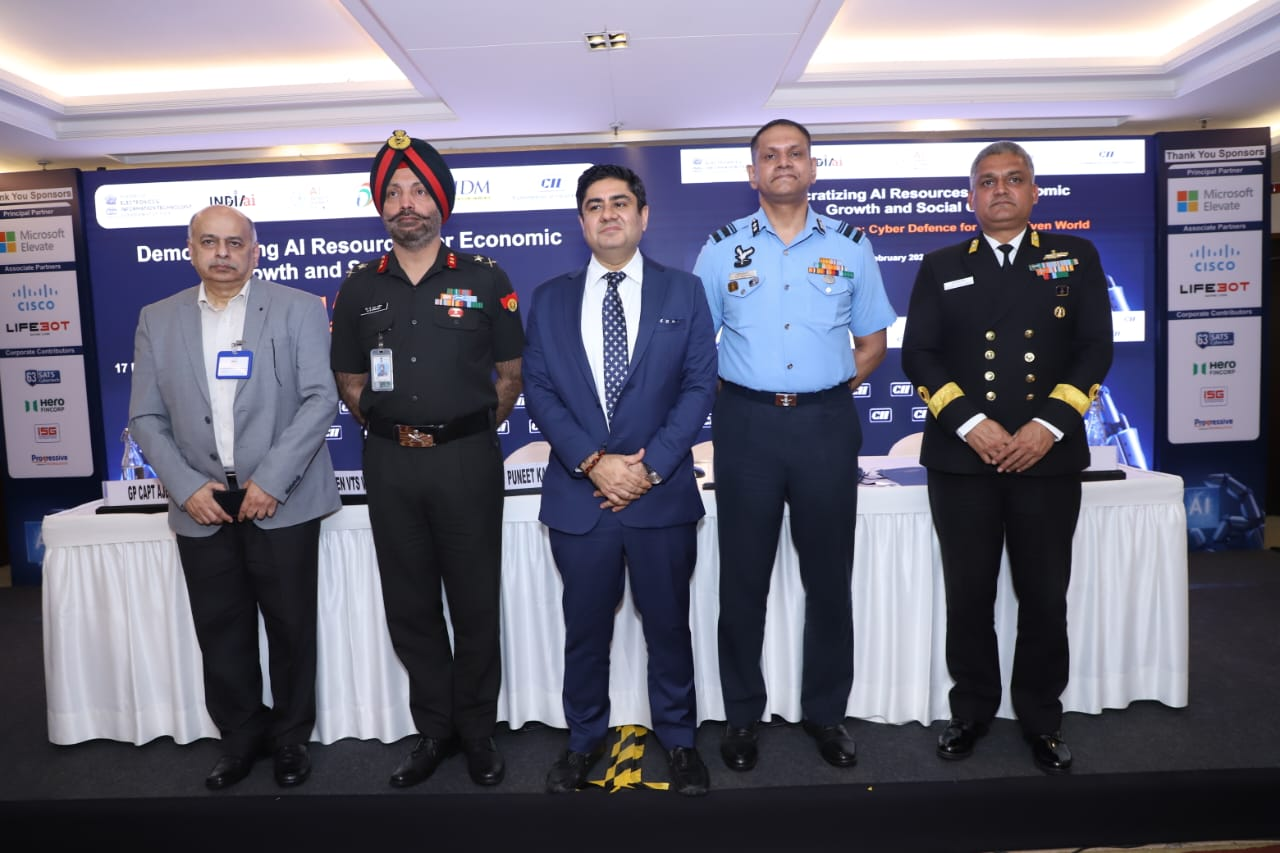
Another critical pillar discussed was cyber secure architecture. The speakers stressed that any development in this domain must operate within robust cybersecurity safeguards. Protection of algorithms, communication networks and mission-critical databases was described as indispensable for maintaining strategic advantage and preventing vulnerabilities.
Interoperability across the Army, Navy and Air Force was also emphasised. Cohesion among the three services is vital, and common standards can enable seamless coordination across domains. Industry participation was strongly advocated, with growing opportunities for Indian companies in maritime platforms, land-based systems and autonomous technologies. Collaboration between the Armed Forces and domestic industry was considered strategically important.
While acknowledging the immense benefits of artificial intelligence, the panel argued that it should not function as an independent decision-making entity. Human oversight in critical decisions must remain central.
The discussion gained further importance in the context of India’s evolving security environment. With shifting modes of warfare, including hybrid and technology-driven conflicts, adopting contemporary capabilities is essential for safeguarding national sovereignty and strengthening defence preparedness.

Aayush Pal is a freelance writer on contemporary geopolitical developments. The views expressed in his work are entirely his own.
 Anusreeta Dutta
  Hridbina Chatterjee