
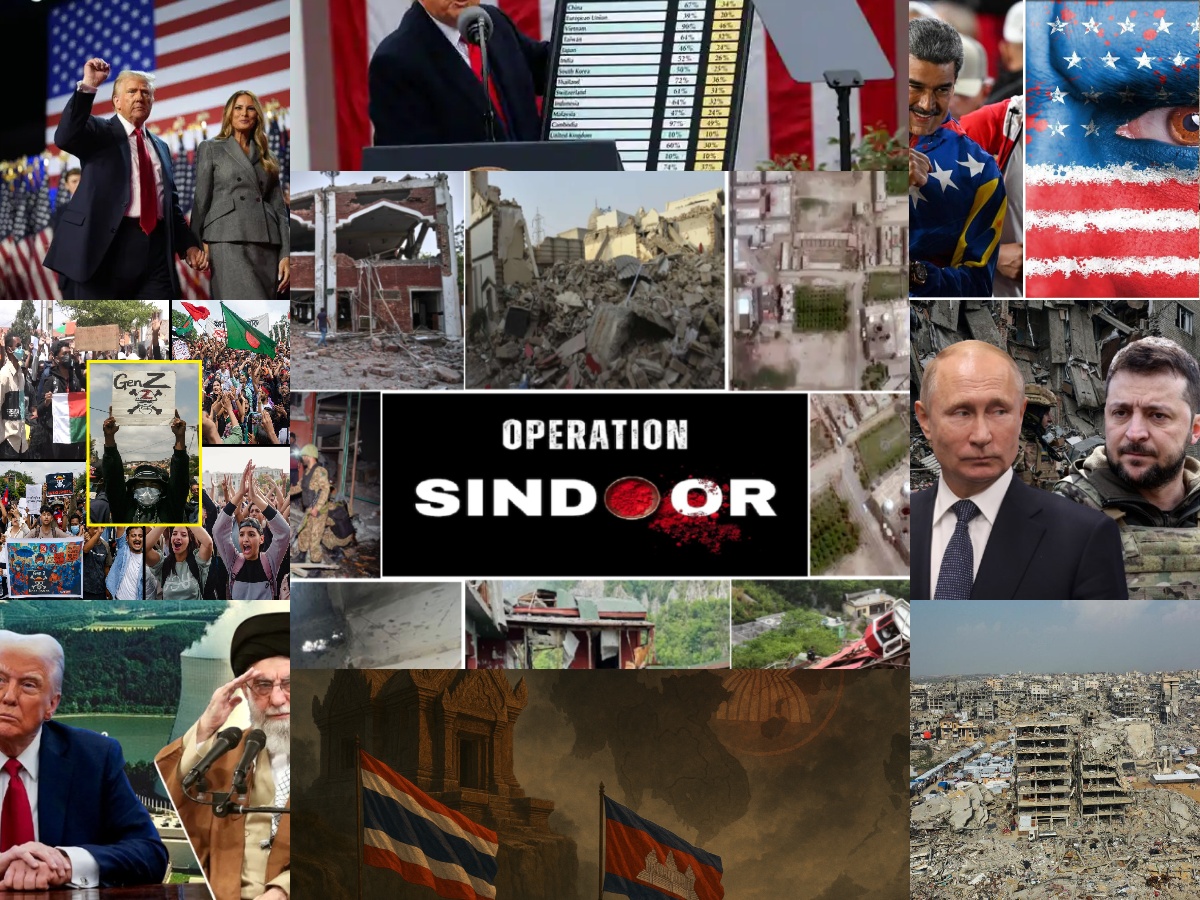
The year 2025 marked a decisive break from the assumptions that shaped the post–Cold War and post-globalisation eras. From renewed great-power coercion and economic warfare to regional conflicts and domestic political upheavals, the international system entered a phase of open contestation and strategic uncertainty. President Trump’s return to the White House acted as a catalytic event, accelerating trends already underway, transactional diplomacy, erosion of multilateral norms, and the reassertion of raw national interest.
Across regions, 2025 exposed the fragility of existing arrangements and signalled a world moving steadily towards realignment rather than stability. We look at the major geopolitical events in 2025 that are reshaping the world as we know.
Return of President Trump and Shift in Global Order

The year 2025 has seen a major geopolitical development. A geopolitical development has been so significant that it has changed global diplomacy from the very start of the year. One of the most significant developments has been President Trump’s return to the White House, which has shaped global politics as American policy under him has had greater ramifications not just for the United States but for the entire world.
America First Policy and Tariff War Impacting India
The year 2025 started on a tumultuous note as President Trump tried to change the very status quo of the world economy. He came out with the so-called America First approach, where he stated that existing American policies had supported other countries and not necessarily the United States. He specifically targeted India and said that India is a tariff king. Soon after he returned to the White House, his policy became very critical of India. Although he justified this policy towards India based on national interest, there was clear selective targeting where countries on similar grounds were given exceptions, while India was particularly targeted.
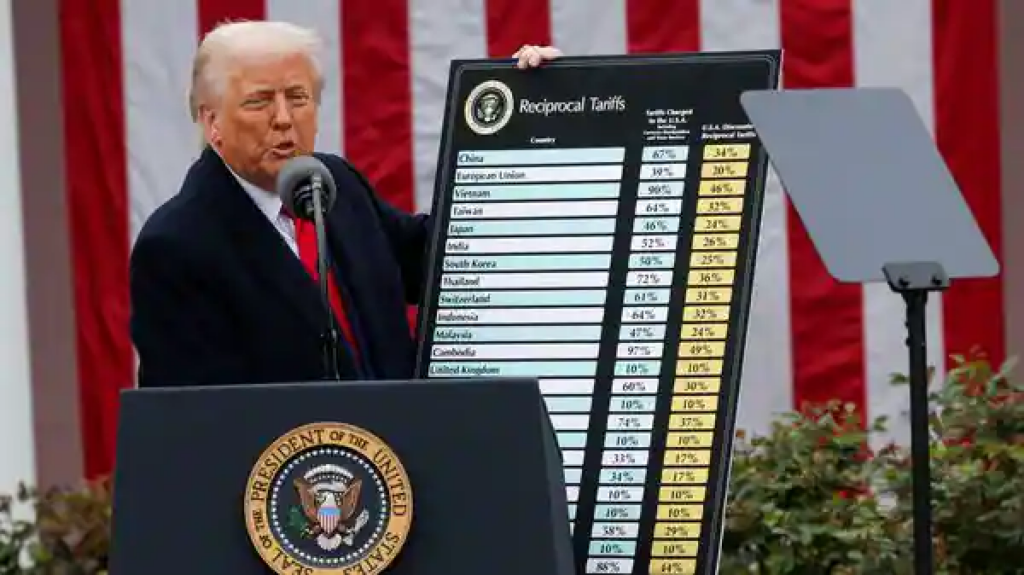
This policy came when President Trump announced huge tariffs on several countries, including India. Initially, the tariff structure created an economic war mainly against America’s adversary, China, where tariffs even crossed 100 per cent. However, as this policy was not viable, it was later delayed, and by the end of the year, both China and the United States reached an understanding. In this entire tariff episode, one of the biggest developments was the American approach towards India. When the White House first announced tariffs in April, the tariff on India was 26 per cent. As the year progressed, the United States used the Russia-Ukraine war as a leverage point and accused India of helping Russia in the war. This resulted in tariffs on India rising to 50 per cent, where 25 per cent was a tariff and the remaining 25 per cent was imposed as a penalty. This led to a major economic divide and raised serious questions in India-US relations.
India-Pakistan Conflict and Diplomatic Fallout
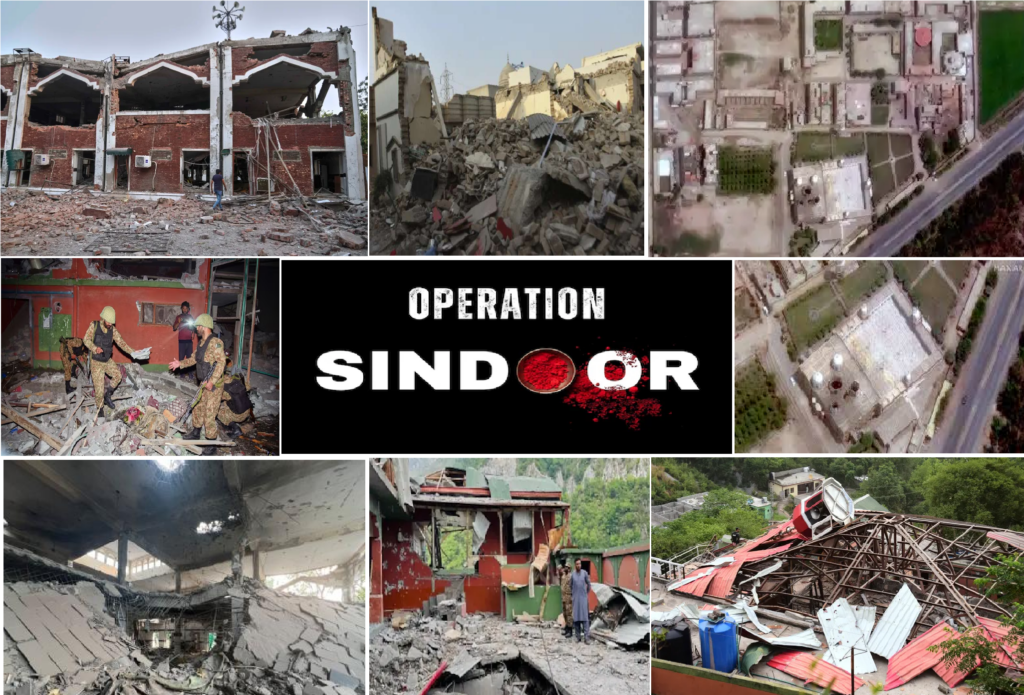
This fault line further intensified when the India-Pakistan war broke out in May. This conflict started with a terrorist attack by Pakistan-sponsored elements in Pahalgam in April, following which India was forced to retaliate. India launched a decisive response targeting terrorist infrastructure inside Pakistan. The impact was such that major airfields and military installations in Pakistan were severely damaged. India also adopted a strong diplomatic stance by keeping the Indus Waters Treaty in abeyance.
While the world was focused on the India-Pakistan conflict, an interesting development emerged regarding the end of the war. President Trump made an irresponsible diplomatic claim by stating that the United States had mediated the ceasefire between India and Pakistan. This claim was rejected by the Indian government, which clearly stated that the ceasefire was agreed upon after Pakistan requested it due to the pressure of India’s military response. President Trump’s statement was largely a public relations move aimed at enhancing his national and international image. This created a trust deficit in India-US relations. Since May, President Trump has repeatedly claimed credit for ending the India-Pakistan conflict. This undiplomatic conduct further strained bilateral ties.
United States Iran Escalation and Nuclear Tensions
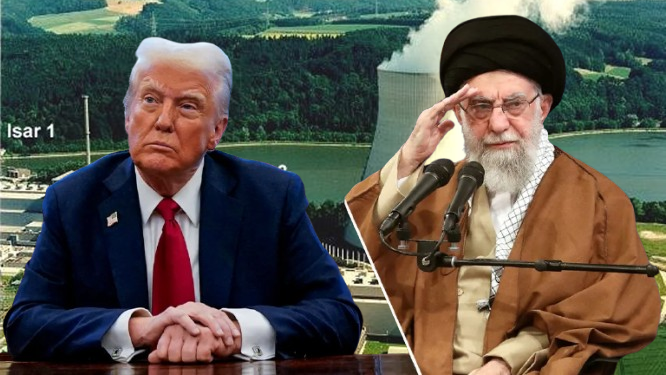
Another significant geopolitical development occurred between the United States and Iran. Before coming to power, President Trump stated that he did not want war with Iran and preferred diplomacy. However, under pressure from Israel, the United States accused Iran of advancing its nuclear enrichment program. The United States targeted Iranian nuclear infrastructure using sophisticated B-2 bombers and claimed that Iran’s nuclear facilities were destroyed. Iran rejected these claims and responded by targeting critical Israeli infrastructure. This escalation increased tensions in West Asia and raised serious questions about the future of Iranian nuclear talks. Iran made it clear that nuclear enrichment is a matter of national interest and would not be abandoned.
Thailand-Cambodia Border Conflict in Southeast Asia
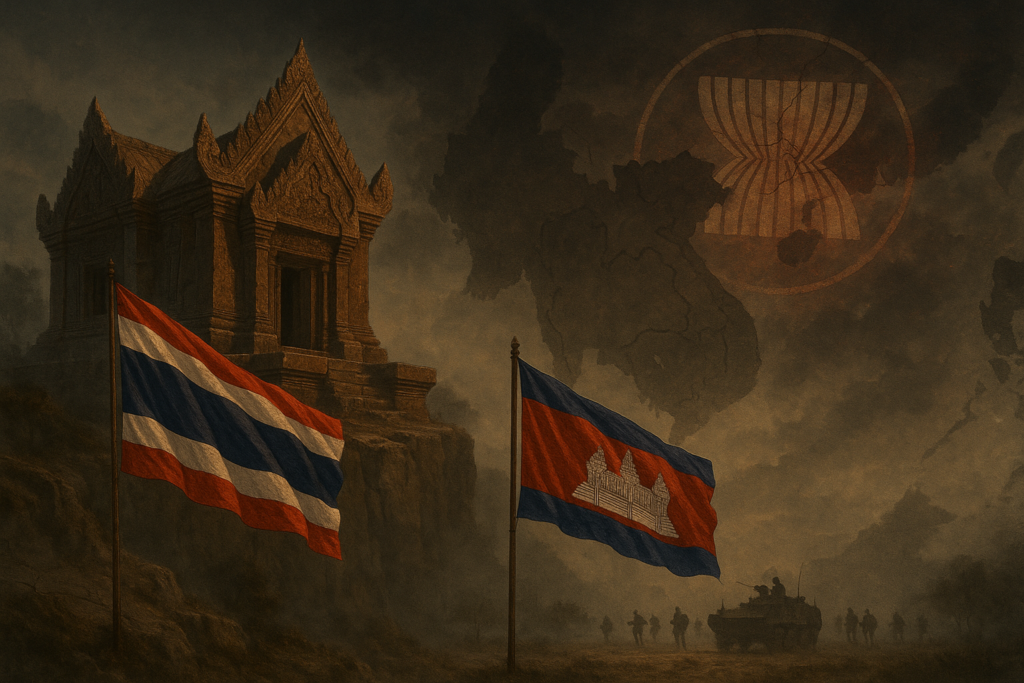
Another major development occurred in Southeast Asia between Thailand and Cambodia. The region, usually known for stability, witnessed a serious conflict due to border tensions revolving around the Preah Vihear temple. Both countries claimed ownership of the temple, leading to a full-scale conflict. A ceasefire attempt was made, reportedly involving President Trump, but it failed. Fighting resumed in December, followed by Chinese mediation. Within days, the ceasefire collapsed again. The Thailand-Cambodia conflict has created serious regional security challenges, particularly for China, which views Southeast Asia as strategically vital and does not want instability that could provide leverage to the United States.
Gaza Conflict and Unresolved Post-Ceasefire Questions
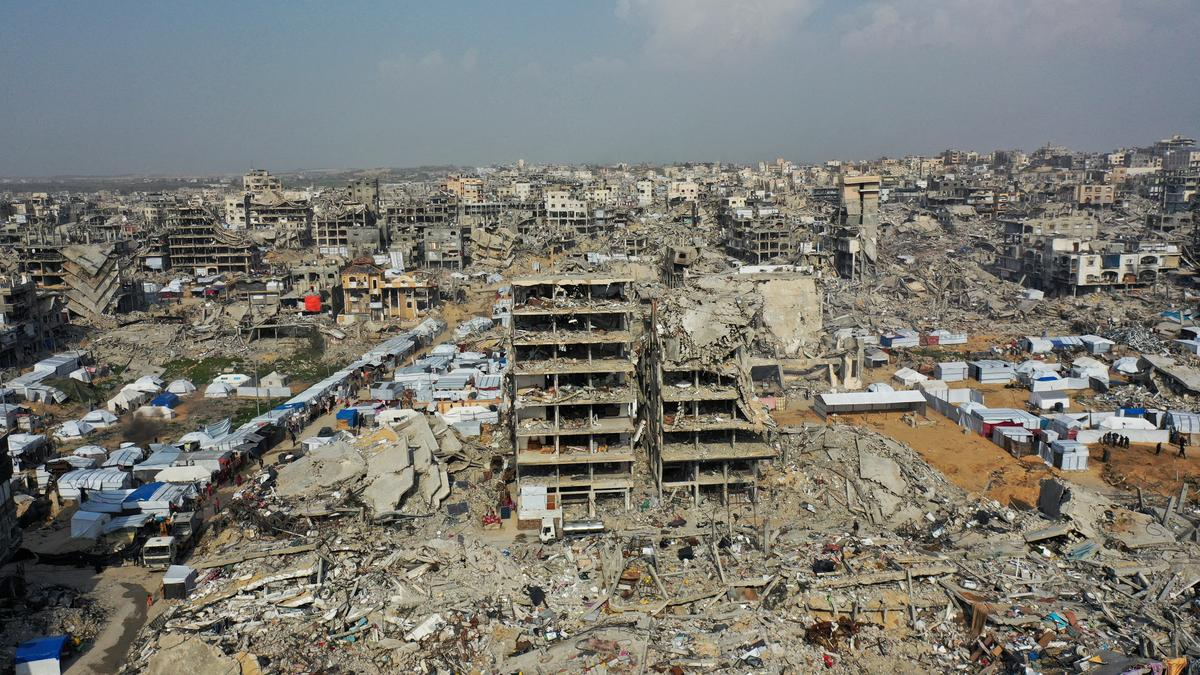
Another major question was whether President Trump would be able to resolve the Gaza issue. The Israel-Hamas war, ongoing since 7 October 2023, saw a ceasefire agreement facilitated by Turkey, Qatar, and Egypt. President Trump sought credit for this ceasefire, but serious questions remain unresolved regarding Gaza’s future governance, economic reconstruction, and security arrangements. The United States and its regional allies seek complete demilitarisation of Hamas, which Hamas strongly opposes.
Gen Z Protests and Political Upheaval Across Regions
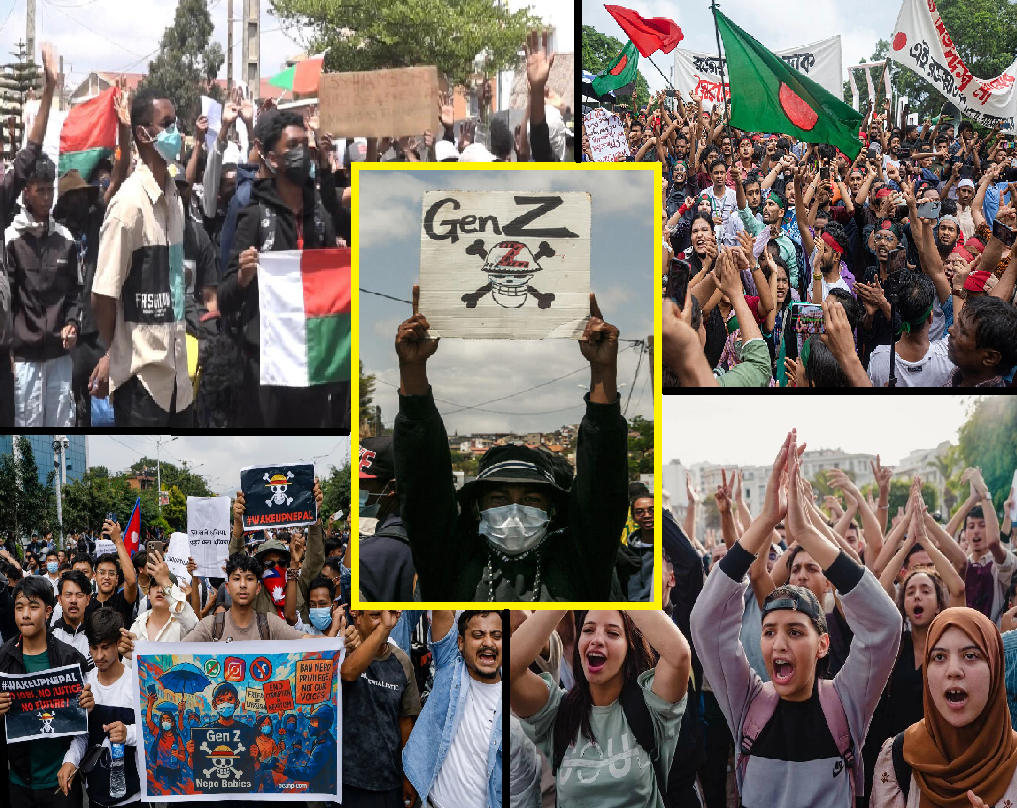
One of the most interesting developments of 2025 was the Gen Z protest movement. These protests gained prominence in Nepal, where young people challenged the government of KP Sharma Oli over restrictive social media laws. The government banned platforms like Instagram and TikTok, citing national law violations. This triggered mass protests amid existing political paralysis, economic stagnation, and large-scale migration of skilled youth. As a result, an interim government was formed with Susheela Karki as the head.
The Gen Z protests were not limited to Nepal and spread to Morocco, Madagascar, Peru, and the Philippines. These protests toppled governments in Madagascar and Nepal. However, serious questions remain about whether these protests were organic. Many analysts suggest that the movement appeared highly organised, raising questions about funding and coordination. These developments suggest similarities with colour revolutions, and 2026 may determine the future trajectory of the Gen Z protest movement.
Russia-Ukraine War and Failed Peace Efforts
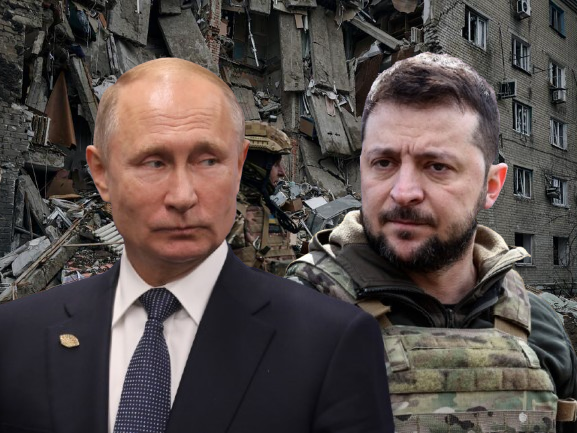
Finally, 2025 was not a successful year in resolving the Russia-Ukraine war. Despite President Trump’s promise to end the war quickly, the conflict continued. Ukraine carried out a surprise operation in June targeting key Russian military assets. A significant diplomatic moment occurred when President Putin met President Trump in Alaska, the first meeting under the new administration. While the meeting raised hopes for a ceasefire, no concrete outcome emerged. Russia demanded a permanent ceasefire and withdrawal of Ukrainian forces from disputed regions, while Ukraine sought a temporary ceasefire and rejected territorial concessions. Disagreements over Donbass and ceasefire terms continue to remain major obstacles.
Venezuela, Trump, and Renewed Pressure Politics
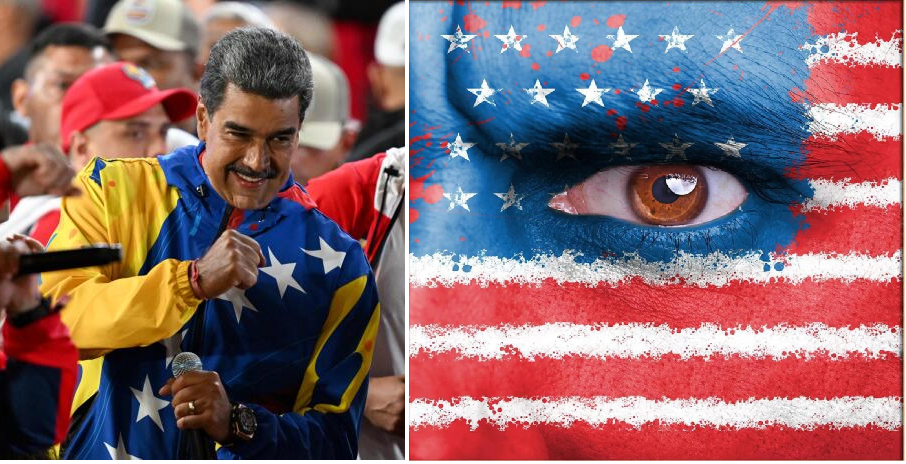
Another important theatre of confrontation in 2025 was Venezuela, where President Trump revived a hardline approach towards the Maduro regime. The United States accused Venezuela of democratic backsliding, human rights violations, and continued alignment with adversarial powers such as Russia and Iran. Washington reimposed stringent oil and financial sanctions that had earlier been partially eased, directly impacting Venezuela’s fragile economic recovery.
The Trump administration framed these measures as necessary pressure to force political reforms and free elections, but Caracas dismissed them as economic coercion aimed at regime change. Venezuela responded by deepening ties with China and Russia, seeking alternative energy markets and financial mechanisms to bypass U.S. sanctions. This renewed confrontation reinforced the broader pattern of 2025: diplomacy increasingly subordinated to pressure tactics, and regional crises becoming entangled in great-power rivalry rather than resolved through negotiated frameworks.
References:
- https://taxfoundation.org/research/all/federal/trump-tariffs-trade-war/
- https://www.orfonline.org/expert-speak/operation-sindoor-raising-the-cost-of-terrorism-for-pakistan#:~:text=Operation
- https://edition.cnn.com/2025/12/27/asia/thailand-cambodia-ceasefire-fighting-intl-hnk
- https://www.nytimes.com/news-event/ukraine-russia
- https://www.cfr.org/article/guide-trumps-twenty-point-gaza-peace-deal
- https://www.ohchr.org/en/press-releases/2025/06/un-experts-condemn-united-states-attack-iran-and-demand-permanent-end
- https://abc7news.com/post/trump-orders-blockade-sanctioned-oil-tankers-venezuela-ramping-pressure-maduro/18294700/?utm_source=chatgpt.com

Aayush Pal is a freelance writer on contemporary geopolitical developments. The views expressed in his work are entirely his own.
 Pranav S
  Ajith Shetty Heranje
  Anusreeta Dutta