- The playbook has been identical: a Western-supported local politician is patiently prepped over decades to destabilise and eventually replace a regime.
- The Nobel Peace Prize is neither noble nor peaceful – it is simply another strategic tool.
- Target countries share traits: weak economies, fractured democratic histories, and resource wealth; action begins when nationalisation or non-USD alignments emerge.
- Watch the awards, track the names, and join the dots- the global elite need to win only once.
Venezuela is not the last in the list of this standard script. There are countries yet to come. A prominent Asian Islamic country is probably next. The invasion script was executed in 1989 in Panama, 1991 in Iraq, 2011 in Libya, 2024 in Bangladesh, and 2026 in Venezuela. The collateralisation script is silently running across the world, with Africa being its centre.
The playbook has been identical. A Western-supported local politician—usually positioning themselves as being beyond politics—is constantly prepped to take over the levers of power, or at least act as a disruptor sufficient to create social tensions and put pressure on the government. Continuous investment and support imply that the sponsors take a very long-term view and have immense patience—almost as if they believe they only need to win once. The success of this playbook has been phenomenal across the world: very open in Ukraine, Georgia, Moldova, Bangladesh, Venezuela, large parts of Africa, and Nepal; and covert in Western European states and at the state level in Bharat across multiple states.
All those countries facing trading issues with the USA in the short term will win. China had its sanctions indefinitely postponed. Indian IT will get a reprieve. Europe can prolong the Ukrainian war as more freshly printed USD flows into it. The EU and US steel and arms industries will get fresh orders, and large amounts of USD will flow into US NGOs to continue their usual business of “spreading the light of democracy” across the world.
The Nobel Peace Prize has also been won. The choice now appears justified, and the selectors and juries deserve applause.
MAGA supporters, possibly US President Trump and some leaders across the world who informally nominated him, were disappointed that the coveted prize was denied to him. Many people who were or are neutral (including this author) were initially surprised that the knowledgeable committee overlooked a candidate who had at least temporarily brought a halt to the war in Gaza.
A relatively unknown politician from Venezuela, fighting a left-wing regime not in the good books of the current elite ruling the so-called Western world, was chosen over a sitting United States president who is also, by most estimates, the most popular US president outside the USA. This choice is now fully justified.
This opens the next topic: the way the global elite operate by identifying long-term goals and sticking to them across administrations in the USA (Democrat or Republican) and through regime changes among allies. No other country matches this long-term, generational approach to power and politics.
The Nobel Peace Prize is neither noble nor peaceful. It is simply another strategic tool.
Gaza occupied headlines for two long years. In fact, almost all of India’s (not Bharat’s) icons—including its opposition, media, Bollywood, and an influential section of the Twitterati elite—had their eyes fixed on Gaza, Rafah, and even on certain anatomies of the men of a terror group in Lebanon.
The Gaza war generated more emotional outbursts in Europe than the combined First and Second World Wars. The ferocity, surface-level violence, grotesque transparency, and overtly anti-Semitic nature of pro-Palestine demonstrations—along with open media support across Europe—forced some European governments (UK, France, Ireland, and Spain) to recognise a virtual entity called the “country of Palestine” without even defining its borders.
A local newspaper in Berlin pointed out that, irrespective of whether the Gaza war stopped or not, Trump at least deserved the prize for temporarily freeing European cities from siege by pro-Palestine protestors—something local European governments could not achieve.
The strategic decision to relativise Gaza—its violence and destruction—against a so-called fight against a left-wing government in South America demonstrates that the global elite are not bogged down by events, but remain focused on long-term goals: the dominance of the USD.
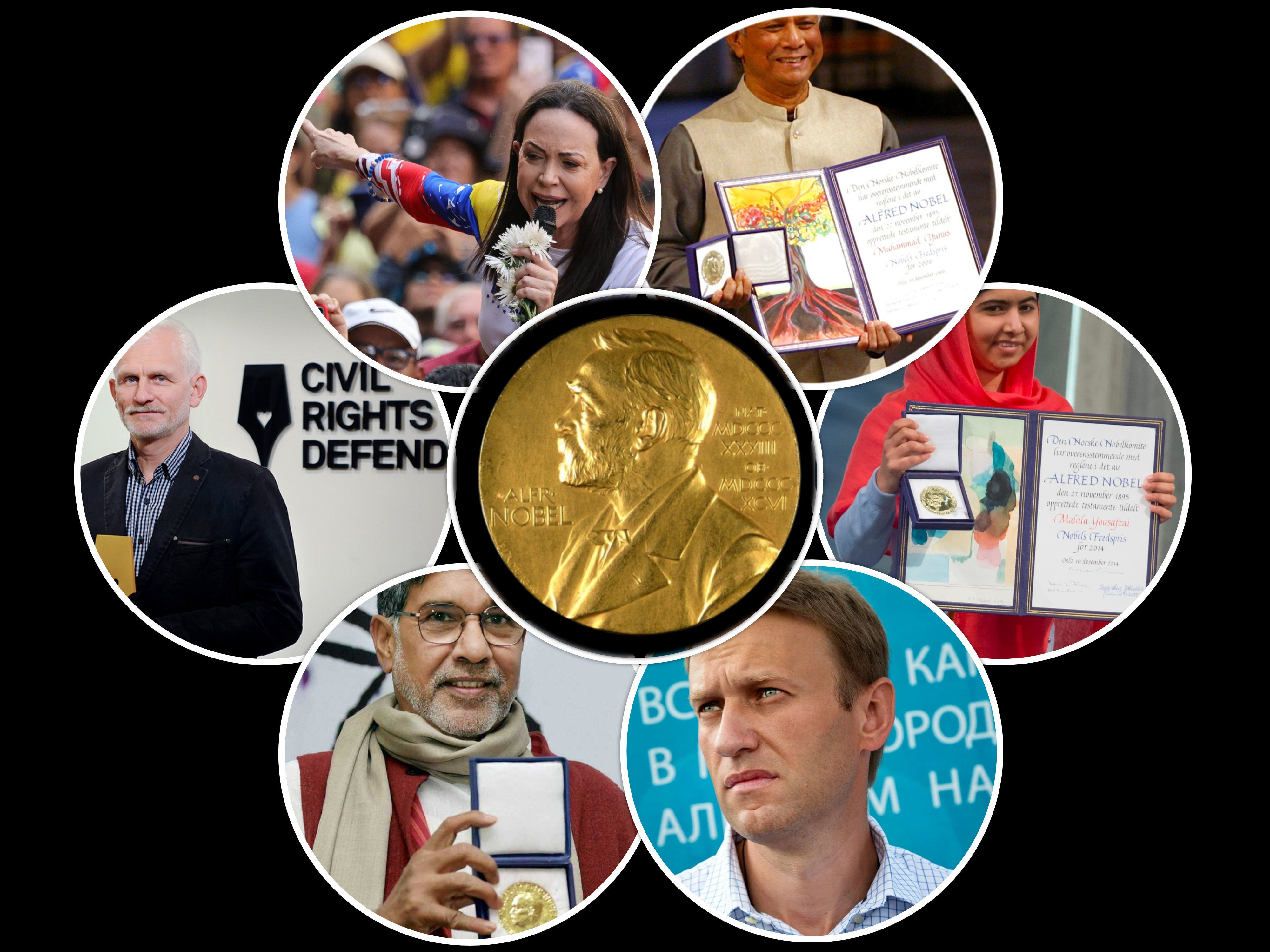
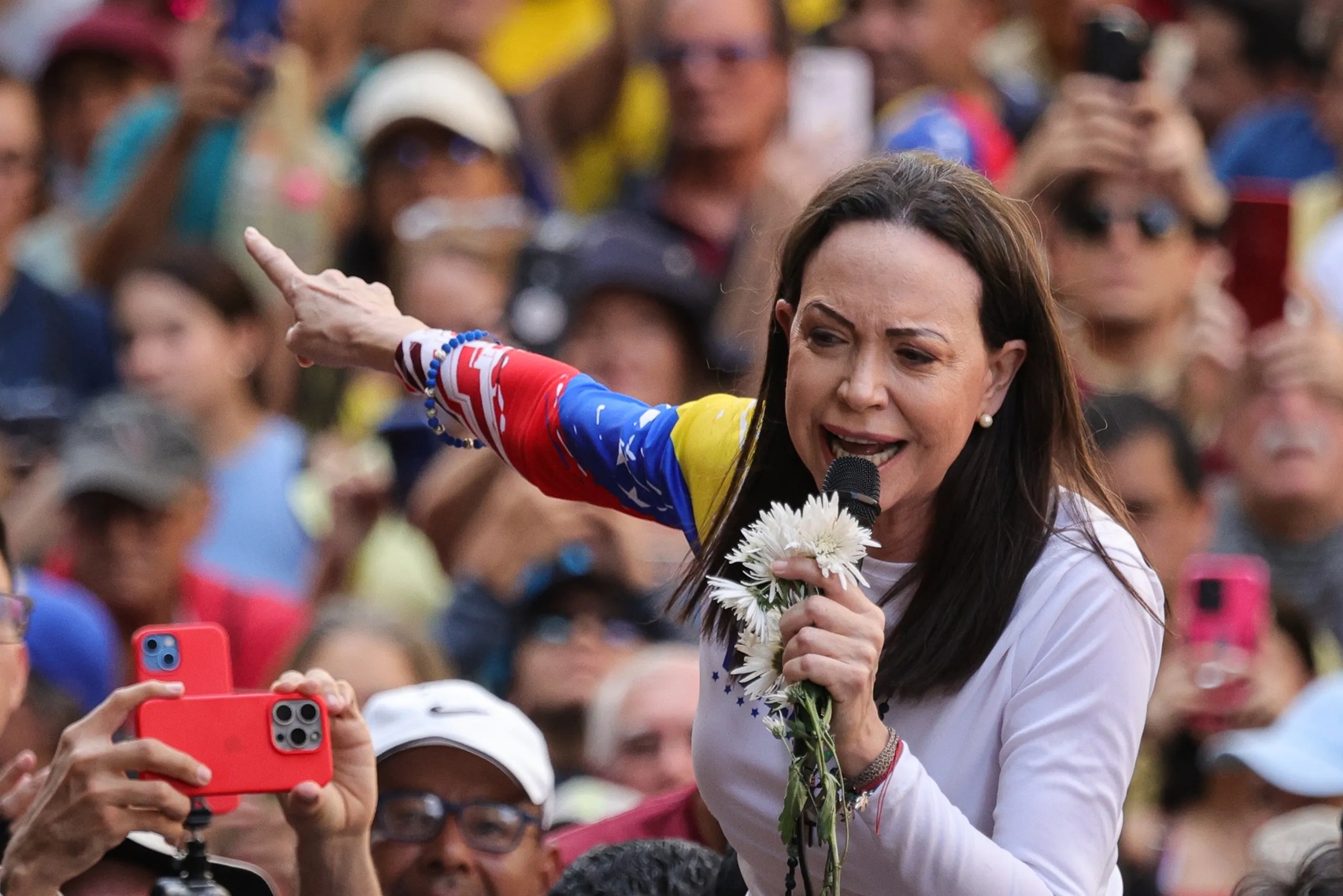
Below is a short, not fully complete list of Nobel Peace Prize winners and their contributions, starting with María Corina Machado, the winner in 2025.
A simple web search or AI query produces a flowery description of her as a superhero attempting to dislodge a left-wing Venezuelan government. Some portray her as Gandhian, seeking a peaceful end to left-wing rule. What is often missed is that she has been on this path for a very long time, and that the Nobel award is merely the latest in a long list of “awards.” She has been recognised by the BBC, Time Magazine, the EU (Vaclav Havel Prize), and the Sakharov Prize—all for being an opposition politician with no notable achievements on record. (Sound familiar?)
US President Obama received one as well. He had little to offer peace; a few months before the announcement, he had overseen the bombing and destruction of Libya, and the news cycle was filled with the Benghazi massacre. The prize was more a gesture of geopolitical acknowledgement for neutralising a potential threat to USD dominance. Had Joe Biden defeated Trump, it is entirely possible he would have been nominated for creating the extraordinary situation and human tragedy in Ukraine.
Other notable recipients and their geopolitical implications include Albert Gore, former US Vice President. He received the award for climate change advocacy. It was partly consolation, as President Clinton could not be awarded due to impeachment proceedings. Gore has since been a permanent fixture at Davos, always punctual—arriving in his private jet.
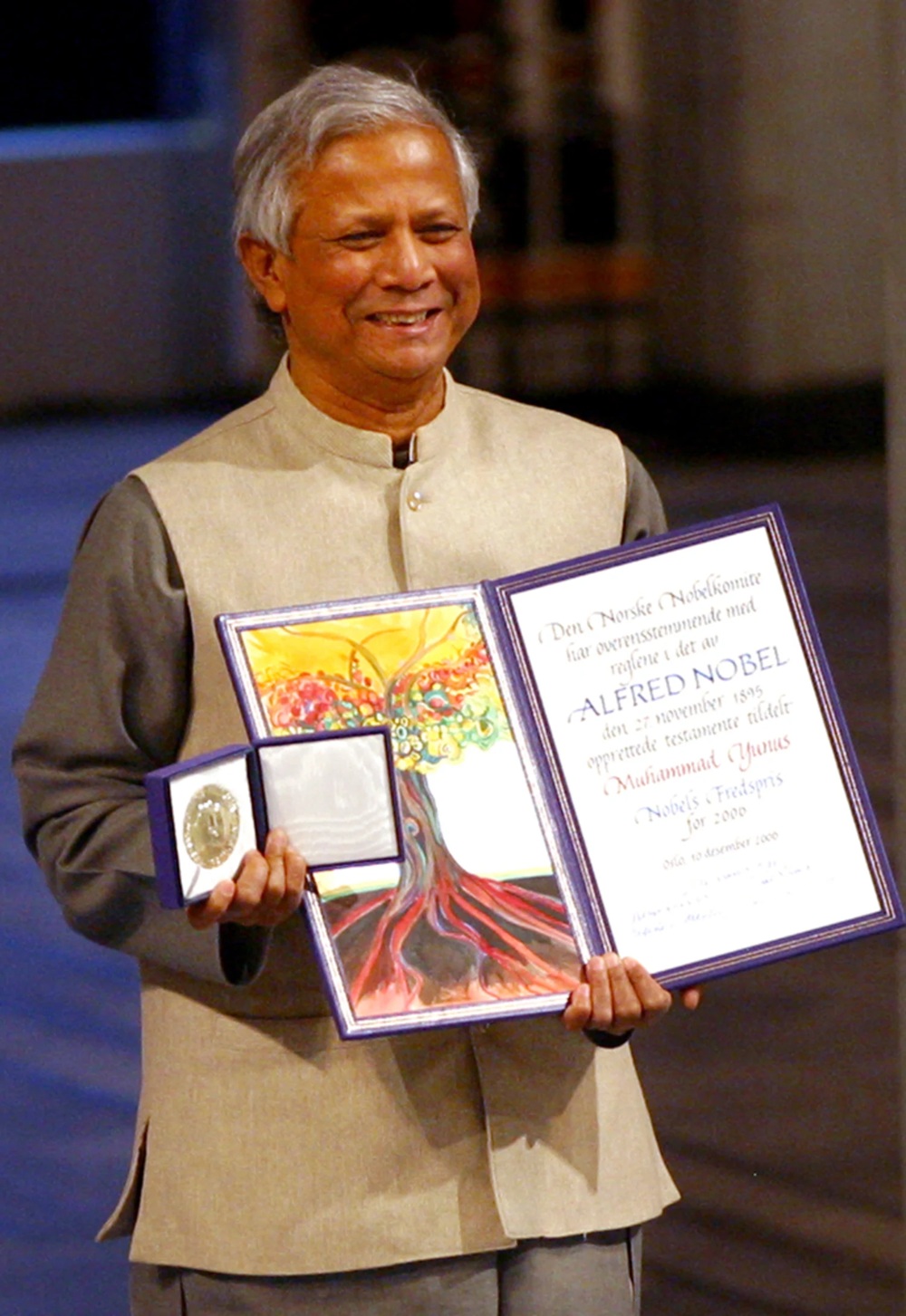
Mohammed Yunus, the current “appointed president” of Bangladesh, received the prize in 2006 despite having no contribution to peace. Under his leadership, a new chapter of Hindu genocide has begun. He was a long-groomed candidate—a successful payoff for a long-term investment.
The EU awarded itself the Peace Prize in 2012. Ironically, it is the entity most eager for the Ukraine conflict to continue and the Gaza conflict not to end. Its defining moment was an official EU X (Twitter) post on the Russia–USA peace deal on Ukraine: “We have a very dangerous peace.” When peace itself is dangerous, the prize is doubly justified.
India–Pakistan hyphenation was achieved in 2014 through Kailash Satyarthi and Malala Yousafzai. Malala, who once claimed to be Christian, married a radical Muslim in the UK and selectively chooses causes to champion.
Alexei Navalny was courted for years, but elites concluded he would not withstand Putin’s power—a judgment later proven correct. Another potential future winner is Ales Bialiatski, a long-time human-rights activist opposing Belarusian President Alexander Lukashenko, recently released from prison. The list could go on, but the larger point remains: the Nobel Peace Prize is a geopolitical indicator of elite focus.
Bhartiya readers should recall Indian figures who share similar profiles—serial award recipients, endless media coverage, NGO affiliations: a chief minister now out on bail, a border-town leader currently in jail, an activist who stalled a river dam for two decades. The list is long.
The playbook is identical. A Western-supported local politician positioned as “above politics” prepared patiently over decades. The success rate is extraordinary—open in Ukraine, Georgia, Moldova, Bangladesh, Africa, and Nepal; covert in Western Europe and within Indian states.
Target countries share traits: weak economies, high poverty and crime, fractured democratic histories, and resource wealth. Action begins when nationalisation or non-USD alignments emerge. Legitimacy is questioned. Then comes an accusation—fentanyl, democracy, human rights, WMDs. Finally, an invasion or mass uprising, followed by the appointment of the chosen leader. Media plays its role: Venezuela becomes “the Caribbean.” Godhra becomes the Gujarat riots. Kandahar hijack becomes Air India hijack. 1984 became the Delhi riots.
Bharat faces this threat across institutions—media bias, bureaucracy questioned, and the judiciary discredited. Reports of elite relatives receiving unmerited Western university placements are alarming. India’s obsession with Western validation, NGO density, and political complicity makes this combustible. Grooming now replaces awards. This assault cannot be stopped by governments alone. Bharatiya society must understand the NGO ecosystem and agenda-setters. Otherwise, collapse is inevitable.
The global elite need to win only once.
Watch the awards. Track the names. Join the dots.
Thank you for your attention to the matter (sic).
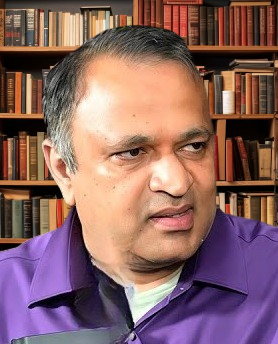
Mani Bhushan is a Trade & Business Relations Expert. He is a Member of the India Business Forum and an observer of International Relations. Views expressed are the author’s own.
 Aayush Pal
  Dr Nanda Kishor