
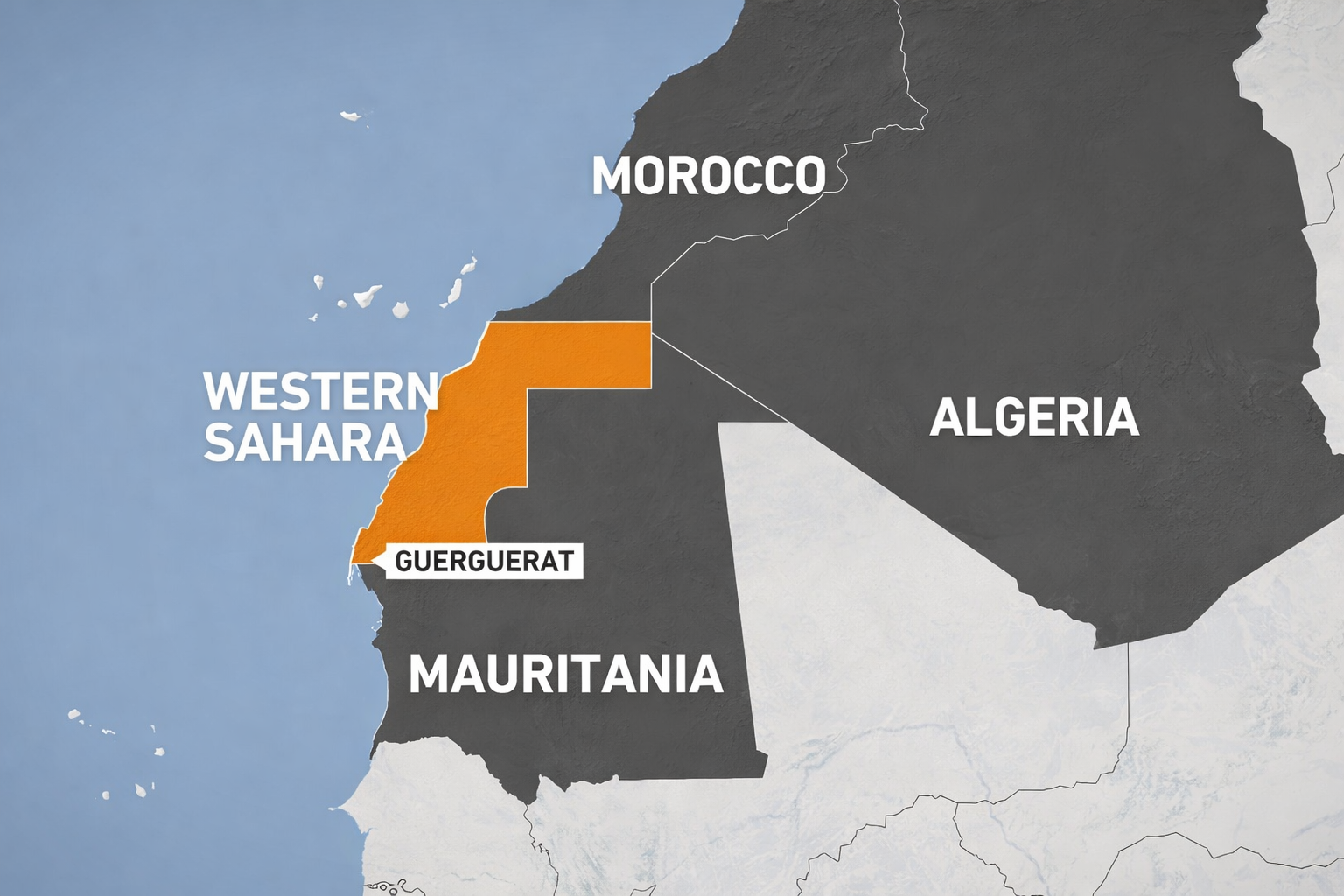
- Western Sahara is not merely a political dispute; it has strong geo-economic and strategic significance as the region is rich in phosphate deposits, has abundant Atlantic fisheries, and is believed to possess potential offshore hydrocarbon resources.
- Control over Western Sahara also strengthens influence over the Maghreb and the Sahel region, which is why Morocco insists on full sovereignty while offering limited local governance under its authority.
- The dispute over Western Sahara is gradually transforming into a broader geopolitical contest involving major global actors.
Africa is a continent that is emerging as a new geopolitical epicentre in the 21st century. It possesses immense geopolitical and geo-economic resources and is home to a young and evolving demography. However, it is also fuelled by major regional tensions and political rivalries. As a result, Africa is gradually becoming a theatre of geopolitical contention.
One of the most significant emerging rifts is in Northwestern Africa, between Algeria and Morocco. Both countries are regional powers and share a deep adversarial relationship. To understand this hostility, it is important to examine its root causes. Interestingly, the European colonial legacy plays a major role in shaping this dispute.
The primary cause of the tensions between Morocco and Algeria is Western Sahara. Western Sahara is strategically located along the Atlantic coast and between Morocco and Mauritania, and the Sahara Desert. Historically, it was colonised by Spain. In 1975, Spain withdrew from the region following the Madrid Accords. Soon after the withdrawal, Morocco claimed control over Western Sahara and began administering it as part of its southern territory. Today, Morocco considers Western Sahara an integral part of its sovereign territory.
However, this claim is not accepted by the Sahrawi people, who are the indigenous population of Western Sahara. In pursuit of their right to self-determination and sovereignty, they formed the Polisario Front in 1973. The objective of the Polisario Front is to establish the Sahrawi Arab Democratic Republic and reject Moroccan sovereignty over the territory.
Algeria, which is Morocco’s eastern neighbour, strongly supports the Sahrawi cause. Algeria has hosted Sahrawi refugee camps within its territory and has provided diplomatic backing to the Polisario Front. Morocco views this support as interference in its domestic affairs and as a violation of its sovereignty.
Western Sahara is not merely a political dispute; it has strong geo-economic and strategic significance. The region is rich in phosphate deposits, has abundant Atlantic fisheries, and is believed to possess potential offshore hydrocarbon resources. Phosphate deposits are vital for global food security, providing over 90% of the raw material for phosphate fertilisers that nourish crops and sustain high agricultural yields. They are essential for producing animal feed, detergents, industrial products, and lithium iron phosphate (LFP) batteries. As a finite resource, they are critical for supporting growing populations.
Furthermore, Western Sahara’s strategic location provides geopolitical leverage and access to the Atlantic Ocean. Control over Western Sahara also strengthens influence over the Maghreb and the Sahel region. This explains why Morocco insists on full sovereignty while offering limited local governance under Moroccan authority, whereas the Polisario Front demands complete independence.
Tensions escalated significantly in 2021 when Algeria severed diplomatic ties with Morocco and closed its airspace to Moroccan aircraft. The crisis drew the attention of European powers, particularly Spain, which has been a historical actor in the region.
Spain, France & US involvement
Spain’s position witnessed a major shift in 2022. For decades, Spain maintained a relatively neutral stance, urging diplomatic dialogue between Algeria and Morocco. However, in 2022, Spain openly supported Morocco’s autonomy proposal for Western Sahara. This marked a watershed moment in Spanish diplomacy.
The reason behind Spain’s shift was not only diplomatic recalibration but also the immigration crisis in Europe. Morocco and Algeria act as transit points for African migrants attempting to cross into Europe via the Mediterranean. Immigration has become one of the most sensitive political issues in Europe. European governments increasingly view cooperation with Mediterranean African states as essential for managing migration flows. Spain’s support for Morocco was partly aimed at securing cooperation on migration control and stabilising bilateral relations with Rabat.
France has also expressed clear support for Morocco, again influenced by concerns over migration and regional stability.
The position of the United States is equally significant. In 2020, during President Trump’s first administration, the United States recognised Moroccan sovereignty over Western Sahara in exchange for Morocco joining the Abraham Accords and normalising relations with Israel. This diplomatic exchange marked a major shift in US policy. In subsequent US administrations, Washington has indicated that it will continue supporting Morocco while endorsing Morocco’s autonomy proposal as a basis for negotiations.
These developments have led to Algeria’s diplomatic isolation in the Western bloc. This isolation has contributed to stronger Algeria–Russia relations. In recent years, Algeria has deepened its defence cooperation with Russia. In 2023, Algeria reportedly expanded defence cooperation agreements with Russia worth billions of dollars, agreeing to procure advanced Russian military equipment, including the S-400 air defence system and reportedly Su-57 fighter aircraft. This has further strengthened Algeria’s strategic partnership with Moscow.
As a result, the Algeria–Morocco rivalry is no longer confined to bilateral tensions. It now involves European powers, the United States, and Russia. The dispute over Western Sahara is gradually transforming into a broader geopolitical contest involving major global actors.
Conclusion
At a time when Africa requires stability to address developmental and structural challenges, the widening rift between Algeria and Morocco risks turning Northwestern Africa into a new geopolitical flashpoint. If not managed carefully, it could evolve into a proxy confrontation among external powers.
The responsibility now lies primarily with Morocco and Algeria. Their differences must not escalate into a larger international crisis. Strategic restraint and diplomatic engagement are essential to prevent this regional dispute from destabilising a continent that is otherwise emerging as a key centre of global geopolitical transformation.

Aayush Pal is a freelance writer on contemporary geopolitical developments. The views expressed in his work are entirely his own.
 Archita Gaur
  Diksha Bharti