

- Cinema does more than entertain society—it reflects and reinforces the choices within human behaviour.
- Is the struggle coming from the situation—or from how the situation is responded to?
- Life follows a simple mechanism: Situation. Response. Outcome.
Introduction: The Recurring Theme of Struggle
Across cinema, stories are often built on a familiar theme—struggle.
From survival dramas to underdog journeys, from personal hardship to large-scale conflict, similar narratives repeat. The character must struggle, endure, and overcome. Film after film reinforces a powerful assumption:
Life is a struggle.
This story arc is widely accepted and rarely questioned. Over time, it begins to shape how life itself is perceived.
Cinema does more than entertain society—it reflects and reinforces the choices within human behaviour. The constant portrayal of conflict, reaction, and confrontation mirrors a common approach to life—where situations are often met with resistance, and responses create further complications.
The Cycle of Conflict
This pattern is clearly seen in One Battle After Another, where the narrative unfolds as a chain of events, with one negative choice leading to another.
Each response fuels the next situation, creating a continuous cycle of conflict—one that could have been altered at any point.
These stories, while compelling, raise a deeper question:
Is the struggle coming from the situation—or from how the situation is responded to?
The Core Idea: Response Over Situation
If observed carefully, every circumstance presents two possibilities:
- A positive response
- A negative reaction
These are the real choices. At every moment, there is a crossroads.
- Positive responses create clarity and forward movement.
- Negative reactions create resistance and further complications.
This is where the struggle begins.
Struggle is not in the situation—it is in the response.
When an event feels challenging:
- Responding with negativity tightens the knot that binds us.
- Responding with positivity loosens it.
These are the simple mechanics of life.
Patterns That Shape Experience
Seen in this light, many cinematic struggles are not caused by circumstances alone—they are sustained by repeated negative responses, past and present.
The cycle continues because negative responses continue.
This pattern is not limited to cinema. In life, individuals often experience repeated difficulty. On the surface, it appears that circumstances are the cause. But when observed more closely, familiar patterns of response begin to reveal themselves.
The same type of reaction, repeated over time, creates the same type of experience.
What we refuse to learn returns to teach us.
The Appeal of Struggle
This also explains why stories of struggle are so widely appealing.
Overcoming odds, facing resistance, and pushing through hardship—these narratives carry intensity. There is even a kind of rush associated with them.
Negativity gives a quick high, yet leads to long-term damage. So much so that when life feels smooth, some may feel that something is missing.
Struggle begins to feel normal—even necessary.
But is it?
When clean water is available, why continue swimming in dirty, familiar water that is not beneficial?
What is common is not always positive.
Like a recreational substance, the same rush is not felt at the original level. More negativity is often needed to feel the same effect.
Negativity attracts more negativity.
If we remain in dirty water, we begin to carry its effects. The energy of choices never lies—it only guides. The evidence surrounds us.
Cinema as a Mirror of Possibility
Cinema, however, also reveals another possibility.
In 12th Fail, the central character faces repeated setbacks. Yet, through consistent positive responses, the direction of his life begins to change.
The situation does not immediately disappear—but his approach transforms the outcome.
A similar shift is seen in Pad Man, inspired by the life of Arunachalam Muruganantham. The character faces resistance despite a pure intention to serve humanity. Instead of reacting negatively, he continues with clarity and purpose. His consistent positive responses uplift his community and empower society.
In The Pursuit of Happyness, the character portrayed by Will Smith faces severe hardship. Yet, through steady positive effort and refusal to give in to negativity, his life gradually shifts—demonstrating resilience rooted in constructive response.
And then there are stories where simplicity itself becomes strength.
In Forrest Gump, the character does not resist life. He accepts each situation as it is and responds with positivity and consistency. While others struggle with confusion and resistance, he continues moving forward—demonstrating that clarity in response creates a life that flows beyond obstacles.
The Decisive Difference
These stories point to something simple yet powerful:
Two individuals may face similar situations.
- One experiences ongoing struggle.
- Another moves forward in life.
The difference lies in the response.
Experiences are lesson-based—created by the energy of previous choices. What is done now determines what happens next.
The present response carries the greatest potential. It holds the possibility for transformation.
A constructive response—even in a seemingly challenging situation—can begin to change the direction of events. Not always in expected ways, but often beyond imagination.
The Mechanism of Life
Life follows a simple mechanism:
Situation → Response → Outcome
Acceptance of reality and choosing to see each situation as an opportunity opens the door to new outcomes—better than those created through resistance.
Cinema presents this pattern in a condensed form. Stories unfold in hours, allowing us to observe what may take years to recognise in real life.
When seen clearly, these stories reveal something beyond entertainment.
Conclusion: Rethinking Struggle
Struggle is not something brought upon us. It is something we are creating.
Fighting reality is a battle that neither the characters we empathise with on screen—nor humanity—can ever win.
But when the response changes, the living experience begins to evolve.
What appears to be a life of repeated struggle can begin to flow more smoothly—not because situations that test us stop coming, but because the way they are responded to has evolved.
Our perspective fuels our choices. When positivity is chosen consistently, rooted in selfless service, even seemingly difficult situations begin to transform.
Cinema shows us this truth—repeatedly.
The question is whether we are willing to see it.
Perhaps we can learn from the choices of others on screen.
We must ask ourselves:
Is struggle inevitable—or is it something we are continuously choosing?
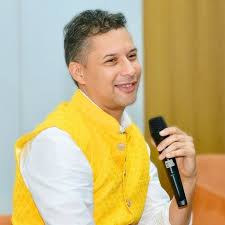
Ananda Mathews, known professionally as Matthew David DOP, is a Mumbai-based cinematographer and author currently residing in Goa. He engages in psycho-spiritual counselling and social service throughout Bharat alongside his Guru Ji, Divine Colonel – Ashok Kini Ji. His first book In Quest of Guru and forthcoming Living Science explore the journey of human transformation. Views expressed are the author’s own.