
|
Getting your Trinity Audio player ready...
|
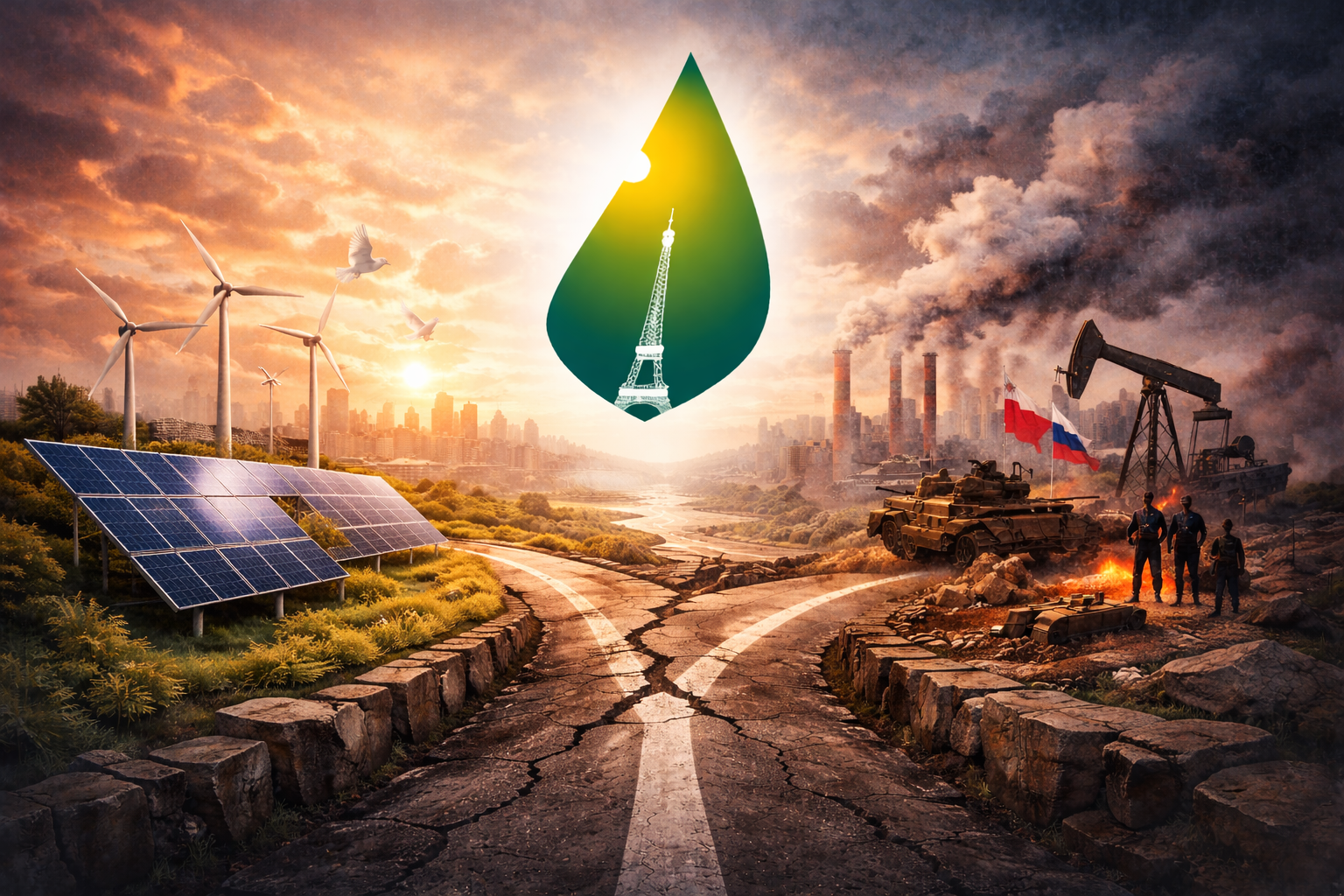
- The Paris Agreement has a fundamental challenge: there is always a gap between what countries pledge and what they actually implement.
- The lack of funding for climate change has become a major source of suspicion, making people feel even more unfair about the global climate regime.
- The Paris Agreement was based on a spirit of cooperation, but now governments are more focused on their own economic and energy security issues.
- Climate governance is no longer just about this one thing; it’s now part of a bigger, more broken system.
The Paris Agreement has long been thought of as a turning point in international climate diplomacy. The United Nations Framework Convention on Climate Change (UNFCCC) adopted it in 2015. It brought almost all countries together to commit to addressing climate change. Not only was it important because so many people took part, but also because it broke away from rigid, top-down governance structures that had made it hard for the world to take action on climate change.
But ten years later, the main question is not if the Paris Agreement was historic (it definitely was), but whether it still works and remains relevant in a world that is becoming more divided. As global politics shift towards strategic competition and national prioritisation, the fundamental assumptions of the Agreement are being challenged in unprecedented ways.
Political Creativity of Flexibility
The Paris Agreement worked because it was practical. The Agreement replaced the Kyoto Protocol’s binding, top-down targets with a bottom-up framework that allows countries to set their own Nationally Determined Contributions (NDCs). This flexibility worked politically, so both rich and poor countries could take part without having to worry about externally imposed obligations.
From a diplomatic point of view, this was a significant step forward. By accommodating differences within a universal framework, it closed the long-standing gap between the Global North and the Global South. Participation became the most important measure of success, and Paris did better than previous agreements.
But this flexibility is also a structural weakness. Because there are no legally enforceable mechanisms, compliance depends on the political will of individual states. Because of this, the Agreement is more of a coordination framework than a set of rules. This difference has a significant impact on how well it can help reduce carbon emissions in a meaningful way.
The Gap Between Ambition and Action
The Paris Agreement has a fundamental challenge: there is always a gap between what countries pledge and what they actually implement. The main goal of the Agreement is to keep global warming to 1.5°C above pre-industrial levels. This is still possible, but it is politically difficult. The Intergovernmental Panel on Climate Change has conducted several assessments showing a growing gap between the emissions cuts countries have promised and the cuts actually needed to reach this goal.
A more recent “implementation gap” makes this “ambition gap” even worse. A lot of countries aren’t even close to meeting their current NDC commitments. There are a lot of reasons, such as limited institutional capacity, conflicting economic goals, and poor policy coordination. The main problem, though, is structural: the Agreement doesn’t have any way to make sure that everyone follows the rules or to enforce compliance.
This difference has effects that go beyond the environment. They make the Agreement less credible as a way to govern the world. If states fail to deliver on their commitments without facing consequences, the framework’s legitimacy is questioned.
Climate Finance and the Lack of Trust
It’s hard to put things into action in developing countries. The idea of common but differentiated responsibilities is at the heart of the Paris framework. This idea takes into account past inequities in emissions and capacity. This idea is based on the promise of rich countries to give $100 billion a year for climate action.
But this promise has only been partly kept. The lack of funding for climate change has become a major source of suspicion, making people feel even more unfair about the global climate regime. For many developing countries, the refusal to give them money could not only make their climate action plans impossible, but it could also make the whole diplomatic process less valid.
This lack of trust has real effects on politics. It makes people less ambitious as a group because countries are less likely to raise their pledges if they don’t get support in return. In addition, the words used change from working together to fighting, and climate talks are becoming more focused on fairness and responsibility.
The Rise of Climate Nationalism
Climate nationalism is another thing that sets this time apart from others. The Paris Agreement was based on a spirit of cooperation, but now governments are more focused on their own economic and energy security issues.
Geopolitical events such as the war between Russia and Ukraine have made people worried about energy security. Because of this, many countries have turned to fossil fuels to stabilise their energy systems. This change is part of a bigger shift in priorities, where short-term economic and political issues are more important than long-term climate goals.
At the same time, developing countries want more say in climate talks. Countries like India have stressed how important climate justice, fairness, and development space are. This is a change from how things used to be, when developing countries were often seen as passive recipients of climate policy frameworks.
This trend encourages diversity, but it makes it harder to reach a consensus. The many different national priorities make it hard to see how the Paris framework applies to everyone. There is no longer one global vision for climate action; instead, there are many state agendas.
From Centralised Multilateralism To Broken Government
The Paris Agreement is still very important in this changing world. It sets up a standard language for climate action, reporting, and transparency, as well as regular reviews through processes like the global stocktake. The annual Conferences of the Parties (COPs) are still important places to negotiate and set the agenda. But the way climate governance works is changing. The Paris framework is not a complete, centralised government. Instead, it is being added to by a lot of other agreements, and in some cases, these agreements are taking its place. These include bilateral agreements, regional collaborations, and sector-specific alliances focused on climate finance, green hydrogen, and renewable energy.
This change doesn’t mean that Paris is going to fall apart; it means that it is going to evolve. The Agreement is changing from a single set of rules to a foundational layer in a more complex and decentralised system for governing the climate.
Conclusion
The Paris Agreement is still a key part of global climate diplomacy, but its role is changing quickly. Climate governance is no longer just about this one thing; it’s now part of a bigger, more broken system. Its long-term usefulness will depend on how well it can adapt to changes in the geopolitical landscape. So, the main question is not if the Paris Agreement is becoming less important, but if global diplomacy can change quickly enough to deal with the growing climate disaster. If there isn’t renewed political commitment, better institutional processes, and a return of trust, the agreement could become just a symbolic framework instead of a way to make real changes.
In this way, Paris is at a crossroads. Its future will be shaped not only by environmental needs but also by the way politics works around the world.

Anusreeta Dutta is a columnist and climate researcher with experience in political analysis, ESG research, and energy policy. Views expressed are the author’s own.
 Anjali Singh
  Archita Gaur