- Mauritius has set an end-of-July 2026 deadline for the United Kingdom to finalise a long-stalled agreement on the transfer of sovereignty over the Chagos Islands.
- The proposed pact, which would return ownership of the archipelago to Mauritius while enabling the joint US-UK military facility on Diego Garcia to remain operational, has been placed on hold due to Donald Trump’s reservations.
- From the perspective of international relations, the conflict is consistent with realist theory, which prioritises control over strategic territory over normative obligations like decolonisation.
- However, Mauritius’ claim is rooted in constructivist and post-colonial perspectives, highlighting past injustice and the right to sovereignty.
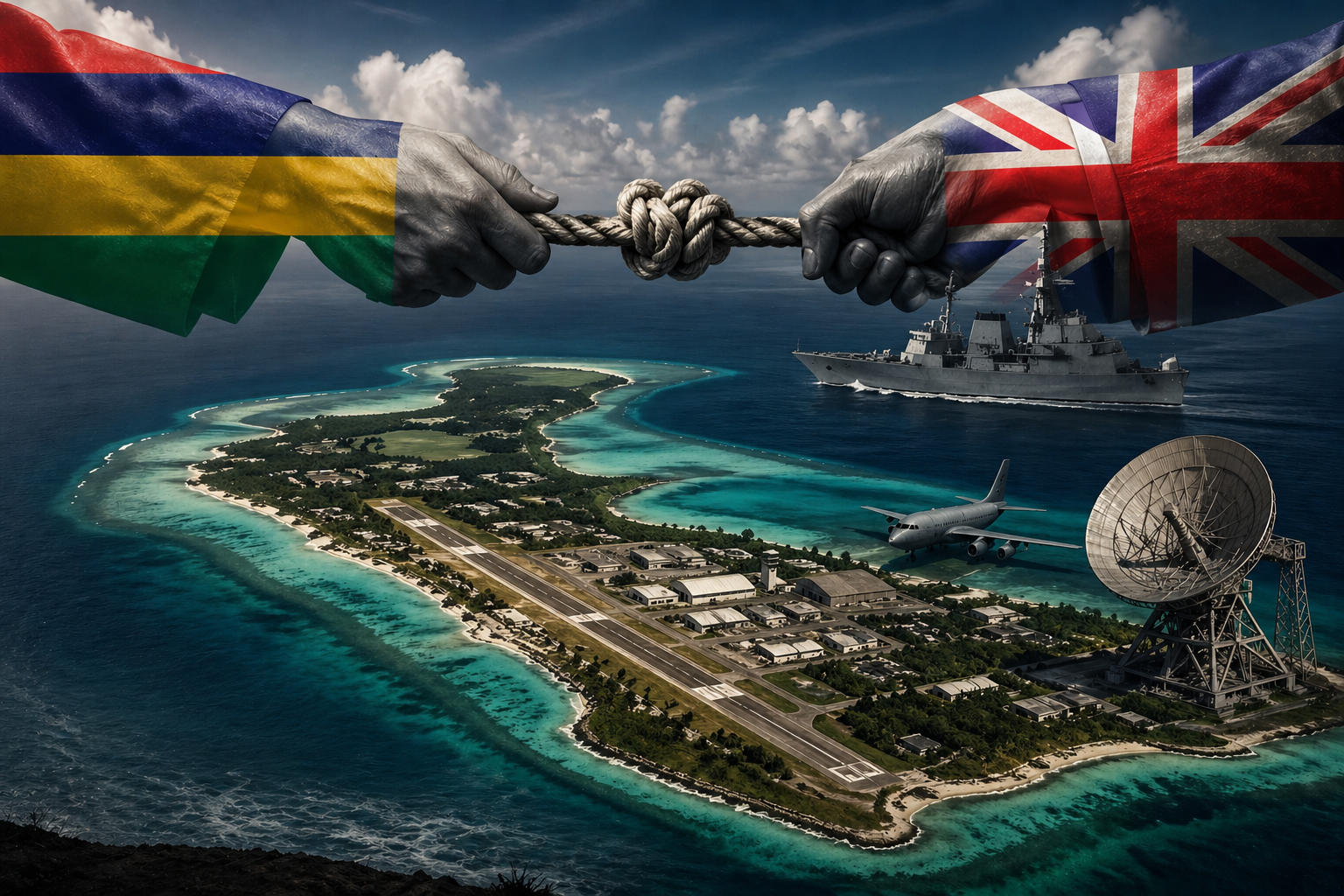
Mauritius has set an end-of-July 2026 deadline for the United Kingdom to finalise a long-stalled agreement on the transfer of sovereignty over the Chagos Islands, underlining the nexus of decolonisation, strategic security, and great power politics in the Indian Ocean region.
The proposed pact, which would return ownership of the archipelago to Mauritius while enabling the joint US-UK military facility on Diego Garcia to remain operational, has been placed on hold due to Donald Trump’s reservations. This development emphasises the role of external powers in forging bilateral agreements, especially when critical military assets are involved.
From the perspective of international relations, the conflict is consistent with realist theory, which prioritises control over strategic territory over normative obligations like decolonisation. Power projection over the Middle East, Africa, and Asia is made possible by Diego Garcia, a vital military base. Its geopolitical significance is shown by its involvement in operations ranging from Yemen to Afghanistan, making the Chagos issue a global security architecture issue rather than just a legal dispute.
However, Mauritius’ claim is rooted in constructivist and post-colonial perspectives, highlighting past injustice and the right to sovereignty. The repatriation of the islands is framed by Mauritius as part of the incomplete process of decolonisation, and the forcible relocation of Chagossians during British administration has long been a controversial topic. This is consistent with more general international standards that uphold self-determination and territorial integrity.
The dynamics of asymmetric power relations are demonstrated by the UK’s reluctance, which was impacted by U.S. strategic concerns. The strategic interests of stronger nations continue to limit Mauritius’s capacity to influence results, despite its efforts to use diplomatic and judicial channels. This illustrates the idea of dependence theory, which holds that smaller nations must negotiate choices influenced by more influential players in the global system.
As Mauritius continues to seek resolution through international forums, legal procedures, and conversation, the situation also emphasises the importance of liberal institutionalism. Port Louis is aiming to strike a balance between assertiveness and institutional credibility by establishing a timetable and indicating an openness to diplomatic engagement.
Furthermore, the problem is intertwined with the larger geopolitics of the Indian Ocean region, where the strategic significance of island jurisdictions has grown due to greater competition among world powers. The Chagos dispute has become more than just a bilateral issue due to control over military logistics, surveillance capabilities, and maritime routes.
The conflict between the concrete realities of strategic rivalry and the normative goals of decolonisation is essentially demonstrated by the delay in finalising the Chagos Islands accord. The decision will ultimately rely on how big powers balance their security interests with international legal and moral commitments, but Mauritius’ July deadline indicates growing impatience.

Anjali Singh is a postgraduate student of Political Science and International Relations, a Social Media Analyst, and a former Research Intern at the Indian Council of World Affairs. Views expressed are the author’s own.
 Aayush Pal