- The Ganga Water Treaty has stayed intact because both sides saw it as a framework for cooperation rather than confrontation.
- The Jamaat’s potential power lies in its capacity to reframe the treaty not as a collaborative framework but as an inequitable arrangement that necessitates rectification.
- India’s challenge is to create a situation where working together is always the best option, no matter who is in charge of Dhaka.
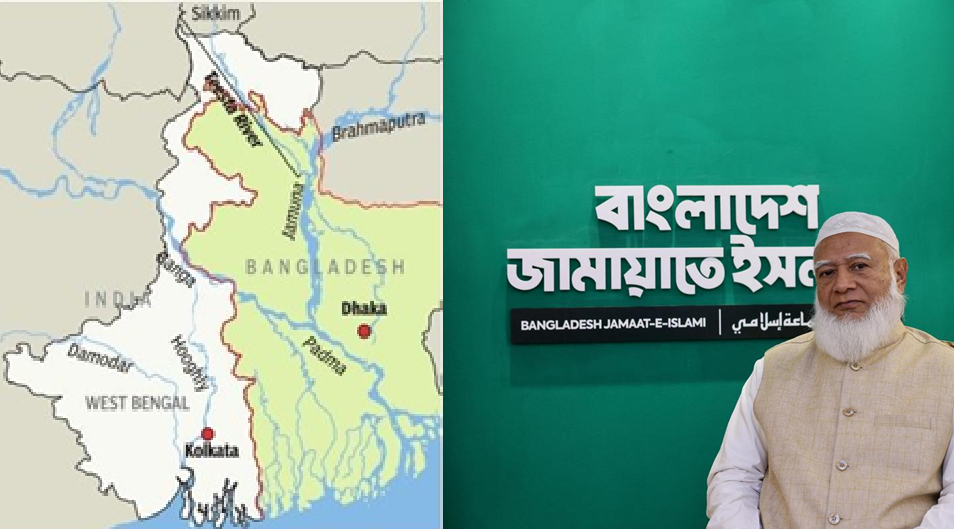
Rivers in South Asia have always been more than just geographical features; they are political, cultural, and, more and more, strategic. The Ganga is one of these rivers. It connects India and Bangladesh in a way that is both dependent and unequal. That connection is now going through a new period of instability. This is not only because of climate or water stress, but also because of changes in Bangladesh’s domestic politics, especially the rise of Jamaat-e-Islami Bangladesh.
As India works to fix and future-proof its relationship with Dhaka, it must now face a more difficult question: can a partnership based on practical cooperation survive the limits of ideological disagreement? What happens to the Ganga Water Treaty when water is no longer a shared need but a sign of political identity?
From strategic convergence to political flux
For more than a decade, India-Bangladesh ties have benefited from unprecedented levels of political convergence. The Awami League government, led by Sheikh Hasina, has prioritised regional collaboration, resulting in breakthroughs in connectivity, security coordination, and energy commerce.
This convergence enabled controversial issues, such as water sharing, to be managed rather than escalated. Despite frequent tensions, the Ganga Treaty has stayed intact because both sides saw it as a framework for cooperation rather than confrontation. However, political convergence is not a permanent phenomenon. Bangladesh’s internal political environment is growing increasingly diverse and contentious. In this changing climate, Jamaat’s ideological comeback offers a new variable—one that does not fit neatly into the assumptions that have governed India’s engagement thus far.
Jamaat’s Ideological Grammar: Sovereignty, Identity, and Distrust
To understand Jamaat’s possible effects, we need to look past simple labels and into its ideological grammar. Jamaat politics is based on the idea that religion, government, and identity are all connected in a society. People look at external interactions not only in terms of strategy, but also in terms of sovereignty and cultural autonomy.
India is in a strange situation in this story. It is also a partner, a neighbour, and a supposed hegemon. This lack of trust leads to a politics of distrust, which can be easily used to solve problems like sharing water. This ideological framing is important because it can change technical problems into symbolic ones. A dispute regarding cubic meters of water can be characterised as an issue of national honour. Once this change happens, it will be hard, if not impossible, for politicians to reach a deal.
The Ganga Treaty: A Political Document
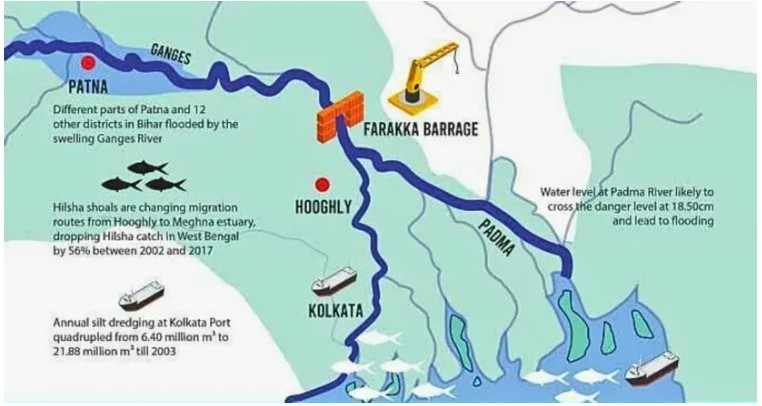
People often call the Ganga Water Treaty a technical agreement, but it is also a political document that shows how India and Bangladesh were able to work together and trust each other at a certain point in history. The agreement, which was signed in 1996, was the result of diplomatic common sense. It recognised that there was an imbalance, but it tried to deal with it through institutional procedures and agreed-upon formulas for how to divide up the water. The fact that it can last for almost 30 years says something about how it was made.
But treaties don’t happen in a vacuum. They are legitimate because of the political situation in which they work. If the situation changes, such as if a major political group starts to question the treaty’s fairness or relevance, it is not safe to assume that it will stay in place. The Jamaat’s potential power lies in its capacity to reframe the treaty not as a collaborative framework but as an inequitable arrangement that necessitates rectification.
India’s Strategic Blind Spot
India’s strategy for Bangladesh has worked very well in the last few years, but it is also too narrow. New Delhi has not put enough money into understanding and interacting with the wide range of ideologies in Bangladesh because it has mostly focused on government-to-government relations.
This makes a strategic blind spot. India reacts rather than shapes results when there are changes in government or when non-state actors gain power.
The rise of Jamaat is not only a threat but also a reminder that diplomacy that focuses on the state has its limits. In this case, rebuilding relationships requires a multi-faceted approach that includes policymakers, society, stories, and attitudes.
The Hydro-Political Future: Scarcity and Ideology
The timing of these ideological changes is especially important because they are happening at the same time as the Ganga basin’s water stress is growing. Climate change is changing the way rain falls, making it harder to predict when glaciers will melt, and making seasonal changes more common.
It is easier to work together when there is a lot of something. When resources are limited, politics becomes more rigid. If Bangladesh has serious water shortages during dry seasons, people will put more pressure on any government, no matter what their political beliefs are. If that government is influenced by groups like Jamaat, they are likely to respond in a more aggressive and possibly confrontational way.
This puts India in a difficult position: it needs to meet its own water needs while also meeting the needs and expectations of a stressed neighbour downstream.
In the middle of Realism and Resilience
It would be foolish to think that differences in ideology will always hurt the relationship between India and Bangladesh, even though there are problems. History shows that when the costs of conflict are too high, opposing political systems can work together on shared resources. The key is to understand that ideology and pragmatism can work together. Even actors with strong ideological beliefs may implement pragmatic policies when confronted with material constraints.
India’s challenge is to create a situation where working together is always the best option, no matter who is in charge of Dhaka. This means creating institutional systems that can handle changes in government, putting money into shared scientific and technological skills, and seeing water-sharing as a problem that both sides have to deal with, not as a fight.

Anusreeta Dutta is a columnist and climate researcher with experience in political analysis, ESG research, and energy policy. Views expressed are the author’s own.
 Anjali Singh
  Aayush Pal