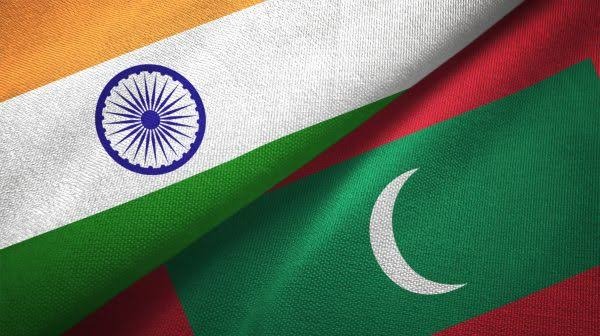
- Under the SAARC Currency Swap Framework, India approved the first ₹30 billion withdrawal for the Maldives, indicating ongoing financial support and bolstering its strategic position in the area.
- From the perspective of international relations, the action represents India’s use of economic statecraft, which is the use of financial instruments to further geopolitical objectives.
- Further, the development is in line with India’s “Neighbourhood First” strategy and Vision MAHASAGAR, which place a high priority on regional connectivity and stability in the Indian Ocean Region.
- Ultimately, India’s approval of the ₹30 billion withdrawal is a deliberate intervention that combines geopolitical intent with economic help, rather than just a financial transaction.
Under the SAARC Currency Swap Framework, India approved the first ₹30 billion withdrawal for the Maldives, indicating ongoing financial support and bolstering its strategic position in the area. The Reserve Bank of India and the Maldivian government reached an agreement during President Mohamed Muizzu’s October 2024 visit to New Delhi, which is why the Indian High Commission in Malé announced the payout.
From the perspective of international relations, the action represents India’s use of economic statecraft, which is the use of financial instruments to further geopolitical objectives. India strengthens bilateral connections and contributes to the stabilisation of the Maldivian economy by offering currency swap support. Additionally, the facility comes after a previous $400 million swap that Malé successfully returned in 2024, exhibiting fiscal management and boosting trust in global financial dealings.
Liberal institutionalism, which promotes collaboration through regional structures to manage economic risks, is the foundation of the SAARC Currency Swap Framework. India has provided the Maldives with approximately $1.1 billion in swap support since its establishment in 2012, demonstrating how institutional frameworks can lessen financial instability in smaller countries while promoting dependency. These agreements increase the resilience of the local economy by reducing transaction costs and supplying liquidity during balance-of-payments crises.
Further, the development is in line with India’s “Neighbourhood First” strategy and Vision MAHASAGAR, which place a high priority on regional connectivity and stability in the Indian Ocean Region. India presents itself as a “net security provider” and a trustworthy first responder through steady financial support—concepts linked to realism theory, in which states aim to increase their influence and preserve strategic dominance in their immediate vicinity. Because of its strategic location along important marine routes, supporting the Maldives is very important.
Additionally, there are aspects of soft power diplomacy in the currency exchange. India fosters goodwill and confidence by providing assistance without imposing strict conditions that are frequently associated with international financial institutions. This is particularly true in the Maldives, where changes in domestic politics have periodically affected the direction of foreign policy. Thus, bilateral ties are stabilised by financial cooperation.
The Indian Ocean’s balance of influence can also be used to assess the motion. India’s financial involvement acts as a counterbalance to the growing competition among large powers for strategic footholds in the region, guaranteeing that smaller nations like the Maldives maintain their economic stability and political alignment with regional frameworks rather than external dependencies.
Mutual trust is strengthened by the Maldives’ effective repayment of the earlier $400 million facility, which further demonstrates the country’s dedication to fulfilling its commitments. In comparison to conventional loans, it also shows how successful currency exchange agreements are as a flexible financial tool.
Ultimately, India’s approval of the ₹30 billion withdrawal is a deliberate intervention that combines geopolitical intent with economic help, rather than just a financial transaction. India maintains its leadership position in South Asia while fostering stability and long-term alliances in the Indian Ocean region by utilising institutional frameworks and bilateral collaboration.

Anjali Singh is a postgraduate student of Political Science and International Relations, a Social Media Analyst, and a former Research Intern at the Indian Council of World Affairs. Views expressed are the author’s own.
 Aayush Pal