
- Why does China continue to invoke Japanese militarism in contemporary security debates?
- Today, Japan increases defence spending, develops counter-strike capacities, and strengthens security cooperation with several countries, including the United States, Australia, the Philippines, and other countries participating in the Quad.
- The Chinese rhetoric about Japanese militarism is not meant only for Tokyo.
- With the constant evocation of Japanese militarism, China tries to hinder Japan’s emergence as a respected security player in the region.
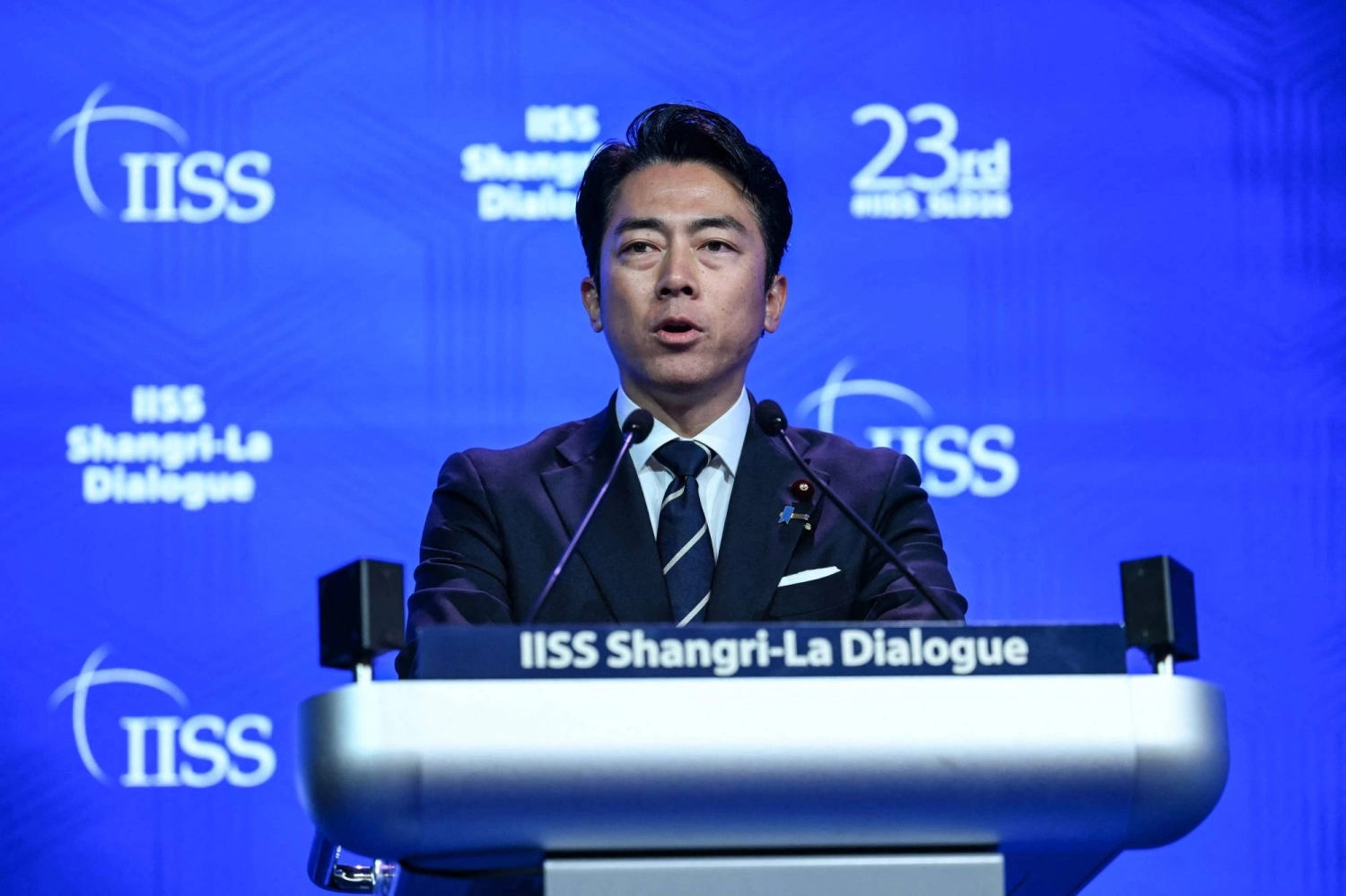
At this year’s Shangri-La Dialogue held in Singapore, a perennial East Asian geopolitical fault line returned to the fore. Japanese Defence Minister Shinjiro Koizumi made regional security comments, which prompted Meng Xiangqing, a Professor at China’s National Defence University, to refer to the Tokyo Trials and Japan’s wartime history while dismissing Japan’s attempts to divert charges of ‘new militarism’. The comments, while directed at Japan’s new defence policies, illustrated a broader regional struggle that is beyond military capabilities and deals with the politics of history.
Why does China continue to invoke Japanese militarism in contemporary security debates? With Japan’s defence budget growing, its counter-strike capabilities increasing, and the country taking a more visible role in the Indo- Pacific region, references to its imperial history have turned up time and time again in Chinese diplomatic rhetoric. These invocations simply are not about history. They also have strategic implications: influencing regional perceptions of Japan’s security intentions, questioning the legitimacy of its military normalisation, and bolstering China’s standing in an up-for-grabs regional order.
History as a Strategic Resource
The use by China of Japanese militarism cannot be comprehended without an analysis of how important history is for East Asia’s political life. Unlike other regions of the world, where the influence of historical enmities was slowly fading, memories of Japanese imperialism and crimes committed by the Japanese troops are an intrinsic part of China’s political identity. The events, such as the Nanjing massacre and the invasion of a significant part of China by the Japanese troops, have not disappeared into oblivion and remain a vivid part of the country’s political life.
At the same time, history performs other important functions in addition to remembering the past. Countries often use their respective historical traditions and heritage to support their policies in the present day. In the Chinese case, the history of Japanese militarism becomes an effective tool, allowing Beijing to explain to its people what is going on with Tokyo’s military policy.
That is not to say that historical grievances are fabricated or disingenuous. Instead, it serves to demonstrate how collective memory can be instrumentalised (in a negative sense) for strategic purposes, especially in an era of geopolitical competition.
The Politics of Japan’s Military Normalisation
As mentioned above, China’s renewed fixation on the military past of Japan cannot be considered independently of the major changes taking place in Japan’s national security policy. During most of the post-WWII era, Japan maintained a pacifistic policy based on its Constitution Article 9 and limited the role of the Japanese Self-Defense Forces (JSDF). Besides, the country’s national security was ensured almost exclusively by cooperation with the United States. Nevertheless, due to the fast-changing geopolitical environment in the region, it became evident to Tokyo that some reforms were needed.
Today, Japan increases defence spending, develops counter-strike capacities, and strengthens security cooperation with several countries, including the United States, Australia, the Philippines, and other countries participating in the Quad. The main reason for these developments is the increase in China’s political power, missile capacity development in North Korea, and the need to ensure stability in the Strait of Taiwan. Although Japan does not see any intention of using weapons against anyone but intends to build up its defences, China sees it differently. The growing importance of Japan in the field of security in the Indo-Pacific makes it easier for China to discuss this matter from the standpoint of history.
Narrative Warfare and Regional Perceptions
The Chinese rhetoric about Japanese militarism is not meant only for Tokyo. It is intended just as much toward creating impressions among regional audiences that can determine the future power balance in the Indo-Pacific. Through emphasising Japan’s growing security profile through a prism of Japan’s history of militarism, China hopes to cast doubts on Japan’s motives and portray Japan’s military normalcy as a possible cause of trouble instead of a necessary reaction to current security threats.
Southeast Asia’s World War II memories contain important remnants of Japanese wartime occupation. Today, although most surrounding states are affirming increasingly robust political and security relations with Japan, the challenge of the region’s historical amnesia remains a concern in popular and diplomatic relations. With the constant evocation of Japanese militarism, China tries to hinder Japan’s emergence as a respected security player in the region. This, in effect, goes beyond the issue of remembering history; rather, it is more about establishing regional hegemony. Indeed, the struggle over Japanese militarism is reflective of a greater truth in geopolitics – that stories can matter just as much as military power.
Conclusion
It is evident from the discussion between the two countries in the Shangri-La Dialogue that the conflict between the two countries goes well beyond budgets, capabilities, and security alignments. It is also about narratives, legitimacy, and how each side interprets history. Given that Japan will keep on developing its security strategy in accordance with the evolving situation in the region, it is quite certain that the Chinese will continue using the narrative about the Japanese militarist past in order to put the legitimacy of the Japanese strategy into question. This shows that in East Asia, history is much more than just history.
References:
- South China Morning Post. (2026, June 1). Japanese defence minister rejects ‘new militarism’ label in Shangri-La speech. South China Morning Post.
- Ministry of Foreign Affairs of Japan. (2022). National Security Strategy of Japan. Government of Japan
- Ministry of Defense Japan. (2022). National Defense Strategy. Government of Japan.
- International Institute for Strategic Studies. (2026). Shangri-La Dialogue 2026. IISS.
- Wee, R., & Yong, J. (2026, May 31). Japan rejects ‘new militarism’, accuses China of rapidly arming. Reuters.

Archita Gaur is a postgraduate student at the School of International Studies, JNU. She specialises in the World Economy and has a strong interest in public policy, economic research, and governance. The views expressed are the author’s own.
 Aayush Pal
  Hridbina Chatterjee