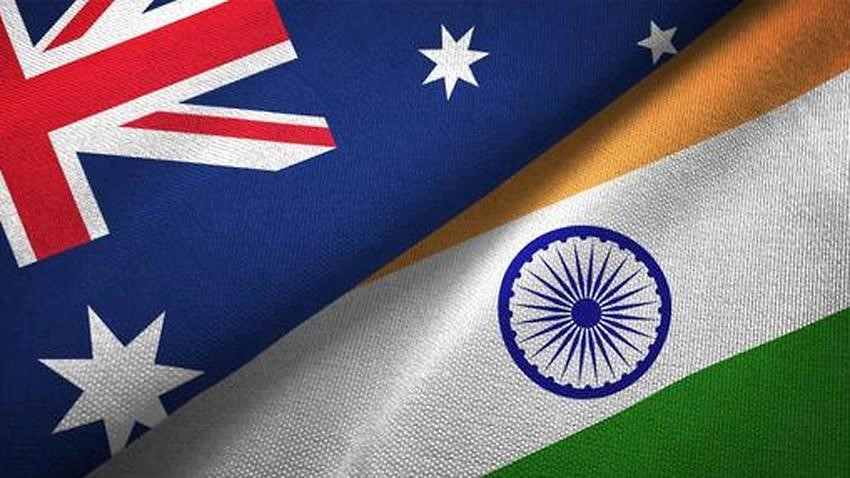
- The presentation of the Australia-India Sports Roadmap is a quantum leap in statecraft beyond a conventional maritime security and commerce agreement.
- This answers the call to decisively outgrow the “culturally old” world of “cricket diplomacy,” and transforms the sport into a sophisticated and formalised business and investment platform.
- The roadmap outlines five key operational features to translate diplomatic goodwill into actual results.
- The structural continuum means that what India has served up to Australia in terms of technical expertise in being able to manage mega events will now be absorbed in the growing Indian sports fraternity system, creating an unavoidable pathway for India’s sporting future, with the 2036 Olympic Games being a goal the nation would inevitably pursue.
The India-Australia bilateral relationship has turned into a transformation gear; an exceptionally grave development has passed completely under the radar of the mainstream media. The presentation of the Australia-India Sports Roadmap is a quantum leap in statecraft for the government beyond a conventional maritime security and commerce agreement. This answers the call to decisively outgrow the “culturally old” world of “cricket diplomacy,” and transforms the sport into a sophisticated and formalised business and investment platform. Both nations are developing a joint ecosystem for a new economy and society that connects the most important sporting events of the coming 10 years through a commercial pipeline and redefines bilateral relations from the bottom up.
Shifting Gears: From Field Diplomacy to a Business Platform
The roadmap was originally drawn up to cover four key areas such as capability building, technology, major events and industry and investment, and while sports diplomacy, a friendly icebreaker between India and Australia, has always been the speciality of the two nations, it may be viewed as an opportunity to explore other avenues for cooperation in the future. A strategic outcome that is opening up is the commercial opportunities in an array of high-growth areas; there are plenty of openings for Australian and Indian businesses. This tech-enabled integration starts with high-performing infrastructure and velocity stadium improvements, advanced stadium operations, wearable sports tech, and real-time fan-engagement analytics. In addition, there is a bilateral, interdependent sports economy of the strongest games, in which media broadcasting, digital rights, the unique education training model delivered by partnerships with the university programme, sports tourism and in-country manufacturing of the tourism gear are at work together.
The Five Pillars of Practical Cooperation
The roadmap outlines five key operational features to translate diplomatic goodwill into actual results. For one, it strives to establish the basics of sporting capacity in India through high-performance centres, coach development, scholarship exchanges, and train-the-trainer schemes. Second, with a major focus on data analytics, injury prevention, nutrition, the anti-doping systems, and special parasport technology, it sets up sports science and university collaboration. Third, an equivalent is created to cooperate bilaterally in the field of major events, providing each other with know-how to host them, reciprocal contests, and a structured event pipeline. Fourthly, a sports industry and investment corporation is being created to nurture entrepreneurs, media production, and the sale and purchase of sports goods. Lastly, sport for women is a backbone bilateral element, contributing leadership, community health, social inclusion, and high-performance sport for women.
The Project Pipeline: 2026 to 2032 and Beyond
The beauty of this sports diplomacy gesture is that it is played chronologically in such a way that it gives an edge to the first taker so that they can secure partnerships, contracts and unparalleled visibility to get people’s attention. High-profile anchor events launch the pipeline in 2026 with the launch of the Big Bash League (BBL) opener in Chennai and the tremendous Sports Industry Summit (SIS) in Mumbai. This short-term momentum is addressable to a long-term momentum that will take us towards the Ahmedabad 2030 Commonwealth Games and finally tying the knots of the 2032 Olympic & Paralympic Games in Brisbane. The structural continuum means that what India has served up to Australia in terms of technical expertise in being able to manage mega events will now be absorbed in the growing Indian sports fraternity system, creating an unavoidable pathway for India’s sporting future, with the 2036 Olympic Games being a goal the nation would inevitably pursue.
| 2026 | 2026 | 2030 | 2032 |
| Chennai Hosts | Mumbai Hosts | Ahmedabad Hosts | Brisbane Hosts |
| BBL Opener | Sports Industry Summit | Commonwealth Games | Olympic & Paralympic |
References:
- Prime Minister visits the Melbourne Cricket Ground for a Sporting event (July 10, 2026)-
- India-Australia Roadmap for Sports Collaboration-
- Opening match of Big Bash League to be played in India with expanded sporting ties-

Parag Gilada is a Master’s student at IISM Mumbai in Sports Management, with a bachelor’s from OP Jindal Global University in Global Affairs, with an interest in Sports Diplomacy and Governance. Views expressed are the author’s own.
 Hridbina Chatterjee
  Divyanka Tandon
  Kumar Satish