
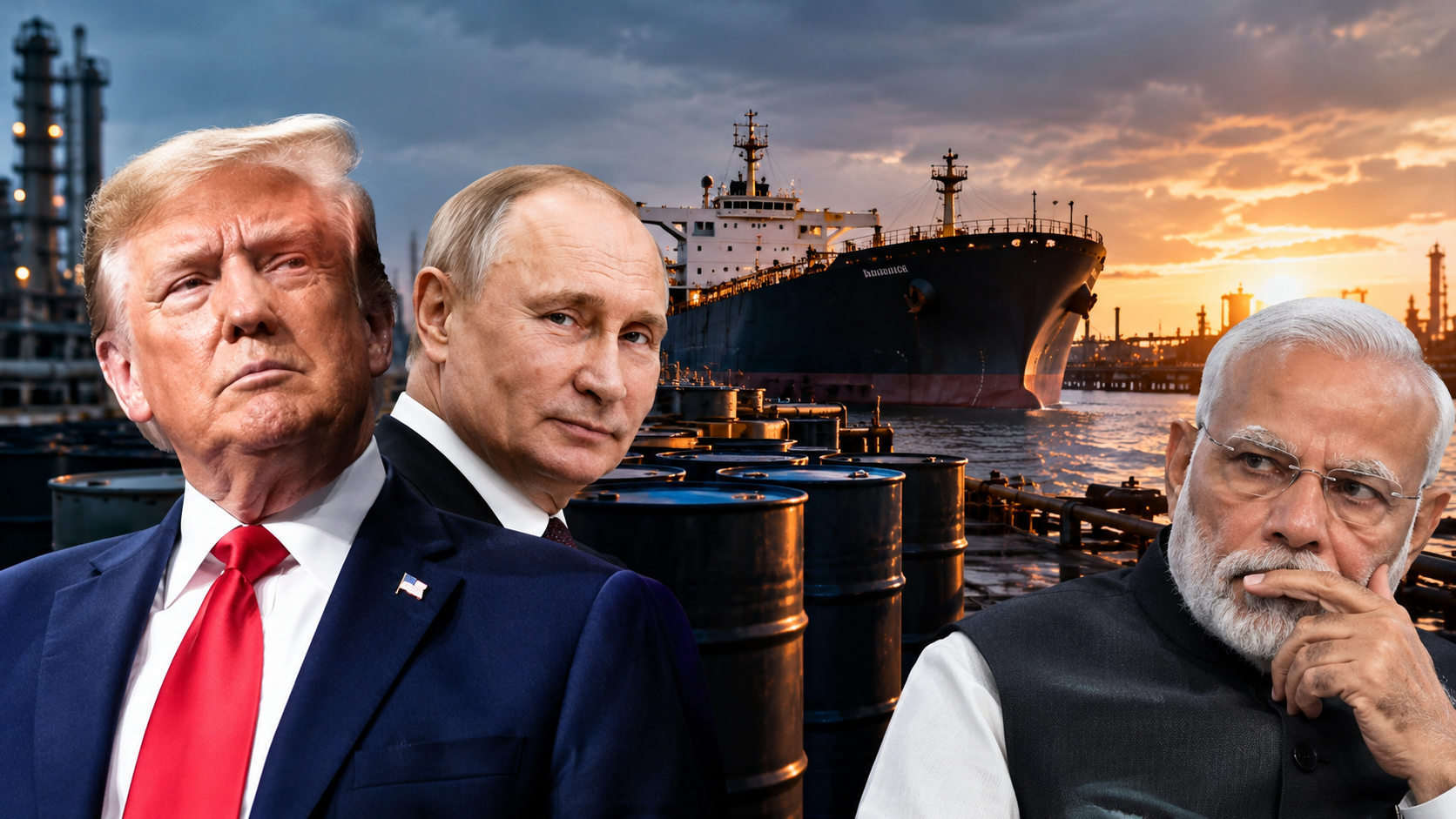
- Following a telephone conversation with Russian President Vladimir Putin on October 9, 2026, Trump announced that Russia would immediately supply more than 300,000 tonnes of diesel, followed by another 500,000 tonnes in November and one million tonnes thereafter.
- The agreement has provoked concern in Ukraine, where President Volodymyr Zelenskyy has criticised the decision on the grounds that additional Russian energy revenues could help Moscow finance its war effort.
- India, in particular, has faced considerable pressure from the Trump administration, including punitive tariffs linked to its purchases of Russian oil.
- By easing restrictions when its own energy market faces difficulties, the United States risks undermining the consistency of that argument.
In a major geopolitical development that has sent shockwaves across Euro-Atlantic politics, US President Donald Trump has announced an arrangement with Russia to supply diesel to American and global markets. Following a telephone conversation with Russian President Vladimir Putin on October 9, 2026, Trump announced that Russia would immediately supply more than 300,000 tonnes of diesel, followed by another 500,000 tonnes in November and one million tonnes thereafter. He also referred to the possibility of additional supplies. The decision comes at a time when energy prices in the United States have surged amid the war involving Iran and disruptions to global fuel supplies. With the US midterm elections scheduled for November 3, 2026, rising energy costs have become a significant political challenge for Trump and the Republican Party. The announcement has triggered a strong reaction from Ukraine and raised questions about Washington’s commitment to supporting Kyiv against Russian aggression.
Trump’s Energy Calculations and the US Midterm Elections
The decision to facilitate Russian diesel exports comes at a politically sensitive moment for the Trump administration. Rising fuel prices have placed additional pressure on American consumers and businesses, particularly sectors dependent on diesel, such as agriculture, transportation and logistics. Trump has attributed the rise in energy prices to the wider conflict involving Iran and Ukrainian attacks on Russian oil refineries. His administration has consequently sought to increase fuel supplies and ease market pressures ahead of the November midterm elections, which will determine the balance of power in Congress. The decision to temporarily ease restrictions on Russian fuel imports represents a significant shift in Washington’s approach towards Moscow, particularly given the sanctions imposed following Russia’s invasion of Ukraine. However, analysts have questioned whether the quantities involved will be sufficient to produce a substantial and sustained reduction in fuel prices. The decision therefore reflects both an energy-policy calculation and the domestic political pressure facing the Trump administration.
Ukraine’s Concerns and the Future of American Support
The agreement has provoked concern in Ukraine, where President Volodymyr Zelenskyy has criticised the decision on the grounds that additional Russian energy revenues could help Moscow finance its war effort. The Ukrainian leadership has also questioned the fairness of Washington’s approach, particularly when Ukrainian attacks on Russian energy infrastructure are being criticised while Russia is being allowed to expand its fuel exports. The controversy has intensified following Trump’s announcement of an energy ceasefire between Russia and Ukraine, under which both sides would halt attacks on energy infrastructure. However, Zelenskyy indicated that Ukraine would stop attacking Russian oil refineries if Russia reciprocally ceased strikes on Ukrainian energy facilities. He also expressed surprise at Trump’s announcement, suggesting that the terms and implementation of such an arrangement remained uncertain. Trump has separately questioned Zelenskyy’s leadership and argued that Ukraine should elect a new president. These developments have heightened concerns in Kyiv that American support could become increasingly conditional on Ukraine accepting Washington’s preferred approach to negotiations with Moscow.
Russia’s Gains and Europe’s Strategic Dilemma
For Russia, the agreement presents an opportunity to expand energy exports and potentially generate additional revenue at a time when its war economy remains under pressure. Nevertheless, the actual financial gains will depend on the volume of diesel delivered, market prices and the ability of Russian refineries to meet the announced commitments. The arrangement also creates a strategic dilemma for European countries, many of which have sought to reduce their dependence on Russian energy since the invasion of Ukraine. A US decision to ease restrictions on Russian fuel exports could complicate the broader Western effort to limit Moscow’s energy revenues and maintain economic pressure over the war. At the same time, the proposed energy ceasefire could offer an opportunity to reduce attacks on critical infrastructure if both sides implement it reciprocally. The central uncertainty is whether the arrangement will contribute to a wider diplomatic settlement or merely provide temporary economic relief while leaving the underlying conflict unresolved.
Washington’s Double Standards: Russian Energy for America, Sanctions for India
The reported move by the United States to facilitate Russian diesel supplies raises questions about the consistency of Washington’s sanctions policy and exposes an apparent contradiction in its approach towards Russian energy exports. The United States has repeatedly criticised countries such as India, China and Brazil for continuing to import Russian energy, arguing that such purchases help finance Moscow’s war in Ukraine. India, in particular, has faced considerable pressure from the Trump administration, including punitive tariffs linked to its purchases of Russian oil. The US decision to ease restrictions on Russian diesel therefore presents a striking contrast with Washington’s earlier efforts to discourage other countries from maintaining their energy trade with Moscow.
India, however, has consistently defended its decision to purchase Russian oil by emphasising the need to safeguard its domestic interests, energy security and the affordability of fuel for its population. New Delhi has maintained that its energy procurement decisions must be guided by national interests rather than external political pressure. Washington’s approach has placed India in a difficult position, as its need for affordable energy has had to be balanced against the economic and diplomatic consequences of continuing to import Russian oil. The Trump administration’s decision to facilitate Russian diesel supplies for American markets now raises an important question about the consistency of its position: if Russian energy purchases can be justified by American energy-security requirements, why should India’s similar concerns be treated differently?
The apparent inconsistency invites scrutiny of the principles underpinning Washington’s sanctions policy. The United States may argue that its decision is a temporary response to exceptional market conditions and that its domestic energy requirements necessitate a different approach. Nevertheless, the contrast with its earlier pressure on India remains significant. Washington has justified restrictions on Russian energy partly on the grounds that revenue from these exports helps finance the war in Ukraine. By easing restrictions when its own energy market faces difficulties, the United States risks undermining the consistency of that argument.
More broadly, this episode raises the question of whether sanctions against Russian energy exports are being applied consistently or adjusted according to the strategic and economic priorities of individual countries. From India’s perspective, the pressure exerted by Washington can be interpreted as an attempt to influence its foreign-policy choices and bring its energy trade into closer alignment with American preferences. The latest development strengthens the argument that India’s energy decisions should be assessed in the context of its domestic requirements rather than through the expectations of another country. However, establishing that the sanctions were imposed solely to make India comply with American preferences would require further evidence. What remains clear is that the contrasting approaches towards Russian energy purchases have renewed debate over energy security, economic sovereignty and the selective application of international economic pressure.
A Win for Trump, Putin and Zelenskyy? The Unequal Stakes of the Deal
The agreement has different implications for each of the principal actors. For Trump, additional fuel supplies could help address rising energy costs, although analysts have suggested that the quantities involved may have only a limited impact on American and global prices. For Putin, the arrangement offers an opportunity to restore some access to international energy markets while challenging the economic pressure imposed on Russia over the war. For Zelenskyy, however, the stakes are considerably higher. Ukraine remains dependent on continued international assistance to defend its territory, sustain its military operations and negotiate from a position of strength. Any reduction in American intelligence sharing, military assistance or diplomatic support could complicate its strategic position.
The broader lesson is that the war’s trajectory is shaped not only by developments on the battlefield but also by domestic political calculations in Washington and the changing priorities of its allies. With the US midterm elections approaching, decisions driven by American economic and electoral concerns could have significant consequences for Ukraine and the wider European security order. The diesel arrangement also highlights a wider challenge for international diplomacy: whether governments can maintain a consistent sanctions policy while responding to domestic economic pressures. For India, the episode reinforces the importance of strategic autonomy and the need to safeguard national energy interests amid competing geopolitical priorities.

Aayush Pal is a freelance writer on contemporary geopolitical developments. The views expressed in his work are entirely his own.
 Pranav S