
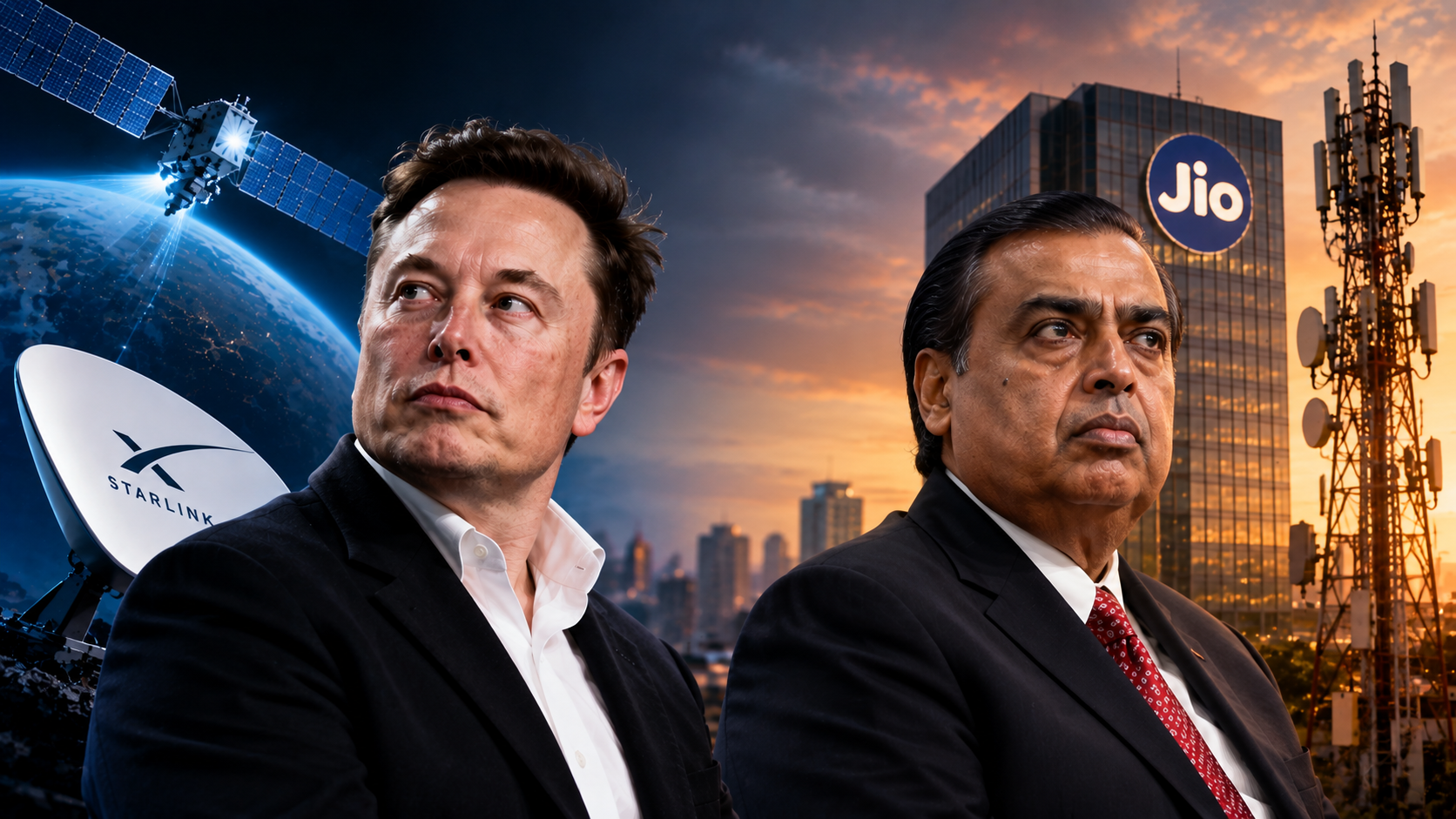
- The controversy began with a series of posts on his social media platform, X, in which he questioned why Starlink had not yet received the necessary clearances to begin commercial operations in India despite operating in several other countries.
- The dispute then escalated when Musk directed his criticism towards Mukesh Ambani, chairman of Reliance Industries, sarcastically referring to him as “Prime Minister Ambani” and suggesting that he wielded disproportionate influence over India’s decision-making process.
- Musk contributed approximately $259 million to groups supporting Donald Trump and Republican candidates during the 2024 election cycle.
- However, his commercial interest in securing access to the Indian market cannot be separated from his public criticism of the regulatory process.
Elon Musk, a billionaire who has made his name through innovation and entrepreneurship, is one of the world’s richest men. His success has largely been attributed to his entrepreneurial ventures across various industries. However, Musk has now become a major political personality in the United States and around the world. It would be fair to say that his support for President Donald Trump played a significant role in Trump’s 2024 presidential campaign. Musk openly backed Trump and contributed approximately $259 million to groups supporting Trump and Republican candidates. His support was followed by his appointment to lead the Department of Government Efficiency, famously known as DOGE. However, his tenure did not end well, as disagreements eventually led him to leave the Trump administration in May 2025.
Although Elon Musk has established himself primarily as a businessman, he has repeatedly found himself at the centre of political controversies. This time, the controversy involves his efforts to introduce Starlink, a satellite-based internet service, into India. Starlink promises to provide internet connectivity across the globe and has received regulatory approvals in several countries. However, its commercial launch in India requires the necessary clearances. One of the major concerns surrounding its entry into India is national security. Since Starlink operates through a satellite network, the Indian government must ensure that the service complies with its security requirements, particularly during situations involving domestic instability or other security challenges. Another important consideration is affordability. India is known for providing relatively affordable internet services, and Starlink must ensure that its pricing remains competitive with existing Indian alternatives. These factors have become important considerations in the debate surrounding Starlink’s entry into the Indian market.
Starlink’s Entry into India and Musk’s Attack on Ambani
These challenges did not stop Elon Musk from publicly criticising India’s regulatory process. The controversy began with a series of posts on his social media platform, X, in which he questioned why Starlink had not yet received the necessary clearances to begin commercial operations in India despite operating in several other countries. His position received support from India’s Leader of the Opposition, Rahul Gandhi, who advocated his pitch,Musk subsequently appreciated Gandhi’s intervention. The dispute then escalated when Musk directed his criticism towards Mukesh Ambani, chairman of Reliance Industries, sarcastically referring to him as “Prime Minister Ambani” and suggesting that he wielded disproportionate influence over India’s decision-making process. Musk also shared reports concerning political donations by companies linked to Reliance and their contributions to the BJP. These remarks triggered a wider debate in India, with critics questioning Musk’s comments on the country’s domestic affairs and others debating whether powerful corporate interests could influence the regulatory process.
Although Musk’s allegations have attracted considerable attention, it is important to understand the Indian government’s position. The government has rejected allegations of favouritism and maintained that satellite internet operators must meet the applicable regulatory and security requirements. Starlink and other satellite communication operators have been pursuing the necessary approvals, with security clearances and spectrum-related requirements remaining important considerations before commercial services can begin. Therefore, the delay cannot, by itself, be treated as evidence that the Indian government is favouring one company over another. National security remains a legitimate consideration for any government, particularly when dealing with communication infrastructure that could have implications for surveillance, data security and domestic stability. At the same time, regulatory decisions must remain transparent and consistent to ensure fair competition.
Musk’s Political Donations and the Question of Double Standards
While Musk has presented himself as a supporter of innovation and competition, it is important to examine the contradictions that his statements raise. When he criticises Indian business leaders for their alleged political influence and questions the relationship between corporate interests and the incumbent government, his own involvement in American politics becomes relevant. Musk contributed approximately $259 million to groups supporting Donald Trump and Republican candidates during the 2024 election cycle. His financial support was substantial, and he subsequently assumed a government role leading DOGE. These facts raise questions about the relationship between wealth, political influence and access to decision-makers. However, it would be inaccurate to claim that his donations alone prove that he received government benefits in return. The more important question is whether Musk applies the same standards of scrutiny to his own political involvement that he expects others to face.
Musk’s business interests also need to be considered while examining his criticism of India. Starlink’s entry into the Indian market would create a significant commercial opportunity for his company. India has a large population, growing demand for internet connectivity and substantial potential for satellite-based services, particularly in remote areas where conventional networks may be difficult to establish. Musk’s argument that greater competition would benefit Indian consumers therefore deserves consideration. However, his commercial interest in securing access to the Indian market cannot be separated from his public criticism of the regulatory process. Similarly, Reliance Jio has an established position in India’s telecommunications sector and has its own commercial interests in satellite communications. Both companies stand to benefit from favourable market conditions, making it necessary to examine their claims and actions with equal scrutiny.
Billionaires, Political Power and Commercial Interests
The larger issue is the relationship between economic power and political influence. Musk’s criticism of Ambani over alleged corporate influence in India appears contradictory when considered alongside his own substantial political spending in the United States. However, the two situations must be examined on the basis of evidence rather than treated as identical. Political donations are not, in themselves, proof of wrongdoing, just as a company’s commercial success or relationship with government officials does not automatically establish improper influence. Nevertheless, when billionaires question the political connections of their business rivals, their own relationships with political leaders and governments deserve the same level of scrutiny.
Innovation and technological advancement are important for every country, but they must operate within a framework that respects national security, regulatory requirements and domestic interests. India, given its complex geopolitical environment and security challenges, cannot disregard these considerations while deciding whether to permit foreign satellite communication services. At the same time, national security must not become an excuse for arbitrary restrictions or unfair competition. The responsibility lies with the government to maintain a transparent and consistent regulatory framework.
Ultimately, the Musk–Ambani dispute offers an important lesson about the relationship between global business and domestic politics. Economic success can provide individuals with considerable influence, but that influence should not exempt them from scrutiny. Musk is entitled to advocate for Starlink and question regulatory decisions, just as Indian businesses are entitled to defend their commercial interests. However, when he criticises other billionaires for their alleged political influence, his own financial and political activities become relevant to the debate. The central question is not whether billionaires should participate in politics, but whether they apply consistent standards when judging their own conduct and that of others. The episode demonstrates how global business ambitions can intersect with domestic political interests, raising questions about accountability, competition and the limits of corporate influence in an increasingly interconnected world.

Aayush Pal is a freelance writer on contemporary geopolitical developments. The views expressed in his work are entirely his own.
 Pranav S
  Archita Gaur