
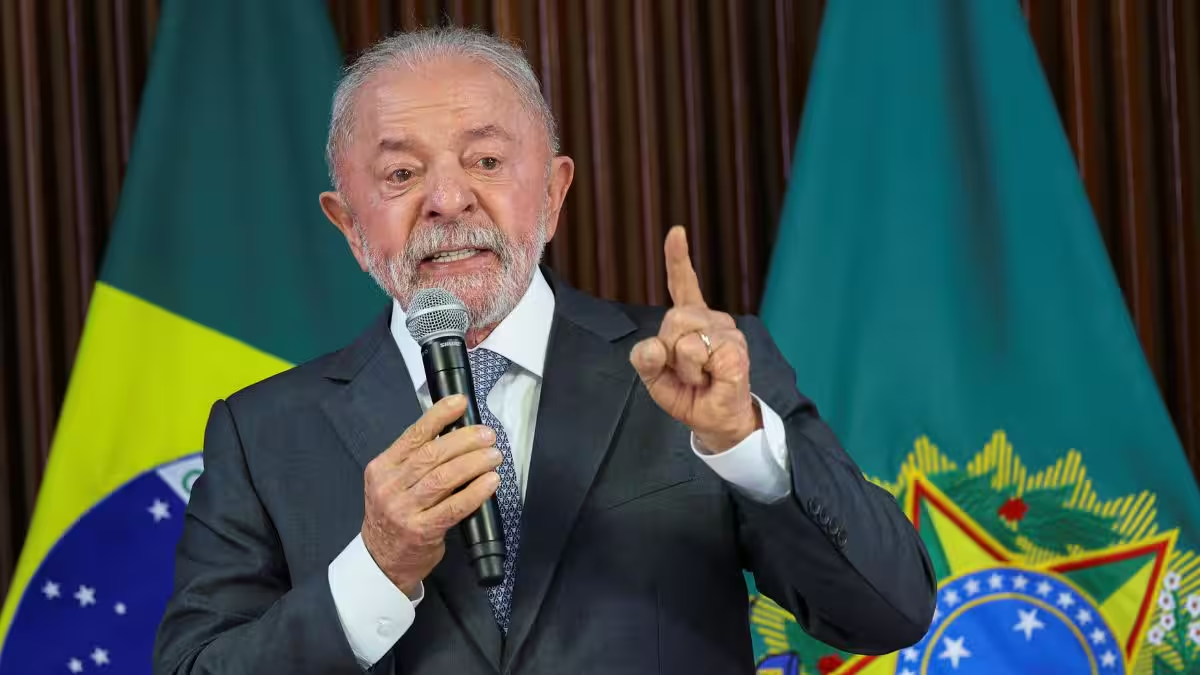
- In a major development, Brazil’s incumbent president, Luiz Inácio Lula da Silva, has staged a remarkable comeback, securing a fourth, non-consecutive presidential term.
- Fiscal sustainability remains a major concern, particularly as the government seeks to maintain social expenditure while preserving confidence in public finances.
- The challenge for Lula will be to advance Brazil’s interests within BRICS without unnecessarily constraining its broader diplomatic and economic options.
In a major development, Brazil’s incumbent president, Luiz Inácio Lula da Silva, has staged a remarkable comeback, securing a fourth, non-consecutive presidential term. Having returned to power in 2022, Lula has now managed to extend his political tenure following a closely contested election. The election was particularly significant, as neither candidate secured the required 50% of the vote in the first round, forcing the contest into a runoff.
The second round proved to be exceptionally close. Voting hours were extended by two hours following a request from Lula’s party, an unprecedented development in Brazil’s electoral history that subsequently fuelled controversy. The far-right camp led by Flávio Bolsonaro questioned the integrity of the electoral process. When the final votes were counted, Lula secured approximately 51.8% of the vote against Bolsonaro’s 48.2%. This marked a remarkable turnaround, considering that Lula had trailed Bolsonaro by approximately 2.2 million votes in the first round. The result was historically significant, as Lula became the first Brazilian presidential candidate to overturn a first-round deficit and win the runoff.
Lula’s victory also highlights the ideological battle unfolding within Brazilian politics. The election brought two distinct political camps into direct confrontation: the left-wing government led by Lula and the far-right movement represented by Flávio Bolsonaro, who sought to carry forward his father Jair Bolsonaro’s political legacy. The election was also deeply personal for the Bolsonaro family, particularly following the legal proceedings and conviction of former president Jair Bolsonaro over his role in an attempted coup. Consequently, the contest revolved around multiple issues, ranging from law and order to political divisions and competing ideological visions.
Among the key issues shaping the election were the cost of living, public security and social inequality. Although Brazil has continued to grapple with structural inequalities under Lula, his government has pursued social welfare measures aimed at improving living standards. The administration has also sought to address economic pressures facing ordinary Brazilians. These issues formed an important part of the broader political contest, although the election result alone does not establish that any single factor determined the outcome. Nevertheless, the close margin demonstrates that Brazil remains deeply divided over its political and economic future.
The Economic Balancing Act: Growth, Inequality and Fiscal Sustainability
Despite his electoral victory, Lula faces significant challenges in his fourth term. Fiscal sustainability remains a major concern, particularly as the government seeks to maintain social expenditure while preserving confidence in public finances. Changes in interest rates, the cost of borrowing and the need to sustain economic growth will further shape the administration’s economic agenda. Lula will therefore have to balance his social commitments with the broader demands of economic stability.
The Amazon and the Burden of Lula’s Fourth Term
The Amazon rainforest represents another important dimension of Lula’s political and international agenda. The president has repeatedly pledged to protect the rainforest, describing it as essential to the global climate system. His administration has overseen a significant reduction in Amazon deforestation compared with earlier periods, earning recognition from environmental advocates. Sustaining this progress will require continued enforcement against illegal deforestation while balancing conservation objectives with the economic interests associated with agriculture, mining and infrastructure development.
Washington, Beijing and BRICS: Brazil’s Geopolitical Tightrope
Another major challenge concerns Brazil’s bilateral relationship with the United States. President Donald Trump’s administration has criticised Brazil over several issues, including its energy trade with Russia and what Washington has described as concerns surrounding democracy and judicial actions. Tensions have also emerged over the restrictions imposed on X in Brazil following its dispute with the country’s Supreme Federal Court, with Elon Musk accusing Brazilian authorities of restricting freedom of expression. In addition, the United States has imposed tariffs on Brazilian imports, further complicating bilateral ties.
Lula, meanwhile, has adopted a firm position on Brazil’s sovereignty, accusing Washington of pursuing a neo-colonial approach towards other countries. Following his electoral victory, he reiterated that Brazil would not be treated as another country’s backyard. Although Lula has engaged with Trump diplomatically, significant differences remain between the two governments. Navigating this relationship will be a crucial foreign policy challenge during his fourth term, particularly as Brazil seeks to protect its economic interests while maintaining an independent international position.
Brazil’s growing economic relationship with China presents another important consideration. China has become a major trading partner for Brazil, particularly through its demand for Brazilian agricultural products, minerals and other commodities. Chinese investment in Brazil has also expanded across several sectors. While these ties provide significant economic opportunities, they raise questions about Brazil’s dependence on a single major market and its ability to strengthen domestic innovation and industrial capacity. Lula will need to balance the benefits of closer economic engagement with China against the need to diversify Brazil’s international partnerships.
The BRICS grouping will also remain central to Lula’s foreign policy ambitions. Brazil has been an important participant in the bloc, and Lula has consistently advocated greater cooperation among emerging economies and reforms to the international order. At a time when tensions between Washington and several BRICS members have intensified, Brazil’s continued participation in the grouping could further complicate its relationship with the United States. The challenge for Lula will be to advance Brazil’s interests within BRICS without unnecessarily constraining its broader diplomatic and economic options.
India has also been at the centre stage of President Lula’s administration. Following his recent visit to India, Brazil has been engaging in efforts to strengthen bilateral relations, particularly in the economic and military spheres. The relationship between President Lula’s administration and India has also grown significantly. As differences with the United States continue to widen, Brazil is expected to move closer to the Global South, particularly countries such as Russia, India, and China.
Lula’s fourth term therefore marks an important phase in Brazilian politics, bringing both opportunities and substantial challenges. His victory demonstrates the continued electoral strength of the Brazilian left, but the narrow margin also underscores the enduring influence of the conservative opposition. From fiscal sustainability and domestic inequality to relations with Washington, Beijing and BRICS, the decisions taken by Lula’s government will have implications extending well beyond Brazil. Ultimately, his ability to translate electoral success into effective governance will shape not only his political legacy but also the direction of Brazil’s domestic politics and its position in the changing international order.

Aayush Pal is a freelance writer on contemporary geopolitical developments. The views expressed in his work are entirely his own.
 Archita Gaur
 Kumar Satish