
- The visit highlights a central contradiction in contemporary American foreign policy: Washington seeks to pressure India over its engagement with Russia while simultaneously navigating its own energy requirements and geopolitical interests.
- At the same time, India remains cautious about entering arrangements that could constrain its strategic autonomy or compromise its independent foreign-policy choices.
- The United States has indicated that a trade agreement with India is close to completion, although differences remain between the two sides.
- For the United States, the task will be to recognise that a durable partnership with India requires more than strategic rhetoric and occasional diplomatic engagement.
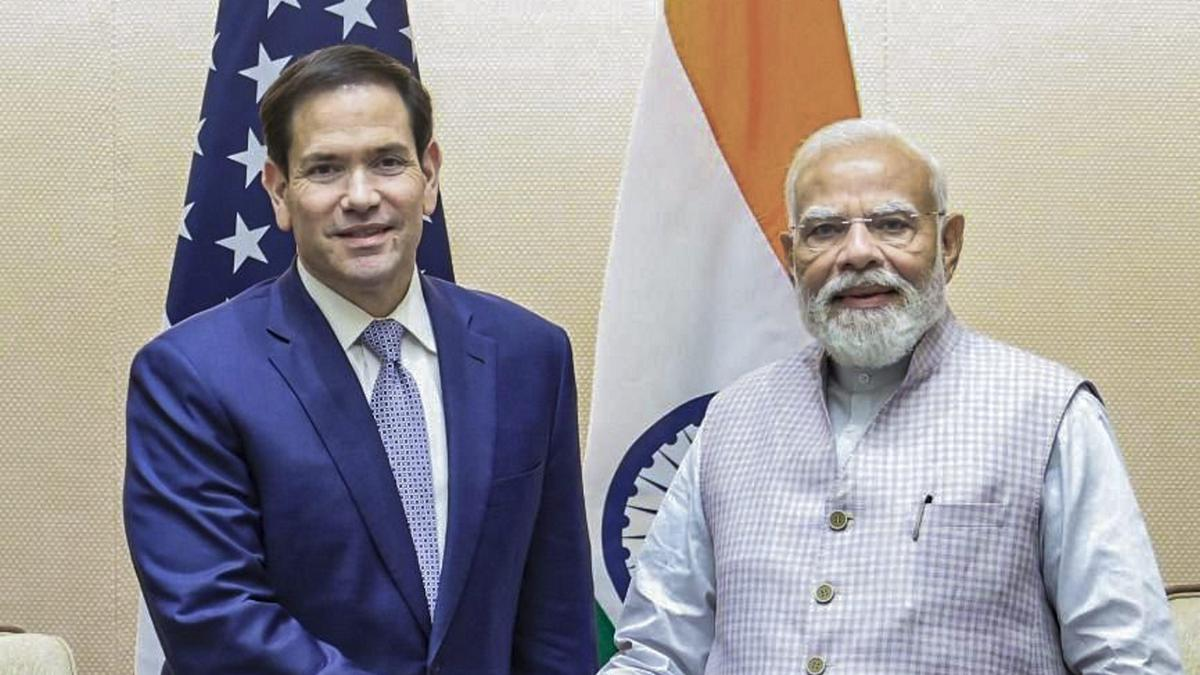
The visit of US Secretary of State Marco Rubio to India comes at a crucial juncture in bilateral relations. The visit has attracted considerable attention, particularly because of the destinations Rubio has chosen to visit. His itinerary includes Mumbai, India’s financial capital, and Jamnagar, the country’s refining hub. These destinations are significant and offer insights into the evolving dynamics of the India–US relationship.
Bilateral relations between the United States and India have been going through a difficult phase since President Donald Trump returned to the White House. His administration’s repeated rhetoric against India over tariffs and its purchases of Russian energy has strained ties between the two countries. Washington has repeatedly criticised New Delhi for importing Russian oil, arguing that these purchases help finance Moscow’s war in Ukraine. Consequently, the relationship has faced considerable friction, raising questions about the future of their strategic partnership.
However, the changing geopolitical landscape makes Rubio’s visit different from previous diplomatic engagements and could mark a defining moment in bilateral relations.
One of the most striking developments in this context is the reported energy arrangement between the United States and Russia, under which Washington would import substantial quantities of diesel from Russia. This comes at a time when energy prices in the United States have been a growing concern. The move has raised questions about the consistency of Washington’s approach to Russian energy exports, particularly given its repeated criticism of India’s purchases of Russian oil. It has also drawn scrutiny amid the wider ramifications of the war in Ukraine and the tensions between the United States and its European allies.
The broader implications of the conflict with Iran have further complicated the energy landscape. Rather than delivering the strategic outcomes Washington may have anticipated, the conflict has contributed to uncertainty and heightened concerns over energy prices and security.
Against this backdrop, the reported US–Russia energy arrangement presents a striking contradiction in Washington’s approach to India. While the Trump administration has criticised New Delhi for purchasing Russian oil, Washington’s own energy requirements appear to be shaping its willingness to engage with Russian supplies. This raises a fundamental question about the extent to which geopolitical principles can be reconciled with domestic economic and energy-security priorities.
This is where Rubio’s visit to Jamnagar assumes particular significance. Russian crude oil requires refining before it can be converted into products such as diesel and petrol. India has emerged as a major refining centre, and Reliance Industries’ Jamnagar complex is one of the world’s most significant refining facilities. Its role in processing crude oil and supplying refined petroleum products to international markets makes it an important part of the global energy supply chain.
Rubio’s visit to Jamnagar therefore warrants attention in the context of the evolving energy relationship between India and the United States. However, any suggestion that the visit is specifically intended to facilitate the export of Russian-origin diesel to the United States, or to reduce American energy prices before the midterm elections, requires further evidence. Nevertheless, the intersection of energy security, domestic political pressures and international trade provides an important lens through which to examine the visit.
The upcoming US midterm elections add another dimension to this relationship. Energy prices remain politically consequential in the United States, and the Trump administration has an interest in demonstrating that it can address domestic economic concerns. Any sustained reduction in energy costs could have political implications for Republicans as they seek to maintain their position in Congress. Yet, the extent to which energy arrangements involving Russia and India could influence prices or electoral outcomes remains uncertain.
Meanwhile, bilateral trade continues to be a major issue between New Delhi and Washington. The United States has indicated that a trade agreement with India is close to completion, although differences remain between the two sides. Rubio’s visit could help build a greater understanding of these differences and create conditions for further negotiations. However, the conclusion of an agreement will depend on the resolution of outstanding issues rather than diplomatic engagement alone.
The visit also comes amid changing dynamics in US–China relations. Recent diplomatic engagement between Washington and Beijing has raised questions about how the United States intends to balance its relationship with China while maintaining its strategic partnership with India. Although tactical cooperation between the United States and China may ease certain tensions, their underlying strategic differences remain significant.
For Washington, India continues to hold considerable importance in the Indo-Pacific. Despite disagreements over trade and energy, the two countries share interests in regional stability, defence cooperation and maintaining a balance of power in Asia. Rubio’s engagement with External Affairs Minister S. Jaishankar reflects the importance Washington attaches to sustaining this relationship. At the same time, India remains cautious about entering arrangements that could constrain its strategic autonomy or compromise its independent foreign-policy choices.
Defence cooperation is another important dimension of the relationship. The United States has sought to deepen defence ties with India, including through greater cooperation in military technology and defence procurement. However, New Delhi has consistently sought to balance its partnerships with the need to develop domestic defence capabilities and preserve flexibility in its strategic decisions. This cautious approach reflects India’s broader commitment to strategic autonomy.
Ultimately, Rubio’s visit underscores India’s importance to the United States at a time of considerable geopolitical and economic uncertainty. Washington’s approach to New Delhi reflects the recognition that India cannot be treated merely as an extension of American strategic priorities. Its independent foreign policy, economic interests and position in the global energy market give it considerable room to manoeuvre.
The visit also highlights a central contradiction in contemporary American foreign policy: Washington seeks to pressure India over its engagement with Russia while simultaneously navigating its own energy requirements and geopolitical interests. Whether this contradiction leads to a more pragmatic relationship or further strains bilateral ties remains to be seen.
For India, the challenge will be to translate its growing strategic importance into concrete economic and diplomatic gains without compromising its independence. For the United States, the task will be to recognise that a durable partnership with India requires more than strategic rhetoric and occasional diplomatic engagement. It requires a willingness to accommodate differences and recognise the limits of political pressure.
Rubio’s visit, therefore, is significant not simply because of the issues discussed, but because it illustrates how the evolving geopolitical landscape is reshaping the relationship between Washington and New Delhi. India’s strategic autonomy has become an important factor in this equation, compelling the United States to engage with India as a consequential partner whose cooperation cannot be taken for granted.

Kumar Satish is a postgraduate in International Relations with a keen interest in reading and writing on geopolitical affairs.
 Anjali Singh
 Aayush Pal