
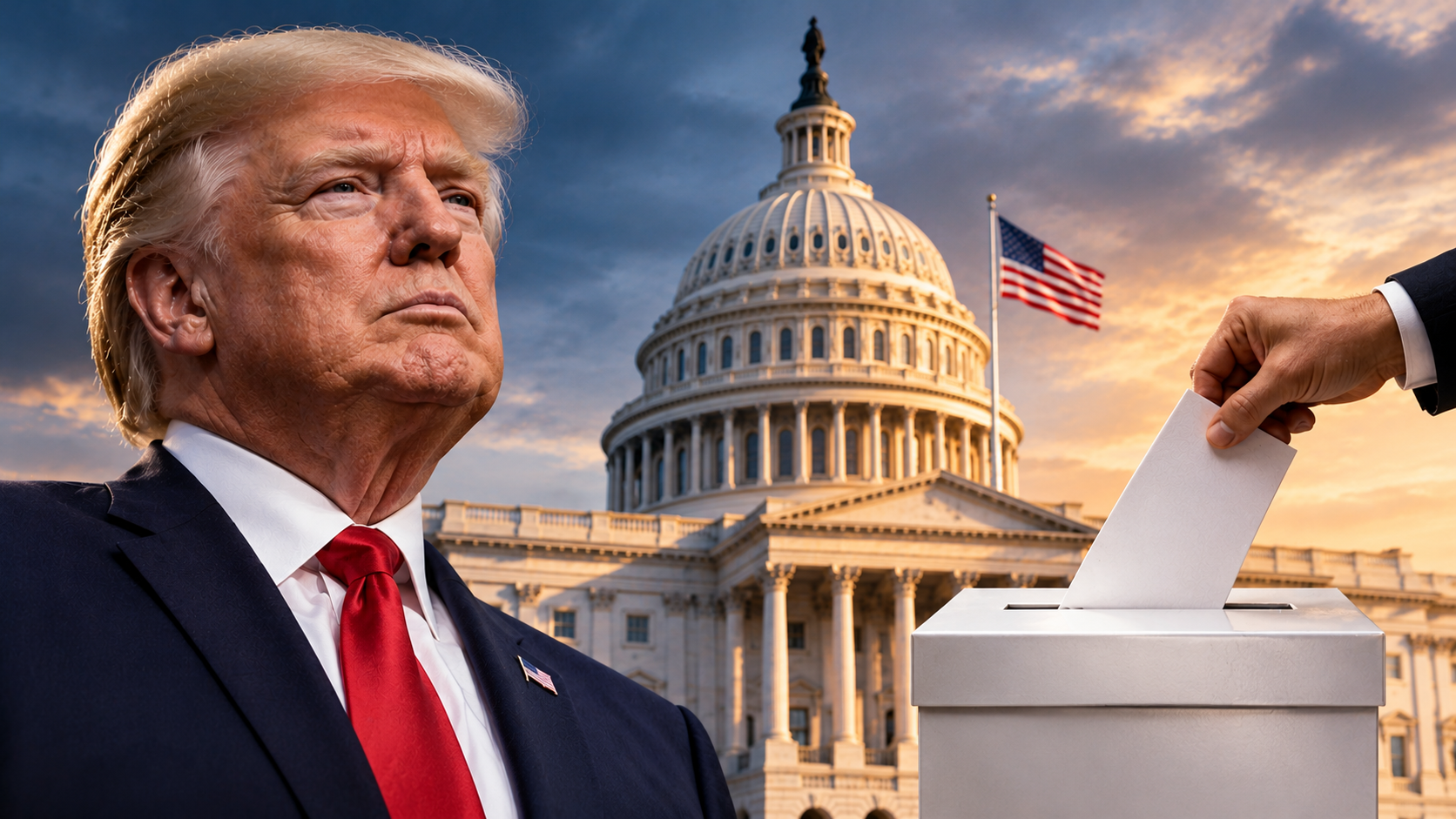
- The midterm elections, held two years after President Donald Trump returned to the White House, are widely regarded as a major test of his leadership and could determine whether the final two years of his presidency become politically difficult for both him and the Republican Party.
- Rising energy prices have become a significant concern for American households, including sections of Trump’s own voter base.
- From the war involving Iran to the unresolved conflict in Ukraine, the gap between campaign promises and subsequent policy decisions has become a point of contention.
- A change in congressional control could significantly affect the administration’s legislative agenda, intensify oversight and complicate its efforts to implement domestic and foreign policy priorities.
The election season is heating up once again in the United States, as the country faces one of its biggest political tests since November 2024. The midterm elections, held two years after President Donald Trump returned to the White House, are widely regarded as a major test of his leadership and could determine whether the final two years of his presidency become politically difficult for both him and the Republican Party.
Scheduled for November 3, the elections will see all 435 seats in the House of Representatives and 35 Senate seats contested. They come at a particularly complicated time for Trump, who is grappling with multiple domestic and international challenges. Both the Republican and Democratic parties have returned to the campaign trail, with Trump claiming that his administration has successfully advanced American interests on multiple fronts. However, developments on the domestic and international fronts have complicated this narrative. Meanwhile, the Democrats are attempting to capitalise on growing criticism of the administration’s policies and what they perceive as the international isolation of the United States. Against this backdrop, the possibility of a Democratic victory in the House of Representatives has become a significant focus of political debate.
The Economic Challenge and Divisions Within the Republican Party
It would not be an exaggeration to say that these midterm elections could prove to be among the most consequential political developments in recent American history. If the Democrats regain control of the House, they could intensify congressional investigations, strengthen oversight of the executive branch and make budget negotiations more contentious. Such a shift could complicate Trump’s ability to advance his legislative agenda and create significant obstacles for the Republican administration.
One of the biggest challenges facing the Republican Party is the rising cost of living and the pressure on American households from higher energy prices. When Trump returned to power in November 2024, he repeatedly criticised the Biden administration over inflation and the rising cost of energy, promising to address these concerns. However, the current energy crisis has created a difficult political situation for his administration. The war involving Iran has triggered major turmoil in West Asian and global energy markets, and the United States has not remained unaffected. Rising energy prices have become a significant concern for American households, including sections of Trump’s own voter base.
In response, the Trump administration has pursued measures to address energy supply concerns, including an energy arrangement with Russia involving diesel imports. However, such a move has also attracted domestic and international criticism, highlighting the difficult choices facing Washington as it attempts to balance energy security with its broader geopolitical objectives.
Another major challenge for the Republican Party is the growing division within its own voter base. The party increasingly appears divided over the war involving Iran, with one section supporting the military campaign while another opposes it. This division has brought Israel, traditionally a major subject of American foreign policy, into the centre of domestic political debate. Republican-aligned personalities such as Tucker Carlson, Candace Owens and Megyn Kelly have criticised the war and challenged the administration’s approach. Their opposition is politically significant because of their influence among sections of the conservative electorate. Although their positions do not necessarily represent the entire Republican voter base, the divisions they reflect could complicate the party’s efforts to maintain political unity ahead of the midterms.
Immigration and the Political Cost of Trump’s Domestic Policies
Immigration has also emerged as a major domestic political issue. The Trump administration’s restrictive immigration policies, including changes affecting H-1B visas and increased pressure on foreign nationals, particularly Indians, have generated considerable debate. At the same time, the operations of Immigration and Customs Enforcement (ICE) have attracted criticism and contributed to the political backlash against the administration. These developments have created a complicated electoral environment in which the Republican Party must balance its commitment to stricter immigration enforcement with concerns about the economic, social and political consequences of its policies.
More broadly, the administration’s domestic challenges have raised questions about whether its policy decisions are delivering the outcomes promised during the 2024 presidential campaign. Rising household expenses, energy costs and immigration controversies have become part of the broader debate over Trump’s leadership. For the Republicans, the challenge is not simply to defend individual policies but also to demonstrate that the administration’s overall direction is benefiting American voters. If sections of the Republican electorate become dissatisfied or less motivated to vote, the consequences could extend beyond individual constituencies and affect the party’s ability to retain congressional control.
Iran, Ukraine and the Growing Strain on US Foreign Policy
On the international front, the war involving Iran has become one of the most consequential challenges for Trump’s presidency. During his election campaign, Trump promised to reduce American military involvement overseas and avoid drawing the United States into new conflicts. These assurances resonated with sections of the Republican voter base and contributed to his political appeal. However, the military confrontation with Iran has raised questions about the extent to which his administration has adhered to those commitments. For some of his supporters, the conflict represents a departure from the foreign policy approach they expected from his presidency.
The consequences extend beyond the battlefield. Higher energy prices, concerns over regional stability and criticism of Washington’s international approach have added to the administration’s political difficulties. The war has also exposed divisions within the Republican Party over America’s role in West Asia, creating a challenge for Trump as he attempts to maintain support among voters with differing views on military intervention and American global leadership.
The war in Ukraine presents another complicated foreign policy challenge. When Trump returned to the White House, he pledged to bring the conflict to an end within 24 hours. However, nearly two years into his administration, a lasting political settlement remains elusive. His approach towards Russia and Ukraine, including criticism of Ukrainian President Volodymyr Zelenskyy and questions surrounding continued American assistance to Kyiv, has generated debate within the United States.
A section of the American electorate supports reducing or ending military assistance to Ukraine, arguing that Washington should prioritise domestic concerns and limit its overseas commitments. Others believe continued support is necessary to defend Ukraine and preserve American credibility among its allies. This division has created another political fault line for Trump, particularly among voters who supported his promise to avoid prolonged foreign conflicts.
More broadly, the administration’s approach to international relations has raised questions about the consistency of its foreign policy. From the war involving Iran to the unresolved conflict in Ukraine, the gap between campaign promises and subsequent policy decisions has become a point of contention. Critics have also questioned the administration’s tariff policies, arguing that uncertainty surrounding trade measures has strained international relationships and complicated economic planning. Meanwhile, Trump’s public confrontations with Canadian leadership and criticism of European allies have added to concerns about the future of America’s traditional partnerships.
The Democratic Opportunity and the Road to 2028
As the midterm elections approach, these domestic and international developments are converging into a significant political challenge for the Republican Party. Rising living costs, divisions over military intervention, immigration controversies, and uncertainty surrounding trade policy have all become part of the broader debate over Trump’s leadership. The administration’s ability to defend its record on these issues could influence the political environment in which Republican candidates contest their respective races.
For the Democrats, the elections offer an opportunity to rebuild their political position and challenge Republican control of Congress. Recent electoral successes in local contests, alongside the emergence of political figures such as Zohran Mamdani, Abdul El-Sayed and Jon Ossoff, have contributed to discussions about the party’s future direction. The Democrats will seek to translate dissatisfaction with the administration into electoral gains, although their success will depend on voter turnout, candidate performance and the ability to present a coherent alternative to Trump’s policies.
Ultimately, the 2026 midterm elections will be a major test of Trump’s political influence and the Republican Party’s ability to maintain control of Congress. A change in congressional control could significantly affect the administration’s legislative agenda, intensify oversight and complicate its efforts to implement domestic and foreign policy priorities. For the Democrats, the election represents an opportunity not only to regain institutional power but also to establish a stronger position ahead of the 2028 presidential contest.

Aayush Pal is a freelance writer on contemporary geopolitical developments. The views expressed in his work are entirely his own.
 Hridbina Chatterjee