
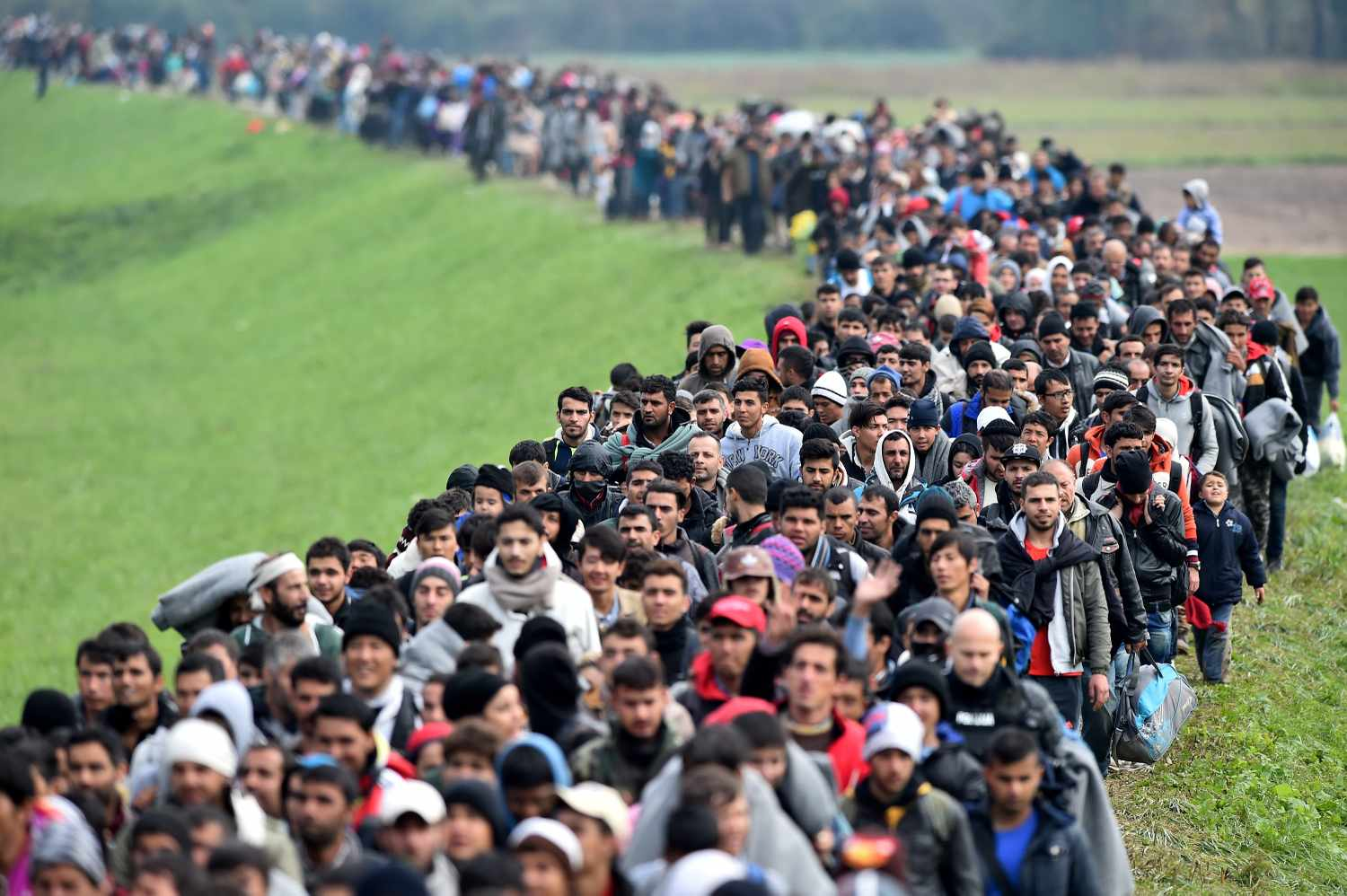
- Governments are tightening border controls, revisiting visa policies and facing mounting domestic pressure to restrict the entry of foreign workers.
- Restrictive immigration policies may respond to concerns around employment, public services and social integration, but they also need to account for the sectors and industries that depend on migrant labour.
- The departure of skilled workers can also deepen existing gaps in healthcare, education and other essential sectors.
- Migration is not merely a question of who crosses borders, but also of how economies manage their dependence on human capital in an increasingly unequal global labour market.
The global economy is facing a contradiction. Across several developed economies, ageing populations, declining birth rates and shrinking workforces are creating an increasing demand for labour. From healthcare and construction to agriculture and manufacturing, migrant workers have become an important part of keeping economies productive. Yet, at a time when the need for cross-border labour mobility is growing, immigration is becoming increasingly contentious. Governments are tightening border controls, revisiting visa policies and facing mounting domestic pressure to restrict the entry of foreign workers.
This tension goes beyond immigration politics. Migration is deeply connected to economic growth, labour-market stability and international development. While destination countries depend on migrant workers to address workforce shortages, countries of origin often rely on remittances as an important source of foreign exchange. However, the departure of skilled workers can also deepen existing gaps in healthcare, education and other essential sectors. The question, therefore, is not simply whether countries should open or close their borders, but how the global economy can reconcile its growing dependence on migrant labour with the political and economic pressures surrounding immigration.
The Economics of an Ageing World
International migration is driven, in large part, by changes in the demographic structure of the global economy. Many advanced economies are undergoing a transition towards what is often described as an ageing economy, characterised by declining birth rates, increasing life expectancy and a gradually ageing population. This demographic shift has direct implications for labour markets, as a shrinking working-age population is increasingly expected to support a growing number of retirees. The resulting pressure on pension systems, public finances and essential services has made workforce availability an increasingly important economic concern.
Japan offers a particularly vivid illustration of this challenge. With a rapidly ageing population and persistent labour shortages, the country has gradually expanded opportunities for foreign workers across sectors such as manufacturing, construction, agriculture and healthcare. Similarly, South Korea faces demographic pressures that could constrain its future labour supply. Across Europe, ageing populations have also contributed to growing demand for workers in healthcare, social care, hospitality and other essential services.
The picture is somewhat different in the Gulf economies. Countries such as the United Arab Emirates, Saudi Arabia and Qatar have long relied heavily on migrant labour to support infrastructure development, construction, domestic services and other industries. In this context, migration is not simply a response to demographic decline or labour shortages; it is also an integral part of the economic model itself.
These examples demonstrate that migration serves different economic purposes across countries. For some, it helps compensate for shrinking workforces; for others, it provides the labour required to sustain economic expansion. In both cases, the movement of people across borders has become closely connected to the functioning of national economies.
When Migration Becomes an Economic Necessity
Beyond addressing demographic challenges, migrant workers play an important role in stimulating economic activity across several sectors. Healthcare, agriculture, manufacturing, construction and hospitality can all be constrained by labour shortages, which risk slowing productivity and increasing the cost of essential services. In many cases, migrant labour helps meet workforce requirements where the domestic supply of workers is insufficient. Their contribution extends beyond simply filling vacancies, as migrant workers also participate in consumption, establish businesses and pay taxes in their host countries.
The economic importance of international migration is also evident in the relationship between migrant workers and their countries of origin. Remittances, or the money transferred by migrants to their families and communities back home, constitute a significant source of external financing for several developing economies. In countries with limited foreign exchange earnings, these transfers can support household consumption, education, healthcare and small-scale investments. According to World Bank estimates, remittance flows to low- and middle-income countries reached approximately $685 billion in 2024, highlighting their considerable contribution to developing economies.
However, the economic benefits of migration are not distributed equally. From a human geography perspective, international migration has two important economic dimensions: the movement of labour and the flow of remittances. Destination countries benefit from an expanded labour supply, as migrant workers help fill gaps where domestic labour markets are unable to meet workforce requirements. Countries of origin also benefit from remittance inflows, as migrant workers transfer a portion of their earnings to support households and communities back home. However, the outward movement of skilled and professional workers can also weaken the domestic pool of human capital, particularly in essential sectors such as healthcare and education. This raises an important question: are remittance inflows and overseas employment opportunities sufficient to offset the loss of skilled human capital in countries that already face shortages of qualified professionals?
The Other Side of Migration: The Cost of Brain Drain
Migration creates economic opportunities for individuals, but it can also result in the loss of essential talent from the labour markets of their countries of origin. For source countries, particularly developing economies, the departure of skilled and educated individuals in pursuit of higher wages, better working conditions and professional growth can create significant challenges. This is particularly concerning for economies that have invested heavily in education and skills development, as the emigration of trained professionals represents a loss of both human capital and potential productivity.
The healthcare sector perhaps illustrates this dilemma most clearly. Several developing countries already face shortages of healthcare practitioners, including doctors, nurses and other medical professionals. Yet, many of their trained workers seek opportunities abroad, where they may find better remuneration, working conditions and professional prospects. This creates a situation in which countries that already struggle to meet domestic healthcare needs risk losing some of their most qualified personnel to international labour markets.
At the same time, destination countries address their demand for skilled labour through the international recruitment of healthcare professionals from these very source countries. This imbalance is not limited to healthcare; it is also evident in education, engineering, research and other specialised professions. The departure of experienced professionals can weaken institutional capacity, disrupt the transfer of knowledge and create long-term constraints on development in countries that already face shortages of skilled workers.
Reconciling Economic Needs with Migration Policies
The challenge for governments is to reconcile domestic political pressures with the economic realities of an increasingly interconnected world. Restrictive immigration policies may respond to concerns around employment, public services and social integration, but they also need to account for the sectors and industries that depend on migrant labour. At the same time, countries of origin must focus on retaining skilled professionals, strengthening domestic employment opportunities and ensuring that migration translates into broader developmental gains. This calls for more structured labour mobility agreements, ethical recruitment practices and greater international cooperation. Ultimately, migration is not merely a question of who crosses borders, but also of how economies manage their dependence on human capital in an increasingly unequal global labour market.

Archita Gaur is a postgraduate student at the School of International Studies, JNU. She specialises in the World Economy and has a strong interest in public policy, economic research, and governance. The views expressed are the author’s own.
 Aayush Pal