
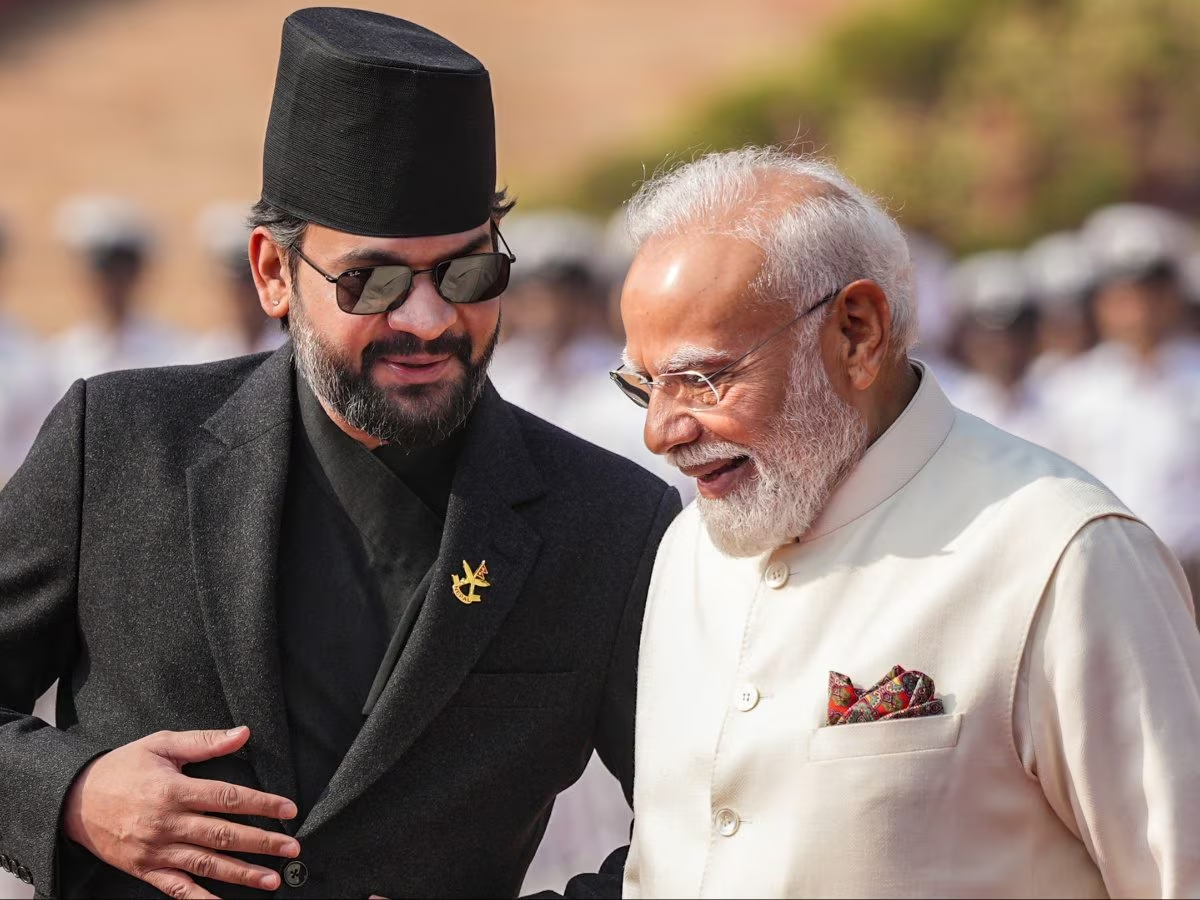
- The two-day visit of Prime Minister Balendra Shah of Nepal to India is an important occasion that provides both countries a chance to renew their relationship.
- The visit yielded an impressive number of initiatives for development cooperation, including eight memorandums of understanding (MoUs) in areas such as energy, connectivity, education, and reconstruction.
- The increased involvement of China in airport building, highway development and hydropower infrastructure in Nepal brings a new angle to this bilateral relationship.
- With this visit, there has been a chance to turn historic goodwill into a more balanced and forward-looking partnership.
The two-day visit of Prime Minister Balendra Shah of Nepal to India is an important occasion that provides both countries a chance to renew their relationship. The visit yielded an impressive number of initiatives for development cooperation, including eight memorandums of understanding (MoUs) in areas such as energy, connectivity, education, and reconstruction. This visit is not just a diplomatic engagement but an attempt to translate centuries-old social and cultural ties into a relationship guided by the logic of contemporary economics and geopolitics.
The visit comes at an opportune moment for India in terms of its Neighbourhood First policy, considering the increasing Chinese influence in Nepal. For the new Nepalese administration, a closer engagement with India is a key to economic development of the country.
Neighbourhood First and New Political Scenario
The rise of Balen Shah signifies a new generation taking over in Nepal’s political arena. Since he belongs to the new generation that expects jobs, governance, and development, the first bilateral visit he made to India had political importance.
The development cooperation package announced by Prime Minister Narendra Modi, valued at 24,000 crore Nepali rupees ($1.63 billion), indicated India’s commitment to helping Nepal rebuild and develop the country. It is even more important now because of the floods and landslides in the month of August, causing great loss of life and destruction.
From the realist perspective, India’s involvement in Nepal has much to do with its strategic interests in the Himalayan region. Since Nepal shares a geographical proximity to India, an open border with India, and proximity to the sensitive northern areas of India, political stability and friendship are essential for India. The increased involvement of China in airport building, highway development and hydropower infrastructure in Nepal brings a new angle to this bilateral relation.
Nevertheless, Nepal’s foreign policy has also taken into account its desire to remain a strategically autonomous country rather than being dependent upon one particular neighbour country. In that regard, sustainable partnership should recognise Nepal as an equal partner with independent developmental aspirations.
From Civilizational Links to People-centric Diplomacy
India and Nepal enjoy unique relations based on religion, language, family ties, and culture. Ayodhya and Janakpur, associated with Lord Ram and Mata Sita, and the connection between Kashi Vishwanath and Pashupatinath serve as a basis for cultural diplomacy.
The launch of the Saryu-Kamala Express train connecting Ayodhya and Janakpur is a practical example of these historical connections. Cooperation related to places of Buddhist pilgrimage, namely Lumbini, Bodh Gaya, Sarnath, and Kushinagar, may enhance tourism activities and economic development of local regions.
In the framework of constructivist theory, the importance of these civilizational connections in international relations can be explained since identities, historical memory, and social interaction influence mutual perception of states. Open borders and *roti-beti* relations serve as the basis of the social construct of this diplomacy.
Nonetheless, such proximity requires material advantages as well. Improved transport links, infrastructure for tourism and ease in cross-border movement have the potential to turn the shared cultural heritage into an employment generator and investment opportunity for the people on both sides.
Connectivity, Energy and Economic Interdependence
One of the main messages that came across during the visit was the need for deepening economic interdependence. India opened up its Kandla and Paradip ports to allow transit trade, in addition to giving a new push to initiatives to connect through roads, railways and borders.
Inauguration of Dharchula Road Bridge, commissioning of Phase II of Motihari-Amlekhgunj petroleum pipeline and laying of foundation stone of Banbasa Integrated Check Post are examples of such efforts. Additionally, the two governments decided to fast-track the completion of Dodhara Chandani Integrated Check Post.
Energy cooperation continues to be another important area of cooperation. Nepal is blessed with immense hydropower potential while India needs clean energy. The laying of the foundation stone for the 669 MW Lower Arun Hydro Project shows the potential of this mutually beneficial initiative.
By virtue of liberal interdependence, these developments would contribute to the generation of shared economic interests, leading to stability and cooperation. Nepal would benefit from investments, exports, and revenues, whereas India would benefit from renewable energy sources and connectivity in the region. However, success would require transparent agreements on the projects, completion in time, and equitable distribution of benefits.
Education, Technology, and Development Cooperation
A total of eight Memoranda of Understanding were signed between India and Nepal on issues like health, traditional medicines, forensics, police training, capacity building of civil services, satellite communications, sustainable urban development, and livestock and fisheries.
The initiative by India to set up an offshore campus of the Indian Institute of Technology in Nepal, together with a startup incubator and innovation centre, holds great significance. Scholarships for Nepalese students and sports infrastructure cooperation, such as cricket, also cater to the aspirations of the youth of Nepal.
The initiatives indicate that the India-Nepal relationship seems to be moving from conventional infrastructure and security cooperation to human resource development, technology, and institution building. The joint vision statement sets a more comprehensive framework of cooperation in education, digital connectivity, water resources, health, trade, and energy.
Addressing Strategic Disparities and the Issue of China
In spite of all the benefits, some problems persist. First and foremost, the ongoing dispute over the territory of Kalapani, Lipulekh and Limpiyadhura is another source of political sensitivity. In this regard, it should be noted that statements by Nepal regarding negotiations between the countries concerned and India’s denial of involvement of any third party in the issue reveal the necessity for careful diplomacy and further negotiations between the two states.
Moreover, the increasing involvement of China makes Nepal an integral part of India’s regional strategy. Nevertheless, the perception of Nepal as just one of the pawns of the India-China competition may negatively affect the attempts of New Delhi to build relations based on mutual trust.
From Diplomatic Progress to Partnership for the Future
The visit of Balen Shah to India has yielded important results in reconstruction, connectivity, energy, education and trade. However, the success of his visit will depend on follow-up and execution of the agreements. There is a need for development aid to reach people who are in need, construction of hydropower plants needs to proceed according to schedule and border and transit corridors must deliver tangible economic gains.
In the end, the relations between India and Nepal are based on a combination of geography, civilisation and strategic interests. With this visit, there has been a chance to turn historic goodwill into a more balanced and forward-looking partnership.

Anjali Singh is a postgraduate student of Political Science and International Relations, a Social Media Analyst, and a former Research Intern at the Indian Council of World Affairs. Views expressed are the author’s own.
 Archita Gaur
 Aayush Pal