
- Developing economies, particularly those belonging to the Global South, have consistently argued that Western countries must assume greater responsibility for climate change because of their historical contribution to global greenhouse gas emissions.
- One of the most contentious issues dominating COP31 is climate finance and the question of how countries should share responsibility for addressing the global climate crisis.
- India cannot immediately eliminate its dependence on conventional energy sources, particularly coal, without considering the economic and energy-security implications.
- Ultimately, the credibility of the global climate framework will depend on its ability to move beyond diplomatic declarations and deliver tangible outcomes.
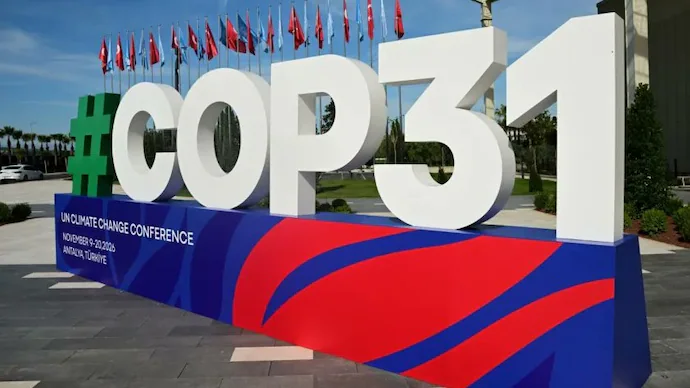
The 31st Conference of the Parties (COP31), currently underway in Türkiye, is a global climate convention held under the United Nations Framework Convention on Climate Change (UNFCCC). An annual gathering of member countries, the summit serves as a platform for international climate diplomacy, negotiations and coordinated efforts to address the growing challenges of climate change.
This year’s summit is particularly significant. While Türkiye is hosting COP31, Australia has been entrusted with a leading role in the formal negotiations, making the arrangement an unusual feature of international climate diplomacy. At a time when industrialisation is accelerating, geopolitical and economic competition is intensifying, and environmental degradation is becoming an increasingly pressing global concern, cooperation among nations has become more important than ever.
One of the most contentious issues dominating COP31 is climate finance and the question of how countries should share responsibility for addressing the global climate crisis. The challenge is particularly complex because of the deep divisions that continue to exist between developed and developing economies. For years, climate conferences have faced criticism for producing ambitious declarations but delivering limited action. A significant reason behind this stagnation has been the absence of consensus over historical responsibility, financial obligations and the distribution of climate-related responsibilities.
The North-South Divide: Who Should Pay for the Climate Crisis?
The differences between developed and developing countries remain one of the biggest obstacles to meaningful climate negotiations. Developing economies, particularly those belonging to the Global South, have consistently argued that Western countries must assume greater responsibility for climate change because of their historical contribution to global greenhouse gas emissions.
Countries such as India and several African nations have repeatedly highlighted that the present climate crisis is closely linked to centuries of industrialisation in Europe and North America. The Industrial Revolution and subsequent economic expansion in Western economies were accompanied by extensive fossil fuel consumption and carbon emissions, while many developing countries began their industrialisation journeys considerably later.
Consequently, the Global South argues that developed economies must not only accelerate their own decarbonisation efforts but also provide adequate climate finance and technological assistance to countries that lack the resources to pursue ambitious environmental targets.
However, developed economies have increasingly pointed towards the growing emissions of emerging economies, particularly India and China, arguing that their expanding industrial activities and continued dependence on coal are contributing significantly to global carbon emissions. This disagreement over historical responsibility and present-day emissions has remained a major sticking point in international climate negotiations.
India’s Position: Climate Justice and the Question of Historical Responsibility
India has emerged as one of the prominent advocates of climate justice and the principle of common but differentiated responsibilities. New Delhi has consistently maintained that climate change does not recognise geographical boundaries and that isolated national efforts cannot adequately address a crisis of global proportions.
India has also highlighted its commitments under the historic 2015 Paris Agreement, which established the international objective of keeping the rise in global average temperatures well below 2°C above pre-industrial levels while pursuing efforts to limit the increase to 1.5°C.
India has pointed to its progress in meeting and exceeding several of its nationally determined climate targets, particularly in expanding non-fossil fuel energy capacity and improving energy efficiency. Its position has been that developing economies should not be subjected to the same expectations as countries that industrialised over several centuries without comparable environmental constraints.
One of the strongest arguments repeatedly advanced by India concerns the failure of developed economies to adequately fulfil their climate-finance commitments. Developed countries had committed to mobilising $100 billion annually in climate finance for developing nations, with the target year set at 2020. However, the delivery of this financing faced considerable delays, and questions have persisted over its accessibility, composition and adequacy.
India and other developing economies have frequently criticised the gap between financial promises and actual support, arguing that climate ambitions cannot be realised without predictable and affordable financial assistance. This perceived disparity has reinforced accusations of climate hypocrisy against developed economies and contributed to the continuing mistrust between the Global North and Global South.
The underlying argument is that countries historically responsible for a substantial share of accumulated emissions must shoulder a greater proportion of the financial burden associated with addressing climate change.
India’s Energy Dilemma: Balancing Growth with Environmental Commitments
While India’s arguments on historical responsibility and climate finance carry considerable weight, the country also faces a distinctive challenge of its own. As one of the fastest-growing major economies and a member of the G20, India’s energy requirements are expanding rapidly. Sustaining economic growth, industrial development and the rising energy demands of its population requires a reliable and affordable supply of electricity.
India has made significant progress in expanding its renewable energy capabilities, particularly in solar and wind power. Its growing renewable energy capacity and investments in clean energy infrastructure have attracted international attention and recognition. Nevertheless, the transition towards renewable energy presents considerable financial, technological and infrastructural challenges.
Renewable energy sources require substantial initial investment, supporting transmission infrastructure, energy storage capabilities and reliable grid integration. Their intermittent nature also creates challenges in ensuring uninterrupted electricity supply. Consequently, India cannot immediately eliminate its dependence on conventional energy sources, particularly coal, without considering the economic and energy-security implications.
This places India in a complex position. While it recognises the urgency of reducing carbon emissions and expanding renewable energy, it must also ensure that its development ambitions are not compromised by an energy transition that remains financially and technologically demanding.
The challenge, therefore, is to establish an equitable framework in which developing countries can pursue economic growth while progressively reducing their dependence on carbon-intensive energy sources.
The Vulnerable Nations: Climate Finance Must Translate into Action
Beyond the differences between major economies, one of the most pressing concerns at COP31 is the vulnerability of smaller and economically weaker countries that face the most severe consequences of climate change despite contributing relatively little to historical global emissions.
Countries such as Nepal face growing environmental threats, including glacial retreat, floods and landslides. Several African nations are grappling with prolonged droughts, water scarcity and deteriorating agricultural conditions. Meanwhile, Pacific Island nations are confronting rising sea levels, coastal erosion and the long-term threat to their territorial integrity.
These countries often lack the financial resources, technological capabilities and institutional infrastructure required to adequately respond to climate-related disasters. For them, climate finance is not simply a matter of economic assistance; it is essential for national survival, environmental protection and sustainable development.
This is where the responsibility of major global economies becomes particularly important. Developed countries must translate their financial commitments into accessible funding, while emerging economies must also contribute to collective climate action in accordance with their capabilities and responsibilities.
Ultimately, the credibility of the global climate framework will depend on its ability to move beyond diplomatic declarations and deliver tangible outcomes. Climate change is a challenge that no country can address independently. Unless nations recognise their shared responsibilities, bridge their financial and developmental differences and provide meaningful assistance to the most vulnerable economies, international climate negotiations will continue to struggle to produce the action the world urgently requires.

Aayush Pal is a freelance writer on contemporary geopolitical developments. The views expressed in his work are entirely his own.
 Niranjan Kadam
 Archita Gaur
 Anjali Singh