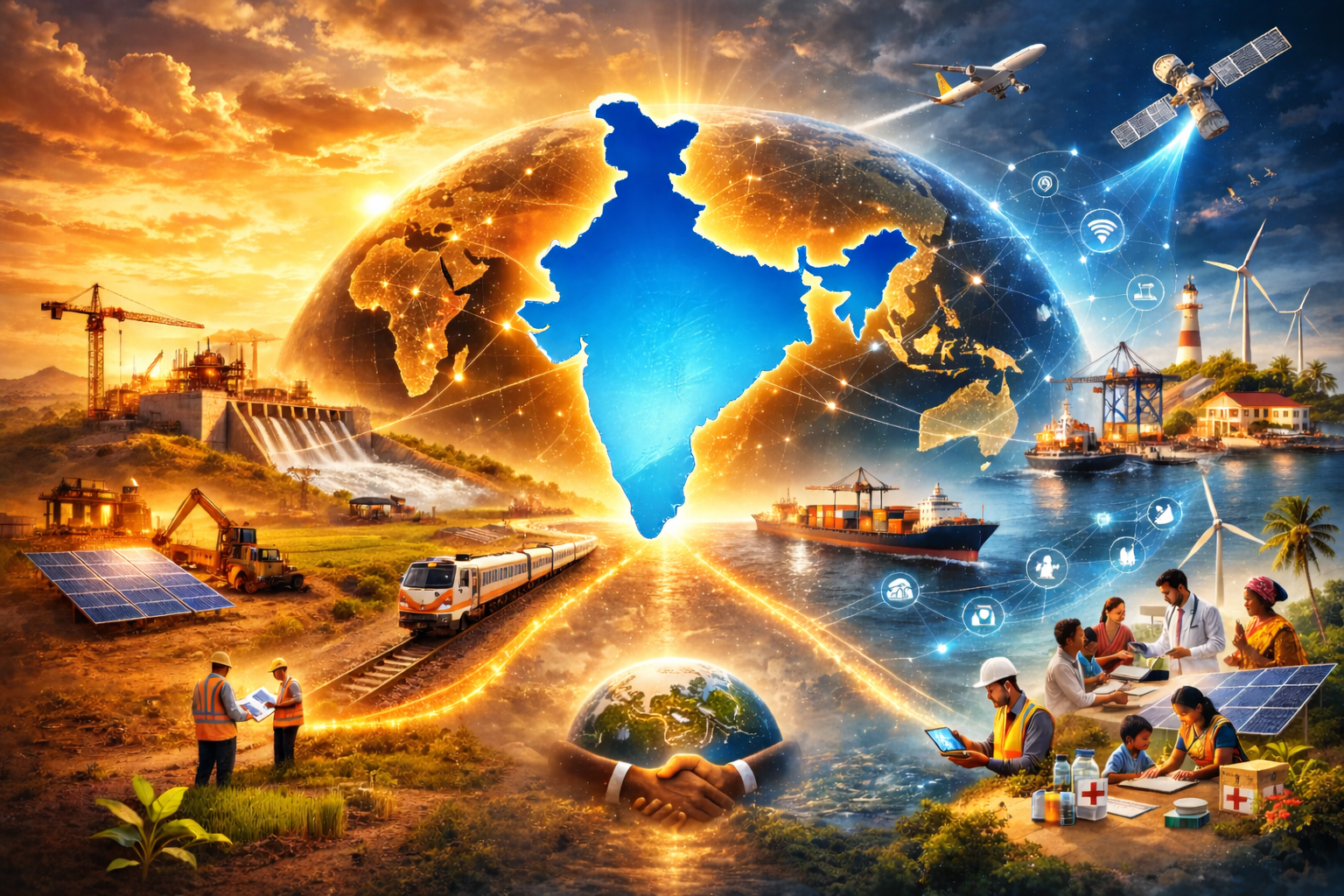
- India’s development diplomacy is characterised by partnership-based engagement, making it an agenda-setter that presents an alternative to the transactional aid-for-trade approaches of Beijing and Washington.
- India’s development diplomacy draws heavily from its post-colonial experience and its long-standing commitment to South–South cooperation.
- Lines of Credit (LOCs) and Capacity building are distinctive aspects and the driving force behind India’s development assistance programs.
- The transformation of India from a recipient of aid to a setter of agendas is a major shift in the politics of development in the global arena.
India’s Emergence as a Development Agenda Setter
For the better part of the post-independence era, India was largely viewed as a recipient of foreign aid, with multilateral bodies and Western countries being the main sources of assistance for its development needs. However, over the last two decades, India has experienced a paradigm shift and has become a major development partner in Africa and the Indo-Pacific. This transformation is not only a reflection of India’s economic rise but also a shift in its foreign policy strategy. Currently, India’s development diplomacy is characterised by partnership-based engagement, making it an agenda-setter that presents an alternative to the transactional aid-for-trade approaches of Beijing and Washington.
Historical Roots and Philosophical Foundations of India’s Development Diplomacy
India’s development diplomacy draws heavily from its post-colonial experience and its long-standing commitment to South–South cooperation. Having navigated the challenges of nation-building, poverty alleviation, and institutional development, India presents itself as a partner that understands the developmental realities of the Global South. Unlike traditional donors, India emphasises sovereignty, non-interference, and demand-driven cooperation. This philosophical approach has resonated strongly in Africa and the Indo-Pacific, where states remain sensitive to external conditionalities and the risks of strategic dependence.
Lines of Credit as Instruments of Partnership-Oriented Development
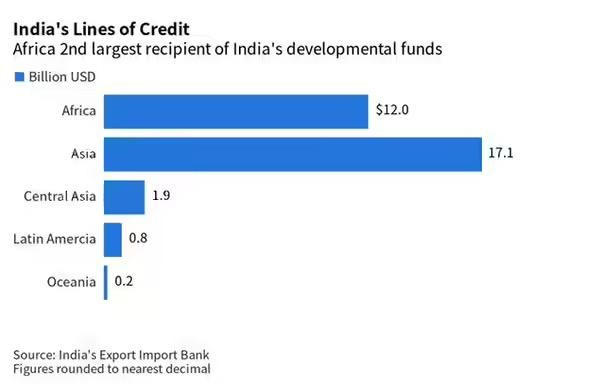
Lines of Credit (LOCs) are the driving force behind India’s development assistance program. These concessional loans are mainly channelled through the Export-Import Bank of India to support infrastructure, energy, agriculture, health, and connectivity sectors. India has offered over USD 30 billion in LOCs to other countries, with Africa being the main beneficiary. While large-scale infrastructure lending often emphasises the need for speed and strategic control, Indian LOCs emphasise sustainability, technology transfer, and capacity building, ensuring that the development paradigm stays rooted in the recipient countries.
Africa-Focused Development Cooperation: Infrastructure with Human Impact
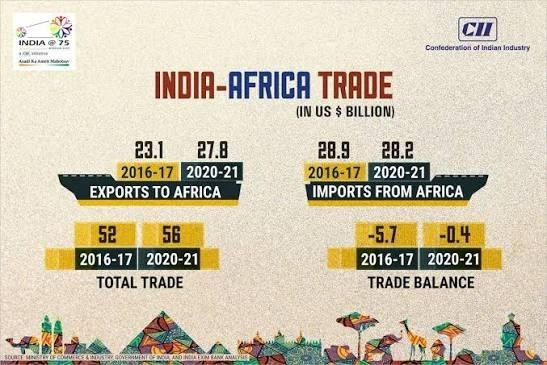
In Africa, the projects that have been funded by the LOC’s and are of Indian origin demonstrate a clear prioritisation of areas that yield long-term developmental returns. The power sector, railway upgrade schemes, irrigation projects, and healthcare infrastructure that have been developed by India are all linked to the core economic challenges. Such projects are also part of institutional arrangements such as the India-Africa Forum Summit, which builds political trust in addition to economic engagement.
India’s Development Role in the Indo-Pacific: Connectivity and Resilience
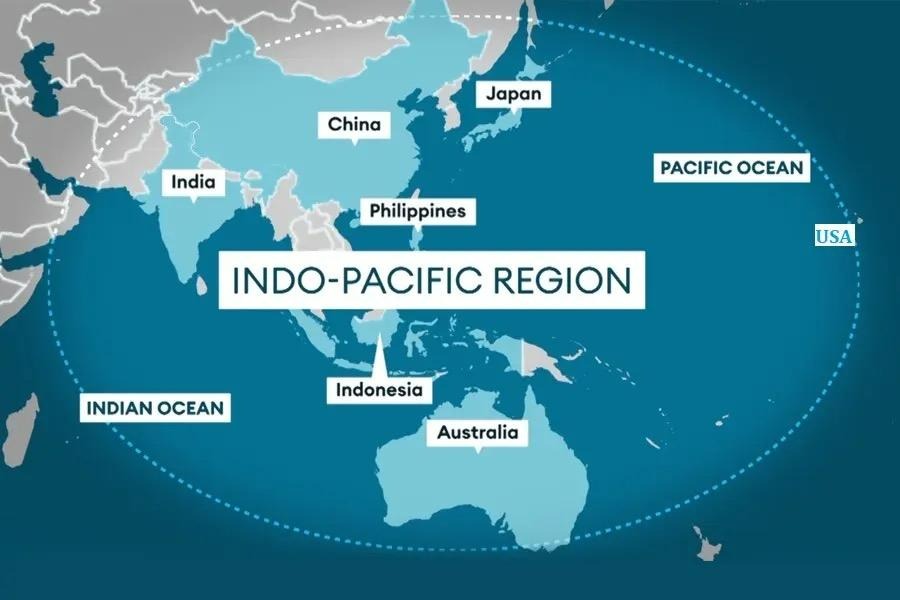
India’s development diplomacy in the Indo-Pacific is inextricably tied to its strategic vision of a “free, open, and inclusive” maritime domain. Through LOCs, grants, and technical assistance, India is helping to develop ports, renewable energy projects, water supply projects, and disaster-resilience projects in South Asia, the Indian Ocean Region, and the Pacific Island States. This is part of India’s overall branding as a net provider of development and security assistance, especially to small island states that are vulnerable to climate change and strategic pressures.
Capacity Building as a Strategic Differentiator
Capacity building is perhaps one of the most distinctive aspects of the Indian development paradigm. The Indian Technical and Economic Cooperation (ITEC) scheme, which was launched in 1964, trains thousands of professionals every year from Africa and the Indo-Pacific region. This ranges from training in governance, information technology, health, renewable energy, and higher education. This is how India ensures that development cooperation leads to sustainable outcomes in partner countries by promoting self-reliance through human capital development.
Digital Public Goods and Knowledge Sharing
India’s current focus on sharing digital public goods has further added to its development diplomacy. Building on its homegrown experience in digital identity solutions, financial inclusion platforms, and e-governance solutions, India is now providing scalable solutions that are suited to the needs of the partner countries. Unlike the transfer of proprietary technology, India’s model is more focused on adaptability and national ownership, which allows the recipient countries to improve their governance capacity without losing control over their data.
People-Centric Partnerships and Health Diplomacy
People-to-people engagement continues to be the hallmark of India’s development diplomacy. Healthcare engagement, especially in the context of the COVID-19 pandemic, has reinforced India’s position as a humanitarian partner. By providing vaccines, pharmaceuticals, and health services through the Vaccine Maitri initiative, India has shown that it stands in solidarity with the international community in the face of a global challenge. Educational exchanges, scholarships, cultural diplomacy, and diaspora engagement have further entrenched India’s position at the people-to-people level.
Comparative Perspective: India, China, and the United States
India’s development diplomacy is positioned in a pragmatic middle ground between the infrastructure-intensive approach of China and the governance-centric approach of the United States. Although the Belt and Road Initiative of China has brought rapid connectivity to the region, there are also concerns about debt sustainability and strategic leverage. On the other hand, the United States tends to condition its development assistance on political and governance conditionalities. The Indian approach is a combination of concessional lending and respect for sovereignty.
Strategic and Geopolitical Implications
India’s development partnerships have provided dividends to the country that go beyond the economic sphere. They have helped to improve diplomatic alignments, and they have increased India’s credibility as a leader of the Global South. They have also helped to increase India’s influence in multilateral institutions. In a world defined by great power rivalries, India’s development diplomacy is a stabilising influence.
Challenges and Future Trajectory
Despite the success, India’s development diplomacy is also constrained in terms of funding, project implementation, and coordination. To overcome these issues, there is a need for increased cooperation with multilateral agencies, better monitoring systems, and political will. However, these issues do not affect the credibility of the Indian model but rather highlight the need for consolidation as India’s role in the international arena continues to grow.
Conclusion: Redefining Development Cooperation
The transformation of India from a recipient of aid to a setter of agendas is a major shift in the politics of development in the global arena. With lines of credit, capacity building, and people-oriented partnerships, India has defined a development diplomacy that is based on solidarity, sustainability, and shared growth. In Africa and the Indo-Pacific region, this approach provides a viable alternative to traditional aid architecture, placing India not only as a donor but also as a partner in shaping the future of development cooperation.

Daljeet Singh holds a BTech in Computer Science and is currently pursuing an MA in Political Science. His interests range across geopolitics, international relations, and technology. An avid reader and writer, he is passionate about exploring the intersections of these fields. Views expressed are the author’s own.
 Anusreeta Dutta
  Aayush Pal
  Hridbina Chatterjee