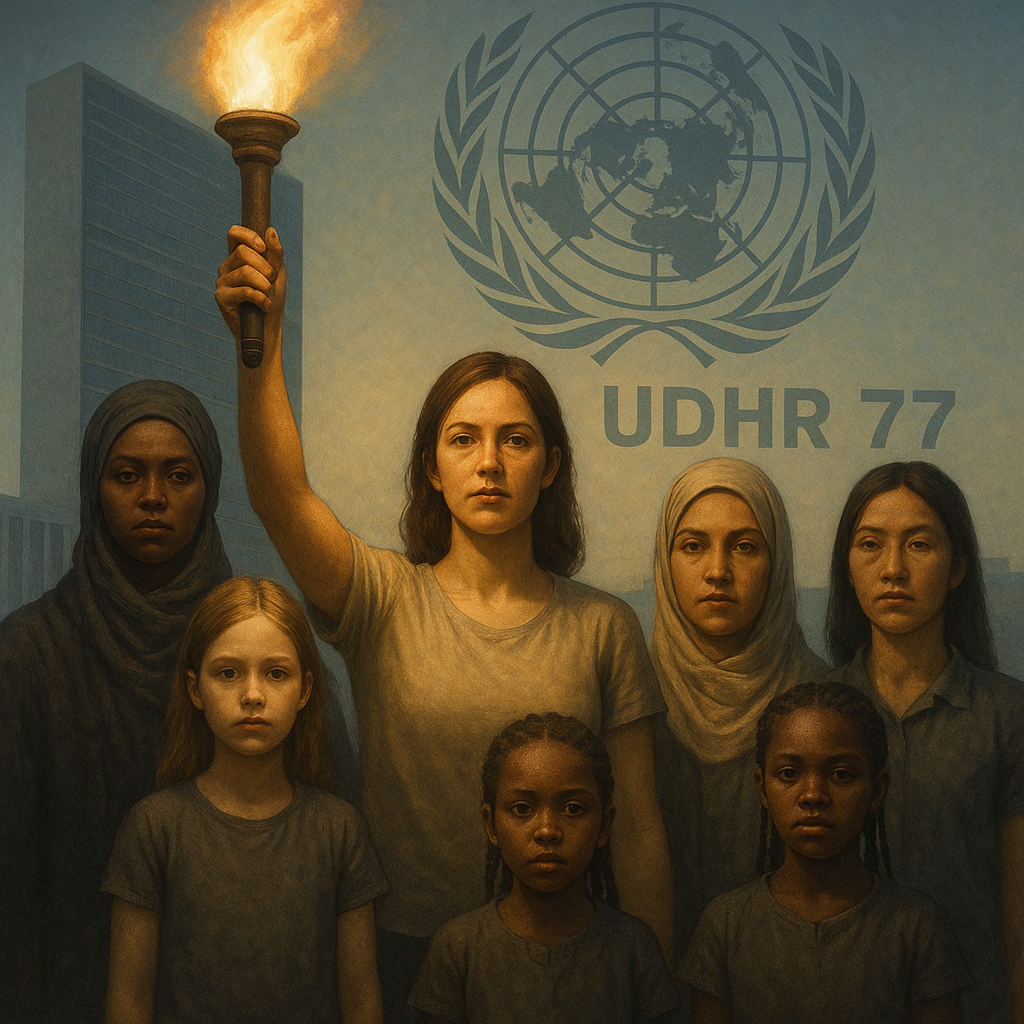
- Eighty years on, 4 billion women and girls still struggle to realise their fundamental rights to a gender-equal and violence-free world, as envisioned in the UN Charter and the UDHR.
- There has been a 50% rise in conflict-related sexual violence… wherein 95% victim-survivors are women and girls.
- Despite sustained UN advocacy, the fundamental human rights of women and girls remain unrealised—even 77 years after the UDHR.
- A bottom-up approach in which empowered women themselves feel obliged to ‘light the lamp’, carry the torch forward, and lead the way to empower other women and girls is urgently called for.
INTRODUCTION
On November 20, 2025, the International Day for the Elimination of Violence Against Women (IDEVAW) has brought 16-day activism and campaign (November 25-December 10, 2025) that will conclude on the Human Rights Day [UNGA resolution 423 (V) of Dec. 04, 1950]. This takes place just ahead of the 77th anniversary of the Universal Declaration of Human Rights (UNGA resolution 217 (III) A of Dec. 10, 1948), when the UN Secretary General (UNSG) Antonio Guterres has called for “protecting the institutions that make human rights a lived reality” (November 28, 2025). Therefore, at this critical juncture, it is pertinent to examine and take stock of the global state of fundamental human rights of women and girls [UNSG, July 25, 2025; UN Women, April 11, 2025; UN Women, Femicide, 2025; UN Women Strategic Plan, 2026-2029; UNICEF Gender Action 2026-2029] coinciding with the UN’s 80th anniversary (Author: October 22, 2025: Samvada World) and the UDHR’s 77th anniversary (1948-2025).
As a global concern for the scourge of violence against women and girls, the UN General Assembly [resolution 48 (104) of December 20, 1993] adopted the Declaration on the Elimination of Violence against Women. However, it was another UNGA resolution 54/134, of February 07, 2000, that officially designated November 25 as the IDEVAW, inviting governments, international organisations, as well as NGOs to join together and organise activities designed to raise public awareness on the issue. Such campaigns and marking of international days are meant to educate the general public on issues of international concern, to mobilise political will and resources to address global problems, as well as to reinforce achievements of humanity. The initiative for IDEVAW was taken in 2008 by the UNSG Ban Ki-moon (2007-2016) for the campaign against sexual and gender-based violence (SGBV), including during armed conflicts (Website: UNSG Special Representative). The campaign is managed by UN Women and calls on governments, civil society, women’s organisations, young people, the private sector, media, and the UN system to join forces to address the global menace of violence against women and girls. “Violated or restricted, women’s human rights are threatened…to ensure that women and girls have the same opportunities as men and boys. When women and girls can rise, we all thrive”, the UNSG Guterres prophetically observed in his 2025 International Women’s Day (IWD) message.
GLOBAL GENDER CHALLENGE
In the UN’s 80th year [GA resolution 79 (318) of July 18, 2025], 4 billion women and girls (UN Women 2025), out of total global population of 8.26 billion, still struggle to break the barriers to realize a gender equal and violence-free world in exercise of their fundamental human rights enshrined into the 1945 UN Charter and the 1948 UDHR. As this author vividly underscored in a special primer on the UN@80 contributed to Samvada World (October 22, 2025), the struggle for the realization of fundamental human rights of women and girls adds to the woes of the humankind today – the world we live in – wherein 2 billion people are trapped in conflict zones (SIS Blog: Jan 23, 2025), 1.1 billion face multidimensional poverty (Oct 17, 2025), 887 risk climate hazards (Oct 17, 2025), 670 million go hungry (Oct 14, 2025), 100 economies will take at least 123 years to close the global gender gap (Oct 22, 2025) and 1-in-3 women face physical and/or sexual violence (not including sexual harassment) at least once in their lifetime (UN Women 2025; Author: SGBV in International Law: 2022; 2023).
The nodal entity, UN Women, came into being on January 01, 2011, vide UNGA resolution (64/289 of July 2, 2010, para 49-50) to strengthen the institutional arrangements for the realisation of gender equality, empowerment of women and elimination of all types of violence against women and girls. It was consolidated by bringing together the existing mandates and functions of several UN programs, funds and entities. UN Women’s mandate draws from the UN Charter (Preamble, Articles 1 (3) and 55), outcome of the 23rd UNGA Special Session (Beijing+5; June 5-9, 2000; GA resolution 54 (141) of Dec. 17, 1999) as well as applicable UN instruments, standards and resolutions for gender equality and the empowerment of women and girls. On March 08, 2025, the IWD 50th anniversary [GA resolution 3520 (XXX), Dec. 15, 1975] of the IWD (SIS Blog: March 17, 2025) also coincided with 30th anniversary of the historic 1995 Beijing Declaration and Program of Action that solemnly resolved “to advance the goals of equality, development and peace for all women everywhere in the interest of all humanity”. Now, after three decades (1995-2025), almost one-fourth countries are facing a backlash and backsliding. A series of factors, such as economic instability, the climate crisis, rising conflicts and political pushback, have contributed to a worsening global landscape for gender equality. In his annual 2025 IWD message, the UNSG warned that “instead of mainstreaming equal rights, we are seeing the mainstreaming of misogyny.” “Complex challenges stand in the way of gender equality and women’s empowerment”, said Sima Bahous, UN Women Executive Director (UN News; March 08, 2025).
A woman or girl is killed every 10 minutes by a family member or an intimate partner.
GLOBAL STATE OF HUMAN RIGHTS OF WOMEN & GIRLS
In their respective anniversary years, the UN (1945: 80), the UDHR (1948: 77), the IWD (1975: 5o) and the Beijing Declaration (1995: 30), women and girls around the world face insurmountable challenges emanating from deep rooted global patriarchy and “mainstreaming of misogyny” (UNSG: IWD Message: March 08, 2025). The consequences can be vividly seen in the worsening global state of inequality and violence against women and girls. In the grim scenario of worldwide gender-based violence, a woman or girl is killed every 10 minutes by a family member or an intimate partner. There has been a 50% rise in conflict-related sexual violence (UNSG: CRSV: July 15, 2025), wherein 95% victim-survivors are women and girls. In fact, home has also become the most dangerous place for women and girls, as the majority of women are killed by their intimate partners or other family members.
As per the 2024 report published by the UNODC, 60.2% women were killed in 2023 by their intimate partners (45%) or other family members (55%). Gender based violence remains a major global challenge (Author: The Tribune; November 02, 2021). The ‘femicide’ (UN Women 2025) reflects another entrenched gender-based hatred arising from sadistic mindsets and assumes “the most brutal and extreme manifestation of violence against women and girls”. SGBV has become one of the biggest existential threats faced by women and girls, as testified in this author’s globally acclaimed work (UNSG Special Representative on Sexual Violence in Conflict); Sexual and Gender Based Violence in International Law [English 2022; German 2023] as well as highlighted in the 2018 Nobel Peace Prize (Denis Mukhwege and Nadia Murad) for their “efforts to end the use of sexual violence as a weapon of war and armed conflict”.
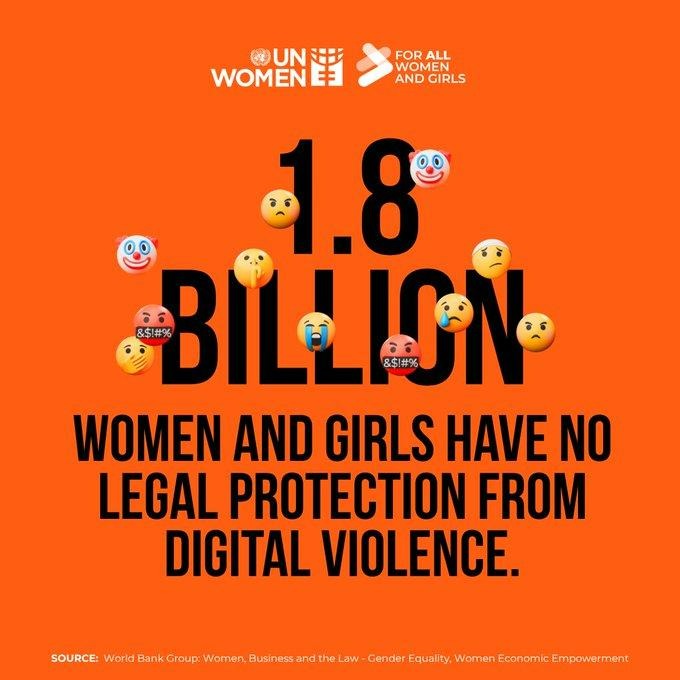
Thus, the overall global state of women and girls has become a cause of international concern as multiple agencies [UNGA; UNSC; UNSG; UNSG-SR on SVC; UN Women, UNICEF; WHO; ICRC, etc] are trying to grapple with the realisation of fundamental human rights of half of the world population. It is reflected in spine-chilling figures on the state of women and girls comprising plight of 2 billion without any social protection coverage (UN Women, 2025); 840 million faced violence at least once in their lifetime and 263 million survived sexual violence (WHO, Nov. 19, 2025); 612 million living in global conflict zones (UN Women, Oct 20, 2025); 393 million mired in extreme poverty (UN Women, 2025); 50, 000 became victims of ‘femicide’ (UN Women, 2025); and digital violence (amplified by AI) now haunts 1.8 billion (UN News, Nov. 2o, 2025; all the figures sourced from official UN documents).

The graphic reality is that despite the advocacy by the entire UN system, the UN member states, international developmental agencies and the civil society groups, it has not been possible to secure realization of the fundamental human rights of women and girls even after 77 years of the UDHR (Dec. 10, 1948)and 80 years of the UN Charter coming into being (Oct. 24, 1945). UN Women’s Strategic Plan (2026–2029) flags a critical need to accelerate progress to realise gender equality and the empowerment of all women and girls. Similarly, UNICEF Gender Equality Action Plan (2026–2029) provides the road map for key gendered commitments. Yet there appear to be big obstacles and pushback to the quest for gender equality arising from acute global uncertainty, political polarisation, economic volatility, planetary crises, armed conflict and a questioning of multilateralism. Due to deeply entrenched societal structures, women and girls experience multiple forms of discrimination based on sex, age, class, disability, race, ethnicity, sexual orientation and gender identity or migration status.
UN Women Strategic Plan (2022-2025) adopted a three-pronged approach: (1) to promote coordination across the UN system, (2) to support the member states in strengthening global norms and standards for gender equality, and (3) to carry out operational activities at country and regional levels. With a paltry budget of US$1.03 billion (2024-2025; projected contributions), the UN Women faces a herculean task to turn the tide. Reflecting on the need of the hour, the 2024 Pact for the Future (UNGA resolution 79/1 of September 22, 2024), underscored: “None of our goals can be achieved without the full, safe, equal and meaningful participation and representation of all women in political and economic life. We reaffirm our commitment to the Beijing Declaration and Platform for Action” (paragraph 15). Ironically, notwithstanding all solemn declarations and the “rescue plan” at the 2023 UN SDG Summit [EPL 53 (4) 2023, 221–231] and inter-governmental confabulations, Goal 5 (Gender Equality and empowerment of all women and girls) of the 2030 Sustainable Development Goals (SDGs) faces dismal prospects due to very slow progress or even regression in the last one decade (2015-2025). The status quo on attaining fundamental human rights of women and girls persists in many parts of the world, especially due to discriminatory social norms, processes and institutions that sustain the subordinate position of women and girls. Bringing about changes in mindsets remains the biggest stumbling block, as the law can’t penetrate human minds. Only education can bring about the desired attitudinal changes in all cultural settings.
Home has also become the most dangerous place for women and girls, as the majority of women are killed by their intimate partners or other family members.
Since the adoption of resolution 1325 of October 31, 2000, the UN Security Council (UNSC) has also been periodically addressing the agenda item “women, peace and security” (WPS). Several UNSC members have sought to prioritise the WPS agenda during their monthly Presidency. After 25 years of the advent of the WPS agenda and adoption of 10 UNSC resolutions (2000-2019: 1325; 1820; 1888; 1889; 1960; 2106; 2122; 2242; 2467; 2493), the WPS agenda has become one of the main thematic pillars of the UNSC’s work. Moreover, the UNSG’s 23 annual reports (2002-2025) on the implementation of the WPS agenda (since resolution 1325/ 2000; as requested by the UNSC Presidential Statement; S/PRST/2010/22 of October 26, 2010) as well as UNSG’s 15 reports (2010-2025; 389 of July 15, 2025) on CRSV, have provided a remarkable corpus of action in addressing the issue.
In his 2024 annual WPS report (S/2024/671 of Sep.24, 2024), the UNSG was pessimistic as he underscored the gravity of the situation: “Amid record levels of armed conflict and violence, progress made over decades is vanishing before our eyes. Generational gains in women’s rights hang in the balance around the world.” However, in providing an overview in the 2025 annual WPS report (S/2025/556 of September 05, 2025), the UNSG has provided a glimpse into the change underway during the 25 years (2000-2025) of actual working of the WPS and its impact on the global human rights challenges faced by women and girls: “Over the past 25 years, amid the erosion of democracies and ever-increasing global military expenditures, women peacebuilders and Member States have driven progress on the women and peace and security agenda by advancing change, shaping discourse and fostering peace where it was most needed.”
The WPS agenda of the UNSC has been justified on the premise that the “Future Lies Not in War” (SIS Blog: January 23, 2025) and women and girls face the most severe consequences, including SGBV, especially in the armed conflicts raging around the world. In fact, with 185 armed conflicts recorded in 2024 (UN Women, Oct 20, 2025), they remain one of the biggest challenge for the elimination of sexual violence and rape as a tactic or a weapon of warfare resorted to by all the (State and non-State) combatants (Author SIS Blog: March 11, 2023; June 22, 2022). In view of this, delegitimisation of SGBV [Author, 2022: SGBV in International Law; Chapter 7, pp. 281-282] presents one of the futuristic scholarly challenges.
CONCLUSION: THE ROAD AHEAD
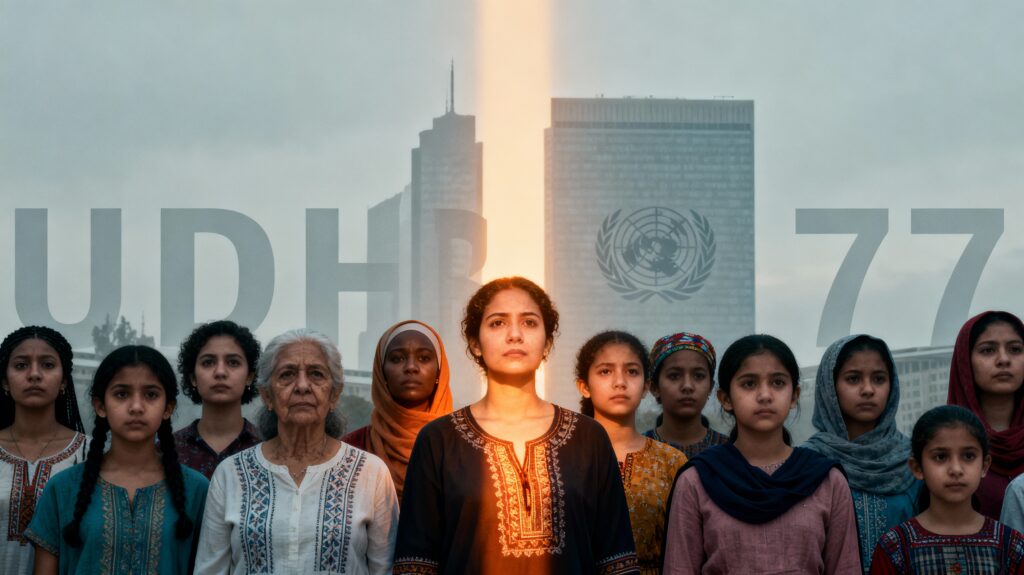
The above-mentioned kaleidoscopic scholarly view [coinciding with: UN@80, UDHR@77, IWD@50 and Beijing@30] shows the graphic reality of the global state of realisation of the fundamental human rights of women and girls in the 3rd decade of the 21st century. In fact, in view of the “implementation gap” to bring about gender equality, it is expected to take 123 years (WEF, June 2025) to bridge the ‘global gender gap’ for the 4 billion women and girls (UN Women, Annual Report 2025). Moreover, despite the enactment of 1,529 legislative measures across 191 countries between 1995 and 2024 (UN Women 2025; UN Women 2025), there exist enormous challenges in the realization of basic human rights such as equality, education, health, property rights (SDG 5) as well as elimination of all types of violence including digital violence against women and girls (UNDP, Nov. 25, 2025). A look back to the ‘act of origin’ (1948 UDHR) provides us with vital lessons that mere legalese and policies, as well as institutional measures (such as commissions for children, women and human rights, etc) alone will not be able to bring about a radical transformation for the attainment of basic rights of women and girls in the near future.
It is expected to take 123 years… to bridge the ‘global gender gap’ for the 4 billion women and girls.
It calls for a bottom-up approach in which empowered women themselves feel obliged to ‘light the lamp’, carry the torch forward, and lead the way to empower other women and girls. Ironically, many of the empowered women follow the habits of their male counterparts or get co-opted, resulting in further fortification of the entrenched global patriarchal systems. Hence, ‘adding the numbers’ in women’s empowerment per se will not result in genuine upliftment of disadvantaged women and girls. The desired change will be accelerated if the empowered women themselves take the lead to become the agents of change we desperately need for securing a gender-balanced and violence-free world for humankind in general and women and girls in particular (Author: SIS Blog: March 17, 2025).
Apart from it, for the elimination of the scourge of SGBV, a well-coordinated multi-agency concerted action plan is needed to “bridge the implementation gap” at the national level. It is worth recalling inspiring words of Dr. Peter Maurer, President of the International Committee of the Red Cross (Geneva, Switzerland), in his foreword (pages vii-viii) to this author’s book [Sexual and Gender Based Violence in International Law: English 2022; German 2023] as it provides a ray of hope in a bleak scenario: “Sexual and gender-based violence (SGBV) is a heinously prevalent scourge, too common in all societies. It is also exacerbated by conflict, other humanitarian crises, and the climate emergency…This publication contributes to the wide field of research demonstrating that SGBV is not inevitable. And indeed, if it is predictable, it is preventable”. As a corollary, it calls for appropriate preventive global measures on the lines of 1979 CEDAW [GA resolution 34 (180) of Dec 18, 1979], by the UNGA to set in motion an inter-governmental negotiation (IGN) process for the adoption of a comprehensive global Convention for the Elimination of All Forms of Sexual and Gender-Based Violence.
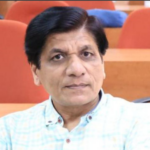
Prof. Dr. Bharat H. Desai is a Humboldt Award Professor at the University of Bonn, Germany, and serves as the Editor-in-Chief of Environmental Policy and Law, Amsterdam, The Netherlands. He was formerly the Chairperson and Professor of International Law at the School of International Studies, Jawaharlal Nehru University, India.
 Ajith Shetty Heranje
  Anusreeta Dutta
  Hridbina Chatterjee