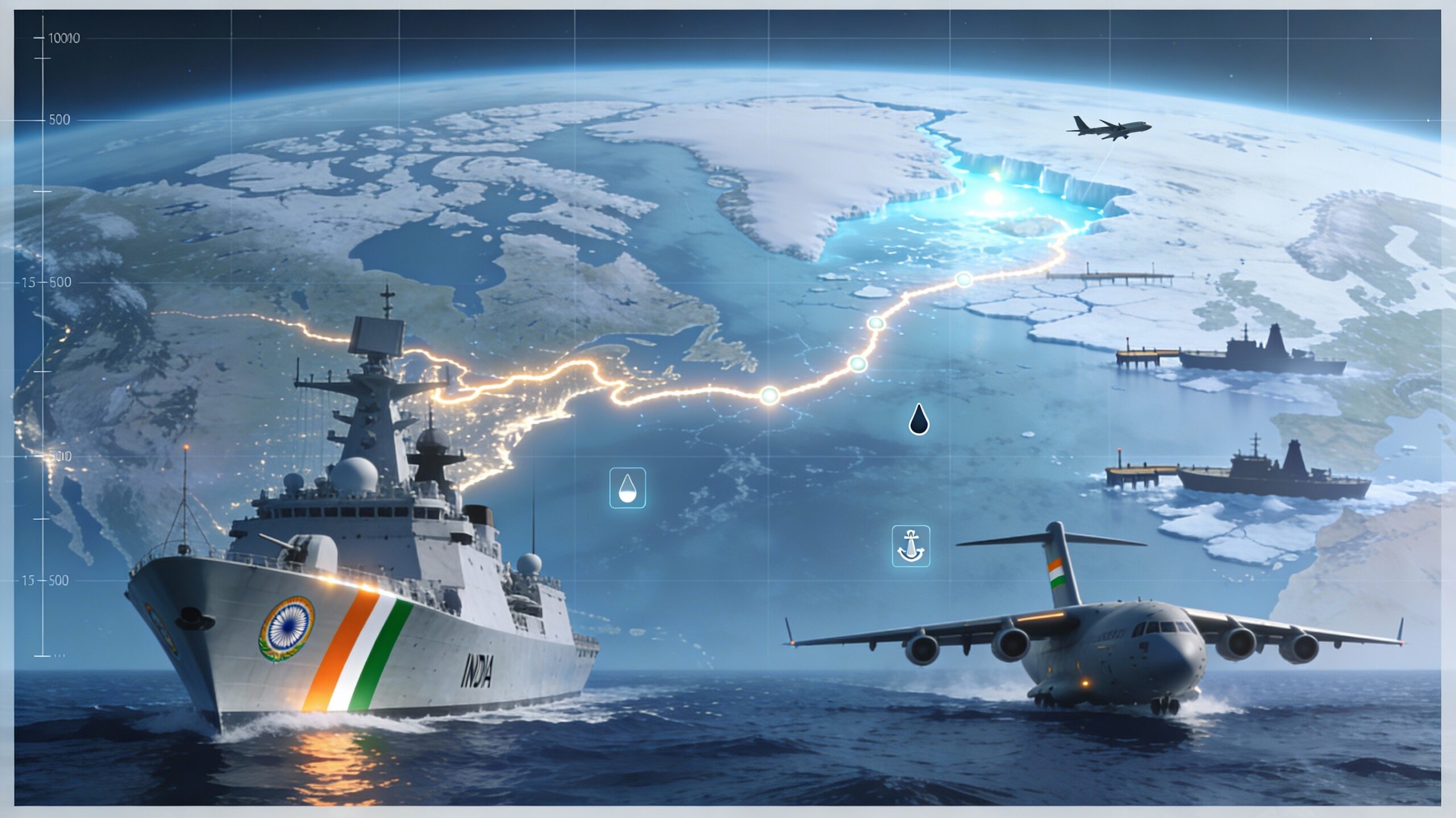
- At its core, the agreement allows Indian and Russian forces to use each other’s military facilities for logistical support during exercises, operational deployments, humanitarian missions, and emergencies.
- By gaining access to Russian facilities along the Northern Sea Route, India moves from a purely scientific presence in the Arctic to a practical strategic role in a region emerging as a major global shipping corridor.
- The pact will support deployments by allowing “five warships, ten aircraft, and three thousand troops” to be stationed in the partner country’s territory simultaneously for up to five years.
- Beyond hardware, the agreement also deepens day-to-day military coordination. Joint exercises become easier to plan, port visits become routine, and humanitarian assistance and disaster relief operations can be mounted without logistical bottlenecks.
Russia’s decision to formally ratify the Reciprocal Exchange of Logistic Support (RELOS) agreement with India, just ahead of President Vladimir Putin’s visit to New Delhi, may appear technical on the surface. In reality, it quietly reshapes the way India can operate far beyond its shores. Unlike headline-grabbing weapons deals, RELOS works in the background. But it is precisely this back-end access, fuel, repairs, spares, berthing, and maintenance, that determines how far a nation’s military power can realistically travel.
At its core, the agreement allows Indian and Russian forces to use each other’s military facilities for logistical support during exercises, operational deployments, humanitarian missions, and emergencies. The pact will support deployments by allowing “five warships, ten aircraft, and three thousand troops” to be stationed in the partner country’s territory simultaneously for up to five years. What earlier depended on case-by-case approvals and diplomatic paperwork is now embedded in a standing institutional framework. That shift alone makes India’s overseas military movement faster, smoother, and far less uncertain.
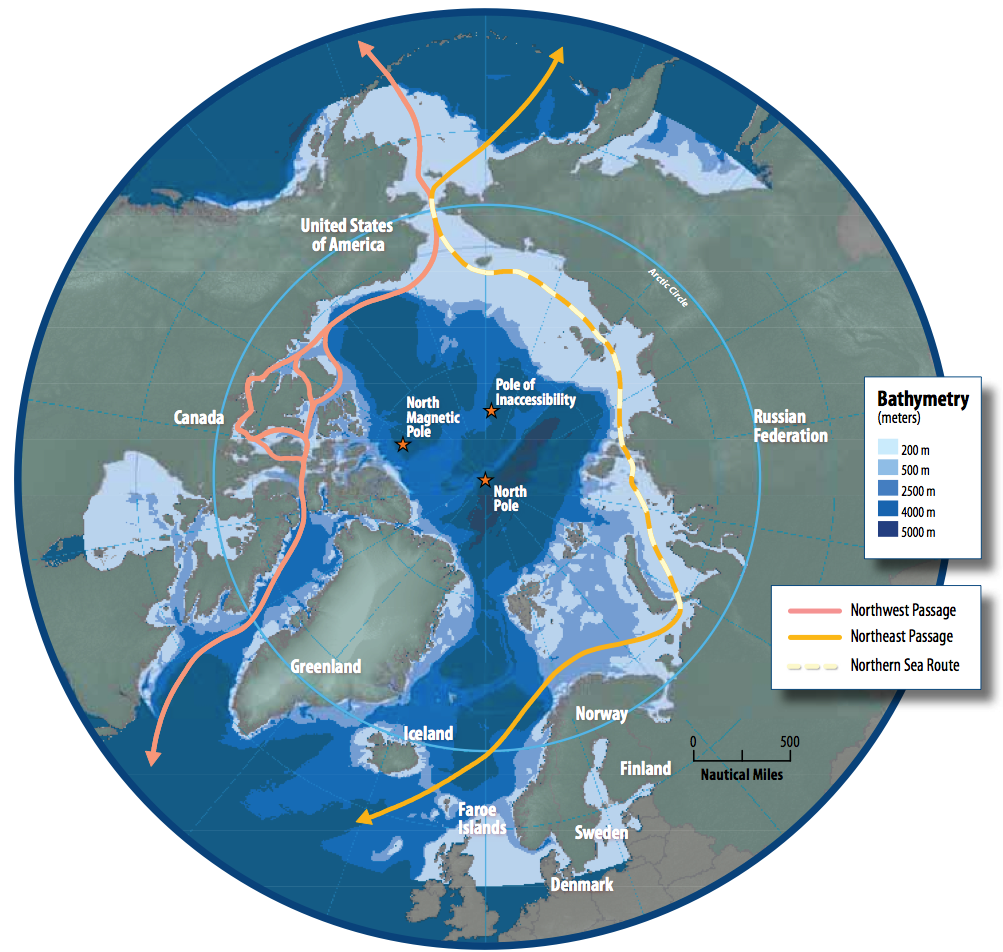
For India, the most consequential outcome lies in geography. Through Russian facilities, New Delhi now gains practical access to the Arctic’s Northern Sea Route, stretching from Vladivostok to Murmansk. Until now, India’s Arctic presence was largely scientific. RELOS changes that equation by opening a logistical gateway into a region that is rapidly becoming a new theatre of strategic and commercial competition. As ice cover recedes and shipping routes shorten between Europe and Asia, the Arctic is no longer a distant frontier. It is emerging as a core global corridor. This is also where India’s approach stands out: Through RELOS, India unveils a new level of international mobility, achieving it without building permanent overseas bases or projecting overt aggression, a practical path distinct from the base-heavy model often associated with the United States or the more assertive postures ascribed to other powers.
There is also a distinctly operational advantage closer to home. A large share of India’s combat platforms, fighter jets, submarines, missile systems, and armoured formations are of Russian origin. During long overseas deployments, access to maintenance facilities and spare parts is often a bigger constraint than combat capability itself. By easing this bottleneck, RELOS improves the sustainability and readiness of Indian forces without the political sensitivities of building permanent foreign bases.
Beyond India’s gains, there is equal clarity about why Russia values RELOS at this moment. For Moscow, the agreement reinforces its position in a rapidly militarising Arctic, offers a measured response to China’s growing activism in the region, and deepens its strategic footprint in Asia at a time when its external alignments are being reshaped. This convergence of interests gives the pact greater strategic depth than a routine logistics arrangement.
Beyond hardware, the agreement also deepens day-to-day military coordination. Joint exercises become easier to plan, port visits become routine, and humanitarian assistance and disaster relief operations can be mounted without logistical bottlenecks. In today’s security environment, speed is influential. RELOS quietly sharpens India’s capacity to respond swiftly across multiple theatres.
Perhaps the most important dimension of the agreement, however, is diplomatic. India already maintains similar logistics arrangements with several powers. Adding Russia to that network reinforces India’s long-standing approach of keeping strategic partnerships broad-based and independent.
This pact does not redraw global power equations overnight. But it steadily widens India’s strategic operating space, northward into the Arctic, eastward into the Pacific, and across the wider global maritime domain. Strategically, the ratification of RELOS signals continuity, confidence, and mutual trust in India–Russia relations.
As international competition intensifies across oceans, trade routes, and polar regions, RELOS ensures India is no longer a peripheral player but a strategically prepared stakeholder. For New Delhi, this pact is not merely about logistics; it is about securing influence, flexibility, and resilience in an increasingly complex global security environment.

 Sughosh Joshi
  Mohmmad Rizwan
  Anjali Singh