
- Approximately 95% of Japan’s oil imports come from the Middle East, with 90% of shipments going through the Strait of Hormuz.
- Tokyo intends to release about 15 days’ worth of private-sector oil reserves in addition to one month’s worth of state stocks in order to avoid interruptions in the supply of petrol and other petroleum products.
- From the prism of international relations theory, Japan’s approach is consistent with the idea of energy security, which highlights government initiatives to safeguard vital resources during unpredictable geopolitical times.
In response to escalating geopolitical tensions in the Middle East and mounting worries about interruptions to the world’s energy supplies, Japan has announced preparations to release a portion of its strategic oil reserves. In order to stabilise domestic petroleum supplies and lessen the impact of supply constraints brought on by the ongoing conflict involving Iran, Prime Minister Sanae Takaichi announced that the government will start releasing reserves as early as March 16.
The decision was made in response to interruptions in the transportation of crude oil via the Strait of Hormuz, a vital maritime route that handles a significant amount of the world’s oil commerce. Approximately 95% of Japan’s oil imports come from the Middle East, with 90% of shipments going through the Strait of Hormuz. Due to the prolonged violence, tanker traffic in the region has considerably slowed, prompting concerns about shortages and rising energy costs.
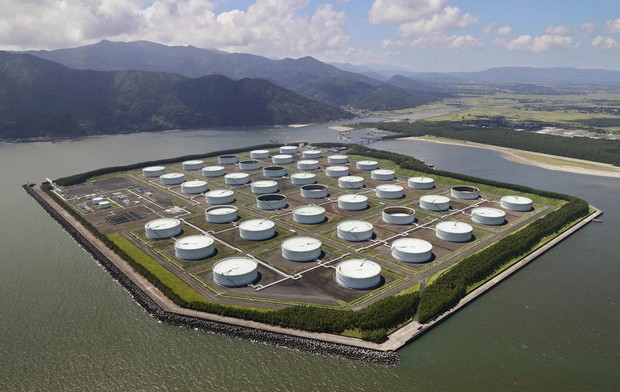
Tokyo intends to release about 15 days’ worth of private-sector oil reserves in addition to one month’s worth of state stocks in order to avoid interruptions in the supply of petrol and other petroleum products. Approximately 80 million barrels of oil, or about 45 days’ supply, might be released onto the market, according to officials. With national stocks, private sector reserves, and joint reserves with oil-producing nations, Japan now has emergency oil supplies of roughly 470 million barrels.
The decision was made in advance of a concerted effort spearheaded by the International Energy Agency, which suggested that its 32 member nations release about 400 million barrels of oil to stabilise international markets. In order to alleviate the immediate supply difficulties, Japan said it would start its release early.
In addition to releasing the reserve, the government intends to use emergency measures and subsidies to control the average retail price of gasoline nationwide at about 170 yen per litre. Diesel, kerosene and heavy oil will all undergo similar measures to avoid abrupt price increases for homes and companies.
From the prism of international relations theory, Japan’s approach is consistent with the idea of energy security, which highlights government initiatives to safeguard vital resources during unpredictable geopolitical times. When global supply lines are under jeopardy, governments prioritise economic stability and national survival, as demonstrated by realist approaches to international affairs. Governments can lessen their susceptibility to external shocks in global energy markets by using strategic petroleum reserves as a tool for policy.
This also highlights how crucial institutional cooperation is to global governance. During times of crisis, organisations like the International Energy Agency offer structures for coordinated actions among major energy-consuming nations. In addition to preventing panic-driven shortages and distributing the cost of supply disruptions across participating states, this kind of cooperation helps stabilise markets.
Japan’s action highlights how geopolitics, energy markets, and economic security are increasingly intertwined as Middle East tensions continue to impact international supply lines.

Anjali Singh is a postgraduate student of Political Science and International Relations, a Social Media Analyst, and a former Research Intern at the Indian Council of World Affairs. Views expressed are the author’s own.
 Kumar Satish
  Aayush Pal