- With over 70% of crude now sourced from outside the Hormuz route, India has effectively insulated itself from the worst of the supply chain bottlenecks.
- India’s diplomatic outreach is not about choosing sides in a conflict we did not initiate; it is about steering a steady course for our citizens and our economy.
- India’s influence in the Global South is not accidental. It is built on a foundation as a “Net Security Provider” in the Indian Ocean and as a reliable partner to Gulf nations that depend on the professional and labour force we provide.
The world today finds itself at a precarious geopolitical crossroads. With the flare-up of the US-Israel-Iran conflict, the stability of West Asia – a region vital to the global heartbeat of trade and energy – has been severely tested. Amidst this turbulence, India has demonstrated remarkable strategic maturity. By prioritising national interests, ensuring the safety of its diaspora, and shielding the domestic economy from unprecedented external shocks, New Delhi has once again demonstrated its capacity to act as a stabilising force in an increasingly volatile world.
A Proactive Energy Shield
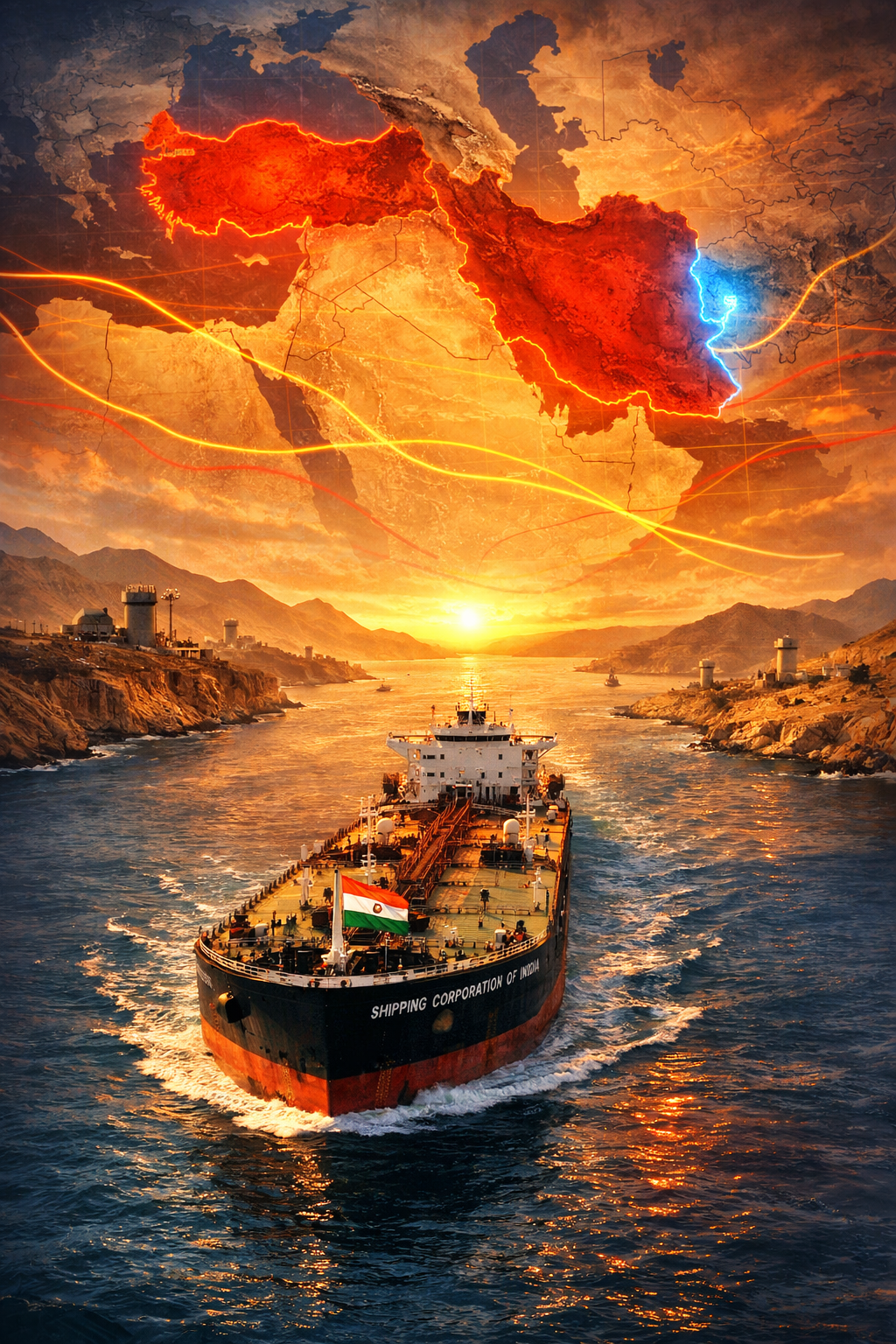
The most immediate challenge posed by the conflict was the unprecedented closure of the Strait of Hormuz. For a nation dependent on energy imports, this could have been a moment of panic. Instead, it became a testament to years of meticulous planning.
The government’s proactive approach to diversifying India’s energy basket is yielding results when it matters most. With over 70% of crude now sourced from outside the Hormuz route – a significant jump from pre-conflict levels – India has effectively insulated itself from the worst of the supply chain bottlenecks. Through the decisive application of the Essential Commodities Act and an innovative “LPG Control Order,” the government has maximised domestic production and ensured that households remain prioritised. While our neighbours have been forced into drastic, economy-crippling austerity measures—shutting schools and cutting public services—India’s refineries continue to run at over 100% capacity, keeping the nation moving.
Diplomacy with a Purpose
Critics often simplify diplomacy, but the Modi administration has chosen a path of “Strategic Pragmatism.” Our diplomatic outreach is not about choosing sides in a conflict we did not initiate; it is about steering a steady course for our citizens and our economy.
The government’s recent co-sponsorship of the UN resolution regarding the Gulf states underscores a commitment to regional stability. By emphasising the protection of all civilians and engaging directly with leadership in both Iran and other regional powers, India has reinforced its position as a trusted, neutral voice. While others demand performative rhetoric, India has focused on the substantive work of securing safe passage for Indian-flagged vessels and coordinating with local embassies to support our nationals in high-risk zones.
The Resilience of the Global South
The current crisis has underscored a vital truth: India’s influence in the Global South is not accidental. It is built on a foundation as a “Net Security Provider” in the Indian Ocean and as a reliable partner to Gulf nations that depend on the professional and labour force we provide.
Looking ahead, the road is undoubtedly challenging. Yet, India’s ability to pivot—whether through increased cooperation with diverse global energy suppliers or through the internal strengthening of our strategic reserves—proves that we are no longer a passive bystander. We are navigating these uncharted waters with a clear vision: to protect the Indian growth story, ensure our energy autonomy, and prioritize the lives of every Indian, no matter where they are in the world.
In this era of global uncertainty, India stands as a beacon of stability and strategic common sense, managing a crisis of historic proportions with the discipline and fortitude of a nation that knows its place and its potential on the world stage.

Frank is a Senior Journalist and an International Relations Expert. He is also the founder of Bharata First, a platform to inform, educate and empower the youth. Views expressed are the author’s own.
 Kumar Satish
  Aayush Pal
  Anjali Singh