
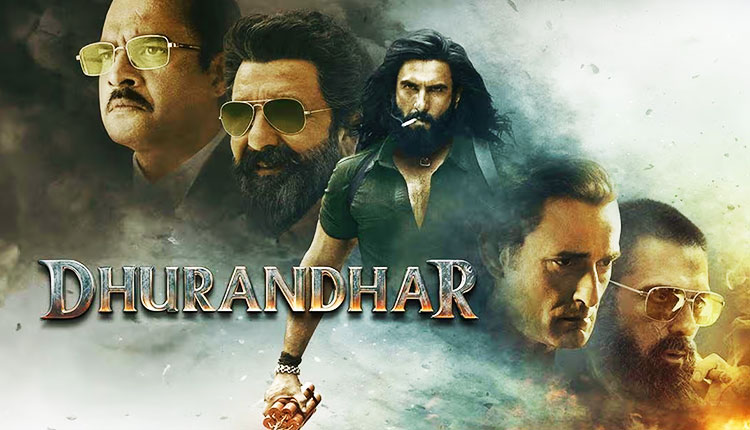
- Dhurandhar shows the transformation of India’s security narrative from one of strategic restraint to one of calculated assertion in dealing with Pakistan and its proxy networks.
- The protagonist’s transformation into an intelligence operative with a civilisational ethos underscores the film’s core message—that the conflict transcends the state and becomes a defence of India’s historical and cultural continuum, elevating it into a civilisational struggle.
- Dhurandhar distinguishes itself through its unapologetic portrayal of Pakistan, discarding the veneer of normalisation seen in ‘Aman ki Asha’ narratives and reflecting a sophisticated understanding of hybrid warfare where insurgency, terrorism, narcotics, and information warfare intersect.
Dhurandhar, the Revenge is a film with deeper significance, not to mention it has taken production design and technical craft to a new level. But what has made this film unique is that it has caught the pulse of India’s evolving geopolitical consciousness that reflects our mood, aspirations, and a desire to be proactive when it comes to our national security. This film can easily be part of a course that can be taught in our universities on how to frame geopolitical narrative with our civilisational lens. Dhurandhar cannot be called a masala film, but it is perhaps India’s first commercial arthouse film and a benchmark on cinematic articulation of India’s post-2016 strategic psyche.
At its core, the film relies on actual historical events of the last 25 years, and it has taken a lot of creative freedom and highlights our doctrinal shift in counter-terrorism, emphasising watershed moments such as the Uri Surgical Strikes and the Balakot Airstrike. Dhurandhar internalises this shift and projects it onto its protagonist, who embodies the state’s newfound willingness for decisive action.
The film depicts Pakistan as a corrupt state that uses its intelligence apparatus, the Inter-Services Intelligence, for its cross-border terrorism against India. The film shows that Pakistan has proxies in India, such as the Narco-Terror group, the Khalistanis and criminal elements such as gangster Atiq Ahmed, who were structurally embedded to bleed India with a thousand cuts. However, what distinguishes Dhurandhar from other films where the antagonist is Pakistan is that it is unapologetic with its cinematic portrayals and removes the veneer of normalisation seen in the many “Aman ki Asha” films, such as Tiger Zinda hai, as an example. This reflects a more sophisticated understanding of hybrid warfare—where insurgency, terrorism, narcotics, and information warfare intersect.
From a narrative-framing perspective, the binaries are sharp: civilisation versus chaos, order versus terror and peacenik vs retaliation. When the first film was released, many critics argued that the film was a raw oversimplification and against the ethos of secularism, but the power of the box office shut them down and gave the left-liberal “Rudaali Gang” a serious case of heartburn. Dhurandhar The Revenge is pure entertainment with zero virtue signalling. This film has reduced moral grey zones, and reinforces a sense of national clarity and purpose and is a brilliant piece of narrative engineering.
Aditya Dhar is unapologetic with his storytelling, and some of the dialogues spoken have never been heard in any mainstream film in India that will have people talking for a long time. The one particular scene is when Major Iqbal, who is in agony, says, “We will circumcise all Hindu men and take Hindu women as sex slaves,” and that there will be Ghazwa-e-Hind, which gives the movie a lot of authenticity.
The protagonist, who has been a convicted murderer, becomes an intelligence operative and is shown with a deep civilizational ethos. This aligns with a broader ideological shift that India is a civilisation, unlike Pakistan, which has no identity. The implicit message is that threats are not just to the state, but to a historical and cultural continuum that must be defended. This, from a geopolitical perspective, elevates the stakes of the conflict, transforming it from a geopolitical contest into a civilizational struggle.
For the audience, which is used to watching films that lack substance, Dhurandhar resonates with and reasserts that the time has come to fight for our civilizational identities in response to asymmetric threats. For decades, many films in India have had their own agenda. The last twenty-five years saw the zenith of virtue signalling films, where storytelling became a vehicle for ideological reinforcement and propaganda against one community. But this film aligns with the public sentiment and state policy.
The role of cinema as soft power is central to understanding the film’s impact. Hollywood has been influencing the world with movies that persuade people to think that America is virtuous. For the first time in India, Dhurandhar functions as an instrument of narrative projection, shaping both domestic and international perceptions of India’s strategic intent. Domestically, the film reinforces a sense of confidence and assertiveness, aligning with the government’s emphasis on a strong, decisive India. Internationally, it signals our departure from a timid and restrained actor. Dhurandhar is explicit: India will defend its interests proactively.
Dhurandhar is a muscular security doctrine in the public imagination. By dramatising pre-emptive strikes and covert operations such as the famed “unknown gunmen”, it conditions audiences to view such actions as legitimate and even necessary.
This film is the Zero Dark Thirty of India.
For a film that runs almost four hours, it does not fail to invoke a sense of urgency and keeps the audience on their toes.
In conclusion, Dhurandhar shows the transformation of India’s security narrative from one of strategic restraint to one of calculated assertion in dealing with Pakistan and its proxy networks. However, as an instrument of soft power, it exceeds the capacity of cinema to shape perceptions and influence discourse.
Dhurandhar has literally showcased how Prime Minister Narendra Modi’s government put the words “Hum Ghar me Ghus ke Marenge” into action, and it has. This film has struck the very heart of Bollywood.
Bottom line: Aditya Dhar has taken full creative freedom to tell a story that spans nearly two decades, and this film will influence new filmmakers for decades to come.

Balaji is a freelance writer with an MA in History and Political science and has published articles on defence and strategic affairs and book reviews. He tweets @LaxmanShriram78. Views expressed are the author’s own.
 Ananda Mathews