
- The crisis is now not seen only as a humanitarian problem, but as a strategic, demographic and security problem that impacts federal politics, border management and regional peace.
- The lack of a uniform refugee regime, as such, has therefore made the crisis a challenge to the federal structure and administrative coordination of India.
- The refugee situation has also exacerbated ethnic and political tensions in the North-East of India.
- The borderlands have become something of a strategic frontier, where humanitarian, security and geopolitical interests converge in the conflict.
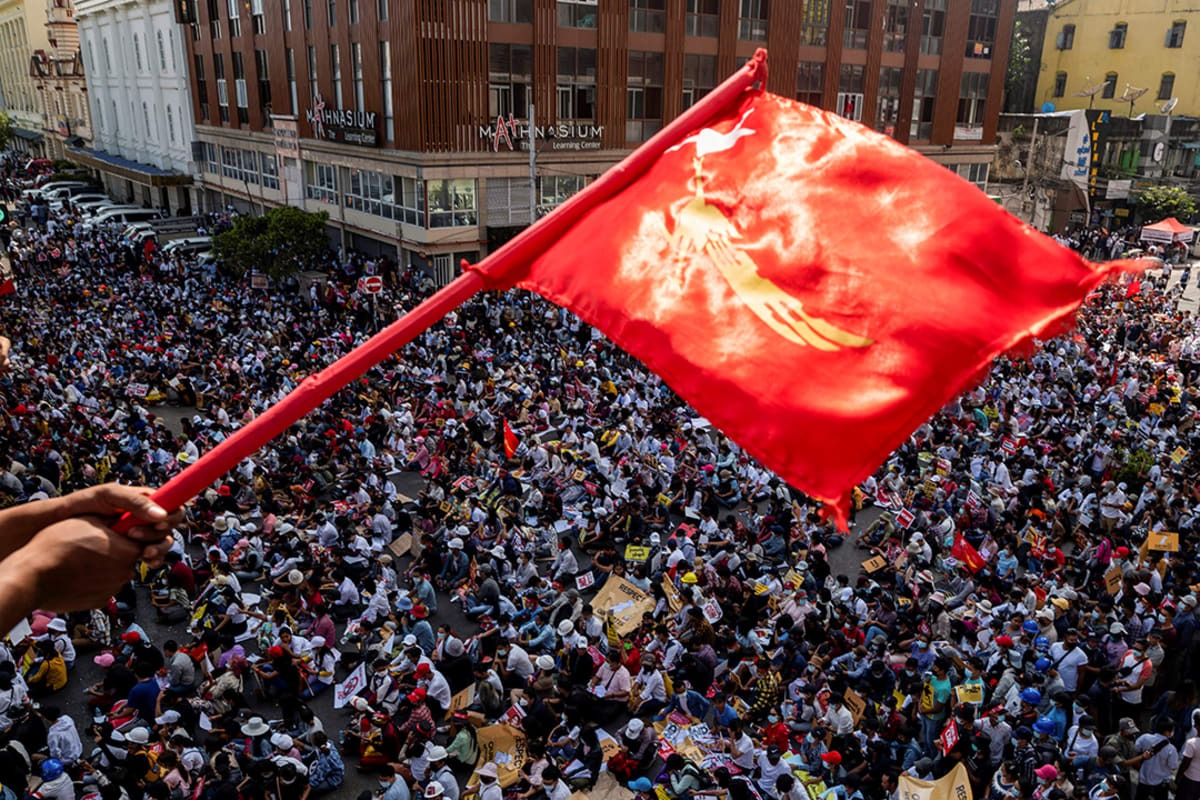
By 2026, the impact of Myanmar’s civil war reaches beyond its borders, as it becomes one of the most destabilising conflicts in South and Southeast Asia. Events that started after the military coup in February 2021 have developed into an uneven but fierce fight between the military junta, ethnic armed groups, pro-democracy opposition forces and domestic militias. Village burning, food shortages, the failure of local administration and repeated airstrikes have afflicted entire regions, including Chin State, Sagaing and Kachin. Millions of civilians have been displaced within Myanmar, and tens of thousands within neighbouring countries are seeking refuge. The immediate concern in India is the northeastern states that have a porous border on the Myanmar side, stretching long. The crisis is now not seen only as a humanitarian problem, but as a strategic, demographic and security problem that impacts federal politics, border management and regional peace.
The northeastern states of India have seen Mizoram emerge as the main destination for refugees from Chin state, Myanmar, due to significant ethnic and cultural connections between the Chin and Mizo communities: Local communities, churches and civil society groups in Mizoram have continued to shelter, feed and offer healthcare to their community since 2021, without adequate resources. Anti-junta groups have once again clashed with one another in 2026, and the military launched new attacks leading to further displacement in border areas like Champhai. There are reports of thousands of refugees entering India during hotspots of violence, and a further influx of refugees in response to military airstrikes in the vicinity of the border. Refugees are not only staying in temporary camps, but are also being hosted in schools, churches, rented houses and informal settlements. While the overall attitude of the government of Mizoram has been a humanitarian one, the continued flow has been causing financial pressures on the local governments, which have to shoulder the burden of poverty, illiteracy, and inadequate infrastructure, and employment opportunities in the region.
The refugee pressure is particularly vulnerable as India does not have a comprehensive refugee law and is not a party to the 1951 UN Refugee Convention. This means that Myanmar refugees are faced with legal limbo. Some are tolerated by state officials on humanitarian grounds; others are at risk of detention or deportation under immigration laws. This ambiguity has led to various reactions in the North-East of India. Mizoram has, in the past, opposed instructions from New Delhi, calling for tougher enforcement of the border because of the “kin ties” and the “humanitarian concern”. By contrast, there is a more securitised response in the case of Manipur due to its own ethnic tensions and insurgency issues. Refugees often find themselves in the middle of local sympathy and national security concerns, and face confusion regarding documentation, access to education, eligibility for health care, and the right to work. The lack of a uniform refugee regime, as such, has therefore made the crisis a challenge to the federal structure and administrative coordination of India.
Security has now come out as one of the primary concerns of the Indian war appraisal. The India-Myanmar border extends to mountains and thick forests and is difficult to monitor and relatively easy to cross the border. Over a prolonged period of instability, Myanmar is likely to provide an added impetus to the growth of insurgent groups operating on its border and legal and illegal supply lines for arms and narcotics linked to the Golden Triangle region, Indian security agencies fear. In the past, several insurgent groups from the north operated camps or logistical routes within Myanmar’s state territories, and the absence of state control in the country has hindered counterinsurgent operations. Security officials in New Delhi are also concerned that militants might use the refugee movement to cover up their travel or open up new supply lines. This has resulted in tougher border security and the gradual elimination of the Free Movement Regime, under which communities on the border of the country could live their daily lives without having to apply for a visa to visit from time to time. While the Indian government seems more and more to view the securitisation of the borders as an evil necessary in the current setting, critics say that increased policing would be more harmful to civilians than to armed groups.
The refugee situation has also exacerbated ethnic and political tensions in the North-East of India. Migration from Myanmar has been a controversy in Manipur, where the Meitei and Kuki-Zo communities have already been fighting for some time, and the state is already tense. There are some groups who believe that the influx of refugees affects the demographic balance and puts pressure on land, forests and public services. Others claim that there are many refugees who share ethnic and familial links with the communities in India and hence deserve protection. Migration has, therefore, become part of political discourses on citizenship, identity and territoriality. Even in the face of some degree of uncertainty, the rumours of armed infiltration or external support networks have further muddied public opinion. In this context, refugees face the danger of being seen as victims of the war and as emblems in wider domestic conflicts over ethnicity and belonging. This situation has thus intensified the already existing divisions in the N.E region of Myanmar rather than caused new ones.
Economic and humanitarian pressures are also great. The border areas in Mizoram and Manipur are not strong economic basins and have limited capacities of the State. There are already many communities that are struggling with high unemployment rates, low industrial activity and poor health care systems. Increased refugee population has led to a greater need for food, sanitation, medicines, housing and schooling. To avoid gaps in the provision of health services, refugee doctors and volunteers have tried to fill them in, but resources are still over-extended. Sustained displacement may lead to outbreaks of disease, malnutrition among children and to the exploitation of children in trafficking networks, warned humanitarian groups. Years out of the formal school system will leave children vulnerable to becoming a lost generation of unstable and uncertain children. At the same time, neighbourhood people may be worried that they will be cut out of the competition for jobs and/or aid, exacerbating their own economic insecurity. Many people still feel a sense of solidarity to one another, but if it is not sustained in perpetuity, without greater monetary support from the central government, this will be harder to achieve.
The crisis also has a significant geopolitical dimension for India’s regional strategy in general. Myanmar is in a key position with regard to India’s policy of “Act East,” which aims at increasing connectivity with the South-East Asian countries through roads, trade corridors and energy projects between the North-East and South-East Asian markets. Many of these aspirations have been hindered by the disruptions caused by war in many countries, which have affected transport routes and led to a lack of investment confidence. Meanwhile, India’s strategists are wary of the prospect of creating a China room to expand its presence within Myanmar by military cooperation, infrastructure investment, and political manipulation of armed groups. New Delhi is thus confronted with a tricky balancing act. It has to interact with the Myanmar military regime for security cooperation and also keep in touch with ethnic groups and resistance groups who dominate considerable areas close to the Indian border. Another factor that makes the refugee issue more complicated is that if India was to be aggressive in deporting these refugees, it could tarnish the image of the country before the people of the northeast and the neighbouring countries. The borderlands have become something of a strategic frontier, where humanitarian, security and geopolitical interests converge in the conflict.
The ongoing civil war in Myanmar has shown how civil wars can alter the regional geopolitical landscape beyond the country’s borders by the year 2026. The situation of the Northeast of India has now become a long-term humanitarian and security quandary with no easy resolution. Refugees are fleeing to escape violence and need protection, shelter and dignity but the numbers and length of the displacement are causing administrative and political problems. The Indian government must thus be mindful of the need to have compassion while at the same time being cognizant of the need for security measures, but not policies that foster ethnic mistrust or criminalisation of the vulnerable. Long-term, improved humanitarian coordination, refugee policies, increased financing for the northeastern states and continued diplomatic engagement in order to quell domestic violence in Myanmar will likely be necessary for security and stability. In the absence of any peace on the border, refugee movements will continue, and the Northeast may be at social and strategic risk for years to come.
Kumar Sheni is an Assistant Professor of Political Science at the School of Geopolitics and Public Policy, REVA University, Bengaluru. Views expressed are the author’s own.
 Hridbina Chatterjee
  Divyanka Tandon
  Kumar Satish