
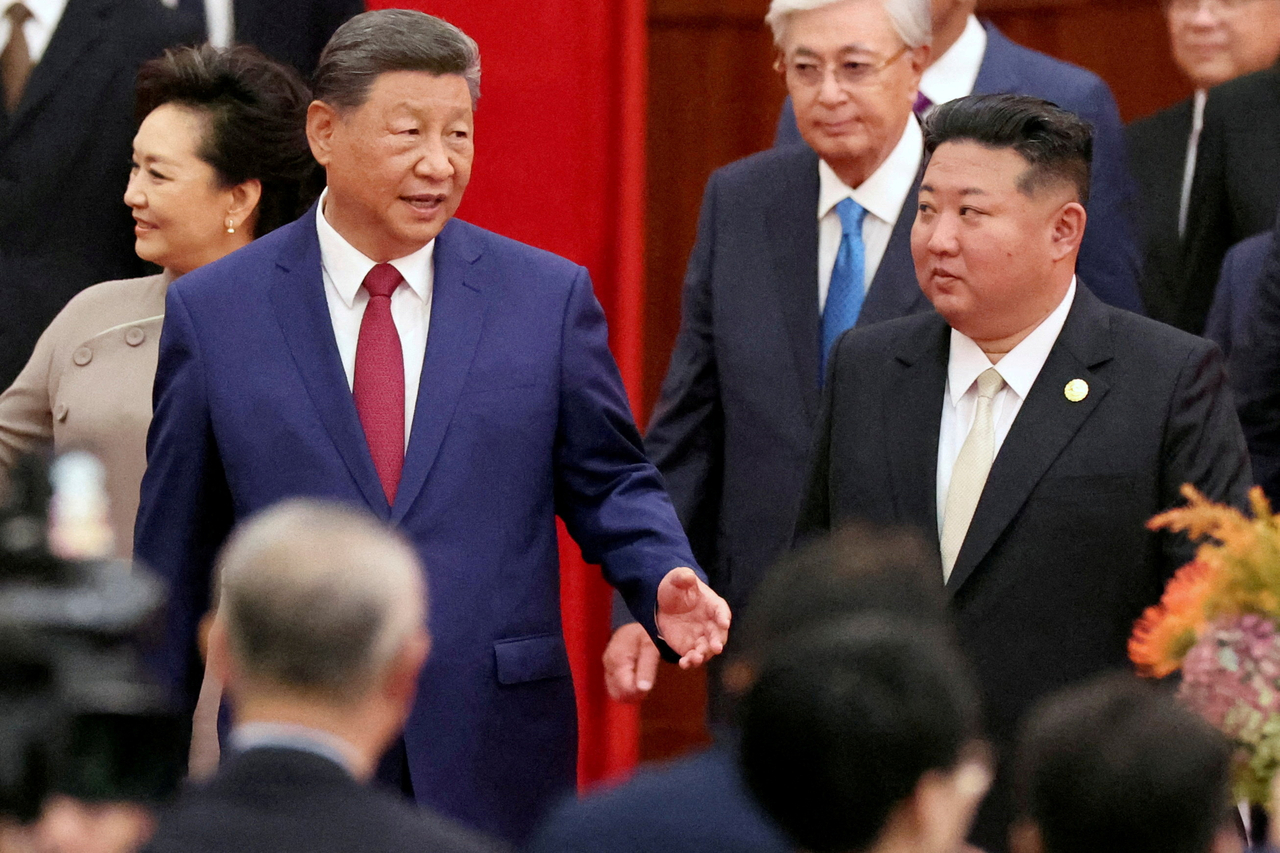
- Chinese President Xi Jinping’s visit to North Korea, his first visit in seven years, comes at a time when tensions across the Asia-Pacific remain high.
- Geopolitical observers have noted that Xi Jinping’s visit to North Korea, coming shortly after President Trump’s historic visit to China, could indicate Beijing’s intention to maintain a degree of coordination regarding developments involving both Pyongyang and Washington.
- At the same time, Russia has also strengthened its relationship with North Korea, particularly since the outbreak of the Ukraine conflict.
Chinese President Xi Jinping’s visit to North Korea, his first visit in seven years, comes at a time when tensions across the Asia-Pacific remain high. Geopolitical contestations among countries in the region have increased significantly, and Xi’s visit highlights the growing strategic ties between China and North Korea.
The Chinese President was welcomed by North Korean leader Kim Jong Un, with both leaders emphasising the strength of bilateral relations. During the visit, Xi described China-North Korea relations as an important pillar of stability in the Asia-Pacific region. Kim Jong Un thanked China for its continued support during difficult times and acknowledged Beijing’s role in assisting North Korea over the years.
Global Attention and the U.S. Factor
Although the visit was bilateral in nature, its implications were observed across the world. Countries, particularly the United States, closely monitored the developments. Washington and its Western allies have long been critical of North Korea’s growing nuclear arsenal. Since returning to office, President Donald Trump has repeatedly stressed the need to address nuclear proliferation and security challenges. During his first administration, Trump made history by becoming the first sitting U.S. President to step onto North Korean territory.
Geopolitical observers have noted that Xi Jinping’s visit to North Korea, coming shortly after President Trump’s historic visit to China, could indicate Beijing’s intention to maintain a degree of coordination regarding developments involving both Pyongyang and Washington. However, North Korea has consistently maintained that while it seeks relations with various countries, it is unlikely to compromise on what it considers its essential security interests, including its nuclear programme.
The Emerging Russia-North Korea Dynamic
China has traditionally been North Korea’s closest ally. Beijing has supported Pyongyang through economic assistance, critical aid, and diplomatic backing during periods of international pressure. In return, North Korea has remained a consistent supporter of China on several international issues. This has created a unique strategic dynamic in Northeast Asia.
At the same time, Russia has also strengthened its relationship with North Korea, particularly since the outbreak of the Ukraine conflict. Moscow has become increasingly active in its Asia-Pacific engagement and has sought to expand its regional partnerships. Relations between Russia and North Korea reached a new level following President Vladimir Putin’s visit to Pyongyang. Russia has expressed interest in assisting North Korea in areas such as energy infrastructure and aspects of military-industrial cooperation.
For Russia, closer relations with North Korea make strategic sense. The two countries share a border, and geography continues to play an important role in shaping their cooperation. For North Korea, engagement with Russia provides additional diplomatic and economic opportunities beyond its traditional dependence on China.
Implications for South Korea and Japan
The growing alignment between China, Russia, and North Korea is gradually reshaping the strategic environment of the Asia-Pacific. It also sends a clear message to countries such as South Korea and Japan, both of which remain important regional players. These countries have increasingly expressed concerns about China’s growing influence and North Korea’s military capabilities. As a result, Tokyo and Seoul are likely to deepen security cooperation and strengthen partnerships with like-minded nations.
A Changing Security Architecture in Asia-Pacific
The evolving geopolitical landscape suggests that the Asia-Pacific is entering a period of heightened strategic competition. As major powers continue to expand their partnerships and pursue competing interests, the region’s military and security dynamics are likely to undergo significant changes in the years ahead.
Reference:
1)https://edition.cnn.com/2026/06/07/asia/china-xi-jinping-north-korea-kim-jong-un-intl-hnk

Aayush Pal is a freelance writer on contemporary geopolitical developments. The views expressed in his work are entirely his own.
 Hridbina Chatterjee