
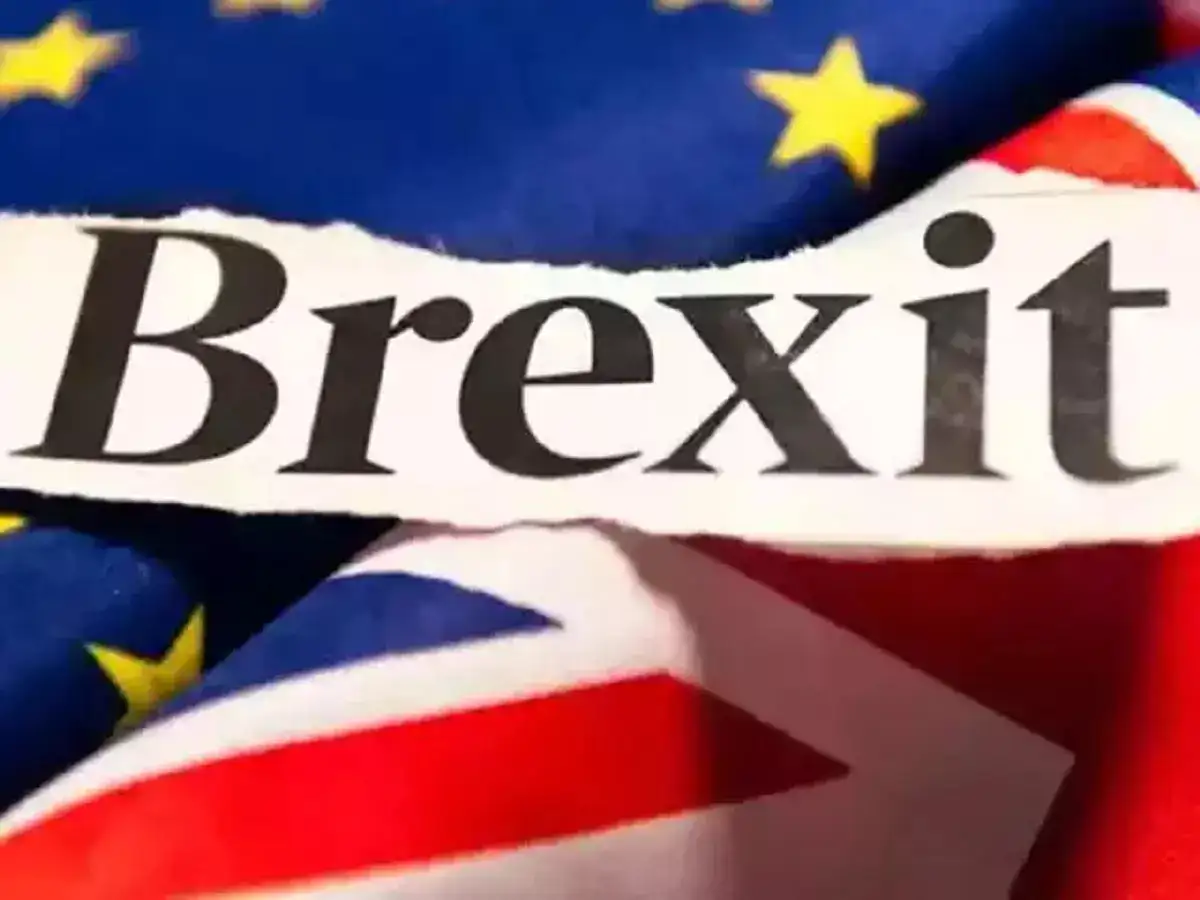
- The findings from almost all of the empirical studies indicate that the economic impacts of Brexit have been summarised into one simple finding – the British economy has become smaller, less productive, and less capable.
- The depreciation of the British pound sterling has been one of the early consequences of Brexit.
- Research shows that business investment is between 12% and 18% lower because of Brexit compared to what it would have been otherwise.
- The effects of Brexit have been slow to emerge, a “slow puncture” rather than a sudden collapse, but the cumulative impact is considerable.
Ten years since the United Kingdom left the European Union, there is no doubt that considerable research has provided insights into the long-term effects of Brexit. In spite of the economic shock that many thought would happen following the announcement from the UK government, the findings from almost all of the empirical studies indicate that the economic impacts of Brexit have been summarised into one simple finding – the British economy has become smaller, less productive, and less capable.
Since the time of the 2016 referendum until its official exit from the EU in 2020, followed by the implementation of the TCA in 2021, the trajectory of the UK economy has been impacted by three main factors – increased costs of imports, uncertainty, and trade barriers.
Macroeconomic Effects of a Smaller Economy
Brexit has significantly cut the UK’s economic output, major institutions have estimated. By the end of 2019, GDP had already been estimated to be 2-3% lower than it would have been in the absence of Brexit. More recent analysis suggests GDP per capita could be 6% to 8% lower by early 2025. This amounts to an average annual loss of around £3,300 per person.
Although external shocks, such as the Covid-19 pandemic and the Russia-Ukraine war, make precise attribution difficult, comparative studies show that the UK’s economic performance diverged from that of comparable advanced economies after 2016. “Growth was very similar for the UK compared with its peers before Brexit, but a gap has opened up since.
Rising Import Costs and Currency Depreciation
The depreciation of the British pound sterling has been one of the early consequences of Brexit. In the wake of the referendum, the value of the pound has decreased by about 10% and is yet to regain its previous status. Such a currency depreciation has raised the price of imports, affecting both individuals and organisations.
An increase in import prices resulted in a corresponding growth in inflation, which raised the prices of goods and services. It has been estimated that the weaker pound caused consumer prices to increase by 3%, resulting in additional expenditure of up to £870 per family per year. Higher input prices for businesses have decreased profitability and made wage increases more difficult.
In theory, a lower value of a nation’s currency may promote the export sector. However, due to persistent uncertainty and trade limitations, the United Kingdom could not capitalise on this effect.
Uncertainty and the Stalling of Investment
The second significant mechanism through which the economic impact of Brexit took place was the element of uncertainty. There was no clear understanding of the direction or pace of the UK’s association with the EU in the wake of the referendum outcome. Political chaos and lengthy negotiations created a situation in which it was hard for companies to plan for the future.
Many companies resorted to waiting until further information came through before making any decisions about their investments, thereby stalling investment. Research shows that business investment is between 12% and 18% lower because of Brexit compared to what it would have been otherwise. As a consequence, there are negative impacts on the country’s productivity.
It is yet to be seen if the recovery in the level of investment since the signing of the TCA is temporary or not.
Trade Barriers and Falling Exports
The signing of the TCA was another change in the UK-EU economic connection. While the TCA allows for free trade between the UK and EU, it is not comparable to the free market access that came with EU membership. Additional tariffs, regulations, and administrative procedures have added to the cost of doing business with another country.
This has led to falling UK exports. Goods exports have dropped by around 10-15%, while services exports have seen a drop of 4-5%. The companies least able to cope with the new regulations and tariffs tend to be the smaller firms, and about one in every seven firms that export from the UK to the EU has stopped its exports.
UK imports from the EU have also dropped; however, some of the lost imports have been replaced by goods imported from other countries due to the Global Britain policy. Nonetheless, the “Global Britain” strategy cannot make up for all the trade losses to the UK because of Europe being their top trading partner.
Challenges in the Labour Market and Productivity
The labour market paints a more nuanced picture. Unemployment remained relatively low in the years after Brexit, but underlying weaknesses have become more apparent. Wages have been stagnating for a long time, and productivity gains are modest.
Labour shortages in key sectors such as construction, hospitality and manufacturing have also been caused by reduced migration from the EU. Non-EU inflows have boosted overall migration levels, but the changing composition of the workforce presents adjustment challenges for employers.
At the same time, workforce participation rates have not fully recovered from the pandemic, and rising economic inactivity is further limiting growth.
Public Opinion and Policy Re-assessment
Public attitudes to Brexit have changed over time. Polls indicate an increasing level of support for closer relations with the EU, with a majority of respondents in favour of better economic co-operation. But the issue is still politically and socially divisive.
The evidence of the long-term economy has also changed the policy debate. Although the initial warnings of an imminent recession proved to be exaggerated, the more general predictions of long-term economic costs, as a majority of economists now agree, were broadly accurate. The effects of Brexit have been slow to emerge, a “slow puncture” rather than a sudden collapse, but the cumulative impact is considerable.
Conclusion
Ten years later, the economy of the United Kingdom is still in a state of adaptation to its new status in terms of being out of the European Union. It becomes clear that the cost of the decision made by the UK ten years ago has been high in terms of increased trade restrictions, lower investments, and higher uncertainty.
Nevertheless, some aspects need to be further explored in the long-term perspective – the future implications of the process on productivity, diversification of trade relations, and the role of the United Kingdom in the international economic system.
In the era of growing economic protectionism and geopolitical fragmentation, the United Kingdom case may provide important insights into how trade disintegration influences economic performance. At least, there is a clear answer already.

Anjali Singh is a postgraduate student of Political Science and International Relations, a Social Media Analyst, and a former Research Intern at the Indian Council of World Affairs. Views expressed are the author’s own.
 Aayush Pal